Camping options near Marshfield, Massachusetts stretch across Plymouth County with coastal and inland wooded settings. Summer temperatures average 75-85°F with higher humidity near the coast, while spring and fall camping seasons offer milder 55-70°F conditions with reduced crowds. Most campgrounds in this region operate from mid-May through mid-October, with some facilities extending their season into November.
What to do
Explore mountain biking trails: Myles Standish State Forest offers accessible trails for riders of varying experience levels. "Great camping spot to road ride from. Nice park. Good access to surrounding new England towns," notes one visitor at Charge Pond Campground. The park contains a network of both paved and natural surface trails suitable for family outings.
Visit local historical sites: The proximity to Plymouth puts campers within 10 miles of significant historical attractions. "We wanted to explore the Cape and are members of the KOA rewards program so we chose here to stay," shares a camper at Boston/Cape Cod KOA, which provides convenient access to both Boston and Cape Cod historical sites. Many campgrounds serve as practical base camps for day trips to Plymouth Rock, Plimoth Patuxet Museums, and Mayflower II.
Kayak or fish in freshwater ponds: Several campgrounds provide direct access to pond recreation. According to a visitor at Pinewood Lodge Campground, "We were lucky enough to get a site by the pond. There was great views from our site of the pond. On the site there was also a path down to a little dock on the pond that you could sit and relax on." Most ponds allow fishing and non-motorized boating from May through October.
What campers like
Spacious, secluded sites: Campers frequently mention appreciation for sites that offer privacy. "Good place to spend the night. It was quiet comfortable and plenty of room between campsites," explains a visitor at Wompatuck State Park Campground. State parks in the region typically provide more separation between sites than private campgrounds.
Clean, updated facilities: Many campgrounds in the area maintain modern bathhouses and amenities. A camper at Massasoit State Park Campground reports, "Just reopened this summer and they did a great job on everything. Nice sites, great playground for the kids." Renovated state park campgrounds often feature updated bathhouses, fire rings with cooking grates, and designated tent pads.
Kid-friendly activities: Families appreciate organized events at several campgrounds. "This campground is a lovely campground we went with my family and children lots of things to do we had a blast," says a visitor to Jellystone Park Cranberry Acres. Summer weekends typically include scheduled activities such as arts and crafts, nature programs, and outdoor games at the larger private campgrounds.
What you should know
Pet restrictions vary significantly: While most campgrounds allow pets, rules differ substantially. "There's a new policy that states if you have a dog YOU MUST HAVE A CAMPER. I only have a tent so for me it's a deal breaker," reports a visitor about Jellystone Park Cranberry Acres. Some campgrounds restrict dogs from beach areas, recreation buildings, or specific camping loops.
Reservation timing matters: State parks fill quickly during peak season. "We stayed over Labor Day weekend. The park was very busy and we never saw grounds staff in the park," notes a camper at Ellis-Haven Family Campground. For summer weekends, reservations typically need to be made 2-3 months in advance for state parks and 4-6 weeks ahead for private campgrounds.
Out-of-state fee differentials: Massachusetts state parks charge significantly higher rates for non-residents. A camper at Myles Standish notes: "For out-of-state visitors, the cost might not be justifiable, with rates of $17-23 per night for in-state visitors and $60 for out of staters." This price difference applies to all Massachusetts state park campgrounds.
Tips for camping with families
Look for campgrounds with pond beaches: Several local campgrounds offer swimming opportunities without ocean hazards. "The pond water was very clear, seeing as they are fed from natural springs under the ponds," explains a visitor at Ellis-Haven Family Campground. Most pond beaches lack lifeguards but provide gradual entry points suitable for young children.
Consider campgrounds with planned activities: Scheduled events can fill rainy days or entertain children. A visitor to Boston/Cape Cod KOA shares: "They had tons of festive activities. They have an indoor and an outdoor pool. The restrooms are clean." Many private campgrounds offer weekend activity schedules during peak season.
Verify playground conditions: Not all campgrounds maintain updated play equipment. A camper at Massasoit State Park mentioned, "Nice sites, great playground for the kids." Newer playground installations typically meet current safety standards with appropriate fall surfaces.
Tips for RVers
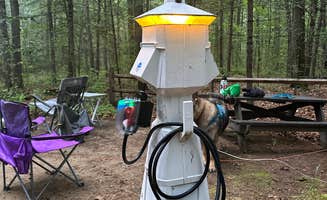
Check power limitations: Many campgrounds have upgraded electrical systems but with limitations. The sites at Wompatuck have "recently added electric hookups limited to 20 amps." RVs requiring 50-amp service should specifically reserve designated sites at the larger private campgrounds.
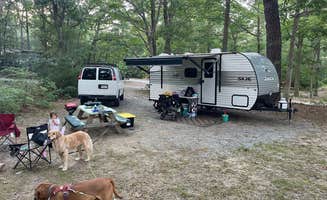
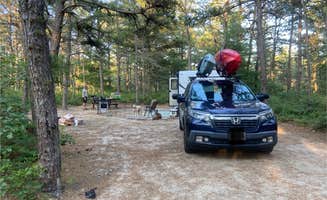
Site dimensions vary substantially: Some campgrounds have size constraints despite being listed as big-rig friendly. "I was disappointed with our assigned spot. Despite seeing several other sites that could have accommodated our rig size, K05 was the only option available when booking online," reports a visitor at Wompatuck State Park. Always confirm specific site dimensions when making reservations for larger rigs.
Consider seasonal RV options: Some local campgrounds offer seasonal stays at significant discounts. "This is a nice resort campground with multiple site type options," notes a camper at Normandy Farms Campground. Seasonal rates typically run May through October with monthly pricing 50-60% less than daily rates.












 Legend


