


Maria A. Guide
Guide
GuideThe Pines Campground
Peaceful place
Pleasant place, pool with good facilities; I recommend it.
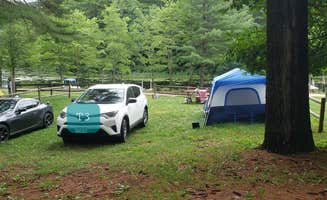
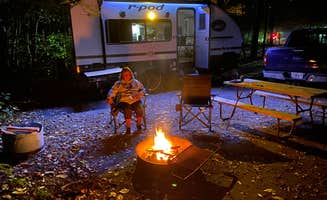
State parks and forests surrounding Tully Lake in north-central Massachusetts provide a range of camping experiences within the wooded New England landscape. Tully Lake Recreation Area, managed by the Army Corps of Engineers and operated by the Trustees of Reservations, offers a distinctive car-free camping environment where visitors use provided wooden wheelbarrows to transport gear to their sites. Nearby Lake Dennison Recreation Area and Otter River State Forest provide more traditional drive-up camping options with varying levels of amenities. The region includes both waterfront sites with direct lake access and more secluded forest settings, with most campgrounds operating seasonally from May through October. Massachusetts state parks in this area typically accommodate tent camping primarily, though some sites can handle small to medium-sized RVs.
Reservations are essential for most campgrounds in the Tully Lake area, with waterfront sites booking quickly during peak summer months. Massachusetts state parks charge significantly higher fees for out-of-state visitors, sometimes triple the resident rate. Cell phone coverage is notably limited throughout the region, with many campers reporting "spotty to non-existent" service at Tully Lake and surrounding campgrounds. As one visitor noted, "Cell coverage is pretty close to absent or poor in most of the area, so download any maps you might want before you arrive." Weather can change rapidly, with campers reporting occasional heavy rainfall that can affect site conditions. The terrain is generally wooded with moderate elevation changes, making some sites challenging to access with larger equipment.
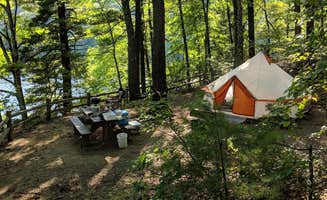
Waterfront sites receive consistently high ratings from visitors, particularly at Tully Lake where some campsites offer direct water access. "Sites closer to the water were less private, but still very peaceful and spread out," reported one camper. The car-free environment at Tully Lake creates a notably quiet atmosphere appreciated by families with young children. Hiking trails connect many campgrounds to natural features, with Doane's Falls near Tully Lake being a frequently mentioned highlight. Facilities vary significantly between campgrounds, with most offering basic amenities like fire rings and picnic tables. Bathroom facilities are typically centralized, sometimes requiring long walks from distant campsites. Wildlife sightings are common, with birds, beavers, and other small mammals frequently observed by campers exploring the lakes and surrounding forests.
$17 - $35 / night
"As a caveat, waterfront in this instance was more of a water view as the lake was on the other side of the campground road and a large open area with trees."
"It was fine, but not near the water. This time, we chose a site near the water, but it's literally surrounded by three other sites. It's not shown like that on the map."
$17 - $55 / night
"Swimming in a pond or a short drive to a bigger lake (camping pass covers both). One of my favorites. It's kind of a hidden gem in north central Massachusetts."
"I loved it here, it was a great little campground for massachusetts"
$40 / night
"Tully Lake Campground is located in Royalston, MA, which is a northern part of Central Massachusetts, near the New Hampshire border."
"No cars at all at the campsites, which was great for peace of mind as our toddler roamed around. It also made for a super quiet stay."
$29 - $45 / night
"Campsites are well shaded but if you have an RV take the time to rent an RV site otherwise backing in will put you in and awkward position as the mixed use “standard” sites are oriented towards tent camping"
"The campsite is big and away from another site. You can easilly access to hiking trails. The staff there are friendly and helpful. It's definitely a plus."
$47 - $70 / night
"We had easy access to trails that went along the river behind some of the sites with a few paths down to the river. Everyone we encountered was friendly and respectful."
"Large, open campground surrounded by the Ashuelot River. Friendly owners who go around delivering wood and ice to guests given the pandemic right now."
$42 - $65 / night
"Lake access with kayaks , some local hiking. Major grocery store nearby along with Walmart."
"the rules but everybody does and it's a good experience, everyone is very friendly the owners are wonderful people and super friendly very helpful it's clean they offer a lot of stuff to do right on a lake"
$34 - $47 / night
"Good bathroom ,nice people, great lake."
"It just had an all-around great atmosphere. Seriously, don’t skip over this campground. If you’re on the fence, just book it. You won’t regret it! We’ll definitely be back!"
$17 / night
"Situated by a beautiful lake and access to several hiking trails. "
"Friends told me about this little gem in north central Massachusetts, not far from Rt 2. The big draw here is the pond, with the public beach on one side and lined with private cabins on the other. "
"This campground is pretty centrally located with easy access to grocery stores, gas, and the highway. It is down a quiet road far enough that you do not hear any traffic noise."
"There are 3 nice and short trails, 2 with a great view and the other that is quite steep down to a swimming hole."
$70 - $115 / night
"Miles and miles of country/forests surrounding pine acres, however pulling in you’ll soon realize how much goes on inside the campground."
"Although the tent sites are a distance from anything, the main areas of the campground are fantastic. With a full calendar of events (some free, some cost $) you will never be bored."







 Guide
GuidePleasant place, pool with good facilities; I recommend it.

 Scout
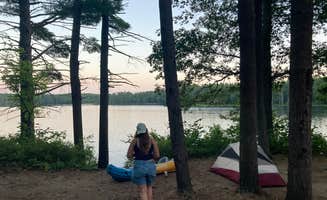
ScoutCoffee by the water before anyone else in our camper woke up. That alone made the trip worth it.
 Scout
ScoutWe have family around Nashua but wanted to bring the RV rather than stay at someone’s house for several days. This turned out to be a great arrangement. We could spend the day visiting everyone and then come back to our own space at night. It also meant nobody had to rearrange their house for us, which I’m sure they appreciated as much as we did.
 Scout
ScoutWe had plans on both sides of the state line, so the location worked really well for our trip. We spent one day around Massachusetts and another up toward New Hampshire without having to relocate the RV. Nice option if your trip isn’t centered around just one destination.
 Scout
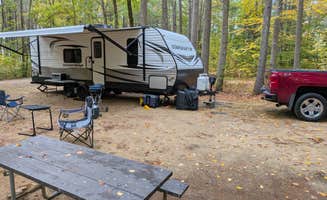
ScoutWe travel in a larger RV and always check campground access before deciding where to stay. We were able to get situated without turning arrival day into an ordeal, which anyone with a big rig knows is a win.

 Guide
GuideFree dispersed camping site in the Green Mountain National Forest, off a dirt road. The site curves around past the driveway so you can tuck up into the trees to be more private. The upper part there has a circular open area, surrounded by thin trees. There’s a fire ring set up midway on the site. It felt more isolated than other sites I’ve stayed at and there were quite a few animal sounds in the woods, including large animal bones left past the treeline. They seem to be left behind from people (based off of how the bones were cut). Dispersed camping so don’t expect facilities of any sort. Decent site and pretty large compared to some of the other spots. Heard Barred Owls in the distance which was awesome. Uploaded a video of the site at night and pics of the area on a map that my friend was able to pull up.
GuideWent with a friend on an impromptu last minute camping trip up in the NF and hoped we could find a spot on a Friday night. Quite a few spots were taken but there were still some free ones. We stayed at one near the creek just over a little bridge. Cute little site, nice fire pit, clean, perfect rock to put a big water jug on. The sound of running water was soothing. In the morning, adorable little red squirrels with big personalities made themselves known and there were wildflowers blooming all over with hummingbirds going about their business. This is dispersed camping so there’s no rest rooms, running water, etc. The particular site we stayed at did have another site on the other side of the creek and we could hear the family during the day and see them as they walked past, so it wasn’t as isolated as some of the other sites. It was a cute spot and I’ll def be back.
 Scout
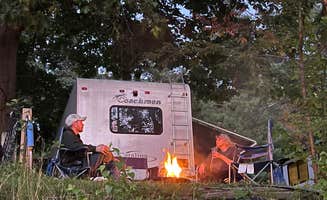
ScoutReally nice little campground. We loved how peaceful it was, especially in the mornings when the lake was quiet. We made coffee, sat outside by the camper, and watched the water before starting our day. The campground was clean and our hookups worked perfectly. Nothing complicated or overdone, just a comfortable place to camp and enjoy being outside. We would definitely return.
 Scout
ScoutWe spent several days here during the summer and had a really good experience. Some days we stayed busy swimming and exploring, while other days we barely left our campsite. That was probably what we enjoyed most.
Tully Lake campsites attract many outdoor enthusiasts from spring through fall. The terrain features rolling hills with elevations between 800-1,100 feet throughout the campgrounds surrounding this north-central Massachusetts destination. Summer temperatures typically range from 60-85°F, with cooler nights in spring and fall that often dip into the 40s, requiring campers to pack accordingly.
Paddling adventures: Tully Lake offers excellent flat-water kayaking and canoeing opportunities. At Ashuelot River Campground, "We spent another great weekend at the Ashuelot River Campground... We took a lazy tube ride from one side of the campground to the other" while another visitor notes seeing "a bald eagle this past weekend while paddling up past the campground."
Disc golf course: Located near the Tully Lake dam, this recreational option provides an alternative activity when you need a break from water sports. "A disc golf course is also near the dam and was seeing a fair amount of activity," reports one Tully Lake camper who explored the area.
Hiking trails: Several trail networks connect camping areas to natural features. Gilson Pond Area Campground offers more challenging terrain with "a healthy 3,600 foot peak, or gentle, shorter pond walks—everyone happy!" Mount Monadnock provides "365-degree views of the surrounding valley and distant mountains" for those willing to make the climb.
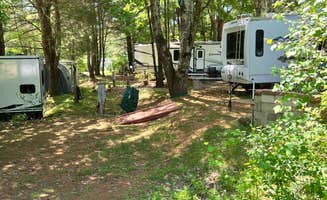
Spacious, private sites: Many campgrounds in the region offer well-separated sites. At Lake Dennison Recreation Area, "The sites on the North side are spacious & quiet. The other side of the campground (east) has a lot of noise pollution from the nearby road." Another camper reports, "We stayed at site 4 and we think that it was one of the best sites in the campground. We didn't have neighbors on either side of us."
Car-free camping experience: Tully Lake Recreation Area provides a unique no-vehicle camping environment. "No cars at all at the campsites, which was great for peace of mind as our toddler roamed around. It also made for a super quiet stay," explains one visitor. The campground supplies wooden wheelbarrows to transport gear to campsites.
Waterfront access: Sites with direct water access rank highly with campers. "Sites located along the river are wooded, field sites are very open great for seeing the stars at night," notes a visitor to Ashuelot River Campground. At Lake Dennison, "The sites by the lake are really pretty, but there's not much privacy."
Cell service limitations: Connectivity varies significantly across the region. At Otter River State Forest, "Verizon cell service was pretty good," but most other campgrounds report limited service. One visitor to Tully Lake warns, "Cell coverage is pretty close to absent or poor in most of the area, so download any maps you might want before you arrive."
Seasonal weather considerations: The region experiences significant weather variations. Spring camping often means dealing with mud and higher water levels. "We went memorial day weekend few years ago... Our site was fairly far from services, long run with small kids in the middle of the night," reports one Tully Lake camper.
Reservation requirements: Most campgrounds fill quickly during peak season. Sites at Gilson Pond "fill up weeks out (and can completely fill the day registration opens, which is date-dependent each year...Booking for Memorial Day meant I booked in April), so you have to be on your game."
Swimming options: Multiple lakes and ponds offer swimming opportunities. Erving State Forest Campground features a "beautiful lake and access to several hiking trails" with "swimming in a pond or a short drive to a bigger lake (camping pass covers both)."
Noise considerations: Some campgrounds maintain stricter quiet hours than others. "Quiet time is quiet time which is great for families," notes a camper at Pine Acres Family Camping Resort, while others report variable enforcement depending on the campground.
Playground amenities: Several locations provide dedicated play areas. At Gilson Pond, "There's a decent bathhouse with pay showers, a small playground, and a loop trail around Gilson Pond that leads right from the campground." Fort Dummer State Park has "a large playground for kids <12 and a wide open day use area for picnicking."
Site selection for larger vehicles: Not all campgrounds accommodate larger RVs comfortably. At Woodmore Family Campground, "Sites in back are ok with trees and different levels. Sites are a little closer than I usually find." This contrasts with Lake Dennison where "sites were big and offered immediate access to and view of the lake."
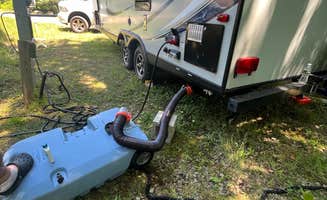
Hookup availability: Electric, water, and sewer connections vary by campground. At Ashuelot River, campers reported staying "in site 59, a pull-through with water and 30/50 amp service. The site was level and easy to get into and park." Many state parks offer more limited hookups, if any.
Bridge restrictions: Some RVers note important cautions about local bridges. At Ashuelot River Campground, visitors are "highly suggest reading the directions on the campgrounds website about the covered bridge you're not allowed to cross—we discovered this the hard way."
Frequently Asked Questions
What amenities are available at Tully Lake Campground?
Tully Lake Recreation Area (MA) — Tully Lake offers primitive, car-free camping with sites accessible by walking or paddling in. Amenities include clean restrooms, drinking water, and a canoe/kayak launch area near the campground. The sites are spacious and well-maintained, with many offering waterfront views. This state-managed campground requires reservations through Massachusetts Trustees of Reservations, and Trustees membership provides a small discount. There are no electrical hookups or shower facilities, making it ideal for tent campers seeking a more natural experience.
What recreational activities are available at Tully Lake Recreation Area?
Tully Lake Recreation Area offers abundant water-based activities including kayaking, canoeing, and fishing from the convenient boat launch near the campground. Waterfront sites provide easy water access for paddlers. Hiking is popular with trail networks in the surrounding area. For families seeking alternatives, nearby Otter River State Forest offers swimming in a pond, and Willard Brook State Forest Campground provides access to Damon Pond. Both locations are in the scenic north-central Massachusetts region, making them great options for day trips while staying at Tully Lake.
How do Tully Lake Campground reviews compare to other Massachusetts lake camping options?
Tully Lake Campground consistently receives high marks for its privacy, spacious sites, and peaceful atmosphere. Compared to other options, Lake Dennison Recreation Area Campground offers waterfront views at affordable rates ($17/night) but with less privacy. Wells State Park Campground is praised for its excellent hiking trails and central location near Sturbridge on Walker Pond with updated bathroom facilities. What sets Tully Lake apart is its car-free policy creating an exceptionally quiet experience, extremely private sites (especially site #1), and paddling opportunities directly from waterfront sites.
Keep Exploring