



Thomas B. Ranger
RangerLake Powhatan — National Forests In North Carolina
Great for the outdoors
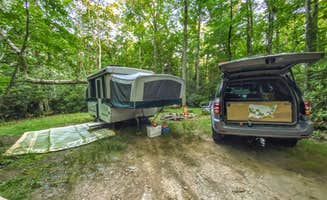
Just a quick stay for us. The roads are a little narrow for a big rig but that's to be expected. Really helpful staff and endless hiking opportunities.

Camping opportunities around Pisgah National Forest span from developed campgrounds to primitive sites in the scenic western North Carolina mountains. Curtis Creek Campground offers tent, RV, and cabin camping with sites situated along a crystal-clear creek, while Black Mountain Campground provides access to hiking trails and the Mount Mitchell area. Several campgrounds in the area feature both standard developed sites and walk-in tent areas, creating options for different camping styles. The region includes established RV parks with hookups at locations like Asheville East KOA and Mountain Stream RV Park, as well as more rustic Forest Service camping areas.
Road access varies significantly throughout the Pisgah region, with some campgrounds requiring travel on gravel roads with narrow bridges. "The road up to the mountain was gravel but our Jeep did just fine and we saw smaller cars at the campground so even though the road might seem sketchy I think most cars can make it," noted one camper about Curtis Creek. Most campgrounds operate seasonally, typically from April through October or November, though a few remain open year-round. Cell service is limited or non-existent at many camping areas, particularly those deeper in the forest. Elevation changes affect both temperatures and road conditions, with higher elevation campgrounds experiencing cooler nights even during summer months. Water sources are plentiful but require proper filtration for drinking at primitive sites.
Riverside camping receives consistently positive reviews, with campers specifically mentioning the soothing sounds of Curtis Creek as a highlight of their experience. Many camping areas provide direct water access for cooling off during hot summer days, though visitors note the mountain streams remain cold even in peak season. Wildlife sightings, particularly bears, are common enough that proper food storage is strictly enforced at all camping areas. The dense forest canopy provides ample shade at most campgrounds, creating comfortable camping conditions. Several reviewers mentioned the quality of nearby hiking trails accessible directly from campgrounds. For those seeking solitude, the dispersed camping areas north of developed campgrounds often provide more privacy than the closely situated sites within established campgrounds, though they come with fewer amenities.
Compare 2 top campgrounds at a time to find your favorite!
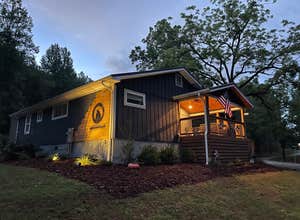
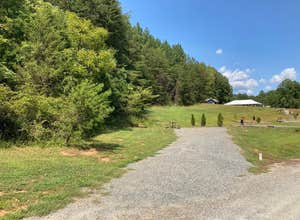
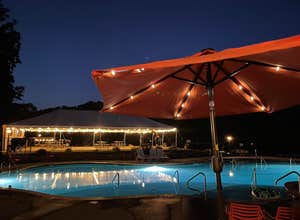
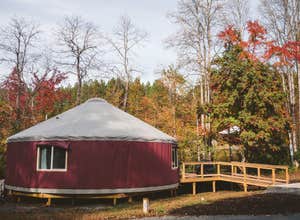
Round 1 of 5
$50 / night
"Beautiful sites on a lake with mountains in view. Very close to lots of sites like downtown Asheville and short drive to Pisgah National Forest and Cherokee reservation."
"As typical of a KOA, they shove you in there so you are very close to your neighbors. The stars of the park are the riverfront sites."
$28 - $56 / night
"**
Campground:
Black Mountain Campground in the Pisgah National Forest, is nestled in Burnsville, NC but you must work at it to get there. https://cfaia.org/black-mountain-briar-bottom-campgrounds-in-north-carolina"
"This is a wonderful spot to be to explore the surrounding areas:
- The famous Mount Mitchell trail, starts a short walking distance from the campground."
$10 - $20 / night
"I would not recommend this for someone unfamiliar with driving a rig but once we got there it was amazing."
"Was able to get two sites right next to each other outside the main campsite area which was great."
$27 / night
"The campground is open from May 1 to Oct 31...but if you walk-in to the sites, as in via the trails, you can rent a site amost all year. Tent sites are small, but nice."
"There are plenty of tent camping sites along the Mountain to Sea trail and throughout the park. I camped by Commissary Ridge next to a small Creek and an excellent view of sunrise."
$24 - $999 / night
"I loved being able to camp in our little Casita in Pisgah National Forest right off the Blue Ridge Parkway. "
"Spacious Skies Bear Den in North Carolina offers an ideal blend of relaxation and adventure for families."
$25 / night
"You’ll feel like you have the forest to yourself, with tons of pretty plants all around you. It’s down a short path (a bit tricky to navigate) and tucked away between the creek and small stream."
"We abandoned plans to stay at place in Old Fort (see listing for Catawba Falls) and ended up here as a last chance before having to hit a hotel to turn back around to CLT. "
$75 - $200 / night
"It was level had tons of shade and even though you are close to your neighbors the sites are situated so that it doesn’t feel like you’re on top of each other."
"The only thing we would say is to be very careful if you’re up on one of the premiere Mountain View sites when you’re pulling your trailer down exiting the CG - it can be seriously steep and a tight turn"
$48 - $65 / night
"There is alot to see somewhat close by too. We did Chimney Rock & Linville Falls, both absolutely beautiful!"
"Located near many great hikes and river access. My Mitchell is about 60 minutes away on a beautiful drive. If you like peaceful and quiet campgrounds this is the place for you!"
$28 - $70 / night
"We stayed for two nights, a little away from the main camp area but was kinda glad for it. Had a great spot tucked into the woods near the water. Great path to skip rocks and just enjoy."
"It is tucked in next to the South Toe River with an excellent swimming hole, rapids for tubing, great trout fishing, and a good launching off point for hikes into the Black Mountains and Mt Mitchell."
$45 - $69 / night
"The campsites are a bit close to each other, but they are well maintained."
"I moved to site 19, which is not on the creek but on the edge of the field. It was very level as well, and all hookups worked fine."
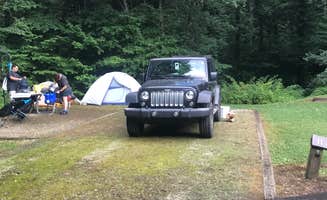

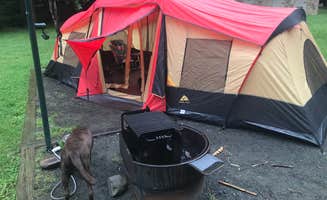
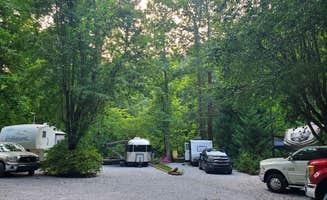

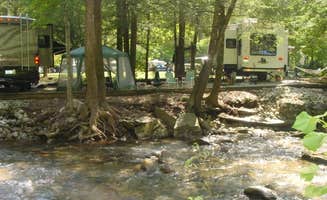







 Ranger
Just a quick stay for us. The roads are a little narrow for a big rig but that's to be expected. Really helpful staff and endless hiking opportunities.
 Ranger
It says no overnight camping but there were 3 cars camping so I decided to camp. Drove straight across the entrance where a sign said parking but no camping. Was actually a really good camp spot plenty of room.
 Scout
ScoutAwesome place to camp. Quiet and cozy. Pet and people friendly. Have been several times. Clean and refreshing.

 Guide
GuideSo fortunate to have stumbled upon this gem. All sites are along the river. RV sites are equipped with electric and water. There is an outhouse and dish wash station. We tent camped and our site was a grassy spot along the river. We had had a picnic table and bbq. Nearby there is a large social fire pit with chairs where we roasted s’mores with our neighbors. There are two rope swings and we brought innertubes. The stairs to the water was perfect for swimming. We stayed for 3 days and it was wonderful!

 Traveler
All you might need for a night camping in the Blue Ridge Mountains! The drive there is part of the trip!Drinking water spouts located throughout campsites, with picnic tables and fire rings at each site. Basic camp bathrooms with running water to freshen up. Hike to Frying Pan trail if you have time!! About 4/5 miles total but worth the hike to the lookout tower.
 Guide
GuideSeveral peaceful spots. Recommend high clearance and awd/4x4 in some areas. A tree was down by the stream when I had arrived after a bad storm so I could not cross it. Decided to follow the trail up the hill. The road was pretty gnarly, It was late and I could not turn around. But once I made it to the top I found an awesome spot to set up.
 Guide
GuideGreat spot! I didn’t stay at the pull off but further down the road there’s actual campgrounds with tent platforms and fire rings for dispersed camping. I found the last empty one. It was quiet but there was a bit of cycling traffic up and down the road. They had signs posted about bear activity and I even saw a bear come out 10 feet from my car! Didn’t bother me after walking back down the road. Nice quiet site :)
TravelerWe spent a Friday and Saturday night at site 23, which is a great spot. This is a spot for a smaller camper and has water and power only. The plug for power is a little further away than usual, so if you are plugging in to power you may need an extended cord. It’s a short walk to the bath house, which was well maintained. The dog walking area was spacious and also very clean. They also have a washer and dryer on site for laundry.
ScoutNice quiet campground about 1.9 miles out of boone NC. Lots to do here family friendly and pets freindly. Worth the stop.
Pisgah National Forest camping elevates into higher elevations that create cooler temperatures than surrounding lowlands, with sites ranging from 2,000 to over 5,000 feet. The forest spans more than 500,000 acres across western North Carolina with camping areas distributed throughout the Grandfather, Appalachian, and Pisgah Ranger Districts. Fall temperatures often drop below 45°F at night even when daytime reaches 70°F.
Hiking to waterfalls: 45 minutes to Crabtree Falls from the Blue Ridge Parkway campground at milepost 339.5. "There's a great 2.5 mile hike to Crabtree falls within the campground," notes Brittany M. about Crabtree Falls Campground. The trail makes a loop with varying terrain.
Fish for trout: Many campsites offer direct creek access for fishing. "Beautiful level sites backed right up to Buck Creek where we enjoyed catching trout straight from our campsite," explains Megan M. about her experience at Mountain Stream RV Park. Remember the streams are catch-and-release in many areas.
Stargazing: Higher elevation sites provide exceptional night sky viewing due to limited light pollution. "Our first night on this trip, the sky was clear and we could see the milky way!" reports Erin D. about the views from Mount Mitchell State Park Campground.
Swimming in mountain streams: Several campgrounds feature natural swimming areas. The Carolina Hemlocks Recreation Area offers "nice tubing put in and a great swimming spot directly in the campground," according to Michael H., though water stays cold throughout the summer.
Riverfront sites: Campsites alongside creeks are consistently rated highest. "The sound of the stream was so peaceful and relaxing. My husband did yoga every morning while I hung in my hammock and watched," shares Barbara S. about her stay at Mountain Stream RV Park.
Cooler summer temperatures: Higher elevation camping provides relief from summer heat. "We left home and the temperate was well into the high 90's, however the temperate on top of the mountain never came above 62!" explains Erin D. about camping at Mount Mitchell.
Clean facilities: Campgrounds with well-maintained bathhouses receive top ratings. "The bathhouse is clean and adequate, but nothing fancy," notes Lee D. about Crabtree Falls Campground, while Anjanel P. reports that at Montreat Family Campground, "the bathrooms were clean and the showers were hot."
Privacy between sites: Campers value separation between sites. "Sites are enormous with lots of privacy, good spacing between. For tents, there are some very nice sites along the creek. Extremely peaceful," writes Desiree B. about her experience at Montreat Family Campground.
Road conditions vary significantly: Some forest roads require high-clearance vehicles. "The road is a little rough to get there, but even a car should have no problems - just might need to dodge a few potholes," explains Nancy C. about Curtis Creek Campground. Plan appropriate vehicle access.
Weather changes rapidly: Mountain microclimates create unpredictable conditions. "Wind gusts easily get into the double digits, and if you aren't prepared for that, it can be alarming, especially while tent camping," warns Erin D. about Mount Mitchell State Park Campground.
Limited cell service: Most forest campgrounds have minimal connectivity. "There is no cell service on T-Mobile or Verizon inside the camp," explains Scott K. about Black Mountain Campground, while others note spotty service throughout the forest.
Tent pad sizes vary: Some campgrounds have restrictions on where tents can be placed. "Tent pads are small... and you must keep tents on the pad so if you have a large family sized tent the pad may not accommodate," cautions Melissa W. about Crabtree Falls Campground.
Choose campgrounds with playgrounds: Some Pisgah area campgrounds offer activities for children. "Very large sites and the staff are very helpful. A lot of activities for everyone to enjoy," reports Teresa S. about Asheville East KOA, which offers amenities like "bike, kayak, canoe rentals for use on property."
Select sites away from roads: For safety with small children, interior sites are better. "We stayed in site #8 and were overjoyed with our choice. The campsite was nestled within the forest and was right next to the cool water of Flat Creek," explains Chad K. about his family's stay at Montreat Family Campground.
Pack for temperature changes: Mountain elevations mean significant day/night temperature swings. "If you are looking for camping around Mount Mitchell, check out Black Mountain Family Campground at the base of the mountain," suggests Katy S., noting that temperatures are more moderate at lower elevations.
Visit during weekdays: Family campgrounds fill quickly on weekends. "It's tough to get a spot as first come first serve on the weekends, so be aware," notes Alexis about Carolina Hemlocks Recreation Area.
Measure sites before booking: Many forest campgrounds have limited space for larger rigs. "We have a 25' C and have stayed here 3-4 times, mostly in the A loop and we love it every time," reports Amy M. about her experience at Asheville East KOA, noting that electric hookups are important for extended stays.
Check road access carefully: Many campgrounds have challenging approaches. "The roads are uphill and a little narrow, but nothing too difficult if you go slow. Our site was level so easy to pull up and set up smoothly," explains Julia M. about Mama Gertie's Hideaway Campground.
Book upper elevation sites early: The most desirable RV sites with views book months ahead. "There are mountaintop sides with big patios that hang over the mountain top and have incredible views," notes Samantha B. about Mama Gertie's, though these premium sites often lack shade.
Bring leveling blocks: Mountain campsites are rarely perfectly level. "The sites are a little tight on a hillside, but the pad is kept up well with large gravel and is compact and level," reports Joan about her experience at Mama Gertie's.
Frequently Asked Questions
Where are the best campgrounds in Pisgah National Forest?
Davidson River Campground is consistently rated as one of the best in Pisgah, offering electric hookups, warm showers, and picnic tables. Located at the forest entrance near Brevard, it provides easy access to numerous waterfalls and hiking trails. Another excellent option is North Mills River, which features beautiful riverside sites with accommodating hosts who deliver ice and firewood upon request. North Mills River's location makes it ideal for accessing hiking, swimming, and tubing opportunities, though it can get crowded due to its popularity and central location within the forest. Both campgrounds offer a mix of reservable and first-come, first-served sites, so advance planning is recommended, especially during peak seasons.
Is dispersed tent camping allowed in Pisgah National Forest?
Yes, dispersed tent camping is allowed in Pisgah National Forest outside of developed recreation areas. Round Mountain offers very primitive camping options for those seeking a more rugged experience while exploring the forest. When dispersed camping, you must set up at least 1,000 feet away from developed areas and 100 feet from any water source. There are no facilities in dispersed areas, so pack out all trash and follow Leave No Trace principles. Always check current regulations at ranger stations before setting up camp, as some areas may have seasonal restrictions or fire bans. Dispersed camping is limited to 14 consecutive days in one location within a 30-day period.
What water activities are available when camping in Pisgah National Forest?
Pisgah National Forest offers numerous water activities for campers. The North Mills River area is excellent for swimming, fishing, and tubing, with the beautiful river running adjacent to camping areas. Wilson's Riverfront RV Park provides access to the French Broad River where you can enjoy tubing (with discounted rentals for campers). Throughout the forest, you'll find countless waterfalls for swimming in natural pools, trout streams for fishing (NC fishing license required), and calm sections of river perfect for kayaking and canoeing. Water activities are most accessible from spring through early fall, with summer offering the warmest water temperatures. Always check water conditions before entering, as heavy rainfall can create dangerous currents.
Are there any private campgrounds with additional amenities near Pisgah National Forest?
Cherryfield Creek Luxury Campsite sits right on the border of Pisgah National Forest, offering clean bathrooms, fire pits at each site, and accommodation for large groups, all while being just 10 minutes from local restaurants. For RV campers, Land of Waterfalls RV Park provides a well-maintained, peaceful setting just 15 minutes from Brevard and Pisgah National Forest with friendly hosts. Other options include Rutledge Lake RV Resort with fishing opportunities and Asheville East KOA, which features lakeside sites with mountain views, a convenient location for exploring both downtown Asheville and the forest. These private campgrounds offer amenities like full hookups, Wi-Fi, laundry facilities, and sometimes swimming pools.
Keep Exploring