











Brandy S. Traveler
TravelerPrune Creek
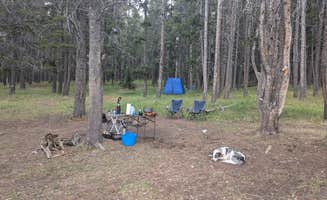
Peaceful
It’s September 19th. It’s rainy and chilly. I think there may be 6/7 people here total.
You'll find several good camping areas throughout Bighorn National Forest, with options scattered across its pine-covered mountains. Circle Park Campground has lots of trees that block the wind and create space between sites, which keeps things quiet even when it's busy. South Fork Campground works well for both tent and RV camping with wider spots that don't feel cramped. If you want to hike right from your campsite, Tie Flume Campground puts you close to trailheads and has some good views of the surrounding area. The forest often has fire rules that change based on conditions, so check what permits you need before heading out. During summer weekends, you should probably book ahead since the best spots fill up fast. Since most camping areas sit at higher elevations, nights get cold even in summer, so bring warm sleeping gear. Remember to pack out all your trash and follow basic forest rules. Bighorn has good camping whether you prefer a tent or bring an RV.
Compare 2 top campgrounds at a time to find your favorite!


Round 1 of 5
$19 / night
"Bighorn National Forest is one of my all time favorites to visit in the country. Dare I say that I enjoy it more than Yellowstone?"
"Amazing creek behind the majority of the sites. Nice tent only walk in sites. Sites 1 & 2 share a parking area. Large turn around area for staging/unloading car/ATV haulers."
$10 - $200 / night
"The Medicine Lodge Archaeological Site is maintained by the Wyoming Game and Fish Department. I normally avoid campgrounds and prefer dispersed camping or backpacking, but I gladly camp here."
"There was a deep hole next to the canyon face. In the afternoon the 60' canyon wall reflected the water. At night the fire flickered and projected our shadows across the whole face."
"Driving through Bighorn National Forest we found TONS of free dispersed camping off route 20. Sites are primitive… No running water, no electric, no restrooms."
"We dispersed camped north of MeadowLark Lake along FS Road 427 I believe! It was beautiful, and so peaceful. We did get stormed on but our tent held out really well!"
$17 - $28 / night
"Beautiful campsites, brook trout fishing in the lake and the creek below, as well as a 4x4 trail that makes a large loop between shell reservoir and lake Adelaide. We’ll definitely be back!"
"Stayed at a site right across from the lake on a hill in the pines."
$19 / night
"At first we couldn't find this place because Google Maps will take you to the entrance of Sitting Bull Campground down the road."
"Campsite #9 is next to the outhouse and you can definitely smell it when the wind blows or if it is getting heavy use. That being said, you are camping in the high country."
$21 / night
"Tie Flume Campground is located in the Bighorn National Forest, with scenery and wildlife all around you. You can't beat that! There are also so many activities to do here."
"Make sure you get a spot near the bubbling mountain stream...sites 23 and 24 were right on the waters edge. The camp host and family were awesome. Great hosts."
"there are also several lakes, paintrock lakes and medicine lodge lakes. there was a microburst a few weeks ago so there a lot of trees blown over, really cool to see."
$20 - $40 / night
"The views of the lake were amazing. The CCC did a remarkable job here. I want to come back in the winter."
"Site has a steep downhill entrance so larger trailers wouldn’t be to level. I have a 24 foot trailer and it fit just right tucked in the site."
$19 / night
"We were on our way to Yellowstone during a 10 day road trip through South Dakota, Wyoming, and Colorado and they insisted we stop and camp here at least one night and I’m so glad we did!"
"Moose and deer frequently are seen walking through or near the campground. Close to lots of hiking and biking trails. The only downfall is it’s 3 miles down a bumpy dirt road."
"There are several corrals and high lines as well as a horse water trough fed by a nearby creek. There is also ample parking for horse trailers."
TravelerIt’s September 19th. It’s rainy and chilly. I think there may be 6/7 people here total.
 Scout
ScoutPulled in at 5pm many sites open has electricity and Great Lake views
 Scout
ScoutOn our camping trip, this was by far our favorite stop. The bathrooms were very clean, with doors on the bathroom and shower entries. The individual shower stalls include a bench to set your belongings on so they won’t get wet. The laundry was also very clean. We were in our camper, and only viewed the cabins from the outside. They looked very quaint from the outside. There is also a playground adjacent to the grounds.

 Ranger
Huge spots along French creek. Campground is very clean and well maintained. A few minutes from Downtown Buffalo.
 Guide
GuideHere off season so things were slim at the office. Gravel sites are level and hook ups are in proper location to connect. Lots of trees so plenty of shade. Laundry available , restrooms are clean , showers are aging somewhat. Shower head was at nose level, but it works and there’s hot water. Mostly quiet location. Some road noise but nothing major. Good Wi-Fi connection. Gets the job done.
TravelerIt was getting late in the day and we were tired. Pulled in the parking lot, but they did have hookups. Lots of lights, but okay with shades down. Not too noisy.
 Traveler
Small campground with sites that don’t have much privacy but it worked for us for 2 nights. Bathrooms were clean. Some BIG trailers there. Stayed late August.
GuideNice area with flat level spots. Cows on other side of dense were amusing! We tow a 20 ft trailer and had no Problems with the road of finding a level spot far away from everyone else.
TravelerTurn on to 402 off of 16. Plenty of space with multiple spots with fantastic 360° views. Suitable for all size rigs. If you drive to the end there are 2 gates. The one on the right is private property. The one on the left is 403. We moved our 32ft RV to a spot past the gate after staying a few nights off 402 just for a change. Both are great locations!
Bighorn National Forest provides camping experiences at elevations between 4,000 and 9,000 feet, creating significant temperature variations even during summer months. Most campgrounds in the national forest sit above 7,000 feet, where summer temperatures typically range from 70°F during the day to the low 40s at night. The forest encompasses over 1.1 million acres of wilderness with camping options ranging from developed sites to remote dispersed areas.
Fishing in mountain waters: Medicine Lodge Creek runs behind Shell Creek Campground, offering fishing opportunities in clear mountain water. One visitor noted, "Amazing creek behind the majority of the sites. Nice tent only walk in sites" while another mentioned they "loved falling asleep next to it."
Wildlife viewing: Lakeview Campground provides excellent wildlife watching opportunities, particularly for moose. A camper reported, "Had a big bull moose sitting in our site upon arrival and he stayed nearby all day and night so caution with pets is recommended." Many visitors share similar experiences across the forest.
Historical exploration: Take time to explore Native American cultural sites near Shell Creek Campground. A visitor mentioned, "Around this mountain range is the Crow Medicine Wheel and one of the oldest trails in N America! Native tribes from the area still come to these sacred sites."
Mountain biking: The network of gravel roads and trails provides numerous options for bikers. At West Tensleep Lake, "There are a ton of gravel and off-road opportunities for bikers. Pay attention to the trails rules because some trails do not allow bikers."
Creek-side camping: Many campers highlight the value of sites positioned near running water. At Island Park Campground, "Best sites for views are along creek where you can watch moose beaver and trout in creek and meadow."
High elevation climate: During peak summer heat, the forest's elevation provides relief. A West Tensleep Lake camper noted, "It's mid August and it's starting to cool down. About 75 during the day and low 50s at night."
Quiet, spaced-out sites: Campers frequently mention site spacing as a positive feature. At Tie Flume Campground, "Sites are very spaced out, so it is very private and quiet. Lots of wildlife and pine forest."
Stargazing opportunities: The remote location offers minimal light pollution. A camper at Tie Flume mentioned enjoying "very dark" nights, though noted that "wildfire smoke sadly blocked the views of the night sky."
Road conditions: Many campgrounds require travel on unpaved roads. For West Tensleep Lake Campground, "It's a dirt/rock road and you'll be on it for 7 miles." Another camper added, "The long 7 mile gravel road on cruiser motorcycles is a pain."
No cell service: Most forest campgrounds lack connectivity. A Shell Creek visitor reported, "No cell service (Verizon)," while another noted at West Tensleep that there were "No facilities, stores or cell service. You must be prepared and self sufficient."
Potential wildlife encounters: Bear safety protocols are essential. For dispersed camping, one visitor advises, "There are bears out in this forest, recommend putting all food in your hard sided truck, Car, or camper! A human fed bear is a dead bear!"
Limited services: Many campgrounds have minimal amenities. A camper at Island Park noted, "No electric to plug into, no dump station, a hydrant to share, a pit toilet that was very clean. All the stuff missing that keeps the wienies away."
Visit interpretive sites: Medicine Lodge Archaeological Site offers educational opportunities. "There is a 700 foot long sandstone bluff that contains several hundred American Indian petroglyphs and pictographs that date back 2000 years."
Water play options: Sites near streams provide entertainment for children. A Shell Reservoir visitor mentioned, "Brook trout fishing in the lake and the creek below," while another camper at Medicine Lodge Archaeological Site shared, "My toddler and 9 year old played in the shallows for hours."
Pack for temperature swings: High elevations create significant day-to-night temperature changes. A West Tensleep camper mentioned, "best part of the week was watching happy tourist pitch a tent and leave after freezing to death at night."
Plan daily activities: The surrounding forest offers numerous family-friendly activities. A visitor to Bighorn National Forest advised, "We dispersed camped north of MeadowLark Lake along FS Road 427... We enjoyed our coffee next to the river!"
Site selection: Not all sites accommodate larger rigs. At Lakeview Campground, "the turning loop will not accommodate large pull behinds or RV's," while at West Tensleep, "People with campers that are on the large side definitely struggled to park and level them."
Water planning: RV campers need to arrange water access strategically. At Tie Flume Campground, "The water spigots don't have threads either and not meant to fill rv tanks" and another camper advised, "Be aware that you will have to arrive with water in your tank if you are in an RV."
Dump station locations: Plan for waste disposal before arrival. One camper noted, "No electric or RV dump here you must go to Burgess station to dump (No posted price/donations appreciated)." Another mentioned, "Dump Station about 13 miles away."
Road navigation: Consider your vehicle's capabilities when selecting a campground. A visitor to Shell Reservoir warned, "High clearance 4x4 needed," while an Island Park camper stated, "Easy access about 2 miles in on graded dirt road."
Frequently Asked Questions
What are the best campgrounds in Bighorn National Forest?
Bighorn National Forest offers several exceptional campgrounds for nature lovers. Tie Flume Campground stands out for its breathtaking scenery and abundant wildlife viewing opportunities, making it a favorite among visitors. Shell Creek is another top choice, with beautiful surroundings that rival even Yellowstone according to frequent visitors. Other noteworthy options include Island Park Campground for its stunning setting, West Tensleep Lake for lakeside camping, and Medicine Lodge Archaeological Site for its well-spaced sites along Medicine Lodge Creek. Each offers a unique experience with varying amenities, from primitive sites to those with more facilities, all surrounded by the forest's spectacular mountain landscapes.
When is the best time of year to camp in the Bighorn Mountains?
The prime camping season in the Bighorn Mountains runs from late June through early September when mountain roads are fully accessible and most campgrounds are open. July and August offer the warmest temperatures and lush wildflower displays, though these months can be busier. Island Park Campground is particularly beautiful during this peak season. Early fall (September) brings stunning autumn colors and fewer crowds, making it ideal for those seeking solitude. Medicine Lodge Archaeological Site Campground remains pleasant into early fall. Weather changes quickly in the mountains, with possible snow as early as September, so always check conditions before traveling. Most campgrounds close by mid-September, though some lower elevation sites remain accessible longer.
Is dispersed camping allowed in Bighorn National Forest?
Yes, dispersed camping is allowed and popular throughout Bighorn National Forest. Circle Road Dispersed Camping offers excellent sites with beautiful mountain views and untouched forest to explore. Route 20 through the forest has numerous free dispersed camping options, as mentioned by visitors to Bighorn National Forest. Standard dispersed camping rules apply: camp at least 100 feet from water sources, use existing fire rings when possible, and practice Leave No Trace principles. No facilities are available at dispersed sites (no running water, electricity, or restrooms), so come prepared for primitive camping. The 14-day stay limit is enforced throughout the forest. Always check for seasonal fire restrictions before establishing camp.
Keep Exploring