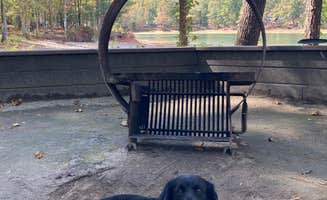
Lincolnton, Georgia camping offers diverse lakefront options on J. Strom Thurmond Lake, a 70,000-acre reservoir with over 1,000 miles of shoreline. The area maintains mild temperatures most of the year with summer highs averaging in the upper 80s and winter lows rarely dropping below freezing. Most campgrounds in the region feature waterfront sites with direct lake access via gentle slopes or retaining walls.
What to do
**Fishing opportunities: ** J. Strom Thurmond Lake provides excellent fishing for largemouth bass, bream, crappie, catfish and striped bass. At Mistletoe State Park Campground, "free fishing poles for kids" are available according to camper Amy C., making it accessible for families to try fishing without bringing their own equipment.
Water activities: Beyond swimming, the lake offers extensive boating options. Petersburg Campground sits near Bartram Trail, which "passes through the property" and provides "terrific mountain biking and hiking" according to Todd C. The trail offers both waterfront views and forested sections.
Historical exploration: Learn about Revolutionary War history at some of the parks. "There is plenty of history to see, experience and learn about," notes Bill C. from his stay at Elijah Clark State Park, where interpretive displays showcase regional historical significance alongside natural features.
What campers like
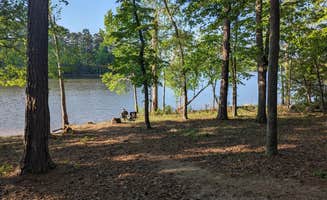
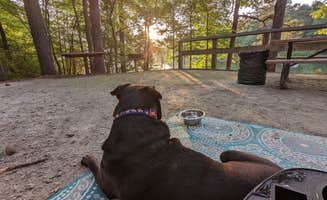
Lake access: Many campsites offer direct water access for swimming and boating. At Winfield Campground, "sites are enormous, private, and provide panoramic lake views" with the ability to "swim right from our site," according to Greg S., who appreciated that there was "no sign of civilization across from the campground."
Spacious sites: The Army Corps of Engineers campgrounds typically feature large, well-spaced campsites. Tanya S. noted that her site at Winfield was a "very large pull thru" that was "super private compared to the many other campgrounds I've been to." This privacy allows for a more secluded camping experience despite being at an established campground.
Clean facilities: Campground maintenance receives consistent praise from visitors. At Big Hart Campground, Jennifer G. found "staff was superb with a last minute booking" and noted they "saw us coming in and checked that we were good" even after closing hours, demonstrating attentive management.
What you should know
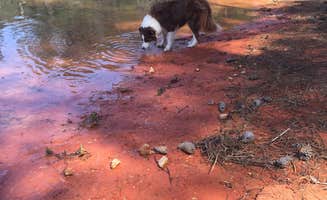
Seasonal water levels: Lake levels can fluctuate significantly throughout the year. Andy S. noted at Mistletoe State Park that "the water level was also extremely low when I was there" in September, which exposed rocks that "are probably covered by water earlier in the year."
Wildlife considerations: Native wildlife is active in the camping areas. Prepare accordingly for insects during warm months, as Scott M. warns at Pointes West Army Resort that "ants can be a huge problem during the summer" in the primitive camping area.
Reservation requirements: Most campgrounds fill quickly during peak seasons. Jason L. visited Pointes West in "early spring and mid-autumn" and noted that during two of those visits they "had the place to ourselves," suggesting off-season camping might provide more solitude.
Tips for camping with families
Beach access: Several campgrounds offer designated swimming areas with beach access. Rachel G. noted that Mistletoe State Park has "kayak rentals" and "swimming" areas, making water activities accessible without bringing your own equipment.
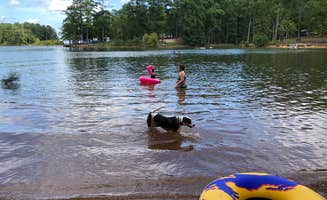
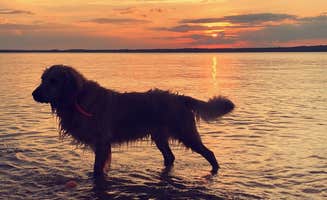
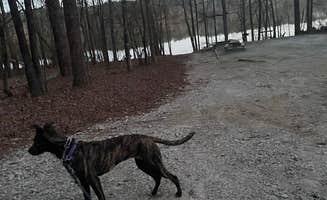
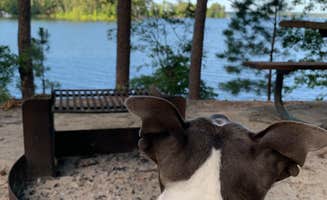
Pet friendly options: Most campgrounds welcome pets but have specific rules. While Modoc Campground is pet-friendly, Laura Z. noted that "dogs aren't allowed on beach area but we found our own great spot within the park that allowed them to swim and cool off with us," showing there are options for pet swimming away from designated human beaches.
Activity planning: Structured activities are available at some parks. Kirsten W. mentioned at Elijah Clark that "you can go swimming in the summer" but noted that weather timing matters as they "went when it was still cold so no swimming for us," emphasizing the importance of seasonal planning.
Tips from RVers
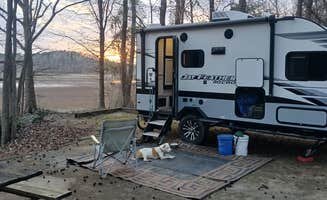
Site selection: Choose sites based on your specific needs for hookups and size. At Raysville Campground, Kenneth P. found "the spots were nice, large, most waterfront, with power and water," providing essential RV amenities in a scenic setting.
Hookup variations: Different campgrounds offer varying levels of services. Martha M. noted that at Big Hart Campground, there's "no sewer, but 50amp electric and water" and mentioned that "some sites were difficult to navigate into with our 40' travel trailer" indicating larger rigs should check site specifications before booking.
Dump station access: Plan for sanitation needs accordingly. Jerry F. mentioned that at Raysville, "bath houses are ok and staff is laid back," but RVers should note dump station locations and capacity for longer stays.












 Scout
Scout


