The Monongahela National Forest surrounds Harman, West Virginia, where elevations range from 1,000 to nearly 5,000 feet above sea level. The region experiences significant temperature variations due to these elevation changes, with summer highs typically in the 70s-80s°F and nighttime temperatures often dropping 20-30 degrees cooler. The area's geography creates unique microclimates where campers might encounter fog, rain, or sunshine within short distances of each other.
What to do
Fishing in trout-stocked waters: At Spruce Knob Lake Campground, the lake is regularly maintained for anglers. "Beautiful especially in the fall. Lake is stocked with trout spring and fall. It is an easy drive to many of the local trout streams such as the Gandy, the Glady and Shavers Fork," notes Tim M.
Stargazing at high elevations: The mountains near Harman offer exceptional night sky viewing opportunities due to minimal light pollution. "You're in the middle of nowhere, so you do have a truly dark sky," explains Jean C. about Spruce Knob Lake. At Big Bend Campground, the bowl-shaped canyon creates a natural observatory where "the campground is framed by mountains and cliffs. It seems that you are inside of a tea cup (but in a good way) Excellent for star gazing," according to Chris J.
River floating and tubing: The South Branch of the Potomac River at Big Bend creates a natural lazy river experience. "A natural lazy river surrounds the campground and is a great location for fishing and river activities. The entire loop took a little over an hour to complete, then a 2 minute walk, and start again," says Jon C.
What campers like
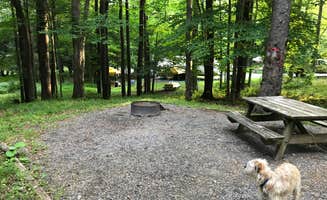
Privacy between campsites: Many campers appreciate the layout at Seneca Shadows, where "the sites are far apart. Bathrooms were OK. There are deer everywhere!" as Jim C. reports. Another camper, Erica H., noted, "Clean and serene campground that wasn't too busy on a drizzly June weekend... campground is huge and sites are roomy and well spaced."
Clean facilities despite remoteness: Toilet facilities at dispersed camping areas often exceed expectations. A camper at Lower Glady Dispersed Campground observed that "the toilet was one of the cleanest I have seen," while Kevin C. adds that "most sites have good shade while still open to the sky."
Wildlife viewing opportunities: Morning and evening wildlife sightings are common throughout the region. At Seneca Shadows, "chipmunks everywhere you look and incredible sunrise birdsong. Camp hosts are super friendly and welcoming," according to Erica H. The natural setting attracts diverse wildlife even at established campgrounds.
What you should know
Limited cell service: The entire region has spotty connectivity. "Do not expect cell service, we didn't have any for about 45 min driving there," warns Brittany M. about Spruce Knob Lake. At Big Bend, Jon C. notes "no cell service. Nearest cell reception is a 20 minute drive away."
Seasonal water levels affect activities: River-based recreation is best in late spring through mid-summer. "If you are interested in tubing on the river, May, June & July are the best months. After that the river tends to get low," advises Chris J. about Big Bend Campground.
Dispersed sites fill quickly on weekends: Arrive early if planning to use free camping areas. At Lower Glady, Leonard M. found "every single spot was taken with many people who look like they have been set up there all summer" when arriving at 4:30pm on a Friday.
Weather changes rapidly: The mountain terrain creates unpredictable conditions. "Definitely be prepared for high winds and rain," advises Lucille W. about Dolly Sods Backcountry, noting that "we hiked in in warm weather and once we reached the top of a long entrance road (where one trailhead was) we found snow."
Tips for camping with families
Look for campgrounds with kid-friendly amenities: Some locations offer recreational facilities specifically for younger campers. At Canaan Valley Resort State Park Campground, Chris S. found "older playground, but good enough for kiddos. Mini golf course, rock wall, and civil war reenactments when we came."
Consider proximity to water features: Kids enjoy accessible water activities at several dog-friendly campgrounds near Harman. At Five River Campground, a reviewer noted that their location was "a beautiful spot on the river—only tent camping in a huge field separated us from the water."
Pack for temperature swings: The mountain elevations mean significant day-to-night temperature changes. "Keep in mind, anytime after mid September can be quite cold overnight. But the foliage is totally worth it!" advises Kellie A. about Blackwater Falls State Park.
Stay alert for wildlife encounters: Wildlife sightings can be educational but require supervision. Jon C. observed at Big Bend that "every morning we were there, fog had enveloped the canyon" creating magical morning experiences for kids while watching for animals.
Tips from RVers
Check road conditions before arrival: Access to some campgrounds requires careful navigation. For Spruce Knob Lake, Jennifer B. cautions that "the drive is on a combination of narrow, winding, mostly unpaved roads. Go slow because there are plenty of blind curves."
Be aware of hookup placement issues: Some sites have unusual utility configurations. At Blackwater Falls, Kevin E. notes that "many of the pull thru sites are situated in the wrong direction with the electric hookup on the wrong side. The dump station is in a weird spot."
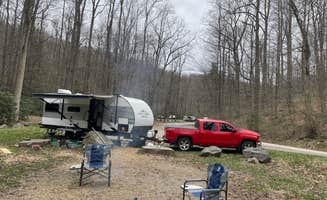
Year-round camping options exist: For winter camping with RVs, Five River Campground in Parsons provides full services. According to Erica M., "It has 120 RV sites many with full hook-ups. It can accommodate tents to large rigs. It has great cell signal for most carriers and even offers wifi and cable."
Scout your site carefully: At Blackwater Falls, Cynthia K. advises, "You back in & your door is facing the correct way, but your picnic table & fireplace are on the wrong side! A lot of sites on this loops are like that... Choose your site wisely!"











 Traveler


