Every camper hits the same wall eventually. The phone is at 4%, the fridge is warming up, and the sites with hookups were booked out months ago.
A solar generator solves that quietly, with no fuel cans, no exhaust, and no gas generator running through quiet hours. But bigger isn’t always better. Go too small and you’re rationing power by day two. Go too big and you’re hauling a heavy battery to charge a phone.
The better question is what your trip actually needs. Start with the five decisions below, then match BLUETTI’s lineup to the way you travel. Shop BLUETTI Black Friday and use code THEDYRT5 at checkout for an extra 5% off.
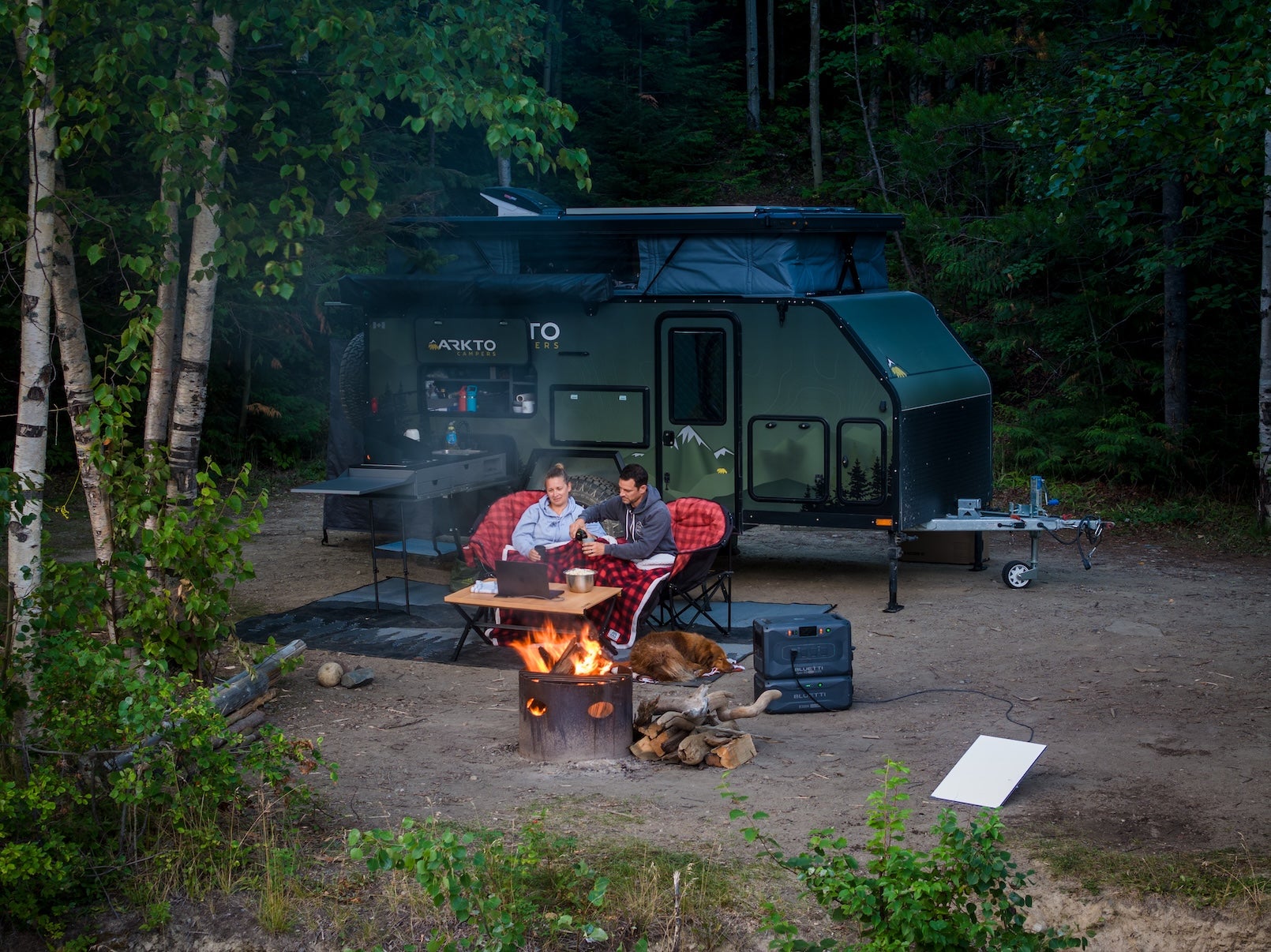
How to Choose a Solar Generator: 5 Questions to Answer First
A solar generator is a portable power station (battery, inverter, and outlets in one box) paired with solar panels to recharge it.
1. How much capacity do you need?
Capacity, measured in watt-hours (Wh), is your fuel tank. List what you’ll power, multiply each device’s watts by the hours it runs per day, and add it up. To estimate runtime:
Runtime (hours) ≈ capacity (Wh) × 0.85 ÷ device draw (W)
The 0.85 accounts for energy lost converting battery power to AC. Treat the result as an estimate, since cold weather and compressor cycling change actual results.
| Device | Typical draw (approx.) |
| Phone or LED lights | 5-25W |
| Laptop | 45-100W |
| CPAP (no humidifier) | 30-60W |
| 12V compressor fridge | 40-60W while running |
| Coffee maker, kettle, or microwave | 800-1,500W |
| RV rooftop A/C (13,500 BTU) | 1,200-1,700W running, more at startup |
Check your own appliance labels.
2. What needs to run at the same time?
Capacity tells you how long. Output tells you how much at once. Add up everything that might run simultaneously, and make sure the station’s continuous AC output covers it with room to spare. Also, motors and compressors can surge to two or three times their running watts at startup, so leave some headroom for that.
3. Do native RV ports matter?
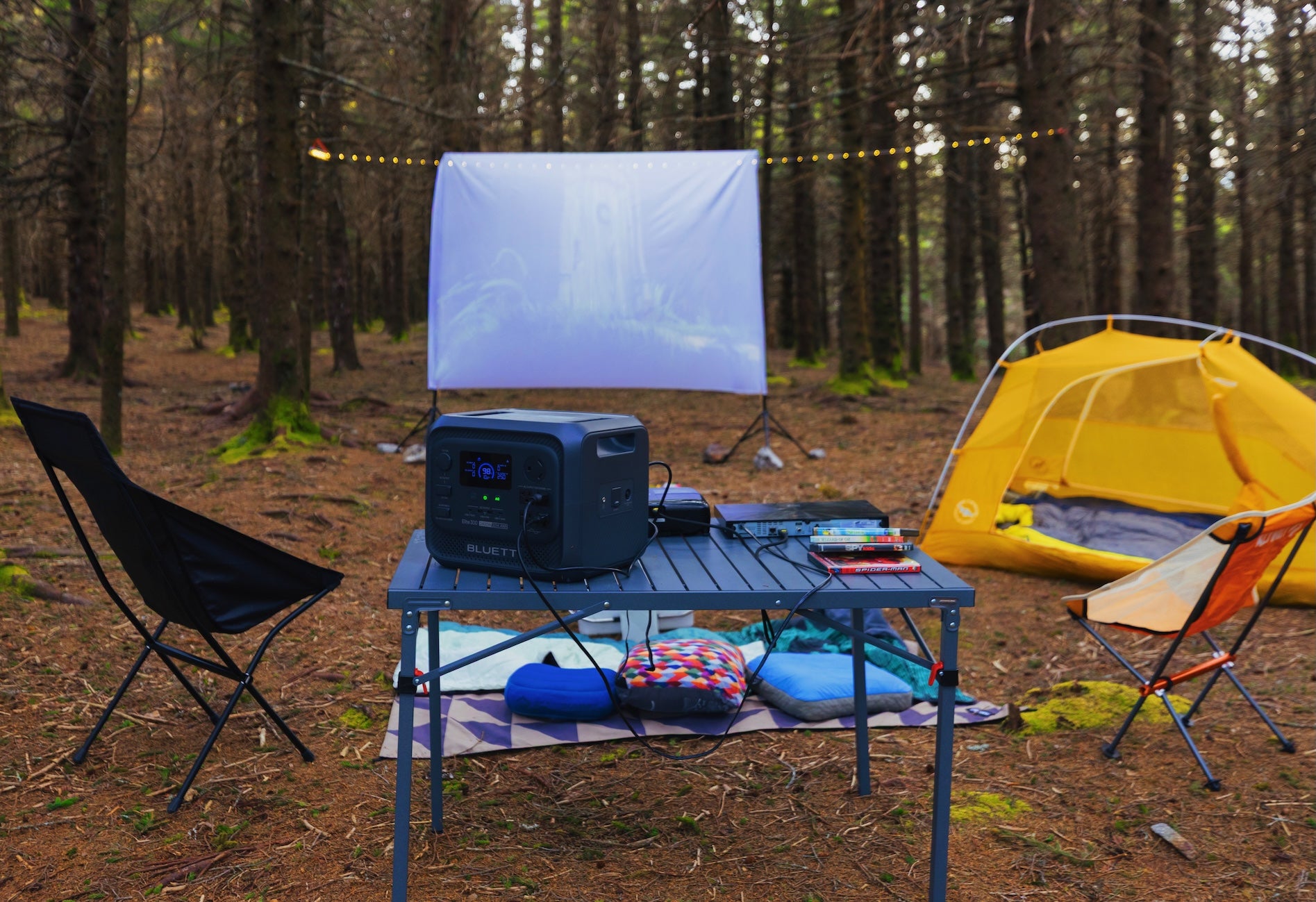
If you travel with an RV or trailer, yes. A TT-30R outlet matches the 30-amp receptacle on campground pedestals, so your rig’s shore power cord plugs straight in with no adapters. High-current 30A DC ports serve 12V gear. Heavier-duty stations may add a NEMA L14-50R, a 50-amp locking outlet for split-phase 120V/240V power.
One caveat: every appliance still draws from the same battery. Before plugging in, switch off loads you don’t need, especially the water heater’s electric element and the converter charging your house batteries.
4. How will you recharge?
- Solar matters most if you park for days. Higher solar input recharges faster, and a wider high-voltage MPPT range lets you wire more panels in series. Panels rarely hit their rated output in real life, so plan conservatively.
- Vehicle charging matters most if you move often. A DC-DC charger pulls more from your alternator than a standard 12V outlet, so travel days refill the battery.
- Wall or shore power is the fastest top-off before a trip or at a site with hookups.
5. Is it time for an integrated 48V system?
Portable stations move easily between truck, campsite, and trailer. But if the unit never moves, you live on the road, or you’re building out a van or boat, consider an installed system. At the same wattage, 48V carries a quarter of the current of 12V. That means thinner wiring, less heat, and less wasted energy.
Quick Match: Which Solar Generator Fits Your Trip?
| If you… | Look for | BLUETTI pick |
| Want power for phones, lights, and a fan on day trips or tent weekends | Under 500Wh, grab-and-go | Elite 30 mini |
| Car camp or overland with a 12V fridge, CPAP, or laptop | About 1kWh, small footprint | Elite 100 mini |
| Want mid-size power that stays quiet at night | About 2kWh, low noise | Elite 200 V2 |
| Tow a travel trailer or stay out several days | About 2.5kWh, high output, native RV ports | Apex 200 |
| Want maximum runtime in one self-contained unit | About 3kWh, no add-on batteries | Elite 300 |
| Need 120V/240V power or room to grow | 3kWh-class, split-phase, big expansion | Apex 300 |
| Live on the road or are building out a rig or boat | An installed 48V system | RVSolar 48V System |
The RV and Outdoor All-Rounder: BLUETTI Apex 200

Who it’s for: Travel trailer owners, vanlifers, and multi-day campers who want serious power without a permanent electrical build.
Key specs: 2.5kWh-class capacity · 3,200W AC output · native TT-30R RV outlet and 30A DC ports · up to 3,000W solar input with a 280V high-voltage MPPT range · four app-controlled AC outlets · 27kg (about 60 lb) · expandable to 33.28kWh
A 1kWh unit runs short once a fridge, a CPAP, and a coffee maker are in the mix. A large expandable battery bank is more than a week at a state park requires. The Apex 200’s roughly 2.5kWh capacity is a practical middle ground, sized to carry everyday loads across several days, especially with sun to top it off. It all fits in one 27kg (about 60-pound) unit instead of a battery bank, separate inverter, and tangle of wiring.
Power for real appliances. At 3,200W of AC output, it can run a coffee maker, microwave, or induction burner while the fridge and lights stay on. Treat big appliances as short bursts, since they drain capacity fast.
Plugs straight into your rig. The native TT-30R outlet takes a standard 30-amp shore power cord, so the Apex 200 feeds your trailer’s 120V system like a campground pedestal. No adapter, and no extension cords through a window. The 30A DC ports handle high-current 12V gear.
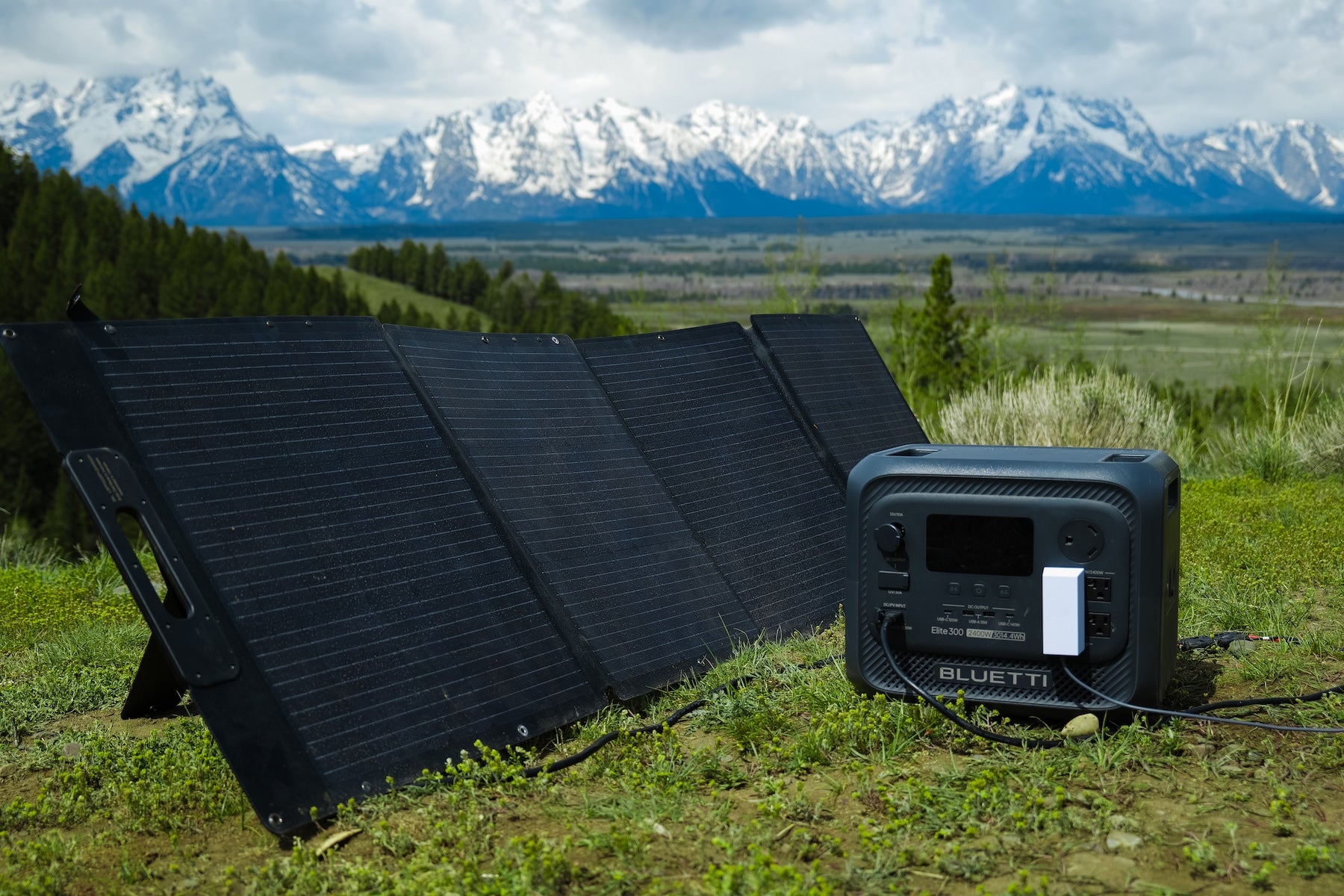
Fast recharging, parked or moving. Up to 3,000W of solar input and a 280V high-voltage MPPT range leave room for long strings of panels on a roof or ground array. For portable solar, start with BLUETTI’s 200W Portable Solar Panel, which folds down for storage, and add more panels as your setup grows. If you want more watts from a single panel, the SORA 500 Foldable Solar Panel unfolds at camp and packs away when you leave. On travel days, the Charger 2 DC-DC Charger taps your vehicle’s alternator for faster charging on the move.
Outlets you control from your phone. The four AC outlets switch on and off independently in BLUETTI’s app, so you don’t need external smart plugs. Keep the fridge running and kill the string lights without getting out of bed.
Room to grow. One Apex 200 scales to 33.28kWh with expansion, and three units in parallel reach up to 6,000W of output and 99.84kWh of capacity. For most campers, though, the appeal is simpler: one high-density station, fast solar when parked, and high-speed alternator charging on the move, without a complex permanent build.
Good to know: At about 60 pounds, this is a rig-based station, not one to carry to a walk-in site.
Black Friday price: $1,149
Shop the Apex 200 portable power station and use code THEDYRT5 for an extra 5% off.
Need More Runtime? Two 3kWh Choices
Both sit in the 3kWh class but serve different priorities. The Elite 300 packs its capacity into one self-contained unit, while the Apex 300 is the heavy-duty route.
Go long in one box with the BLUETTI Elite 300
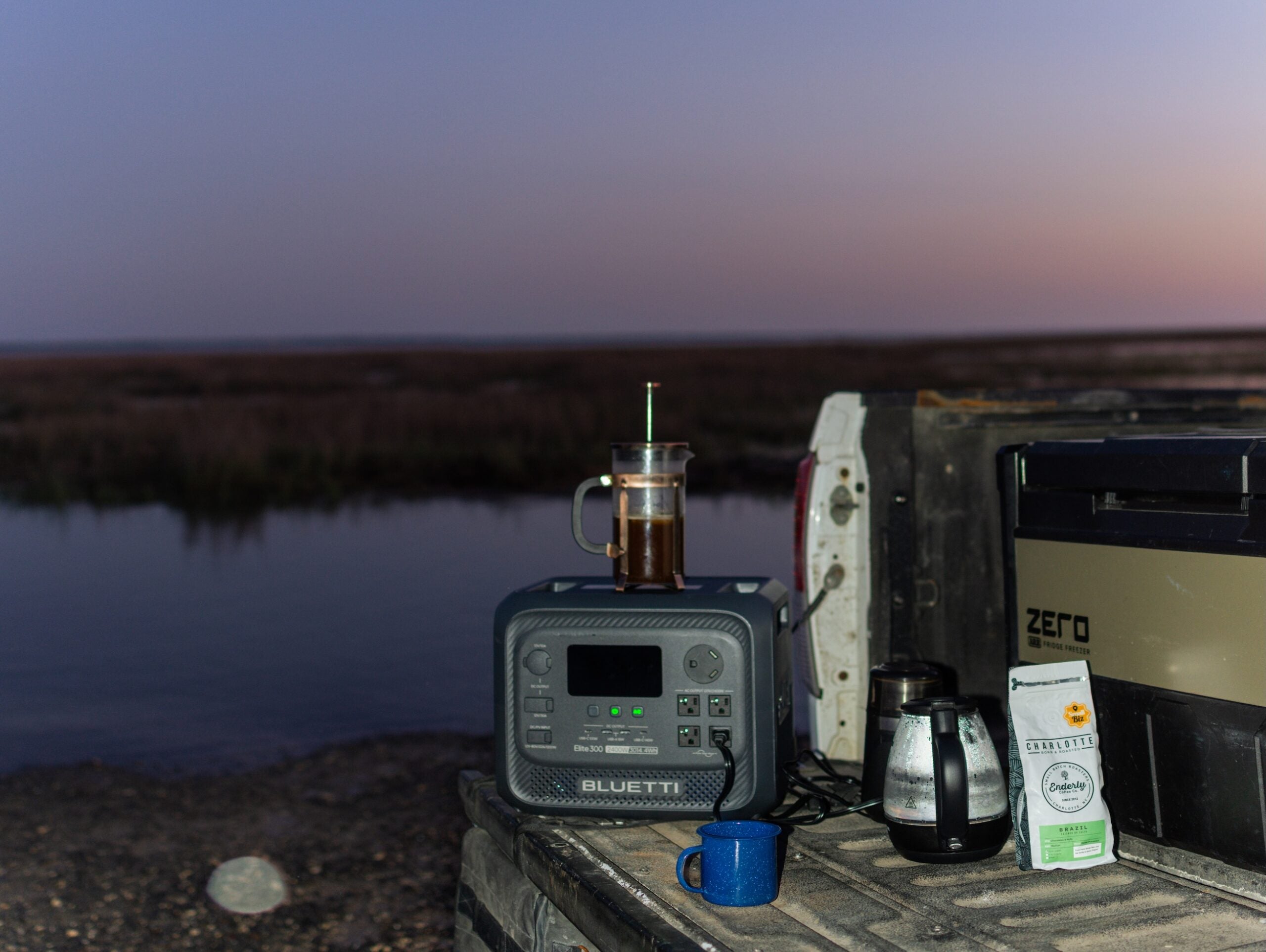
Key specs: 3,014.4Wh LFP battery · 2,400W AC output · 4,800W Power Lifting · 10ms UPS · 3W ultra-low standby · native TT-30R RV outlet and 30A DC ports
The Elite 300 suits campers who want longer runtime without external battery packs taking up space. It shares the Apex 200’s RV-ready TT-30R outlet and 30A DC ports. Power Lifting mode, rated to 4,800W, is designed to run higher-wattage resistive appliances, such as those with heating elements, at reduced power. The 10ms UPS keeps a CPAP or laptop running if shore power drops, and the 3W standby draw wastes little energy while the unit sits idle.
Shop the Elite 300 portable power station · Black Friday price: $999
Go heavy-duty with the BLUETTI Apex 300
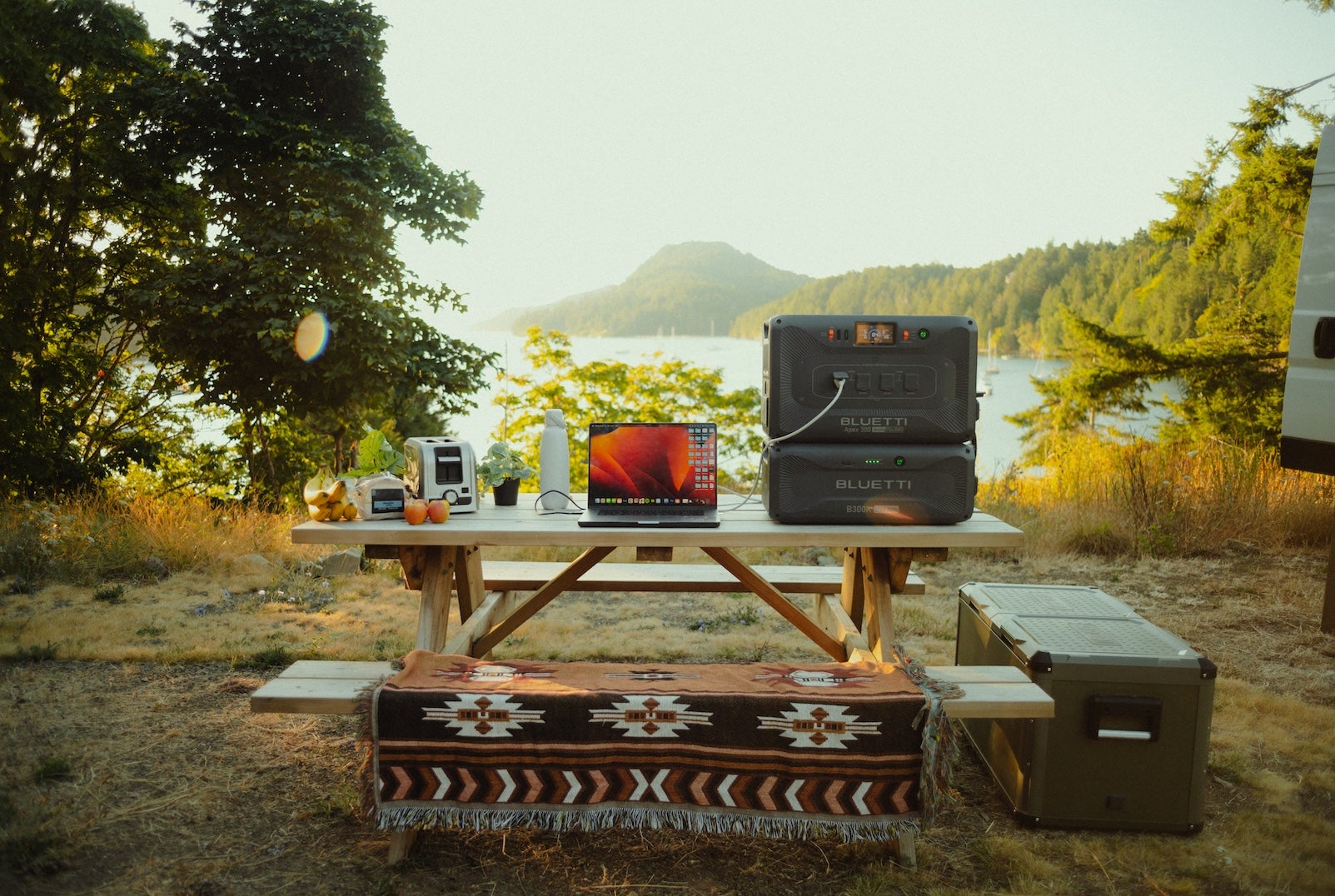
Key specs: 3kWh-class · split-phase 120V/240V from a single unit · 0ms UPS · native TT-30R and NEMA L14-50R outlets · expandable up to 58kWh
The Apex 300 delivers split-phase 120V/240V power from one unit and pairs a TT-30R with a 50-amp NEMA L14-50R locking outlet. Its 0ms UPS means no switchover gap when shore or grid power drops, and expansion up to 58kWh lets it anchor a much bigger system. It isn’t the default pick for most campers. Choose it if you run 240V equipment, want one station for the rig and home outages, or plan to grow into a large off-grid setup.
Shop the Apex 300 portable power station · Black Friday price: $1,399
Quick Picks for Specific Needs
Keep campsite power quiet with the BLUETTI Elite 200 V2
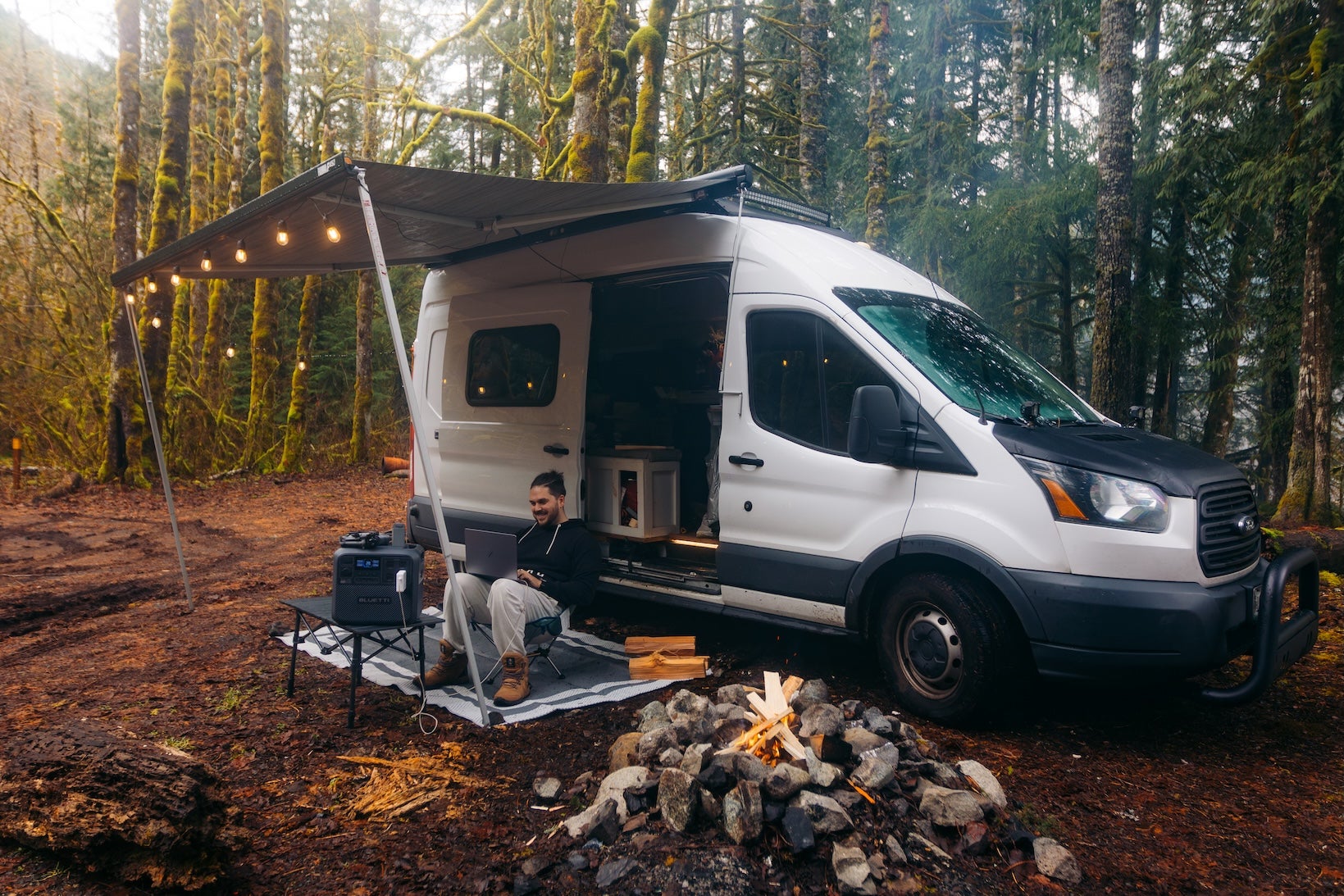
Key specs: 2,073.6Wh · 2,600W output · 16dB low-noise operation · automotive-grade LFP cells with a 17-year rated lifespan
This one is for campers who want mid-size power that won’t be the loudest thing in the rig after dark. BLUETTI rates its low-noise operation at 16dB, and 2,600W of output still handles short bursts from a coffee maker or microwave.
Shop the Elite 200 V2 portable power station · Black Friday price: $999[TBC]
Go compact with the BLUETTI Elite 100 mini
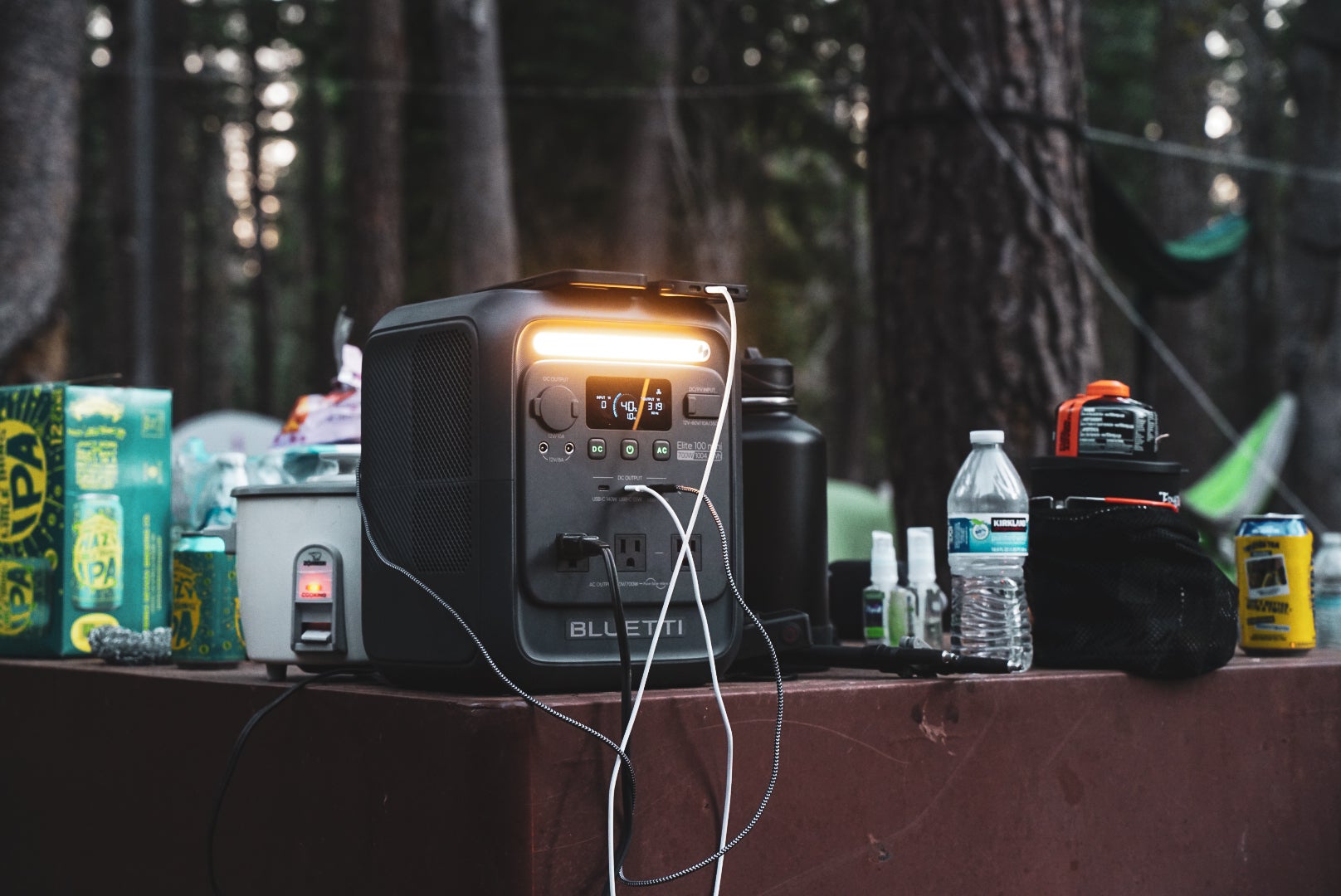
Key specs: 1,024Wh · 700W output · 10ms UPS · up to 350W solar input · 140W USB-C
A practical size for car campers and overlanders running a 12V fridge, lights, a CPAP, and devices over a weekend. The 140W USB-C port charges a laptop directly, and up to 350W of solar input pairs well with a portable panel. The 700W output isn’t meant for coffee makers or microwaves.
Shop the Elite 100 mini portable power station · Black Friday price: $379
Grab and go with the BLUETTI Elite 30 mini
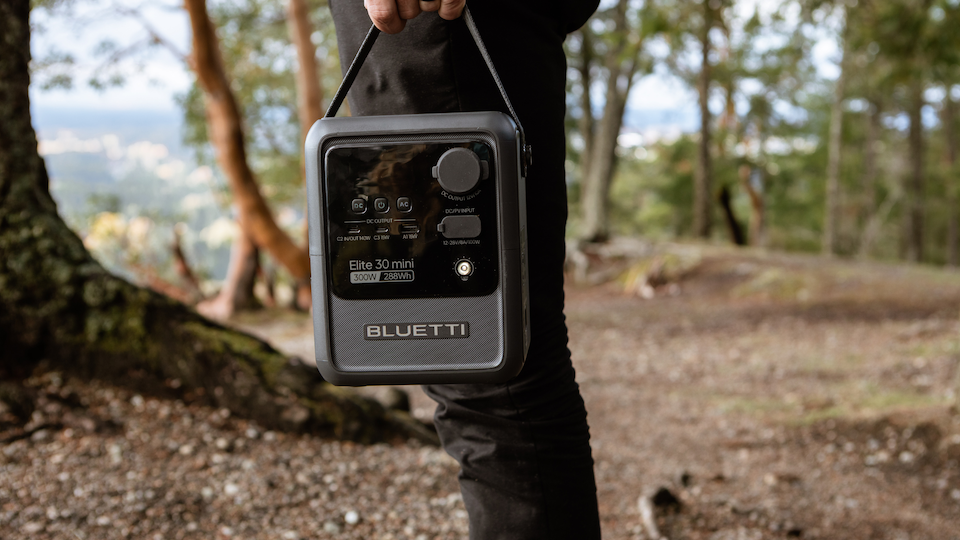
Key specs: 288Wh · 600W output
Built for light loads like phones, headlamps, camera batteries, a fan, and string lights. It’s not a multi-day RV system and isn’t trying to be. Toss it in the car for day trips, or use it as a second unit while the big station stays in the rig.
Shop the Elite 30 mini portable power station · Black Friday price: $199
Go permanent with the BLUETTI RVSolar 48V System

For full-timers, rig builders, and boat owners who’ve outgrown portable power. The RVSolar 48V System is BLUETTI’s premium, integrated 48V off-grid system for installed RV and marine applications, with the efficiency gains of 48V covered above. Plan it alongside your rig’s electrical layout and consider professional installation.
Shop the RVSolar 48V System · Black Friday price: $2,799
Solar Generator FAQ
Can a solar generator run an RV air conditioner?
Sometimes, briefly. A 13,500 BTU rooftop unit typically draws 1,200–1,700W while running and much more at startup, so it drains a battery fast. Plan on short stretches, like cooling the rig before bed, unless you have a large expanded battery bank and solar to match.
How long does it take to recharge with solar?
Divide the energy you need to replace by the solar wattage you’re actually getting, which is usually below the panels’ rating. Replacing 1,000Wh with panels producing 400W takes roughly 2.5 hours in good sun, plus some charging losses.
Get the Deal: BLUETTI Black Friday
Run through the five questions, then pick the size that matches the trips you actually take. BLUETTI’s Black Friday sale kicks off November 19. Browse the full lineup at BLUETTI, then shop the BLUETTI Black Friday sale and use code THEDYRT at checkout for an extra 5% off.
The Dyrt is the only camping app with all of the public and private campgrounds, RV parks, and free camping locations in the United States. Download now for iOS and Android.Popular Articles:
Articles on The Dyrt Magazine may contain links to affiliate websites. The Dyrt receives an affiliate commission for any purchases made by using such links at no additional cost to you the consumer.