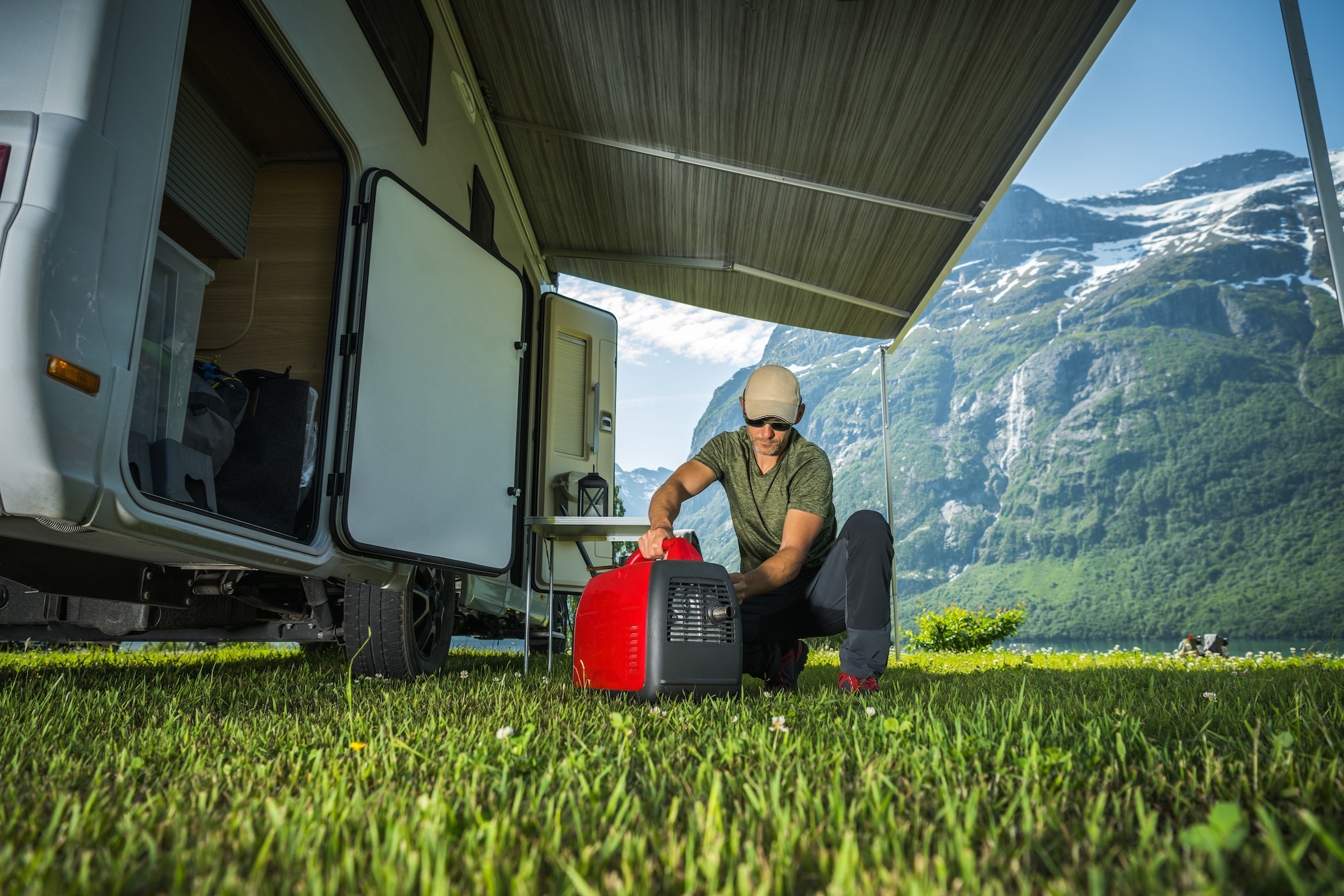
From figuring out how many watts you need to deciding between gasoline and propane, here’s what to know before adding a portable generator to your RV setup.
Camping without hookups comes with plenty of perks: more campsite options, fewer neighbors, and the freedom to stay somewhere because you love the view. But you may still want power.
A portable generator can keep your RV batteries charged, your refrigerator running, your coffee brewing and, with the right setup, even your air conditioner humming on a hot afternoon. The trick is choosing a generator that provides the power you actually need without taking up more space, making more noise or burning more fuel than necessary.
Before shopping, it helps to understand a few basics. Here’s what RVers should know about wattage, fuel type, noise, portability and safety.
Portable vs. Onboard RV Generators
First, a quick distinction.
A portable generator is a standalone unit that travels with you and is set up outside your RV when you need power. An onboard RV generator is permanently installed in a dedicated compartment and integrated into the RV.
Portable generators are especially common with travel trailers and fifth wheels because they let owners choose a power source that fits their particular setup. Larger motorhomes are more likely to have built-in generator systems.
Companies like Norwall PowerSystems carry both RV and camping generators, including portable and onboard options.
For this guide, we’re focusing on portable generators.
Start With How Much Power You Actually Need
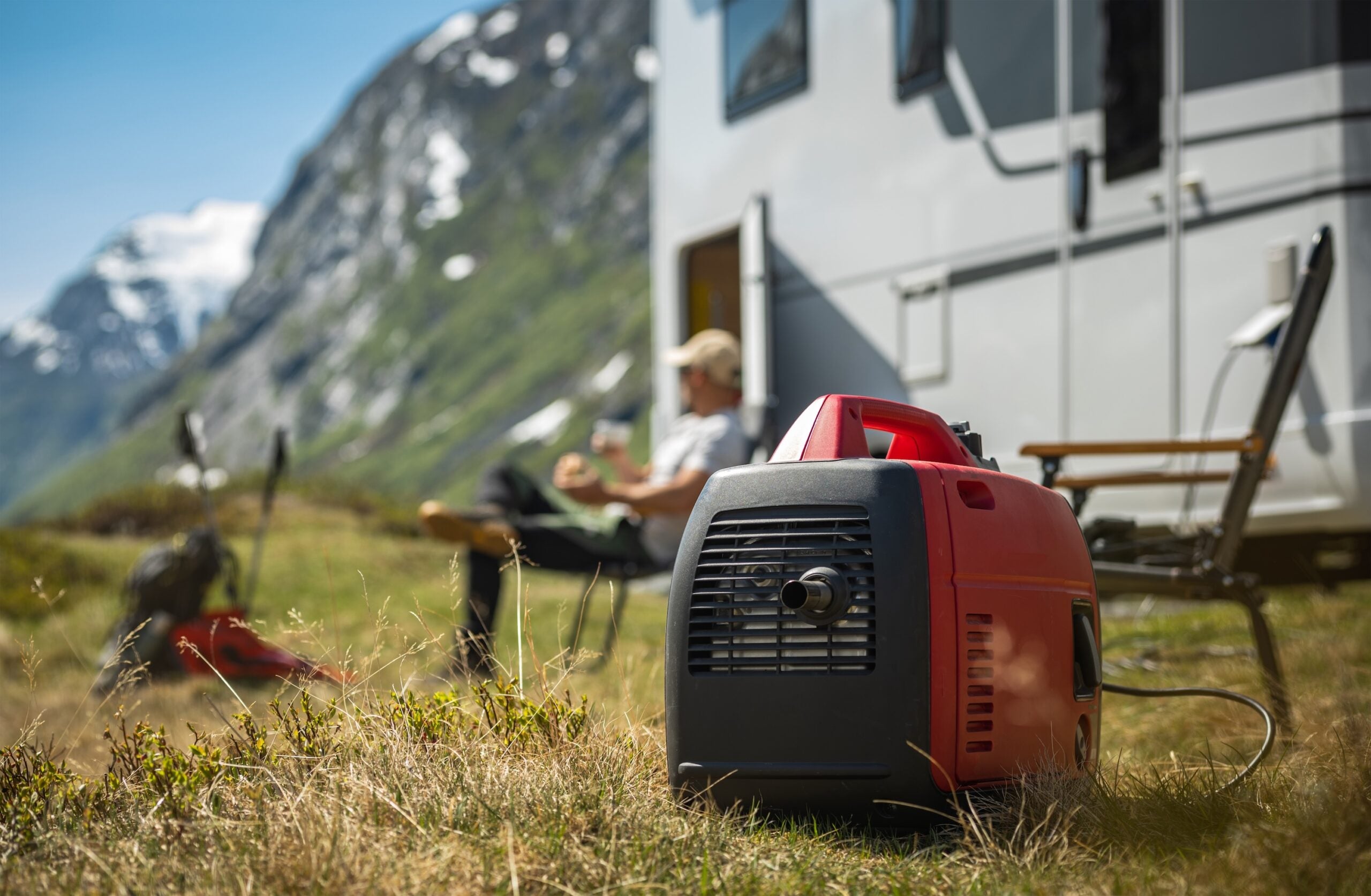
The most important question isn’t necessarily, “How big of a generator can I buy?” It’s, “How much power do I actually need?”
That means understanding two numbers:
- Running watts are the watts an appliance needs while operating.
- Starting watts, sometimes called surge watts, are the additional power some appliances need briefly when they start.
Air conditioners are a classic example. An A/C unit may draw a manageable amount of power once it’s running but require significantly more at startup. If you size your generator based only on running wattage, it may struggle when a larger appliance kicks on.
Start by making a list of everything you might realistically run at the same time, such as:
- Air conditioning
- Refrigerator
- Microwave
- Coffee maker
- Television
- Battery charger
- Laptops or other electronics
- Medical equipment
Then total the running wattage, identify the largest startup requirement and make sure your generator can handle both.
Norwall’s RV and camping generator sizing guide recommends leaving an additional 10 to 15 percent of capacity rather than sizing the generator right at your expected load.
It’s also best to check the actual electrical specifications on your appliances instead of relying only on generic wattage estimates.
Can a Portable Generator Run Your RV Air Conditioner?
Usually, yes, if it’s sized correctly.
Air conditioning is one of the largest electrical loads in an RV, so it often drives generator sizing decisions.
For example, Norwall estimates that a 13,500-BTU RV air conditioner may use around 1,500 running watts and 1,800 starting watts, while a 15,000-BTU unit may require roughly 2,000 running watts and 3,000 starting watts.
Those are only general examples. Your specific A/C model may differ, and you also need to account for everything else drawing power at the same time. If running the A/C is important to you, make that the starting point for your generator calculation.
Know Whether Your RV Is 30-Amp or 50-Amp
You’ll also want to know what kind of electrical service your RV uses.
- A 30-amp RV uses a single 120-volt line and can accept up to 3,600 watts through its shore-power connection.
- A 50-amp RV uses two 120-volt lines and can accept considerably more power, up to 12,000 watts.
But owning a 50-amp RV does not mean you need a generator capable of supplying the RV’s full theoretical maximum. The connection tells you what your RV can accept, not necessarily what you need to produce. Your generator should still be sized around the appliances and systems you plan to run.
For many travel trailers with 30-amp service, an RV-ready generator with a TT-30R outlet can also make connecting the RV simpler. If your generator and RV use different connections, an adapter may be needed.
Inverter vs. Conventional Generators
You’ll also need to decide between a conventional portable generator and an inverter model.
- A conventional generator generally runs its engine at a consistent speed to create electricity. These models can provide a lot of power for the price, but they may be larger and louder.
- An inverter generator uses electronic components to produce stable AC power and can adjust its engine speed based on electrical demand. That often makes inverter models quieter and more fuel-efficient at lower loads.
The benefits of an inverter generator can be especially useful at a campground, where noise, fuel consumption and storage space all matter. Some inverter generators are also parallel-capable, meaning you can connect two compatible units when you need more power. For some RVers, that provides an alternative to hauling one very large generator.
Norwall carries inverter and conventional options from brands including Generac, Champion, DuroMax, Cummins and RVMP, so there’s a wide range of output and feature sets to compare.
Gas, Propane, Dual Fuel or Tri-Fuel?
Fuel type is another major consideration. Generator output may differ depending on the fuel being used. Let’s look at the options:
Gasoline
Gasoline generators are common and relatively easy to refuel while traveling. If you’re already stopping for fuel regularly, adding generator gas may be simple.
Propane
Propane can be convenient for RVers because many rigs already carry it for cooking, heating or other appliances.
Dual Fuel
Dual-fuel generators can operate on gasoline or propane. That flexibility is useful on longer trips. You can use whichever fuel is easier to find or more convenient for your setup.
For example, Norwall carries dual-fuel options from brands including Champion and DuroMax, giving RVers the option to switch fuel sources as conditions change.
Tri-Fuel
Tri-fuel generators can also run on natural gas. That’s often more relevant for homeowners who want to use the same generator for RV trips and emergency backup power at home, but it may still be worth considering depending on how you plan to use your generator.
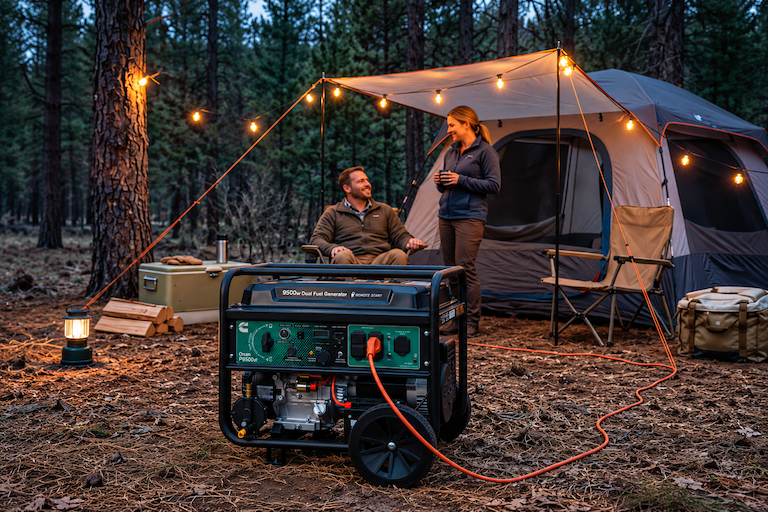
At a Campground, Noise Matters
A generator that sounds fine in your driveway may feel very different when it’s running a few campsites away from someone else’s tent.
Many campgrounds restrict generator use to certain hours, so always check local rules before running one.
When shopping, look at the manufacturer’s dBA noise rating. Keep in mind that noise figures may be measured from different distances or at different loads, so the ratings aren’t always directly comparable.
Inverter generators are often attractive for camping because they can operate more quietly, particularly under lighter loads.
Even with a quiet generator, basic etiquette matters: follow campground hours, place the unit responsibly and remember that noise carries well beyond your own site.
Features That Can Make Camping Easier
Once you’ve narrowed down the right size and type of generator, convenience features can make a noticeable difference in everyday use.
Remote and Electric Start
Push-button or remote start means you don’t have to rely solely on a pull cord. That can be especially nice first thing in the morning or during cold weather.
RV-Ready Outlets
A dedicated RV outlet, such as a TT-30R, can simplify connecting many travel trailers.
Parallel Capability
Parallel-ready inverter generators allow you to connect compatible units for additional capacity.
Eco Modes and Displays
Economy modes can reduce engine speed when demand is low, helping with fuel efficiency and noise. Displays may show useful information such as runtime, load or fuel level.
These features won’t determine whether a generator can power your RV (that still comes down to sizing), but they can make the generator much easier to live with.
Don’t Forget Weight and Portability
Portable is a relative term. As generator output rises, weight usually does too. That matters if you’ll regularly move the generator from your garage into a truck bed, out of an RV storage compartment, and across a campsite.
Before buying, ask:
- Where will the generator travel?
- Where will you store it?
- Who will lift or move it?
- Does it have wheels or a telescoping handle?
- Can you safely load and unload it?
A generator that has all the right specs on paper may still be the wrong fit if moving it becomes a hassle every trip.
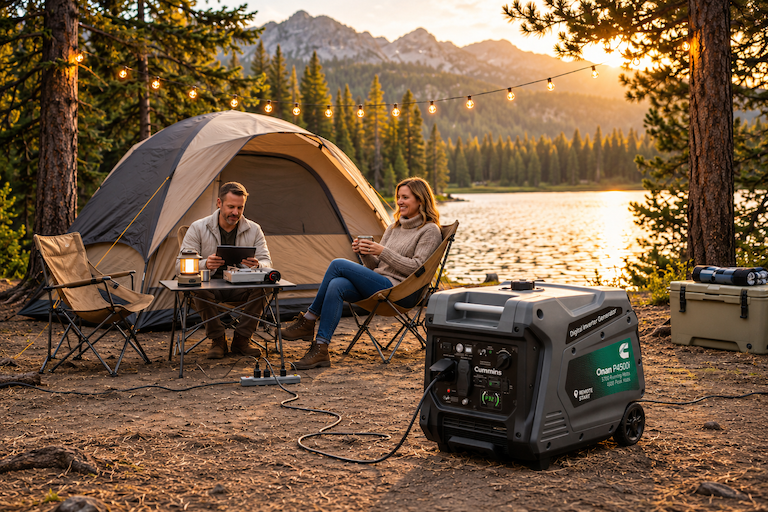
Portable Generator Safety Is Non-Negotiable
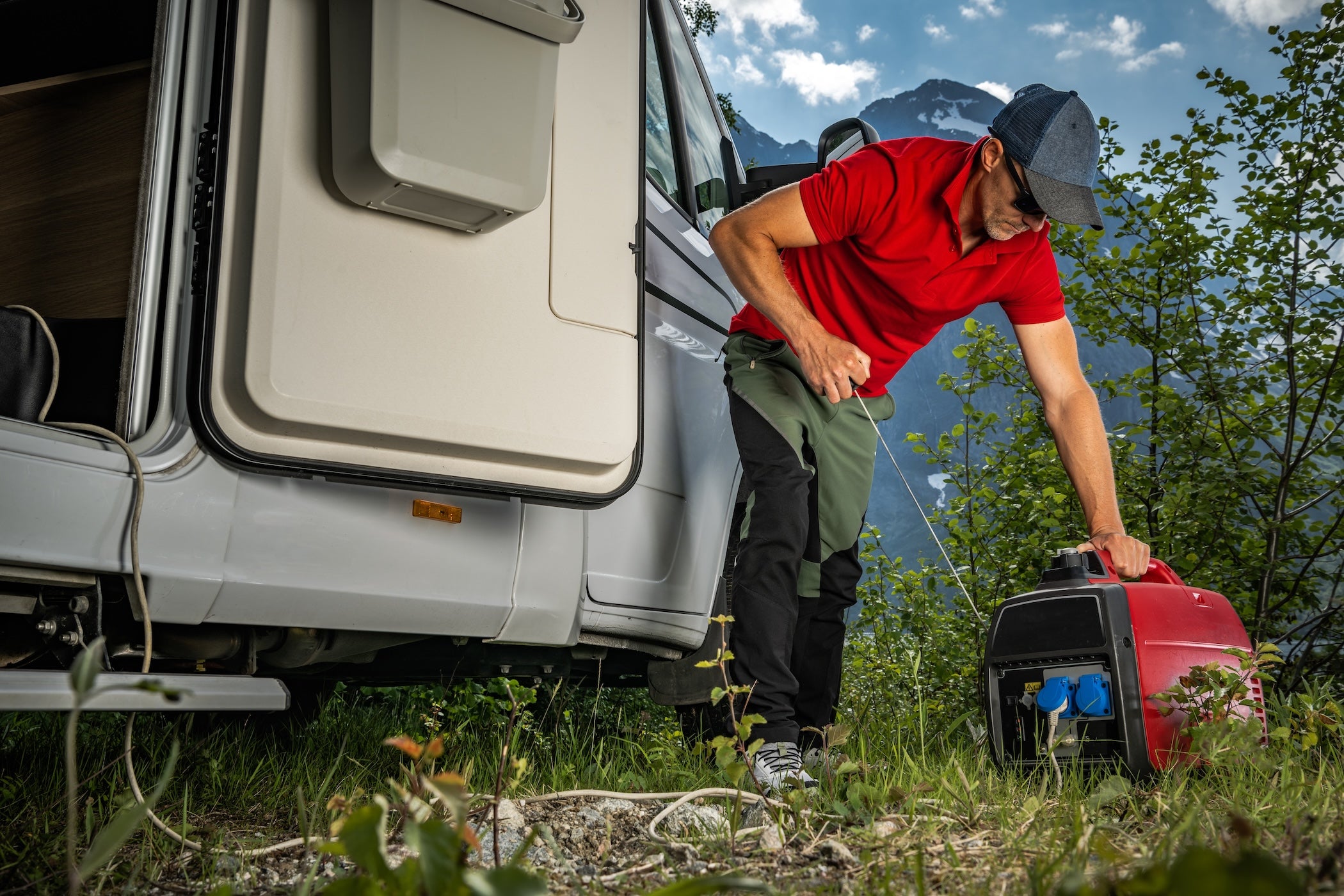
Portable fuel-burning generators produce carbon monoxide, so placement matters.
Never operate a portable generator inside an RV, storage compartment, tent, garage or other enclosed or partially enclosed space.
The U.S. Consumer Product Safety Commission recommends operating portable generators outdoors and at least 20 feet away from occupied buildings, with exhaust directed away from windows, doors and vents. At camp, apply the same principle to your RV, tents and neighboring campsites.
A carbon-monoxide shutoff system adds another layer of protection, but it doesn’t replace proper placement.
Newer safety standards also address these hazards. The ANSI/PGMA G300-2023 standard includes requirements for carbon-monoxide shutoff systems on generators claiming compliance with the standard.
Norwall has detailed resources on portable generator safety and safe generator placement for when you’re ready to go. Always follow the instructions for your specific generator, especially when it comes to fueling, electrical connections and wet-weather use.
How to Choose the Right Portable Generator for Your RV
If all those specs start to blur together, bring the decision back to a few questions:
- What do you need to power?
Make a realistic list of what you’ll actually run. - What are your running and starting wattage requirements?
Make sure the generator can handle both with some extra capacity. - Is air conditioning important?
If so, its startup requirements may be one of the biggest factors in your decision. - Do you have a 30-amp or 50-amp RV?
Know your electrical setup and which connections you need. - How important are noise and portability?
Campground users may prefer a quieter, lighter inverter model. - Which fuel makes the most sense?
Think about what you already carry and what will be easy to find on the road. - Which convenience features will you actually use?
Remote start, RV-ready outlets, parallel capability and wheels may be worth prioritizing depending on how you camp.
There’s no universal “best” portable generator for RVing. The right one is the generator that can reliably handle your electrical needs, fits your storage and transportation setup, and works with the way you actually travel.
Norwall PowerSystems carries RV and camping generators from Generac, Champion, DuroMax, Cummins, RVMP and other manufacturers, with options ranging from compact inverter generators to larger RV power systems.
Figure out what you need to power first. Then choose the generator that helps you camp comfortably wherever the road takes you.
The Dyrt is the only camping app with all of the public and private campgrounds, RV parks, and free camping locations in the United States. Download now for iOS and Android.Popular Articles:
Articles on The Dyrt Magazine may contain links to affiliate websites. The Dyrt receives an affiliate commission for any purchases made by using such links at no additional cost to you the consumer.