Portable water filters come in a lot of shapes and sizes, from ultralight straws you can tuck into a daypack to gravity systems capable of supplying water for an entire campsite. The good news: choosing one doesn’t have to be complicated.
The right setup mostly comes down to how you plan to use it. A solo hiker stopping at streams along the trail has very different needs than a family filtering several liters for drinking, cooking and coffee at camp.
So before comparing weights, capacities and technical specs, start with a simpler question: What will your adventure actually look like?
Here’s how straw, squeeze and gravity filters compare, and how to decide which setup makes the most sense for the way you get outside.
Choose a straw when you want to keep it simple
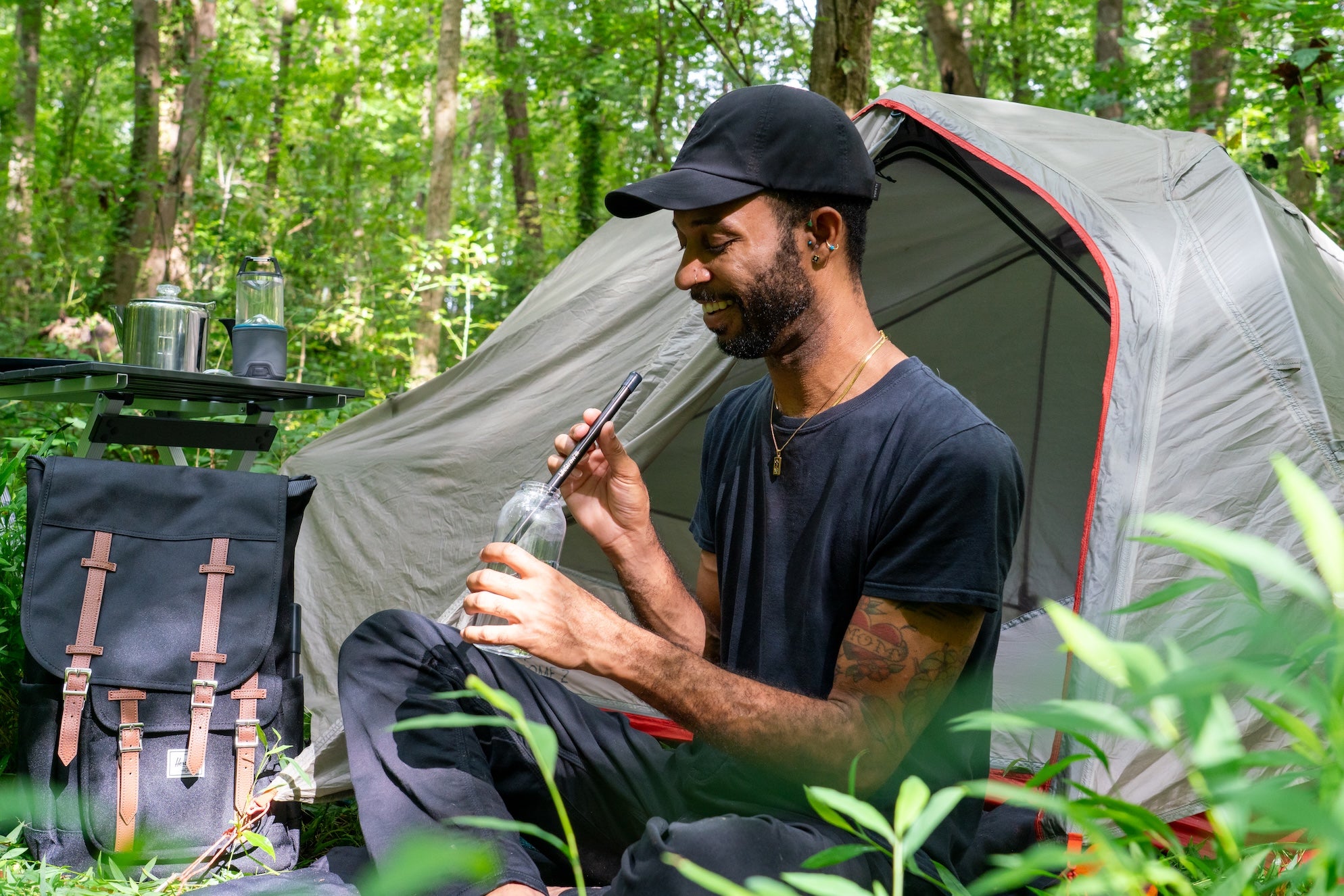
For the most straightforward approach to backcountry water, it’s hard to beat a personal filter straw.
Rather than collecting water and filtering it into another container, a straw lets you drink directly from a water source. That makes it a handy option for day hikes, short solo adventures and situations where you want a lightweight backup tucked into your pack.
A straw makes the most sense when:
- You’re primarily filtering water for yourself.
- You expect to encounter accessible water sources along your route.
- You want something lightweight and compact.
- You’re looking for an emergency backup in addition to the water you carry.
The LifeStraw Personal Water Filter Straw, for example, is designed for drinking directly from natural water sources and filters bacteria, parasites and microplastics. LifeStraw also offers a Peak Series Straw, designed for backcountry use and compatibility with other components in the Peak system.
The tradeoff is capacity. A straw works well when you need a drink, but it’s less convenient if you want several liters ready for cooking, filling bottles or sharing with a group.
Think of it as the grab-and-go option: simple, small and useful when stopping for water is just one part of a day spent moving.
Choose a squeeze filter when you’re covering miles
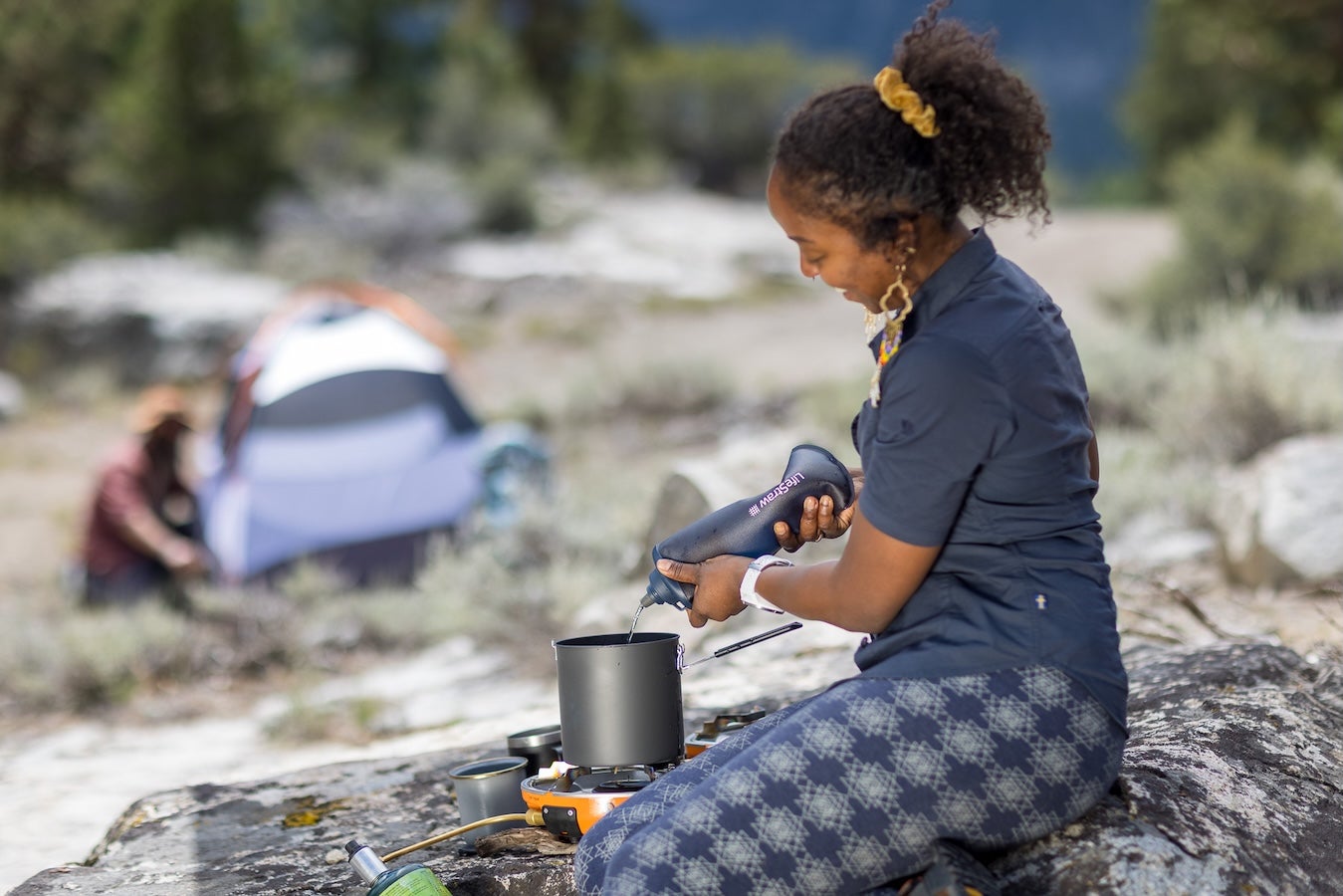
A squeeze system adds one important thing to the equation: a reservoir.
Fill a soft bottle or bag from a water source, attach the filter and squeeze water through it into your mouth or another container. Depending on your setup, you can also collect water and carry it away from the source before filtering it.
That flexibility makes squeeze filters especially useful for hikers, backpackers and anyone moving between water sources throughout the day.
A squeeze system may be the better choice when:
- You want to fill bottles rather than drink only at the water source.
- You’re backpacking or hiking longer distances.
- Water sources are spread out along your route.
- You want a lightweight system that packs down when empty.
- You need enough filtered water to carry you between sources.
This can matter even more later in the season, when reliable summer water sources may be running lower, and you may encounter longer stretches between usable water sources.
A squeeze system also lets you filter enough water to keep moving instead of stopping every time you need a drink.
Choose gravity when camp is your home base
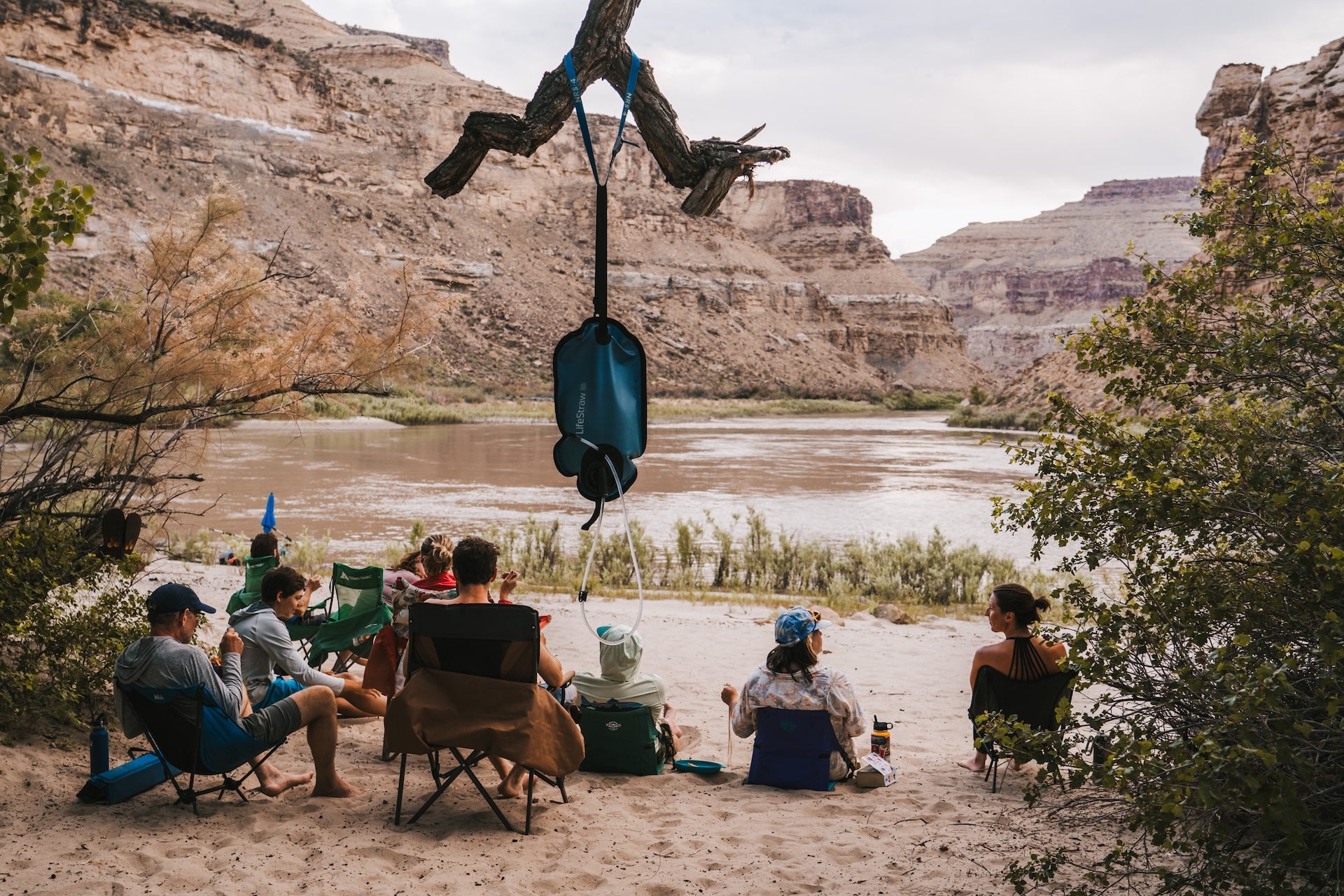
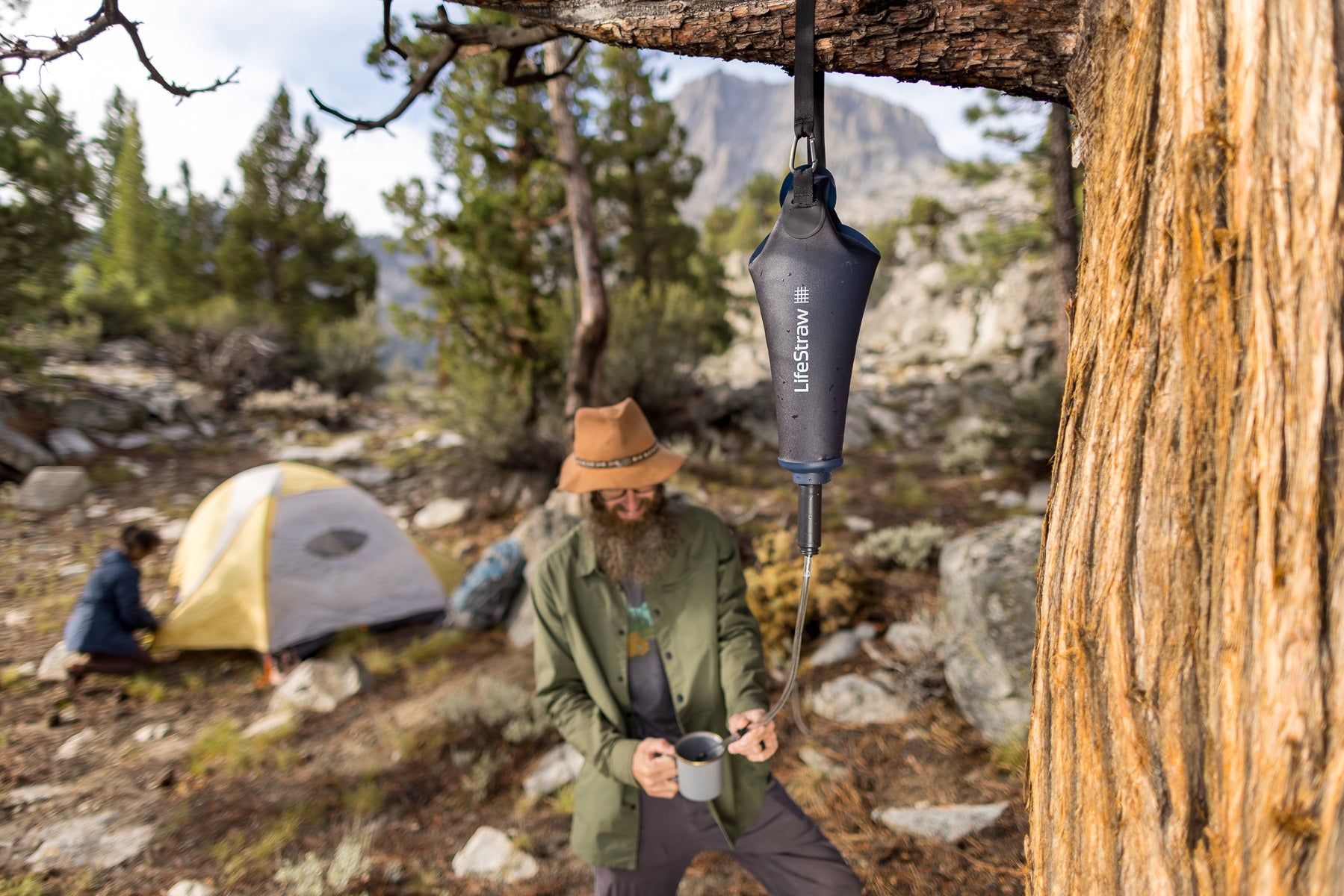
Once you’ve dropped your pack, parked the car, or settled into a campsite, speed and weight may matter less than having enough water available for everyone. That’s when the gravity filter makes the most sense.
You fill a reservoir, hang it above the ground, and gravity pushes water through the filter while you go about your day, setting up the tent, starting dinner or reading a book in the hammock.
Gravity systems are particularly useful when:
- You’re camping with multiple people.
- You’ll be staying in one place for a while.
- You need water for drinking and cooking.
- You’d rather filter a larger quantity at once.
- You’re car camping, base camping, or setting up an RV or van campsite near a usable water source.
Fall camping can make this approach especially appealing. Dinner might involve boiling water for pasta or soup, mornings may require multiple cups of coffee, and cold evenings have a way of turning tea and cocoa into camping essentials.
LifeStraw offers Peak Series gravity systems in multiple sizes, including larger-capacity options designed for groups, basecamps, RVs and van travel.
Set one up at camp and you’ve essentially created a water station the whole group can use instead of having everyone filter individually.
Or choose a system that does all three
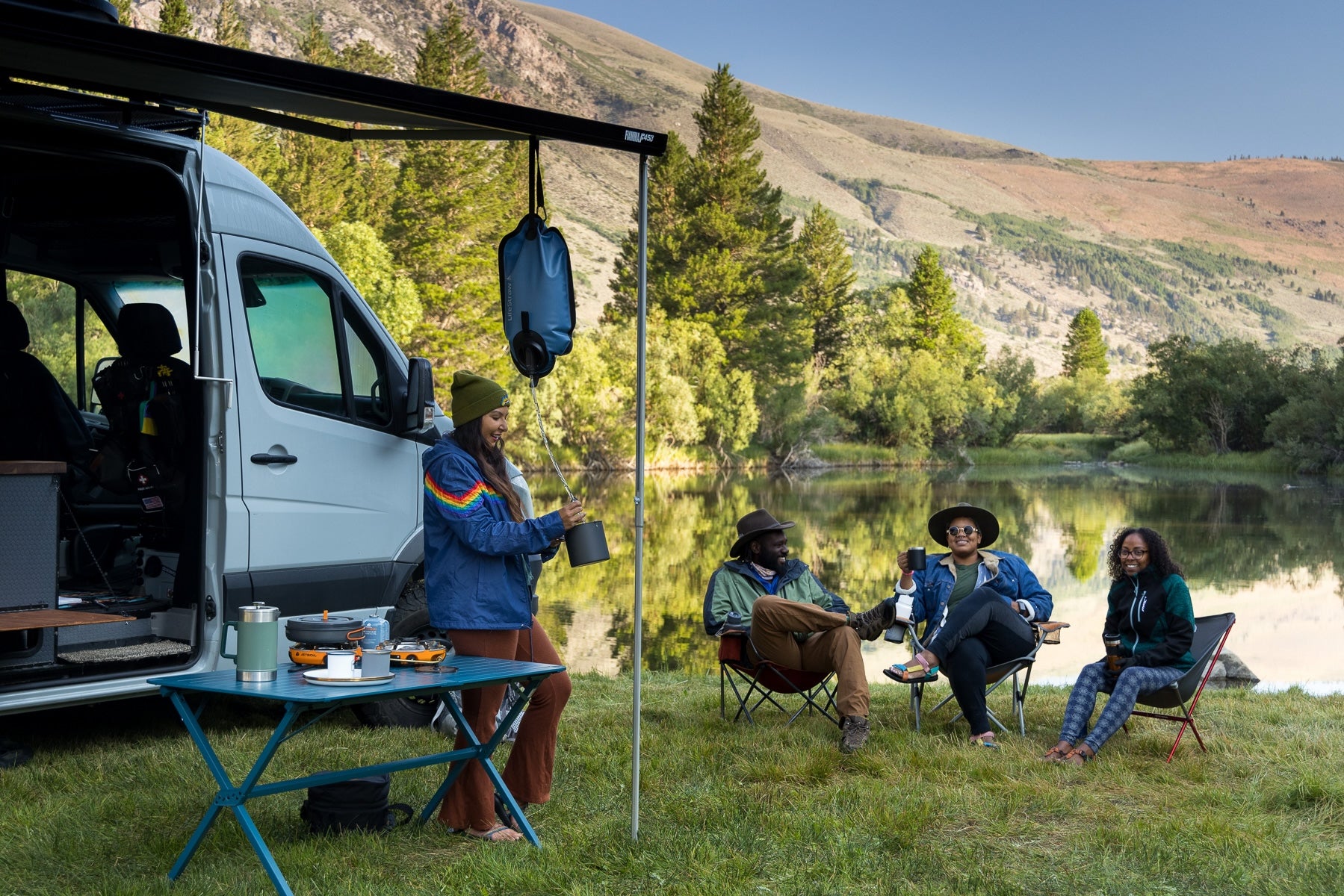
Not every trip fits neatly into one category. Maybe you’re backpacking several miles to a campsite, filtering water throughout the hike, then setting up a basecamp for the night. Or perhaps you’re car camping with the family but heading out on day hikes each morning.
In those situations, a flexible system can make more sense than choosing just one format.
The LifeStraw Peak Series 3-in-1 Water Filtration Kit includes a filter, collapsible squeeze bottle and gravity bag, allowing the setup to work in three different ways: drink directly through the filter, squeeze water through it while you’re on the move or hang the reservoir at camp and let gravity take over.
Before choosing a setup, think through an actual day on your trip:
- Where will you get water?
- Who needs it?
- Will you be moving or staying put?
- How much will you need at once?
Those answers can tell you more than simply looking for the smallest or highest-capacity option.
What changes when you’re filtering water in the fall?
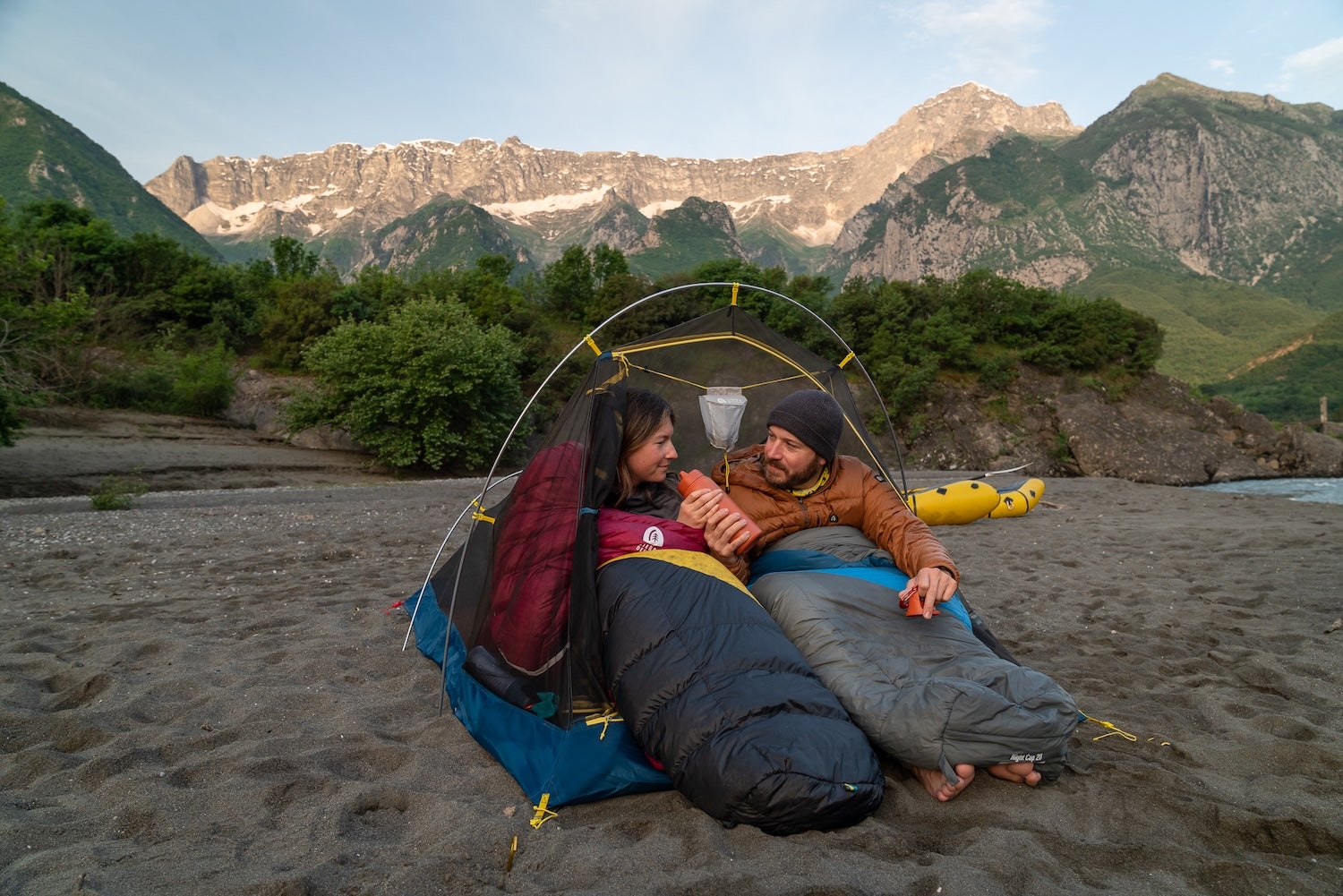
Cooler weather introduces a few additional considerations.
Protect your filter from freezing
This may be the biggest seasonal difference. Many backcountry filters rely on tiny hollow fibers or membrane technology. If water left inside the filter freezes and expands, it can damage those components (even if the damage isn’t visible).
LifeStraw instructs users not to expose its Peak gravity systems to temperatures below 32°F. If freezing conditions are possible, follow the manufacturer’s care instructions for your specific filter and plan accordingly.
Check seasonal water conditions
Small streams can slow or disappear later in the season, and campground water systems may be shut down as temperatures drop. These changes aren’t always publicly announced. Check recent conditions whenever possible and always carry enough water, or have a backup plan, to reach another reliable source.
Plan around shorter days
In summer, arriving at camp an hour later than expected might still leave plenty of daylight to collect water, filter it, and make dinner.
In October, that margin can disappear quickly. If you’re arriving late, consider collecting water before you reach camp when you pass a good source. A squeeze reservoir can help you carry water forward, while a gravity system can make it easier to filter a larger amount once you’ve settled in.
Don’t forget water for cooking
It’s easy to calculate how much water you’ll drink and forget everything else you’ll use, like morning coffee, oatmeal, soup, pasta, hot chocolate, and washing up after dinner.
Cool-weather camping can increase the amount of water you use around camp even if you aren’t drinking as much cold water during the day. You’re probably going to want that extra cup of coffee when the morning temps hit 50 or lower. For groups in particular, being able to filter several liters at once can make camp life easier.
Start with the adventure, then choose the filter
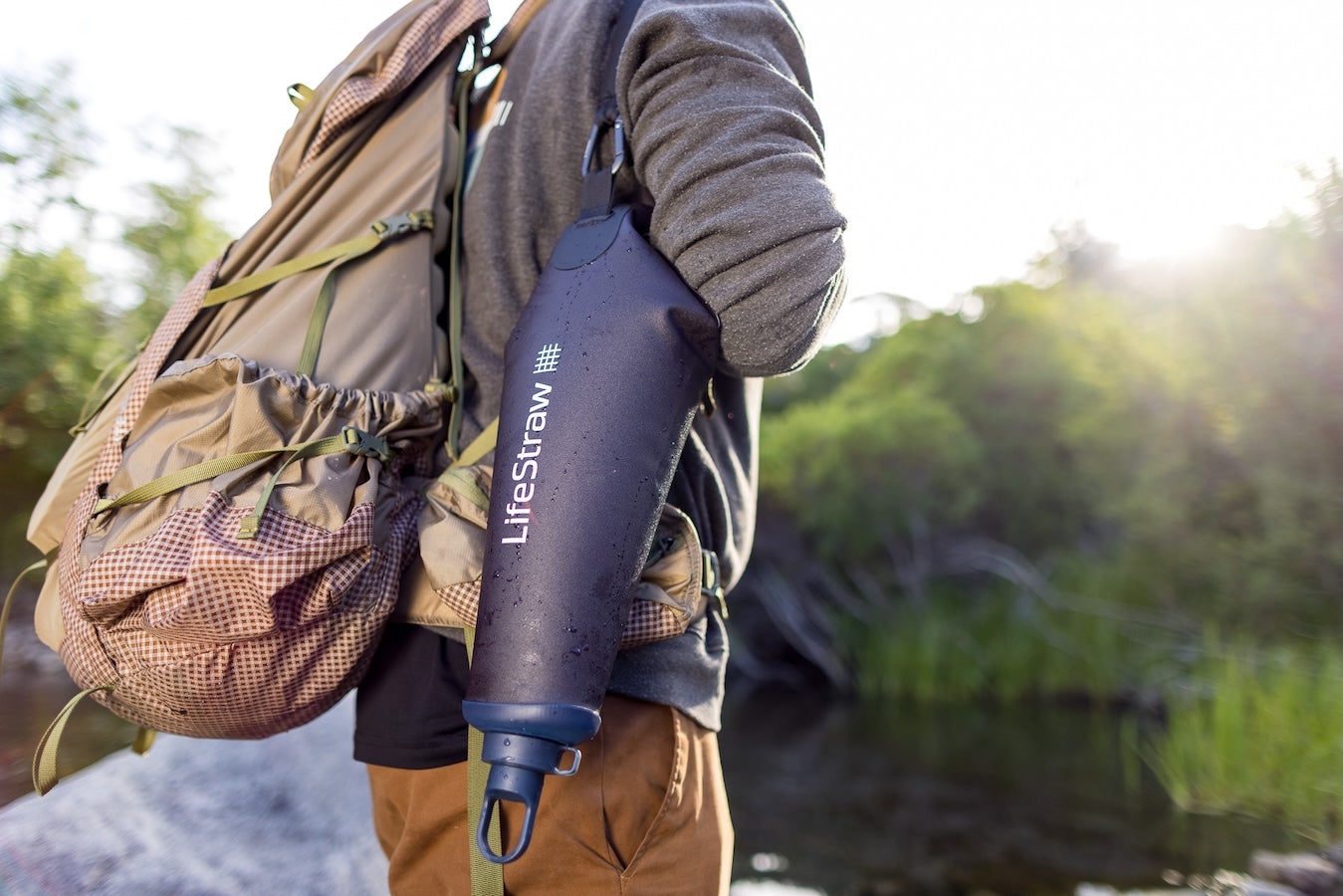
There’s no universal “best” water filter because we all camp and adventure differently.
If you’re heading out for a quick solo hike and want a just-in-case option, a straw may be all you need.
If you’re putting in miles and moving between water sources, a squeeze system gives you more flexibility to filter and carry water as you go.
And if you’re setting up camp for the night, or supplying water for several people, a gravity system can do the work while you move on to everything else.
If your adventures regularly include a little of all three, a modular option like LifeStraw’s Peak Series 3-in-1 Water Filtration Kit lets you change the setup instead of changing the gear.
However you filter, know what your particular system is designed to remove, follow its care instructions, and avoid water sources contaminated by chemicals or saltwater.
And remember that the best filtration setup isn’t necessarily the biggest, lightest, or most technical; it’s the one that fits the way you’re actually getting outside.
The Dyrt is the only camping app with all of the public and private campgrounds, RV parks, and free camping locations in the United States. Download now for iOS and Android.Popular Articles:
Articles on The Dyrt Magazine may contain links to affiliate websites. The Dyrt receives an affiliate commission for any purchases made by using such links at no additional cost to you the consumer.