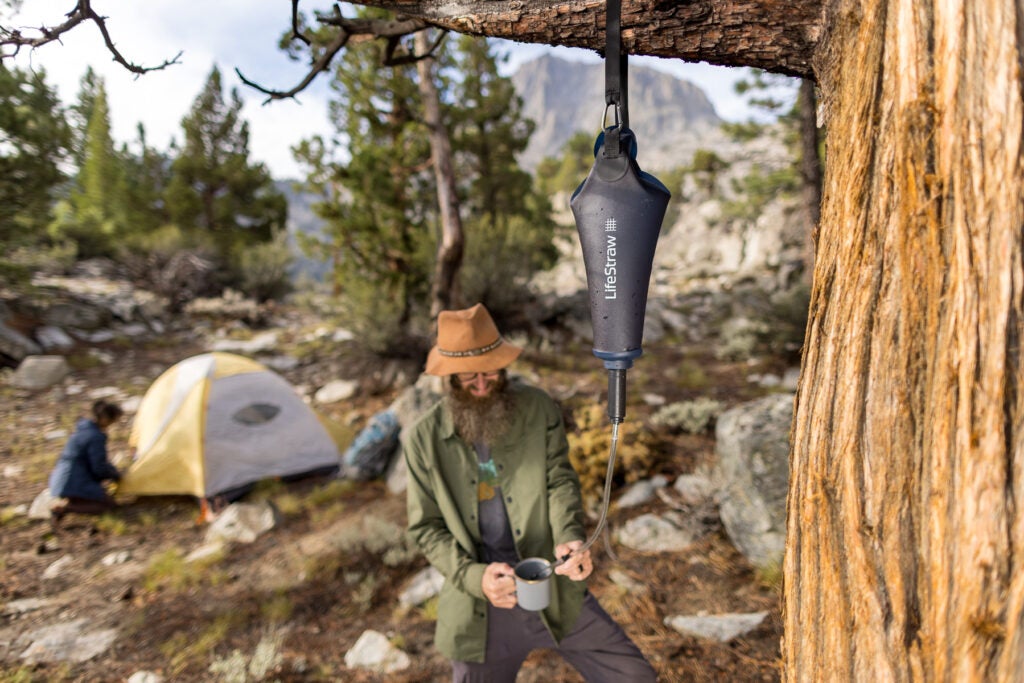
Tent camping has a lot going for it. Your setup fits in the back of a car, you can squeeze into smaller campsites, and there’s nothing quite like unzipping the tent to a mountain, lake, or forest just outside.
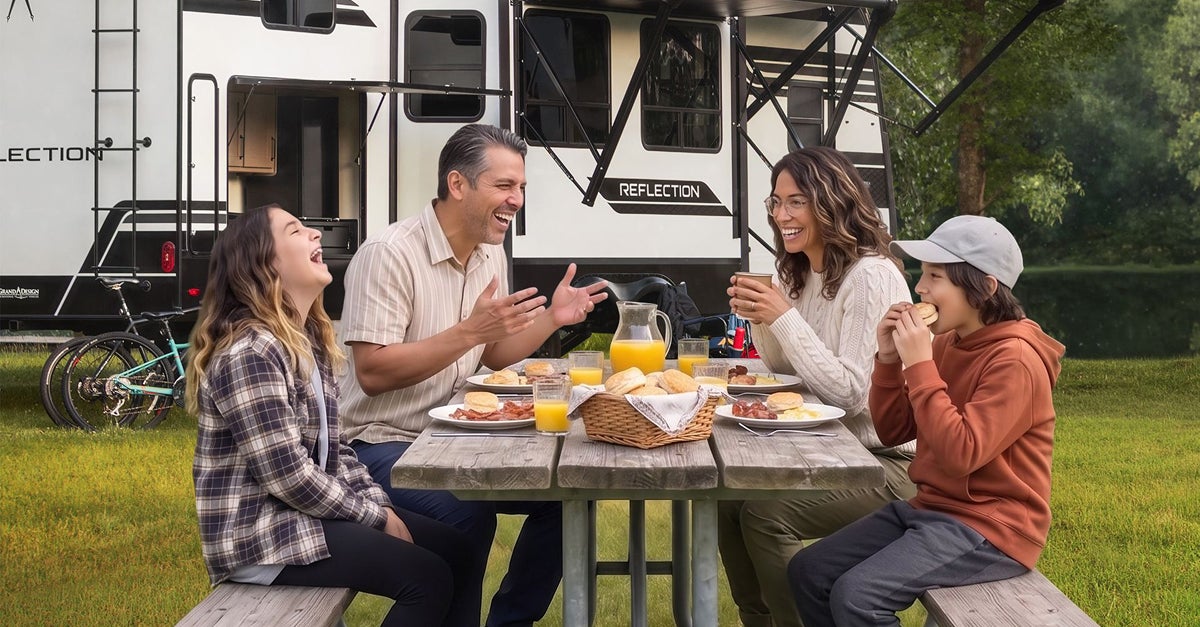
But there may come a trip when sleeping on the ground loses some of its charm. Maybe you’ve packed up one too many wet tents. Maybe your family needs more room. Or maybe you’re simply ready for a bathroom, a kitchen, or a mattress that doesn’t need to be inflated before bed.
An RV can add those comforts while keeping the outdoors at the center of the trip. Buying your first one, though, involves considerably more homework than choosing a tent.
Before you start touring dealer lots, here’s what to know about making the transition from tent camper to RVer.
Start With How You Already Camp
Before asking Which RV should I buy?, ask a more useful question: How do I want to camp?
Think about a typical trip. How many people usually come along? Are you mostly weekend campers or do you spend a week or more away? Do you prefer wooded campgrounds, RV resorts, or dispersed spots? Do you haul bikes, paddleboards, or other bulky gear?
Most importantly, think about what you actually want to change about tent camping.
If you mainly want a comfortable bed and better protection from bad weather, you may not need a huge trailer. A family looking for a bathroom, bunks, and enough space to ride out a rainy afternoon may need something very different.
Before you shop, make two lists: what are your RV must haves and what would simply be nice to have? It can help keep an impressive dealership walkthrough from turning every optional feature into a necessity.
Know Your Basic RV Options
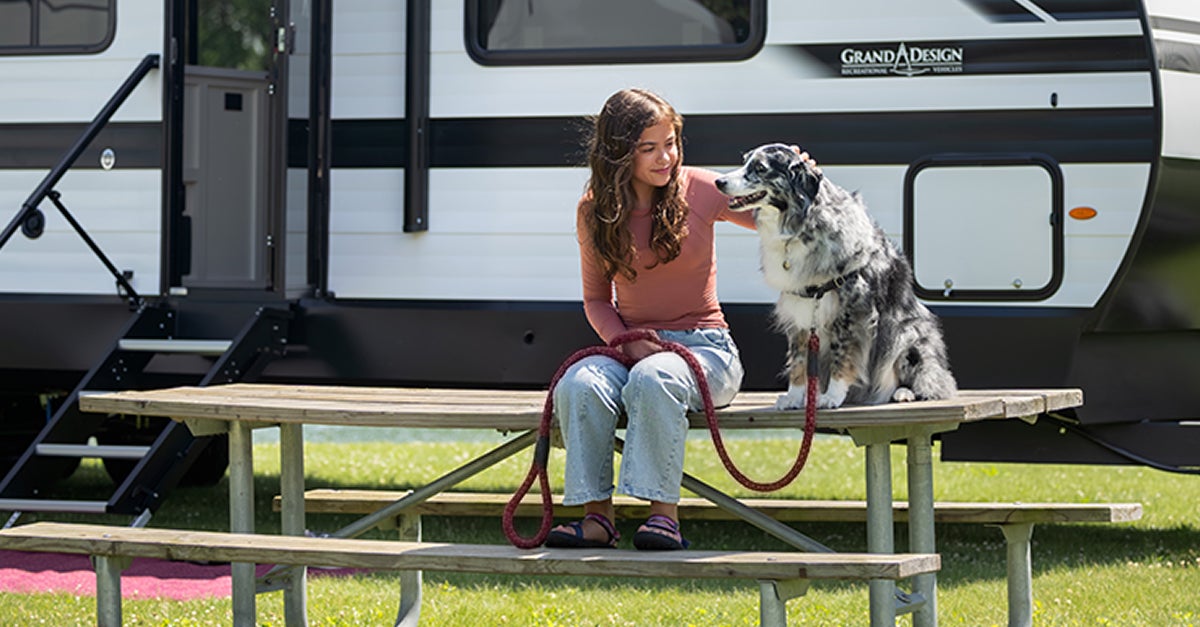
Before you shop, it can also help to understand the major categories of RVs, you can probably quickly rule out some of them based on your camping preferences.
- Travel trailers are towed behind a vehicle and come in a wide range of sizes. For many tent campers, they’re a natural next step because you can unhitch at camp and still use your vehicle for exploring.
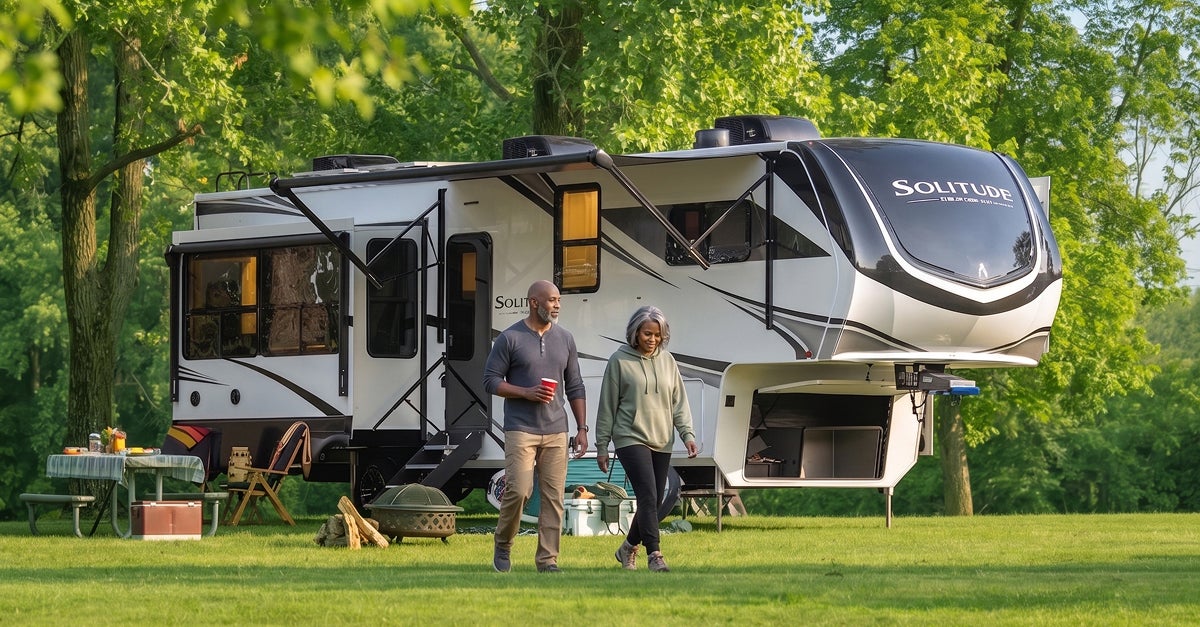
- Fifth wheels are larger towables that connect inside the bed of a pickup truck and often offer more living space.
- Toy haulers include garage-style space for motorcycles, ATVs, bikes, and other adventure gear.
- Motorized RVs combine the vehicle and living space, eliminating the need to tow a trailer.
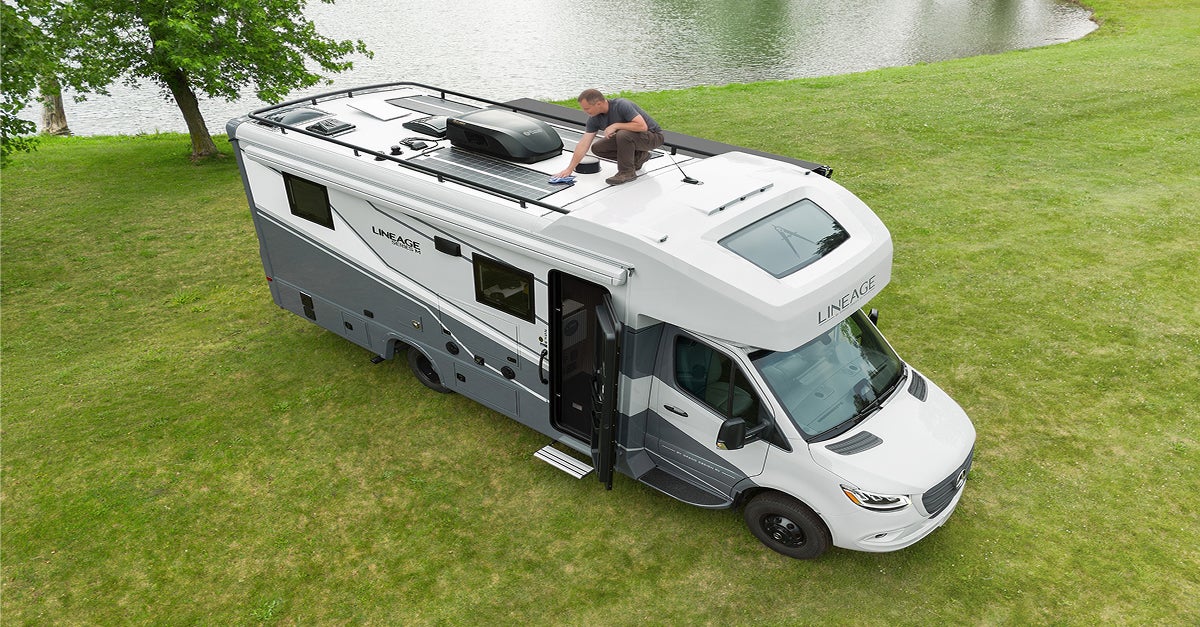
Grand Design, for example, offers travel trailers, fifth wheels, toy haulers, and Lineage motorized RVs. The variety is a good reminder that there’s no single type of RV that’s automatically best for a first-time buyer.
Start with the category that fits your vehicle, crew, travel style, and comfort level, then narrow down from there.
Know What You Can Tow Before You Start Shopping
If you’re considering a towable RV, figure out your vehicle’s limits before you fall in love with a floor plan.
Your maximum tow rating matters, but it isn’t the only number to consider. You’ll also need to account for payload, hitch or tongue weight, passengers, gear, water, and everything else you’re carrying.
And don’t assume the advertised unloaded or “dry” weight of a trailer is what it will weigh when you head to camp. Food, water, batteries, propane, and camping gear add weight quickly.
Check your specific vehicle manufacturer’s towing and payload information and make sure your complete setup falls within those limits. Doing this homework first has another benefit: it immediately narrows the list of RVs you need to consider.
Don’t Assume Bigger Is Better
After years of fitting your home-away-from-home into a tent bag, stepping inside a large RV can be tempting.
But buying the biggest RV your budget and tow vehicle will allow isn’t necessarily the best move.
A smaller RV can be easier to tow, back into a campsite, maintain, and store between trips. Length can also affect where you camp. A compact trailer may fit sites that won’t accommodate a much longer rig.
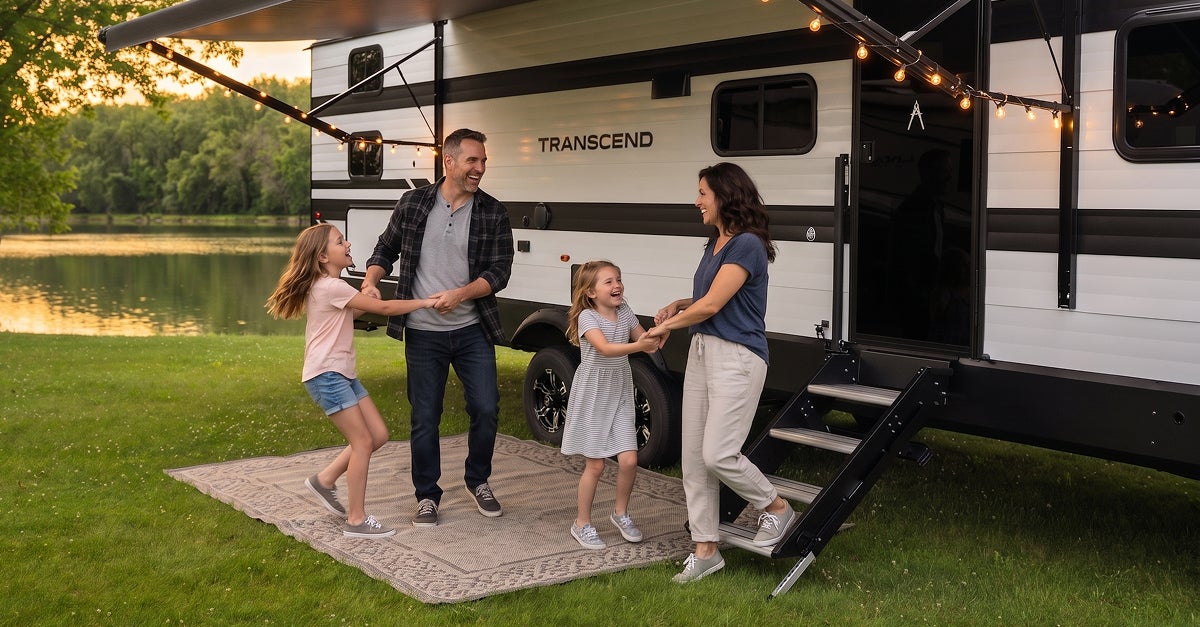
Plus, smaller doesn’t have to mean bare bones. Grand Design’s Imagine AIM is a compact travel trailer under 25 feet, and Transcend Lite was designed as an approachable option for campers transitioning from tents or pop-ups. They’re examples of how smaller trailers can deliver many of the comforts tent campers want without requiring a leap into a much larger rig.
That said, a family planning extended trips may quickly outgrow a trailer chosen solely because it’s easy to tow.
The goal isn’t to buy the smallest RV. It’s to buy the right amount of RV for how you plan to use it.
Choose a Floor Plan for Real Life
Once you’ve settled on a general type and size, floor plan may matter more than the longest list of bells and whistles.
Imagine actually living in the space. Think about what you bring and where you’ll put it. Pretend to make breakfast, sit on the toilet and close the door, put everyone inside at the same time and move around. For many people transitioning from tent camping, just having your own bathroom can feel luxurious, but you want to be realistic that you’ll likely still have space limitations.
Understand the Systems You’re Taking On
One of the appeals of tent camping is simplicity. An RV adds comfort, but it also adds systems you’ll need to learn.
Depending on your rig, that may include fresh, gray, and black water tanks; shore power; batteries; propane; water hookups; leveling; and dumping waste tanks.
You don’t need to become an RV technician before your first trip, but you do need to understand the basics of your own rig.
Ask for a thorough walkthrough when you purchase it, take photos or videos during the demonstration, and keep the owner’s manual handy. There are also a ton of YouTube videos out there offering tips and advice on all types of rigs.
Budget for More Than the RV
The purchase price isn’t necessarily the full cost of getting campground-ready.
First-time buyers may also need things like:
- Hitch or towing equipment
- Brake controller
- Wheel chocks and leveling equipment
- Drinking-water hose and pressure regulator
- Sewer hoses and fittings
- Electrical adapters and surge protection
- Insurance and registration
Then there are ongoing expenses such as maintenance, fuel, campground fees, and potentially RV storage.
The good news: plenty of your existing camping gear will still be useful. Camp chairs, outdoor tables, cookware, lights, and other basics don’t suddenly become obsolete when you buy an RV.
Start with the essentials and add the extras after you’ve spent a few nights in your rig and know what you’ll actually use.
Look Past the Shiny Features
A beautiful backsplash is easy to appreciate on a dealership floor. Construction quality, service, warranty coverage, and inspection procedures aren’t nearly as exciting, but they ultimately matter more.
Ask how the RV is inspected before delivery. Find out what the warranty covers and where you can get service while traveling. Grand Design, for example, says each of its RVs undergoes a 250-point inspection before being shipped to a dealer.
The dealership matters, too. A strong service department can become far more valuable after the purchase than a small difference in sticker price.
Make Your First RV Trip an Easy One
Once the keys are in your hand, resist the urge to make your inaugural trip a two-week, multi-state road trip.
Use The Dyrt to find a campground close to home that fits your rig, then keep the itinerary simple enough that you have time to learn your new setup. This trip isn’t about cool photos and getting out in nature, it’s about testing out your new setup and getting ready for your first real trip. Consider it a dry run.
A site with hookups can reduce the number of variables you’re learning at once. Arrive well before dark, and if you’re towing, practice backing up before you get to camp.
You’ll discover something you forgot. You’ll probably bring something you never touch. You’ll learn where you actually want to store your coffee mugs and which RV gadgets are worth keeping. Take notes, then adjust for next time.
Your First RV Should Make Camping Easier
Moving from a tent to an RV doesn’t mean giving up what you love about camping. Ideally, it removes some of the friction that keeps you from doing more of it.
Maybe that means a compact trailer that makes weekend trips easier. Maybe it’s a bunkhouse with room for the whole family. Maybe it’s a motorhome built for longer road trips.
The best first RV isn’t necessarily the biggest, smallest, most luxurious, or most affordable one. It’s the one that fits your vehicle, your crew, and the way you actually want to camp, so you can spend less time thinking about your RV and more time deciding where to take it next.
The Dyrt is the only camping app with all of the public and private campgrounds, RV parks, and free camping locations in the United States. Download now for iOS and Android.Popular Articles:
Articles on The Dyrt Magazine may contain links to affiliate websites. The Dyrt receives an affiliate commission for any purchases made by using such links at no additional cost to you the consumer.