Battle Ground, Washington sits at the foothills of the Cascade Mountains with elevations ranging from 200-600 feet, providing moderate temperatures year-round. The area's volcanic lake origins and mixed Douglas fir forests create distinct camping environments with particularly good conditions for equestrians and horses. Summer temperatures typically reach 75-85°F during July and August with cooler evenings around 50-55°F.
What to do
Trail riding at L.L. Stub Stewart State Park: Located about 45 minutes from Portland, L.L. Stub Stewart State Park offers extensive equestrian trails through dense forest. The park's Hares Canyon Horse Camp connects directly to a network of riding paths. "The park has many hiking, biking and equestrian trails. I had a nice run on the Bumping Knots Loop," notes Stephanie Z., while Nathan R. adds, "There are communal fire rings in the back section (which is great for groups!)."
Volcanic lake activities at Battle Ground Lake: The 28-acre volcanic crater lake provides swimming, fishing, and non-motorized boating. "They have a cool volcanic lake with a swimming area and great fishing. It's like a mini crater lake. I mean mini like pond size," reports Ashley Y. The lake is stocked with trout and has bass and bluegill populations making it popular with anglers.
Mountain biking and disc golf: Many parks in the region maintain multi-use trails suited for mountain biking. Milo McIver State Park features both riding trails and disc golf courses. "Home of the annual Beaver State Fling, a PDGA sanctioned National Tour event, Milo McIver is an excellent host for the international players that come to the Pacific Northwest," explains Steve C. The park's varied terrain makes it ideal for mixed outdoor activities.
What campers like
Private wooded sites: Beacon Rock State Park Campground offers secluded camping spots within dense forest. "Sweet little campground with lots of beautiful trees and greenery. Still had spots available on a busy weekend," says Corinna B. Another visitor mentions that "Camp sites are kind of small, with most in forested areas. A few are slightly more exposed and some are split-level, in that you park up top and walk a few steps down to your camp site."
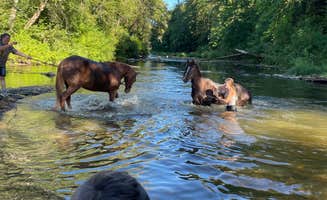
Easy access to water: Many campers appreciate proximity to lakes and rivers. At Oxbow Regional Park, visitors enjoy the Sandy River setting. "Easy distance from Portland on the Sandy River. Down a steep hill (important if you're biking)," notes Ben W. Krupa adds, "We were able to hike the area and enjoy a serene weekend in nature. Clean campsite with the basic amenities, conveniently only a 30-minute drive from Portland."
Reasonable availability: Several campgrounds maintain good availability even during peak season. "Rolled in January 1st. Self pay. About 5 sites with power and water. We got a nice level one. There are only 5 other sites in the whole campground occupied," reports Chris J. about Battle Ground Lake State Park during winter months, highlighting the year-round accessibility.
What you should know
Walk-in tent site logistics: Some campgrounds require short hikes to reach tent sites. At Panther Creek Campground, "The tent pads are a typical woodsy mix of pine straw, leaves, and loose gravel. Sleeping pads are a blessing, but so are nicely stacked leaf piles in a pinch. Tent stakes require a little oomph, I just use the ball of my shoe to push it into the ground," explains Nathan R.
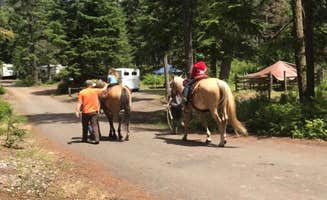
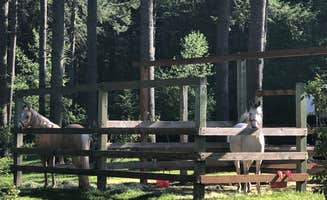
Horse-specific requirements: Equestrian camping near Battle Ground requires planning for horse waste management. Camp Wilkerson has designated horse corrals and specific cleanup rules. "Bring your horses and ride the trails and stay at the horse camp," suggests Schona K., while also noting, "If you do not reserve your spots you can only stay one night and there is an additional $5 transaction fee to pay on site."
Limited connectivity: Most campgrounds have minimal cell service. "No cell service (occasionally 1 bar LTE AT&T). Too heavily forested for Starlink. Had to leave early Monday morning since we were working and needed internet," reports Kim G. about Seaquest State Park. Plan accordingly by downloading maps and entertainment before arrival.
Tips for camping with families
Playground access: Seaquest State Park Campground provides dedicated play areas for children. "My kids loved the addition of a playground. Many parks don't have this and it kept them entertained for hours," reports Mary C. Another camper notes, "There is a huge playground area as well as a day use site with covered shelters within the park."
Junior Ranger programs: Several state parks offer educational activities for children. "At night the campground had a great Junior Ranger program with a very enthusiastic park ranger that kept the almost 50 people/kids entertained. She was great at engaging all the kids and teaching them about the park," shares Ashley B. These programs typically run during summer months.
Beware of wildlife encounters: Food storage practices matter for family safety. "There are no food storage lockers, you cannot leave food out on the tables. You are still in the wilderness, and you are in bear/cougar territory. Hang your bags, or go throw your food back in trunk of your car," advises Nathan R., highlighting the importance of proper camping protocols with children.
Tips from RVers
Hook-up availability: Camp Wilkerson provides varied site options for different RV needs. "We brought a pop up camper and was able to get it set up nicely. Water and toilets are available," mentions Don H. The campground offers electric, water, and sewer connections at select sites.
Site selection strategies: When choosing RV spots, consider privacy needs. "We stayed at the Woodward full hook up sites. Only a small number of them so felt spacious and secluded. Close to a busy train track and you can hear some highway noise but overall we felt secluded," observes Joe C. about Beacon Rock State Park. Sites below number 40 typically provide more shade and privacy.
Dump station considerations: Factor in dump station fees when budget planning. At Seaquest State Park, a camper notes, "Electric and water, dump station included in fee which was $40/night. If not camping here, it is $5 to dump." Most state parks maintain on-site dump stations, while national forest campgrounds may require travel to nearby facilities.






 Traveler


