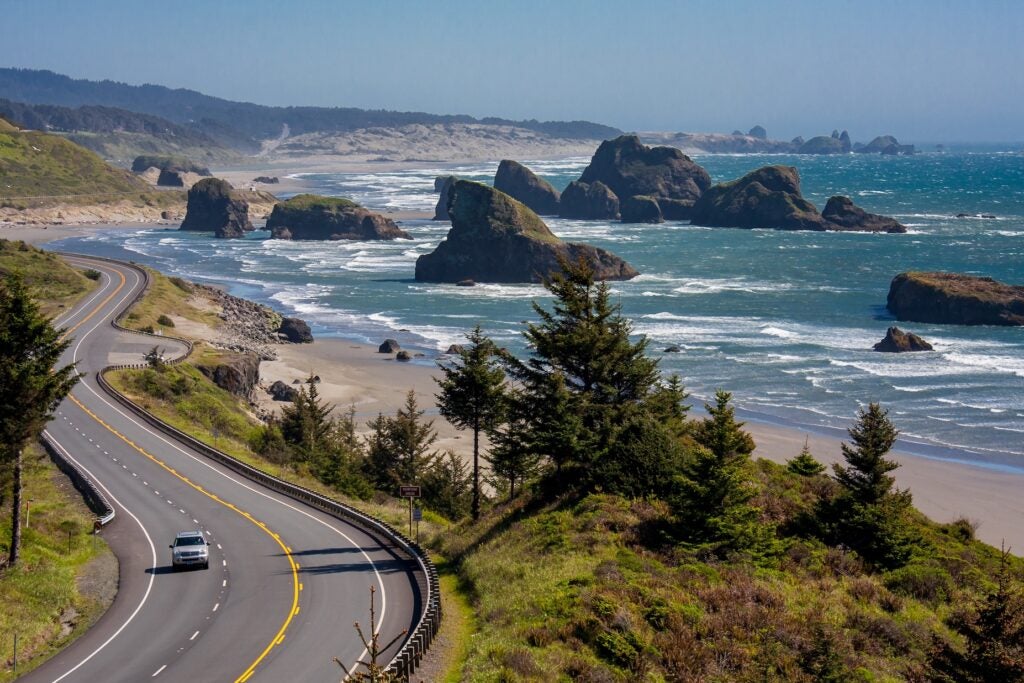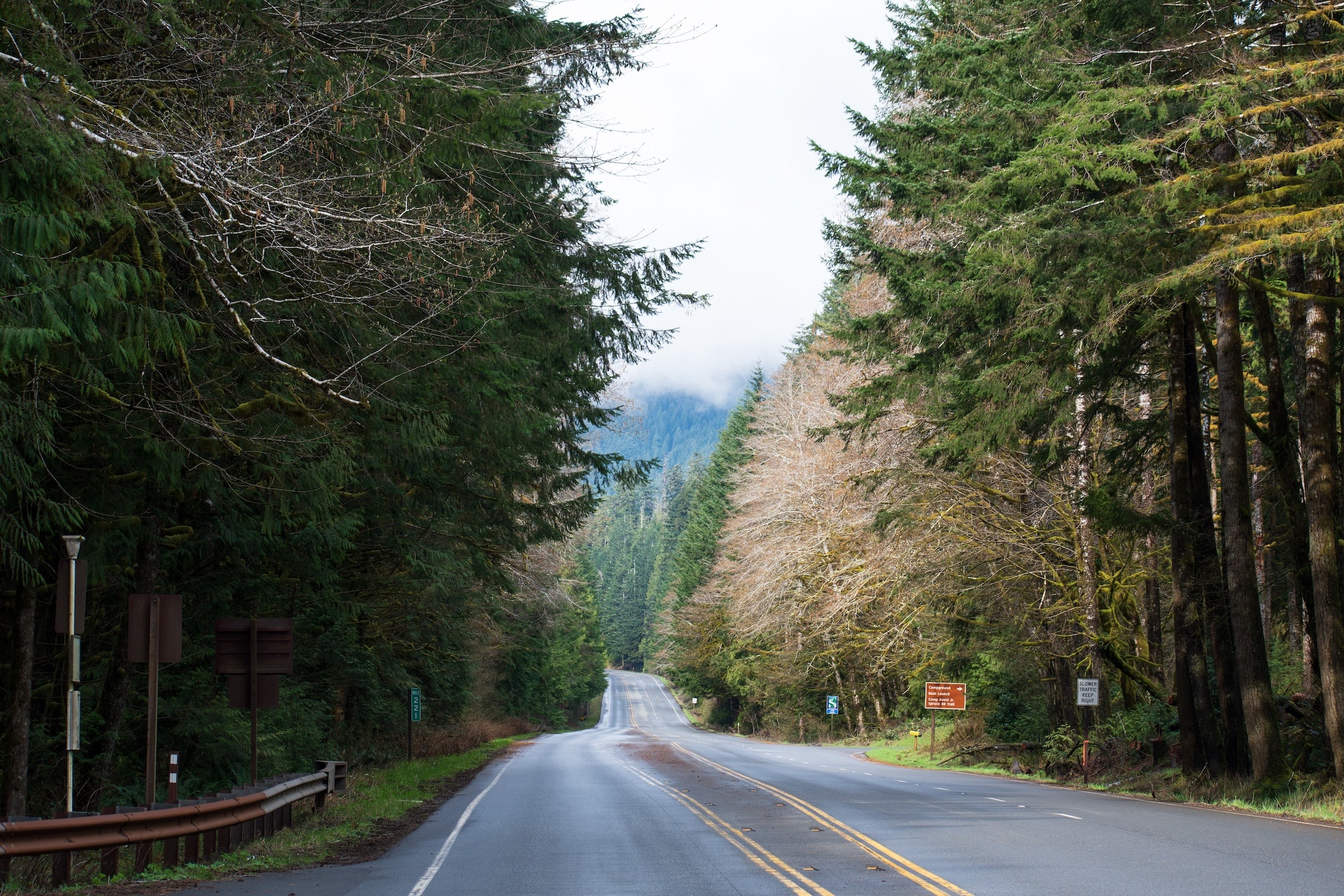
This opening segment of the Pacific Coast Highway road trip begins in Olympic National Park, Washington and travels south to Astoria, Oregon. Covering roughly 250 miles, this stretch sets the tone for the entire journey with remote beaches, dense rainforests, and historic coastal towns. The route follows US-101 through the western edge of the Olympic Peninsula before tracing the Pacific shoreline and finishing at the Columbia River’s mouth. Expect driftwood beaches, moss-covered forests, working fishing towns, and long stretches with limited services. Most travelers spend three days here, though adding a fourth day allows more time for hiking, beaches, and slower coastal pacing. For broader context and planning beyond this section, see the Pacific Coast Highway Overview.
Olympic Peninsula and Southwest Washington Coastal Overview
This segment covers the western and southwestern edges of Washington State, where US-101 loops around Olympic National Park and continues south toward the Oregon border. The drive transitions from glacier-carved lakes and rainforests to open Pacific coastline and estuarine wetlands near Willapa Bay. Roads are mostly two-lane highways with frequent curves and forested stretches. Summer offers the most stable weather, though fog and light rain remain common. Spring and fall bring fewer visitors but more frequent storms. Services are limited between towns, and cell coverage drops out for long stretches, particularly along the park’s western boundary.
Quick Facts for Olympic National Park to Astoria
| Total Distance | Approximately 250 miles |
| Estimated Drive Time | About 6 hours without stops |
| States Covered | Washington and Oregon |
| Main Highway | US-101 |
| Recommended Time | 3 to 4 days |
| Cell Service | Limited in Olympic National Park and coastal areas |
| Reliable Fuel Stops | Port Angeles, Forks, Aberdeen, Raymond, Long Beach |
Travel Lighter with Lightship RV
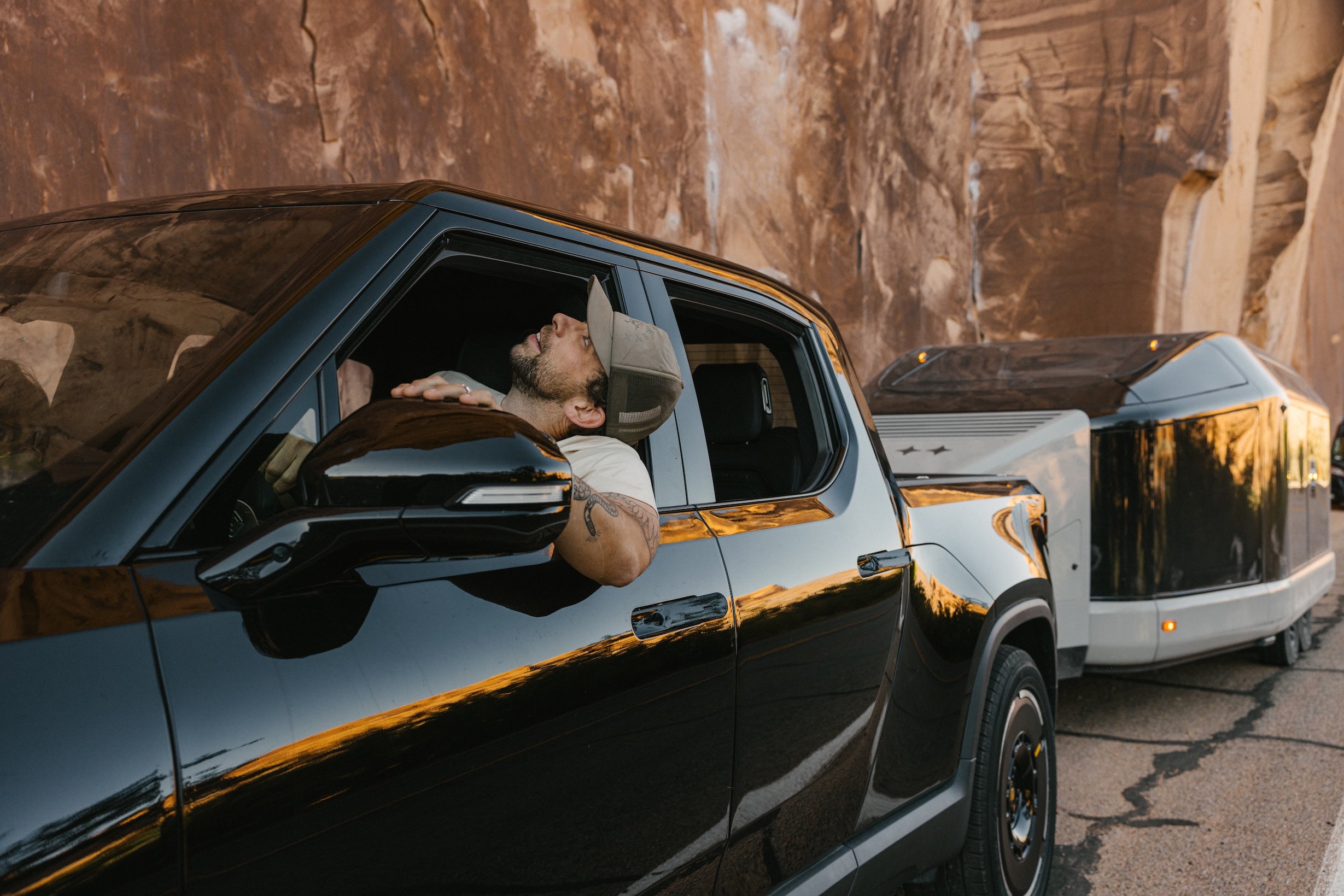
Planning an RV road trip? Lightship is rethinking what’s possible on the road. The all-electric, self-propelled Lightship AE.1 is designed with TrekDrive™ technology to help extend range and make longer routes feel more approachable, especially on winding roads like California’s Highway 1. It’s built for destinations that sit farther between charging or fuel stops, and for camping that feels quieter, lighter, and more connected to the places you’re exploring.
Day-by-Day Olympic National Park to Astoria Itinerary
Day 1: Port Angeles to Forks via Olympic National Park
Plan for roughly 85 miles of driving today, with about two hours behind the wheel before stops. From Port Angeles, US-101 follows the northern edge of Olympic National Park along Lake Crescent. This deep, glacial lake is one of the park’s most accessible highlights. A short walk to Marymere Falls offers an easy forest hike and a good introduction to the park’s ecosystem. Continuing west, the road winds through dense evergreen forest before reaching Forks.
Forks serves as a practical base for exploring the park’s west side. In the afternoon, detour west on Highway 110 toward Rialto Beach. At low tide, walk north along the shoreline to Hole-in-the-Wall for tide pools and sea stacks. First Beach at La Push provides an easier beach stop closer to town. Overnight near Forks allows flexibility for weather and tides.
Good camping options include Mora Campground near Rialto Beach or Bogachiel State Park just south of Forks. Stock up on food and fuel in Forks before heading farther south.
Day 2: Forks to Kalaloch via Hoh Rain Forest and Coastal Beaches
Today’s drive is shorter at about 65 miles, but plan most of the day for stops. Start early and head south on US-101 to the Upper Hoh Road turnoff. The Hoh Rain Forest sits 18 miles inland and is one of the most visited rainforest areas in the park. Short loops like the Hall of Mosses and Spruce Nature Trail provide a clear sense of the dense, moss-covered environment. Wildlife sightings are common, especially Roosevelt elk near the river.
After returning to US-101, continue south toward the coast. Ruby Beach is a worthwhile stop for its sea stacks and driftwood shoreline. Timing visits around tides improves beach access and safety. By late afternoon, reach the Kalaloch area along the park’s coastal boundary.
Spend the night at Kalaloch Campground, which sits above the ocean with direct beach access. South Beach Campground or Hoh Campground are alternatives if Kalaloch is full. Evening light often brings calmer conditions along the shoreline.
Day 3: Kalaloch to Long Beach Peninsula via Lake Quinault and Aberdeen
This is the longest driving day at roughly 140 miles and three to four hours of road time. Shortly after leaving Kalaloch, detour inland to Lake Quinault. Short rainforest trails and lakeside viewpoints make this a good morning stop. The historic lodge area also provides restrooms and limited supplies.
Back on US-101, the route heads south through small communities before reaching Aberdeen and Hoquiam. This is the most reliable place for fuel, groceries, and lunch on this stretch. South of Aberdeen, the highway follows Willapa Bay with long views over tidal flats and oyster beds.
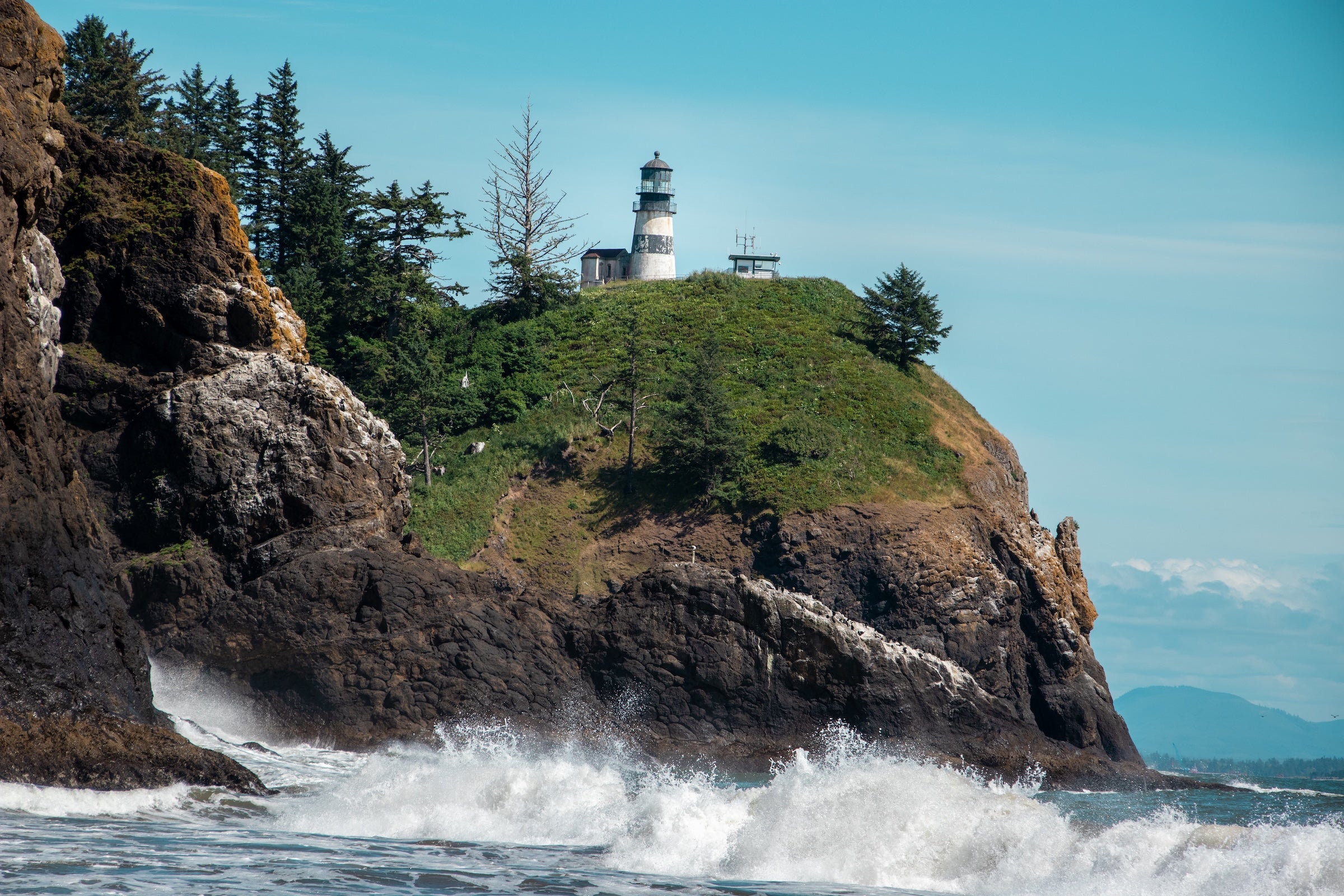
By afternoon, reach the Long Beach Peninsula. The wide, hard-packed beach is open to vehicles in designated areas, and the Discovery Trail offers a paved option for walking or biking. End the day at Cape Disappointment State Park, where forested campsites sit close to coastal trails and lighthouses.
Day 4: Long Beach Peninsula to Astoria, Oregon
The final day is short, with about 20 miles of driving. From Ilwaco, follow US-101 south across the Astoria-Megler Bridge. The crossing offers broad views of the Columbia River and the Pacific entrance. Once in Astoria, spend the day exploring the riverfront and historic downtown.
Highlights include the Columbia River Maritime Museum, walking the Astoria Riverwalk, and driving up to the Astoria Column for a full view of the river, coastline, and surrounding hills. Astoria’s compact layout makes it easy to explore on foot.
Camping options nearby include Fort Stevens State Park west of town, or stay in Astoria to prepare for the next segment of the Pacific Coast Highway, as outlined in the Pacific Coast Highway Overview.
Best Campgrounds Between Olympic National Park and Astoria
- Kalaloch Campground sits along the Olympic coast with direct access to beaches and coastal trails. Sites are forested and well spaced, making it one of the most popular ocean-adjacent campgrounds in Washington.
- Cape Disappointment State Park provides large campsites near lighthouses, beaches, and interpretive trails. Facilities include showers, restrooms, and reservable sites, making it a comfortable final stop in Washington.
- Mora Campground is located near the Quillayute River and Rialto Beach. It offers a convenient base for coastal hikes and tidepooling with a quieter forest setting.
- Hoh Campground places campers directly inside the rainforest, close to trailheads and wildlife corridors. Sites are simple and shaded, ideal for tents and small rigs.
- Bogachiel State Park offers river access, showers, and partial hookups near Forks. It works well for travelers needing amenities without leaving the forested setting.
- Willaby Campground sits along Lake Quinault with easy water access and nearby rainforest trails. The setting is quiet and scenic, especially in the early morning.
Top Things to Do Along This Pacific Coast Highway Segment
Beaches, Forests, and Scenic Stops
Highlights include Rialto Beach, Ruby Beach, and the Hoh Rain Forest. Each provides a different perspective on the Olympic Peninsula’s ecosystems, from wave-carved coastline to dense interior forest. Tide timing plays a major role in beach access, so check local tide charts.
Historic and Cultural Sites
Cape Disappointment’s lighthouses and interpretive center provide insight into early navigation at the Columbia River. In Astoria, museums and historic homes reflect the area’s maritime and trading past.
Outdoor Recreation
Hiking is the primary activity here, with short rainforest loops and longer coastal walks available throughout the segment. Lake Quinault supports kayaking and canoeing in calm conditions, while Long Beach Peninsula offers biking and beach walking.
Unusual and Local Stops
Forks’ pop culture references, Marsh’s Free Museum on the Long Beach Peninsula, and the Astoria Column all add character to the drive without requiring major detours.
Practical Travel Tips for Olympic National Park to Astoria
Fuel and food options are limited between towns, especially between Forks and Aberdeen. Fill your tank early and carry extra water. Expect frequent rain and fog even in summer, and pack waterproof layers. Wildlife frequently crosses roads near forested areas, especially early and late in the day. Cell service is unreliable through much of the Olympic Peninsula, so download maps and campground information in advance. Olympic National Park requires a park pass, and Washington State Parks require a Discover Pass for day use.
Additional Segments & Resources
This Crescent City-to-San Francisco guide is one part of the 19-day Pacific Coast Highway adventure. If you’re continuing onward, or if you started here in the middle, be sure to check out the other segment guides on The Dyrt for a complete picture:
- Segment 1: Olympic National Park, WA to Astoria, OR (4-day road trip)
- Segment 2: Astoria, OR to Brookings, OR (4-day road trip)
- Segment 3: Brookings, OR to San Francisco (4-day road trip)
- Segment 4: San Francisco, CA to Santa Barbara, CA (3-day road trip)
- Segment 5: Santa Barbara to San Diego (4-day road trip)
Safe travels and happy camping as you explore the Pacific Coast Highway!
The Dyrt is the only camping app with all of the public and private campgrounds, RV parks, and free camping locations in the United States. Download now for iOS and Android.Popular Articles:
Articles on The Dyrt Magazine may contain links to affiliate websites. The Dyrt receives an affiliate commission for any purchases made by using such links at no additional cost to you the consumer.