Freeze-dried meals have earned a bad reputation. One chef in Eugene, Oregon, is out to fix that – one bag of stroganoff at a time.
You know the moment. You’ve just rolled back into camp – boots off, pack down, sunburn setting in, that specific full-body tiredness that only comes from a day spent entirely outside. Doesn’t matter whether it was fourteen miles, four hours on the water, or a very committed afternoon in a hammock. You’re back, the light is going gold, and you are ravenous.
So you fire up the stove and stand there holding a foil pouch that promises “Beef Stroganoff” in a font that seems weirdly confident about it.
Ten minutes later you’re eating something with the texture of warm gravel and the flavor profile of a bouillon cube’s distant memory. You eat it anyway, because you’re starving. But this was supposed to be the good part of the day – the sit-down, the payoff, the part where everyone’s quiet because the food showed up. Instead it’s just fuel.
Here’s the thing: it doesn’t have to be that way. And understanding why it’s usually that way turns out to be genuinely interesting. Plus it’ll make you a much smarter shopper next time you’re staring down a wall of backpacking meals.
First, a quick detour into food science (it’s cooler than it sounds)
Freeze-drying is not dehydrating. This is the single most useful thing to know about camp food, and almost nobody knows it.
Dehydrating uses heat and moving air to evaporate water. It works, but heat is a blunt instrument. It collapses the cell walls in your food, which is why dehydrated vegetables rehydrate into sad, chewy little erasers. Heat can also destroy a chunk of the heat-sensitive nutrients (vitamin C and several B vitamins can take a real beating).
Freeze-drying pulls off a genuinely neat trick. The food is frozen solid first, then placed in a vacuum chamber. Under low enough pressure, the ice doesn’t melt. It sublimates: it goes straight from solid to vapor, skipping the liquid phase entirely.
Why does that matter? Because the water leaves without ever sloshing around. The food’s cell structure stays intact. You end up pulling out roughly 98% of the moisture while keeping the shape, the color, most of the nutrients, and the ability to soak that water right back up in a few minutes.
This is also why freeze-dried food is so absurdly light. Water is heavy. Remove nearly all of it and a full dinner drops to five or six ounces. Seal it in a mylar bag with an oxygen absorber and it’ll sit patiently in your gear closet for years.
Freeze-drying is a great way to preserve camp food. But what a lot of companies decide to freeze-dry is a little questionable.
Turn the bag over
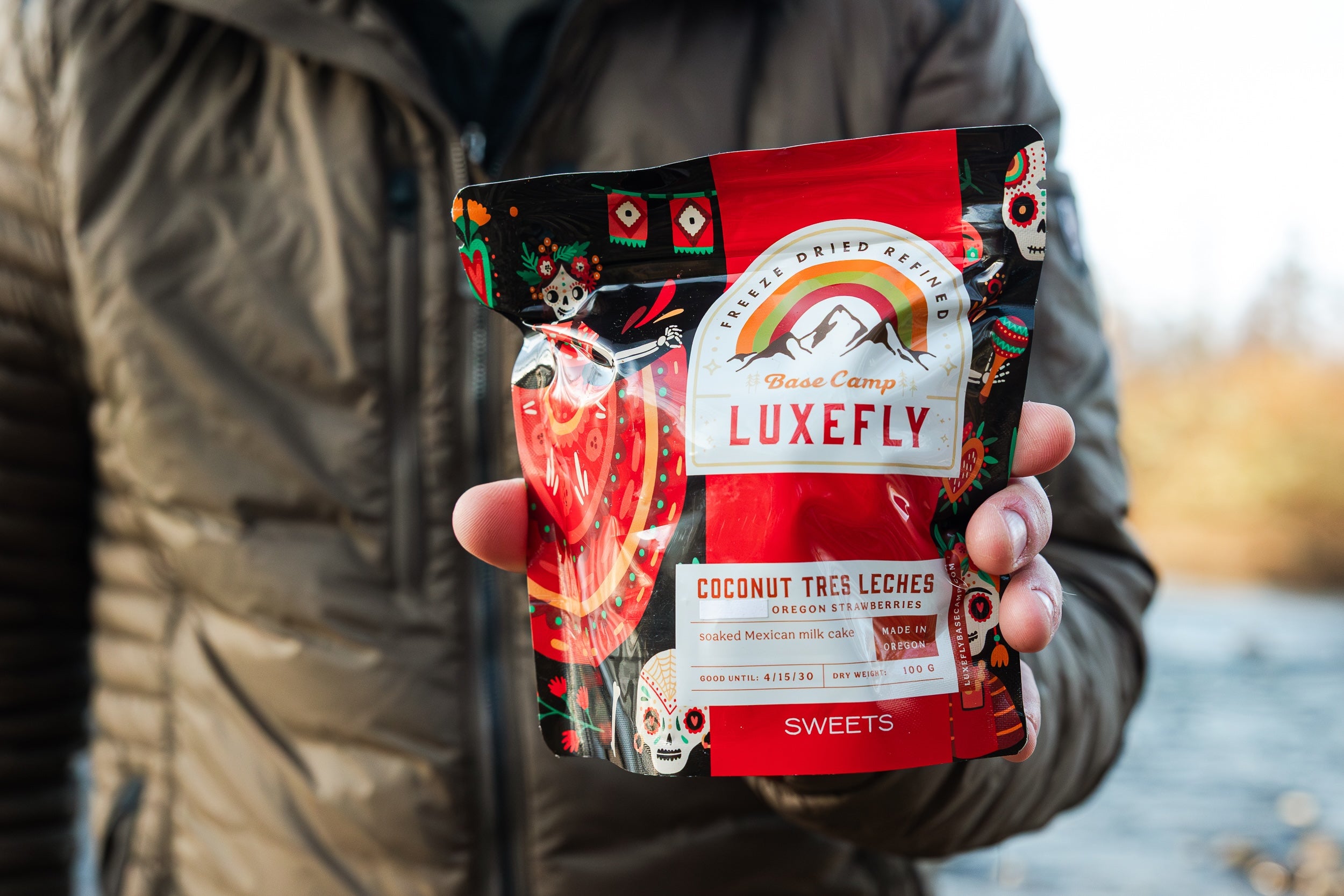
Next time you’re in the camp food aisle, do the single most revealing thing you can do: read the ingredient list.
You’ll often find a supporting cast of ingredients that have nothing to do with dinner and everything to do with manufacturing at scale — soy protein isolate, whey protein concentrate, soy lecithin, maltodextrin, modified food starch, “natural flavors,” and a tail of preservatives.
These aren’t there for you. They’re there because they’re cheap, they bulk up a protein number on the label (the protein trend is REAL), they keep powders from clumping, and they make a product that behaves predictably on an assembly line.
They’re also a big part of why that stroganoff tasted like nothing in particular, and why you felt vaguely sludgy an hour later.
Now here’s the ingredient list for Luxefly Base Camp’s Filet Mignon Beef Stroganoff, in full:
Organic cremini and shiitake mushrooms, organic sour cream, organic beef stock (onions, leeks, tomatoes, carrots, celery), organic egg noodles, RBST-free butter, fresh organic thyme, Pinot Grigio white wine, and grass-fed filet mignon.
There’s nothing in there you couldn’t buy yourself. There’s no ingredient whose job is to be an ingredient. It’s a recipe, and it looks like the one you’d follow in your own kitchen on a night you were trying to impress somebody. Except this one was frozen and put in a vacuum chamber afterward.
That’s the value of Luxefly. They cook real food first, then freeze-dry it.
The chef behind the bag
Luxefly is the project of Sara Willis, who has spent about three decades cooking professionally and has opened eight restaurants across San José del Cabo, Mexico, and Eugene, Oregon since 1994.
The origin story is refreshingly unglamorous: she got back into hiking, camping, and backpacking later in life, ate what was available on the trail, and thought, no. She wanted to bring her actual cooking with her.
That background shows up in the lineup, which reads more like a restaurant menu than a gear catalog. Chicken Pozole Verde. Banh Mi Curry Noodle Bowl. Wild Oregon Mushrooms and Creamy Polenta with red Oaxacan mole. Duck Confit and White Bean Cassoulet. French Onion Soup. Chile Relleno with poblanos and burrata. There’s a Denver Scramble Breakfast Skillet, Brioche French Toast with organic strawberries and rhubarb, and a Black and Blueberry Shortbread Cobbler.
The sourcing follows the same logic. Meat comes from Longs Meat Market, the Eugene butcher shop Willis has been buying from for twenty years. Seafood comes from Newman’s Fish Market, also in Eugene. Produce leans local and organic, and the menu shifts with the Oregon growing season, with new meals dropping as ideas come and seasons change.
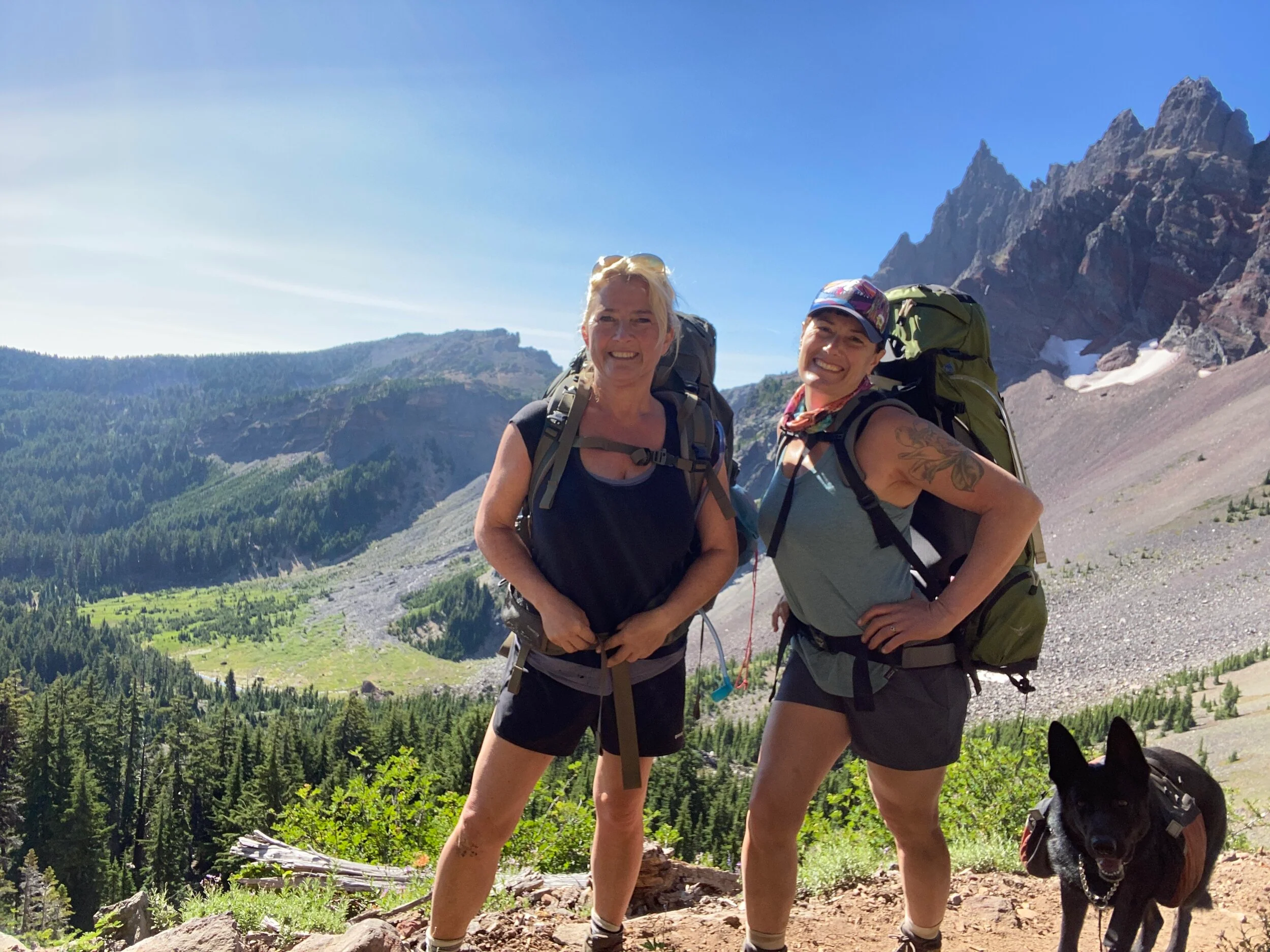
The move nobody tells you about: use them as sides
Here’s a genuinely useful trick that changes how you plan a trip.
Most people treat a freeze-dried bag as a one-to-one substitute for dinner. But Luxefly’s smaller portions work beautifully as components. Bring the Mexican Corn Esquite or the Asparagus and Cremini Mushroom Risotto as a side, and suddenly the trout you actually caught, or the steak you brought in the cooler on night one, has something to sit next to.
This works especially well for car camping and van trips, where you’ve got room for a cooler but not for a spread. Two fresh things plus one bag equals a real meal with about ten percent of the prep. It also solves the group-camping math problem, where one person is vegan, one is gluten-free, and one exclusively eats meat: everybody gets a shared side, and everybody’s mains stay separate and uncontroversial.
Larger portions, meanwhile, run as full mains. Most bags feed one hungry person or two moderately hungry ones, depending on how brutal the day was.
How to not mess it up at camp
The preparation is close to foolproof, but there are a couple of things worth knowing.
- Take the oxygen packet out first. This is the number one rookie error and it is deeply, permanently funny to everyone in your group.
- Use genuinely boiling water. About 8 ounces per bag, poured straight in. Simmering isn’t enough. The hotter the water, the faster and more completely the food rehydrates.
- Stir, seal, wait, stir again. Five to ten minutes depending on the meal. Stirring halfway through is not optional; it’s the difference between an evenly hydrated dinner and a bag with a dry crunchy corner.
- Give it the extra two minutes. Everybody pulls the trigger early because they’re hungry. Everybody regrets it. Set a timer, take your boots off, look at the view.
The bags are certified BPA-free, so eating straight out of them is fine and saves you a dish. If you’d rather use a bowl, cover it tightly, you want to trap that steam.
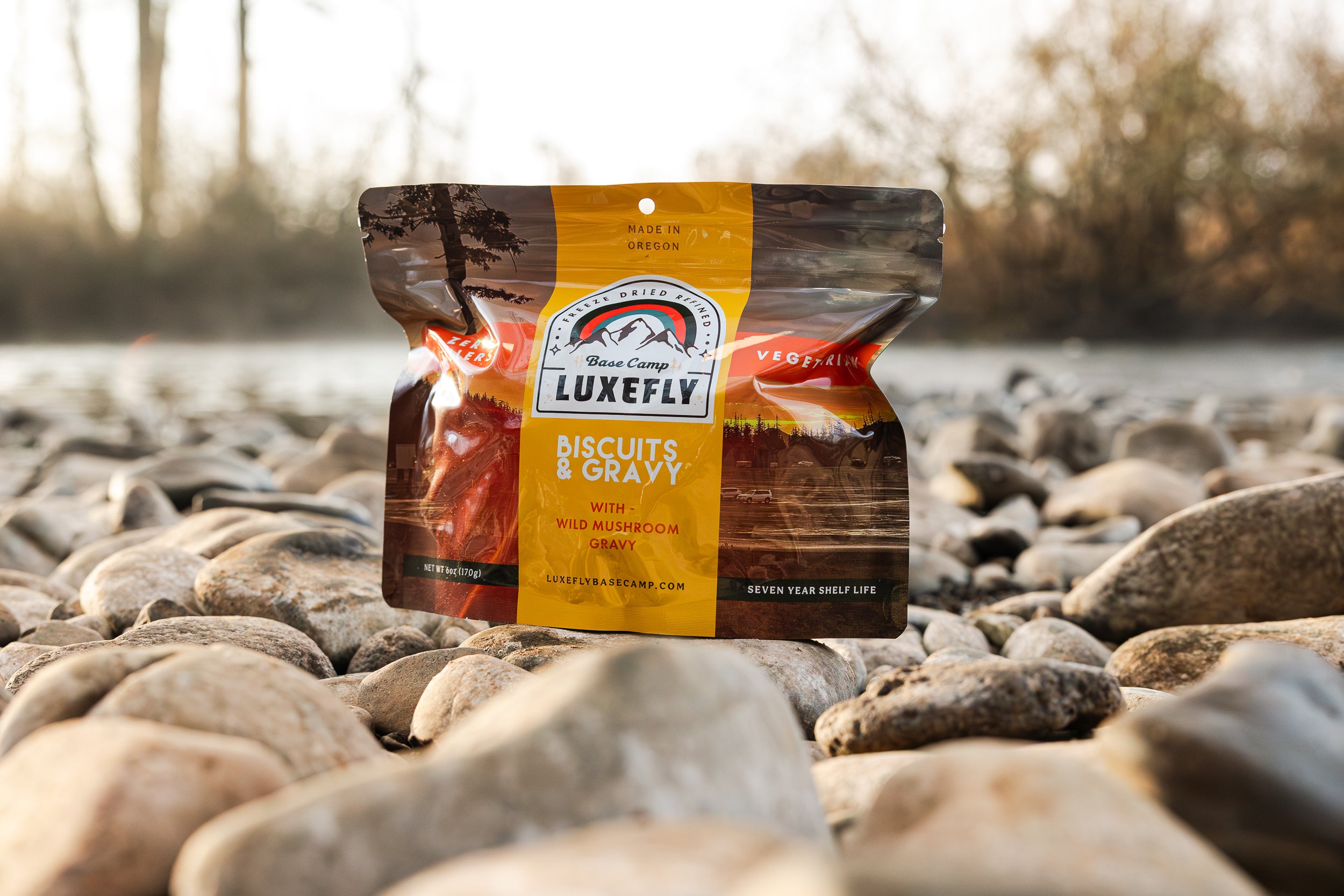
Something for Everyone
Most meals are naturally gluten-free (this is the no fillers part and using wheat free tamari in place of soy sauce), with options for dairy-free, vegetarian, vegan, and high-protein, so filtering to your needs takes about ten seconds. Orders ship within 48 hours(if it is longer they let you know and ask if you would prefer a substitution vs. waiting for a meal that is getting packed over the weekend . There’s a subscription option and a trip planner tool if you’re mapping out a longer route.
And because Luxefly and The Dyrt are working together on this: every Luxefly purchase comes with a free year of The Dyrt PRO (a $59 value!) with your code emailed after checkout. First-time buyers can also use the code THEDYRT for 10% off.
The Dyrt is the only camping app with all of the public and private campgrounds, RV parks, and free camping locations in the United States. Download now for iOS and Android.Popular Articles:
Articles on The Dyrt Magazine may contain links to affiliate websites. The Dyrt receives an affiliate commission for any purchases made by using such links at no additional cost to you the consumer.