Camping near Damascus, Virginia centers around several notable Jefferson National Forest recreation areas with elevations ranging from 1,900 to 3,500 feet. The region features numerous creek-side camping options with established sites along forest roads maintained by the U.S. Forest Service. Most campgrounds experience temperatures 10-15°F cooler than surrounding lowlands during summer months.
What to do
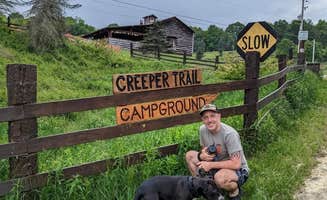
Mountain biking on Whitetop Mountain: Access Creeper Trail Campground for direct trail connections. "The Virginia Creeper trail head is right around the corner from the entrance to the campground," notes Catherine O., who appreciates the campground's location next to this popular cycling route.
Fishing in local streams: Trout fishing opportunities abound in Hurricane Creek near Hurricane Campground. "This is a beautiful campground located alongside a stream with trout fishing," reports Jean C., who visited in 2021 after volunteers had completed restoration work along the riverbank.
Hiking to mountain vistas: Multiple trail networks connect campgrounds to scenic viewpoints. "We especially enjoyed the Lake Trail - easy but quiet and lovely vegetation," writes Sarah G. about trails at Hungry Mother State Park. For more challenging hikes, "the trail to Mt Rogers, the highest point in VA is just another hour away," according to Deb R.
What campers like
Natural water features: Most campers highlight the creeks and streams at dog friendly campgrounds near Damascus. "The sound of the creek was lovely all night," writes Erik C. about Washington & Jefferson National Forest dispersed sites. At Backbone Rock Recreation Area, Rebekah G. appreciates that "Beaver Dam Creek runs behind the campsite and is absolutely gorgeous with clear water, fish, and beautiful rhododendrons and trees that keep the area shaded."
Privacy between sites: Jefferson National Forest Beartree Campground offers exceptional site separation. "The sites were built in a forest of rhododendron and there is so much privacy compared to most other campgrounds. As a result, it seems quieter," explains Deb R., a frequent visitor who has camped there for over 25 years.
Digital disconnection: Limited connectivity forces relaxation at most campsites. "You are truly away at Beartree," states Deb R., while Carissa D. notes about Grindstone Recreation Area: "If you want to escape it all, this campground is for you! There is no cell phone service."
What you should know
Road conditions vary significantly: Access to some campsites requires high-clearance vehicles. Name reports about Whitetop that "the drive in is a bumpy rock terrain so some clearance is a must," though the reward is "rolled mountains" visible at sunrise.
Weather variability: Mountain locations experience rapid weather changes. Whitney B. warns about camping at Whitetop: "If there's any clouds in the sky, you're literally just in a cloud of condensation. Everything is wet. Only camp here if there's clear skies."
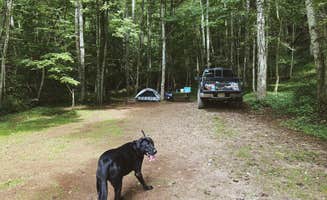
Limited facilities: Most dog-friendly dispersed sites lack basic amenities. "There is no drinking water, picnic tables, or even pit toilet, so come prepared," advises Shari G. about Washington & Jefferson National Forest dispersed sites. For more comfort, Hurricane Campground offers "bathroom facilities include vault toilets as well as flush toilets with showers."
Tips for camping with families
Choose established campgrounds for amenities: Little Oak Campground provides clean, accessible facilities for children. "Little oak offered a great place to stay for a week. With south Holston lake at your finger tips it offers a great area to fish, boat, kayak, paddle board and swim," writes Jayme G., noting that "facilities were cleaned everyday so no stinky bathrooms and showers."
Look for natural play areas: Creeks and lakes provide entertainment for kids. Sabrina M. recommends Backbone Rock because it "sits on a small creek that runs behind most of the sites. It's perfect for small children to swim and play in!" She considers it "a hybrid between the remote camping we are use to and the ease of effort we now need because of small children."
Consider smaller campgrounds for quieter experiences: With fewer sites, some areas offer more controlled environments. "With just 11 sites, the campground chaos is kept to a minimal," writes Sabrina M. about Backbone Rock Recreation Area. Robert R. found Grindstone Recreation Area "very well maintained" with good trails nearby, noting the "Whispering Waters Trail which is good for beginners & small kids."
Tips from RVers
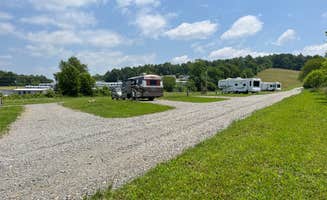
Limited hookup availability: Most campgrounds offer basic or no hookups for RVs. At Laurel Creek RV Park, Geoffrey F. notes it has "good spot right on the Laurel Creek and the Creeper Trail. Walk to town for restaurants and bike/outdoor shops and a convenience store."
Water access methods: RVers should prepare for primitive water systems. Robert J. describes his experience at Beartree Campground: "We used a small ultra quiet generator and filled up our RV water tank from a faucet located at a bathhouse. You will need a hose adapter to hook-up your water hose."
Size constraints at forest campsites: Most national forest campgrounds accommodate smaller rigs only. Robert R. stayed at Grindstone Recreation Area "in site 30D (Double) with 4 tents, 9 people and 3 vehicles. It would be tight with 4 cars." The host advises larger groups to carefully select appropriate sites.















 Scout


