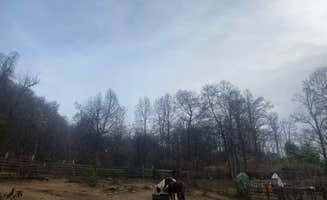
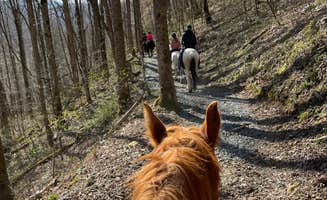
Wash Creek Horse Camp and Wolf Ford Horse Camp offer equestrian-focused camping facilities in Pisgah National Forest. Wolf Ford Horse Camp sits approximately 4 miles from Wash Creek on Pisgah Highway. Neither location provides dedicated horse corrals, requiring visitors to bring their own containment systems. The trails connected to these horse campgrounds allow riders to explore diverse forest terrain directly from their campsites. Both camps maintain primitive facilities with dirt access roads that may present challenges for lower clearance vehicles or larger rigs.
What to do
Fly fishing opportunities: North Mills River Campground provides access to excellent fishing spots. "We've enjoyed this campground mainly for the fly-fishing. The local Trout Unlmiited group has also spent many hours upgrading the walkways and fence lines to protect the river," notes Shannon K. The nearby reservoir offers additional prime fishing locations.
Visit waterfalls: Located near Black Mountain Campground, SetRock Falls is accessible directly from campground property. "There is a nice trail to SetRock Falls, right on the campground property...and several other foot trails to keep you busy and hiking," explains Dave V. Roaring Fork Falls is another nearby option requiring a short half-mile walk from a parking area.
Swimming holes: The South Toe River running through Big Creek Campground provides natural swimming areas. "The creek was great for the dogs to cool off. There are also swimming holes nearby," reports Katrin M. Similarly, North Mills River Campground features a swimming hole with a small sandy beach area and neck-deep refreshing water.
What campers like
Creek sounds: Camping alongside water is highly valued in horse campgrounds near Enka, North Carolina. "The stream ran right by the campsite so listening to the stream as we went to bed was wonderful," shares Julie T. about North Mills River Campground. This natural soundscape enhances the wilderness experience.
Solitude: The remoteness of many sites provides peaceful camping experiences. "We were the only campers there. It was very quiet," notes Julie T. Similarly, at Wash Creek Horse Camp, the isolation creates a genuine wilderness experience as described by Max O.: "bit of a drive through the forest to get here, but great spots if you're looking to get away from civilization."
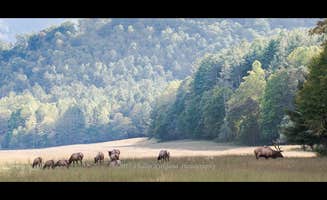
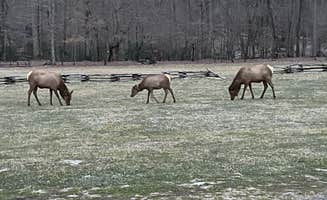
Wildlife viewing: Cataloochee Campground offers exceptional wildlife watching opportunities. "They have their babies at the beginning of June and mid September through October is their mating season, so you can hear their strange whistles," explains Kristina regarding the elk population. Visitors frequently spot elk in meadows during early morning or evening hours.
What you should know
Road conditions: Access to many horse camping areas requires navigating challenging roads. Cataloochee Campground requires extra planning: "Access to Cataloochee is via a narrow, winding, mountain road. A 3-mile stretch of gravel road contains many narrow, blind curves," explains Kristina. Similar conditions exist at several forest service roads leading to horse camps.
Cell service limitations: Most equestrian campgrounds lack reliable connectivity. At Wash Creek Horse Camp, Max O. reports "no cell service" which required walking "10 miles back towards town to call AAA" when locked out of a vehicle. Plan communications accordingly before traveling to remote horse camps.
Seasonal closures: Weather impacts accessibility of many mountain horse camps. "Just a stone's throw from the bustle of Asheville, yet secluded enough to forget it all, this little gem is conveniently located at the entrance to Pisgah National Forest... Usually starting at $22 per night, after November 1st the prices get cut in half," notes Jonathan N. about North Mills River Campground, highlighting seasonal pricing changes.
Tips for camping with families
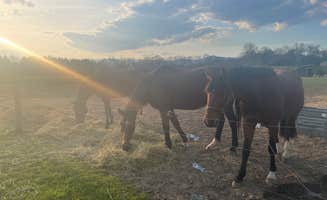
Horse-friendly activities: Bent River Equestrian combines camping with equine experiences. "I tent camped overnight as it was half way to my destination. I got there just in time to see a beautiful sunset and say hello to the horses," shares Katie C. This offers children opportunities to observe horses while maintaining appropriate distance.
Stream exploration: Multiple campsites offer water access ideal for family activities. "My family enjoyed being so close to the river and exploring a new area," comments Amanda about North Mills River. These natural water features provide natural play spaces for supervised children.
Educational opportunities: Historic structures near horse campgrounds provide learning experiences. At Cataloochee, Jodie K. notes, "There are historical homesteads, a school, churches and cemetery to take you back in time." These preserved buildings offer families glimpses into mountain settlement history while camping.
Tips from RVers
Size restrictions: Horse camps generally accommodate smaller rigs only. "Though many campsites will accommodate large rigs, motorhomes over 32' and trailers over 25' in length are not recommended due to the access road," advises Kristina about Cataloochee. Most horse campgrounds have similar limitations due to narrow forest roads.
Leveling challenges: Prepare for uneven terrain at equestrian sites. The Upper Cove Creek dispersed sites require careful selection: "remote- you have to want to get up here but it's really easy to do once you drive it a few times," states Angela M., who clarifies these areas are "Not for big rigs, RVs, etc." Smaller trailers should bring leveling blocks.
Water access: RVers at horse campgrounds should plan for limited hookups. Wolf Ford Horse Camp offers no water hookups, as Katie M. notes: "No running water or electricity. Roads very poorly maintained." RVers should arrive with full freshwater tanks when visiting equestrian campgrounds.



 Guide
Guide


