You made it to camp. The rig is level. The awning is out. Someone’s already asking what’s for dinner. You hook up the water, turn on the faucet, fill a glass and take a sip.
Ugh. Maybe it tastes like a swimming pool. Or maybe it looks clear but has that metallic, “old garden hose in August” thing going on. Or maybe it’s perfectly fine, which somehow makes the next campground’s water taste even worse by comparison.
If you’ve spent enough time camping with an RV, trailer, camper van, or even a well-equipped overlanding setup, you know campground water can be wildly inconsistent. That doesn’t always mean something is wrong. But it does mean your water setup deserves the same attention as your sewer hose and tire pressure.
Because once you’re using that water for coffee, pasta, brushing teeth, pets, ice, dishes, and showers, “good enough” starts to matter a lot.
Why campground water varies so much
Campgrounds don’t all get water the same way. Some are tied into municipal systems. Some use wells. Some operate seasonally. Some have new plumbing and clean, modern hookups. Others have spigots that have been baking in the sun since the invention of the cassette tape.
In other words, every campground has its own water situation. A campground near a city might have treated municipal water. A small private RV park could be on a well. A forested campground might shut down during the winter and restart its system in spring.
So if it seems like your water tastes different in Arizona than it did in Michigan, or different in April than it did in August, that’s because it does.
The “pool water” taste is usually doing a job
Let’s start with one of the most common campground water complaints: chlorine.
Utilities often add disinfectants like chlorine or chloramine to tap water to kill germs and keep water safer as it travels through pipes. The CDC allows utilities to switch between them at different times of year or for operational reasons.
The taste of these disinfectants can show up in your glass. Water with chlorine can taste or smell different than untreated water, and those taste or smell issues can be more noticeable when chlorine levels are higher or when there are more particles in the water. Chloramine can also last longer as water moves through pipes, which is part of why some systems use it.
In other words, that “pool” smell may be a sign the water has been treated. It’s a good thing for bacteria, but it can still make for terrible coffee. And if there’s one thing campers should not have to compromise on, it’s coffee.

Well water is its own adventure
Plenty of beautiful campgrounds rely on well water. That can mean great-tasting water. It can also mean mineral-heavy water, sediment, or taste that changes after storms, drought, maintenance, or heavy seasonal use.
Private wells are different from public water systems. The EPA says private well owners are responsible for delivering safe drinking water, and that private domestic wells are not regulated by the federal government under the Safe Drinking Water Act or by most state governments and laws.
For homeowners, the CDC recommends testing well water at least once a year for total coliform bacteria, nitrates, total dissolved solids, and pH, and testing again when taste, color, or smell changes.
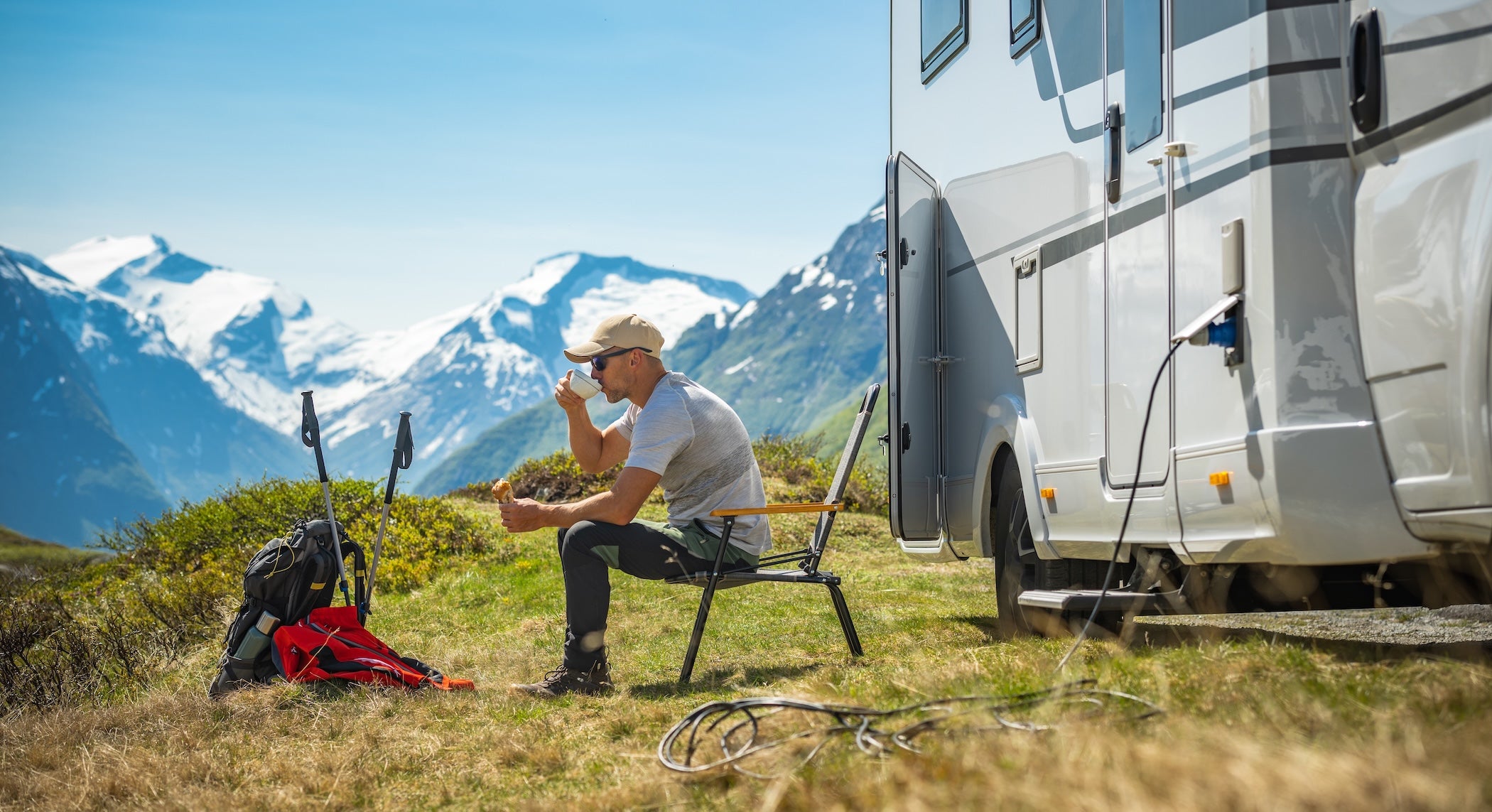
For campers, you usually don’t have that much visibility. You pull into a site, connect your hose, and trust that the campground is doing what it should. Most are. But water quality can still vary, especially when your RV life takes you from municipal hookups to rural wells to older seasonal parks in a single month.
Clear doesn’t always mean clean
One of the trickiest things about water is that it can look totally fine but still be questionable. You often can’t see the bacteria, viruses, and parasites that can make you sick.
That doesn’t mean you need to panic buy a bunch of bottles of water every time you see a campground spigot. It means your water routine should have a few built-in checks.
Before you hook up, look for potable water signs. If the spigot is unlabeled, ask campground staff. Let the water run briefly before connecting. Use a drinking-water-safe hose, not whatever hose was last used to rinse mud off the dog. Keep your hose ends off the ground. And if water smells, looks, or tastes off, don’t just shrug and fill the fresh tank anyway.
Campers plan for rain. We pack extra propane. We carry spare fuses, duct tape, and leveling blocks. Water deserves the same kind of backup plan.
Your RV water filter is not the place to guess
A basic inline filter is better than nothing. It can help with taste, smell, and some sediment. For a weekend here and there, that may be enough.
But the more you camp, the more water sources you meet. That’s when a stronger filtration setup starts to feel less like a luxury and more like part of your standard arrival routine.
A good RV water filter should help with the things campers actually notice: taste, odor, visible sediment, chlorine, and the confidence gap that comes from never really knowing what happened in the pipes before the water reached your site.
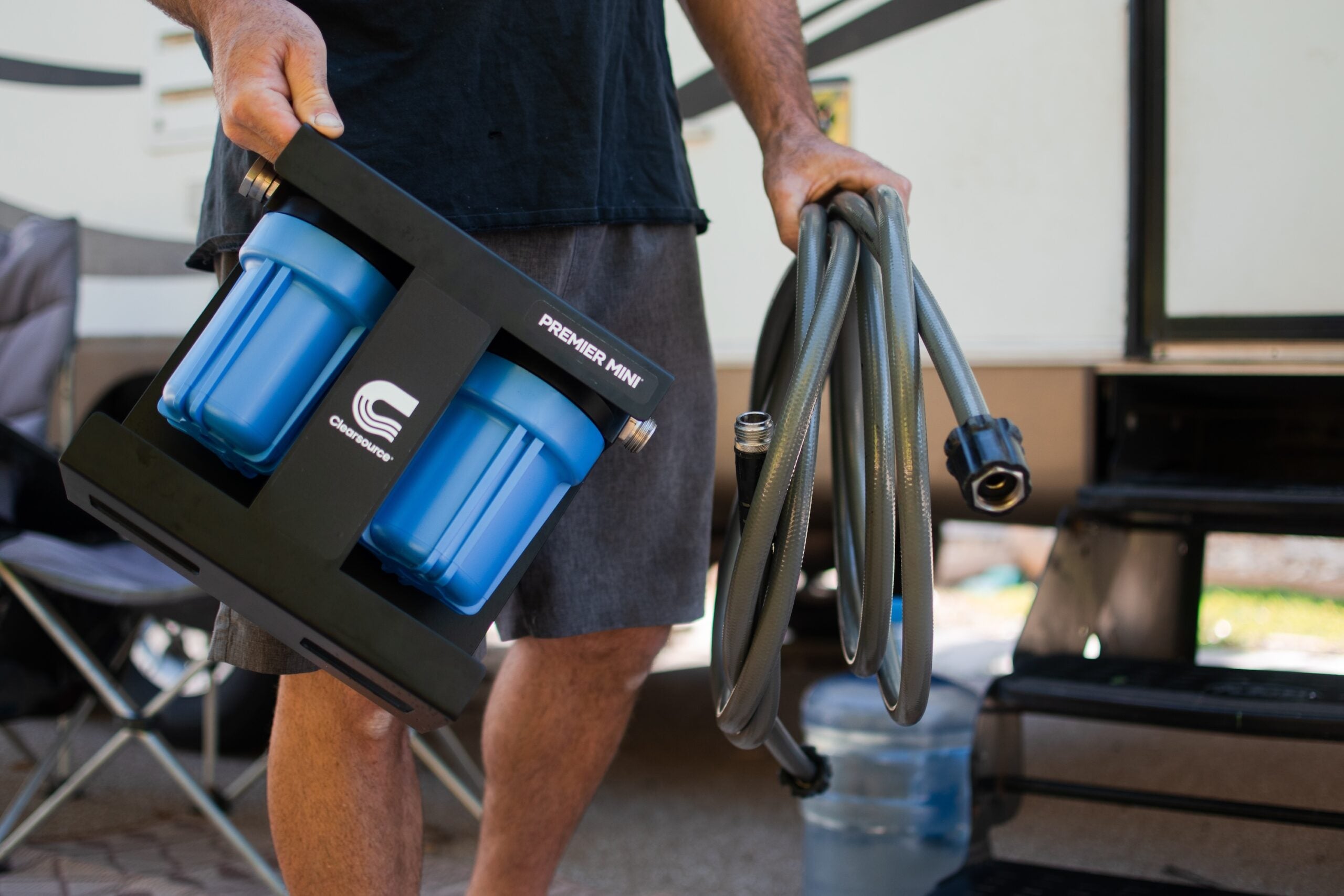
That’s where Clearsource fits perfectly into an RV setup. The Clearsource Premier RV Water Filter System uses a two-stage design with a first-stage coconut shell carbon block filter and a 0.2-micron absolute-rated filter. In simple terms, one filter helps make the water taste and smell better, while the other provides a finer layer of protection before the water reaches your RV.
The “0.2 micron” rating tells you how small the filter can catch, and “absolute-rated” means it’s not just reducing some of those particles, it’s built to reliably block all particles at that size or larger.
For context, many bacteria are around 0.2 to 2 microns, so a 0.2-micron absolute filter is a much finer level of filtration than a basic sediment or taste-and-odor filter. It is especially relevant for RVers because campground water can come from many different systems, including wells and older plumbing. It reduces sediment, chlorine, chloramines, volatile organic compounds, bacteria like E. coli and Legionella, and cysts like giardia.
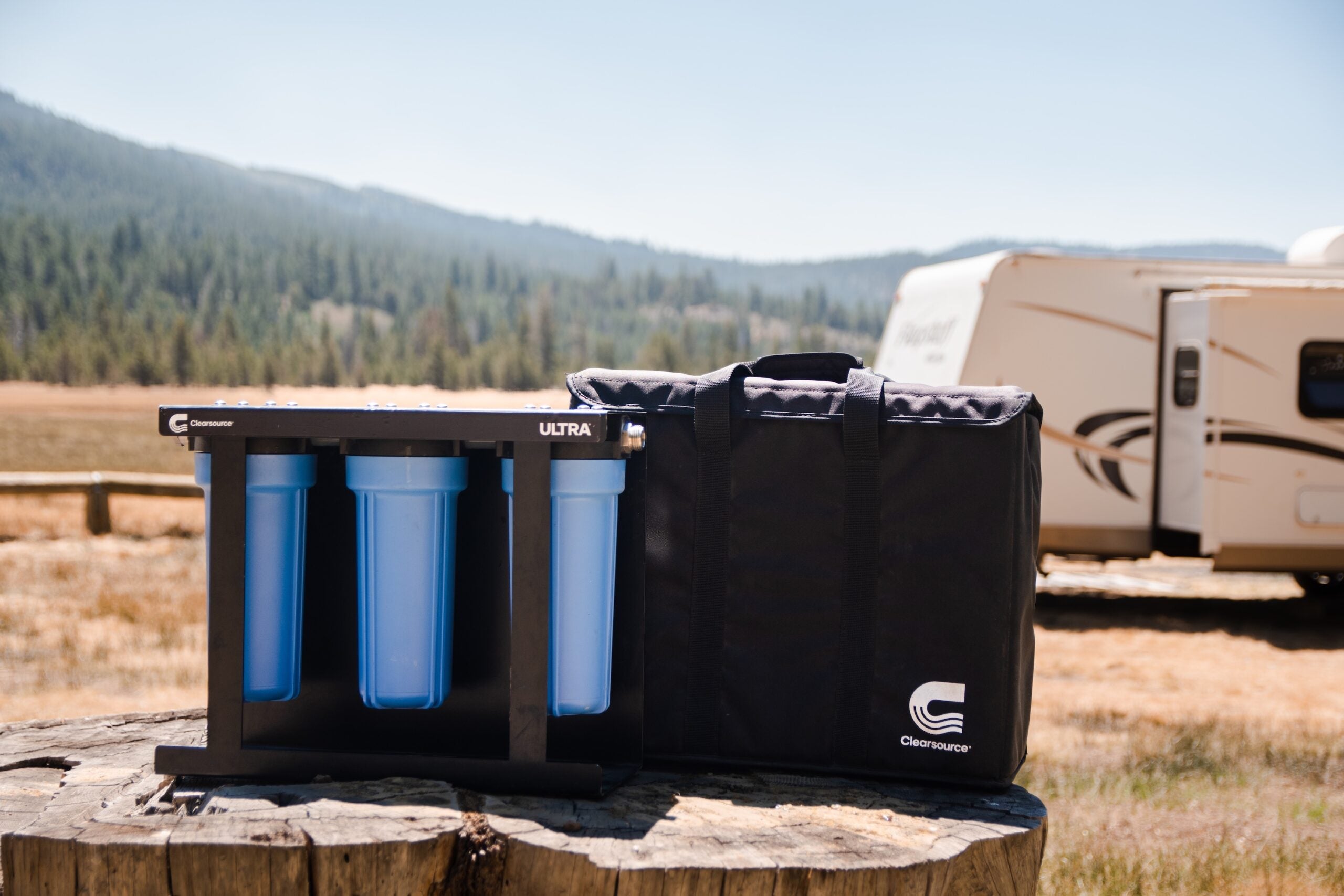
For RVers who want a step up, the Clearsource Ultra uses three-stage filtering, including a first-stage filter for rust and sediment, a coconut shell carbon block filter for taste, smell, chlorine, VOCs, and other contaminants, and a VirusGuardTM stage designed to remove or reduce bacteria, cysts, and viruses.
It’s a simple upgrade that makes a big difference. You just notice that the coffee tastes better, the dog bowl doesn’t smell weird, and you’re not buying plastic jugs every time you roll into a new zip code.
Better water makes the whole campsite better
Water is not the flashiest RV upgrade. It doesn’t make your campsite look cooler in photos. It won’t get compliments from the neighboring site like a new awning, camp kitchen, or perfectly organized outdoor campfire situation.
But it’s arguably more important. You use it constantly. It’s in the coffee you drink while everyone else is still asleep. It’s in the pasta pot that cooks your dinner after a long hike. It’s what your kids use to brush their teeth, what your dog drinks all afternoon, and what you use to wash your hands after fixing the camp stove.
When the water is bad, everyone notices. When the water is good, nobody talks about it. They just keep camping.
And honestly, that’s the goal. Less worrying about what’s coming out of the spigot. More time figuring out where the trail starts, whether the firewood is dry, and how many s’mores is too many s’mores.
The Dyrt is the only camping app with all of the public and private campgrounds, RV parks, and free camping locations in the United States. Download now for iOS and Android.Popular Articles:
Articles on The Dyrt Magazine may contain links to affiliate websites. The Dyrt receives an affiliate commission for any purchases made by using such links at no additional cost to you the consumer.