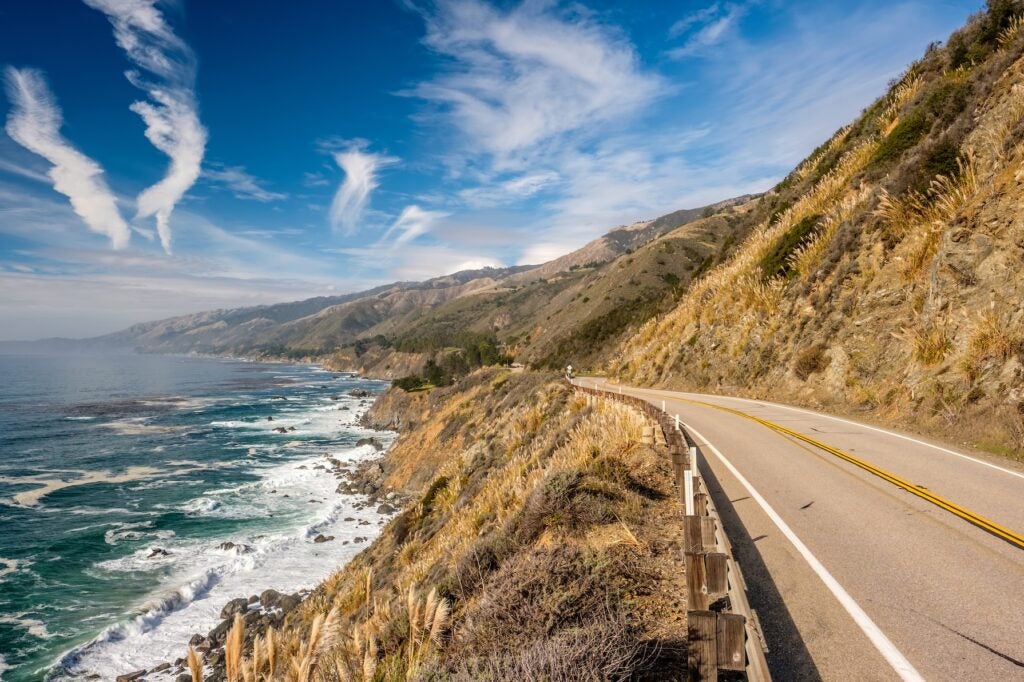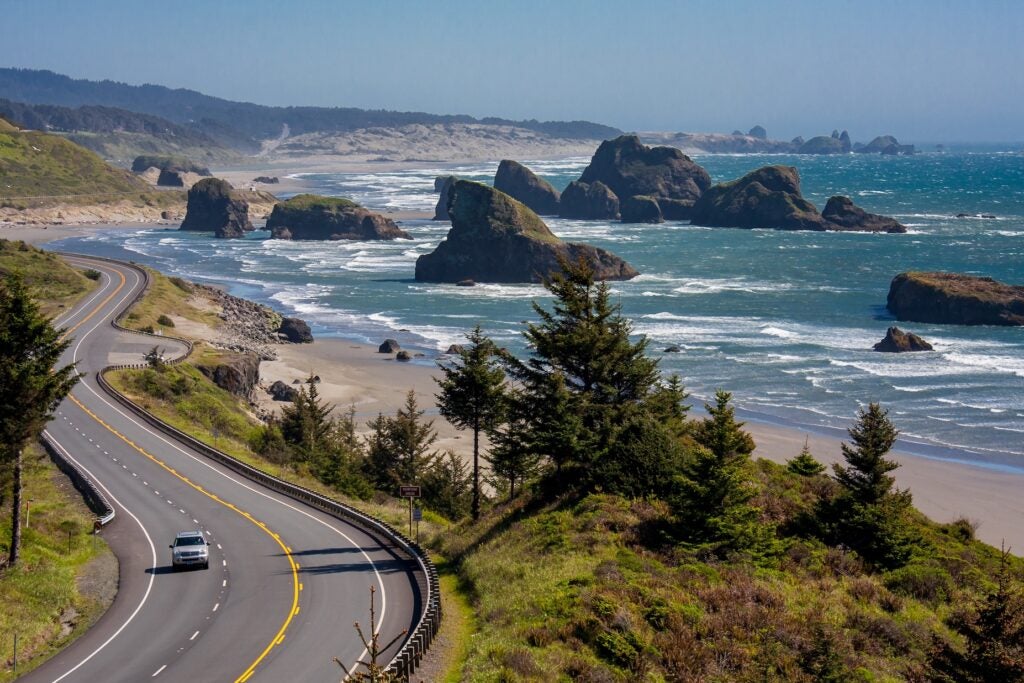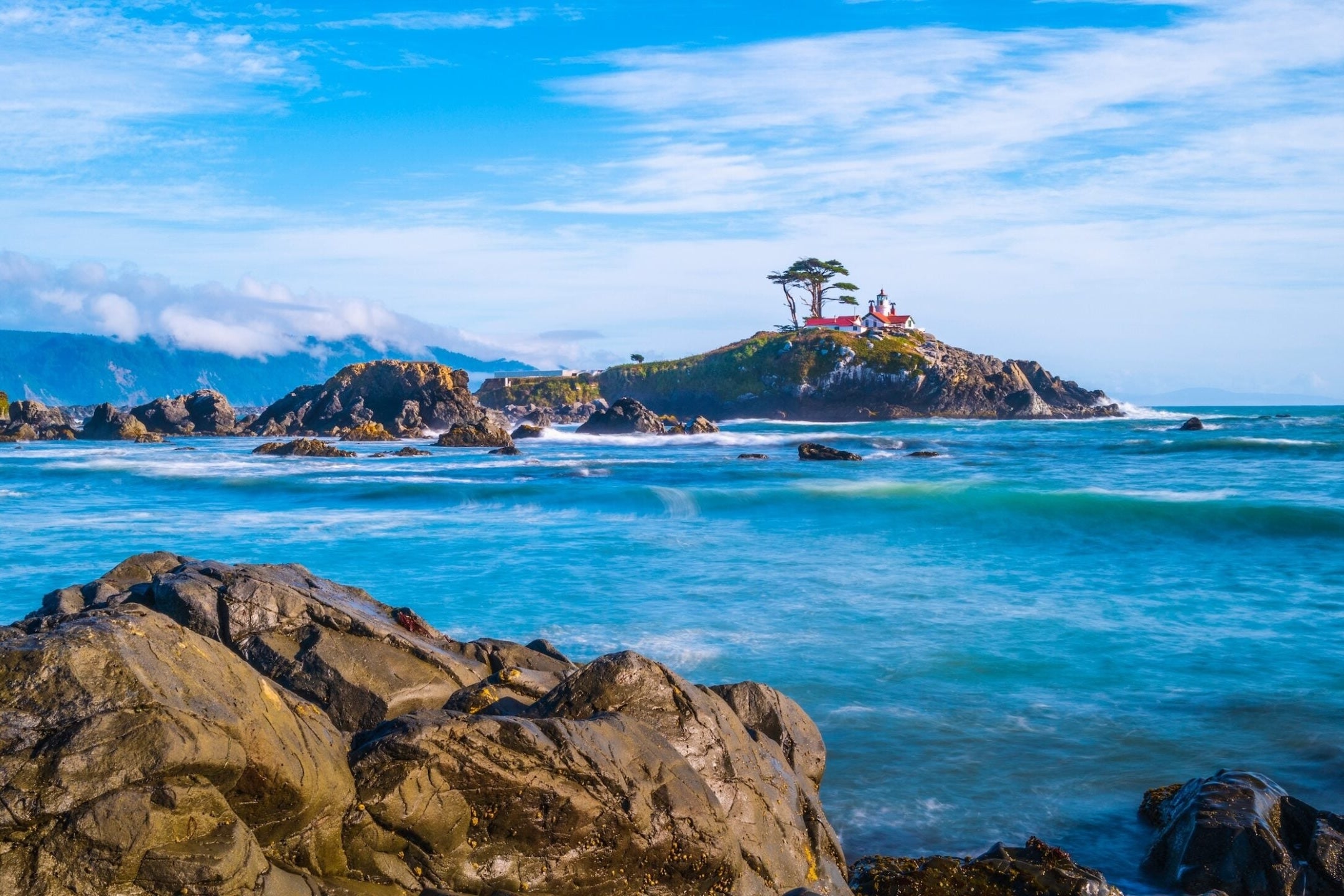
Northern California’s stretch of the Pacific Coast Highway takes you from towering redwood forests to rugged coastline, all in a few unforgettable days. This segment begins in Brookings, OR, just before entering Redwood National and State Parks, and winds south to the Golden Gate Bridge in San Francisco. Along the way, you’ll drive beneath ancient trees, past rocky coves, and through charming seaside towns. The route follows US-101 through the redwoods before transitioning to the famed Highway 1 (CA-1) at Leggett for a stunning coastal drive. It’s a journey of dramatic contrasts: misty fern-filled forests, windswept beaches, Victorian villages, and panoramic ocean vistas. Buckle up and get ready for three days of natural wonders, local culture, and classic road trip adventure on this Northern California PCH segment.
For broader context and planning beyond this section, see the Pacific Coast Highway Overview.
Segment Overview
This 350–380 mile section traces US-101 south from the Oregon border through redwood country, then switches to CA-1 (Shoreline Highway) at Leggett to hug the Mendocino and Sonoma coasts. You’ll experience two distinct halves: the first dominated by lush redwood forests and winding river valleys, the second by dramatic Pacific headlands and seaside bluffs. Plan on at least three days to do it justice. Mornings often start with coastal fog that lifts by midday, especially in summer. Even in peak season the Northern California coast stays cool, so bring layers. Towns are spaced out by long stretches of wilderness, meaning incredible scenery – and some planning for gas and supplies. Road conditions vary from the wide, divided US-101 near Eureka to the narrow switchbacks of Highway 1. Take it slow and enjoy the ride, from the hushed grandeur of the redwoods to the ocean breeze of San Francisco Bay.
Quick Stats
| Distance | ~375 miles (north-to-south) |
| Drive Time | Approx. 8 hours (without stops); plan 3 days to explore |
| Key Routes | US-101 (Redwood Highway), CA-1 (Shoreline Hwy south of Leggett) |
| States Covered | California (Del Norte, Humboldt, Mendocino, Sonoma, Marin counties) |
| Cell Coverage | Spotty in redwood parks & remote coast; mostly available near towns (Verizon generally best) |
| Fuel Stops | Gas in Crescent City, Klamath (limited), Trinidad, Eureka, Fort Bragg, Bodega Bay. Few services on CA-1 – fill up before Leggett and Fort Bragg. |
| Best Season | Late spring through fall for mild weather (winters are rainy with possible road closures) |
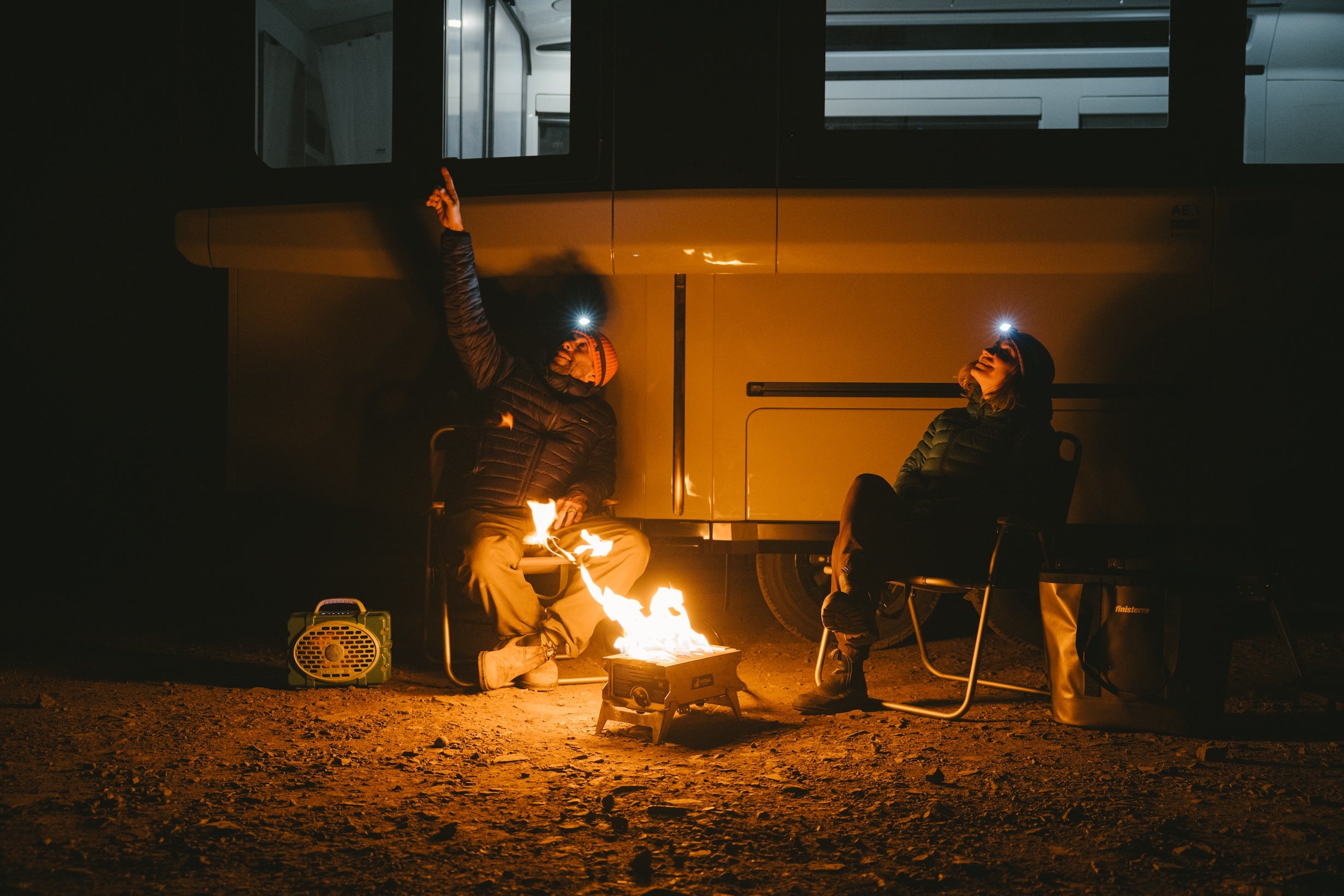
Travel Lighter with Lightship RV
Planning an RV road trip? Lightship is rethinking what’s possible on the road. The all-electric, self-propelled Lightship AE.1 is designed with TrekDrive™ technology to help extend range and make longer routes feel more approachable, especially on winding roads like California’s Highway 1. It’s built for destinations that sit farther between charging or fuel stops, and for camping that feels quieter, lighter, and more connected to the places you’re exploring.
Day-by-Day Itinerary
Day 1: Brookings to Humboldt County (Redwood National Parks)
Jedediah Smith Redwoods, Prairie Creek Redwoods, Klamath Coast. Begin your day amid the giants of Jedediah Smith Redwoods State Park just outside Crescent City. If time allows, take a short hike among old-growth titans on the Stout Grove Trail or a scenic detour down Howland Hill Road under a canopy of ancient trees. Heading south on US-101, you’ll wind through forested hills with glimpses of the Pacific. Stop at Prairie Creek Redwoods State Park via the Newton B. Drury Scenic Parkway (exit 753) for more jaw-dropping groves. Keep an eye out for wild Roosevelt elk grazing in Elk Prairie – they often hang out near the Prairie Creek Visitor Center.
For a unique side trip, drive out to Fern Canyon (permit required in summer via the Redwood National and State Parks official site) in Prairie Creek – a lush, narrow canyon where ferns drape the 50-foot walls. Back on 101, continue south past the quaint town of Orick. As you approach Klamath, consider a quick detour to the Klamath River Overlook for a sweeping view of where the river meets the ocean – whales sometimes spout offshore here in season. In Klamath, you’ll also spot a roadside attraction: the Trees of Mystery (hard to miss the 35-foot Paul Bunyan). It’s kitschy, but the massive redwood statues make a fun photo op.
End Day 1 in the vicinity of Humboldt County’s northern coast. The fishing village of Trinidad (30 minutes north of Eureka) makes a charming evening stop with its sheltered harbor and sea stacks. There are a few cafes, a market, and beach trails if you need to stretch your legs. McKinleyville and Arcata are larger towns just up the road, or you can drive into Eureka for more dining and lodging options. If camping, consider staying right in the redwoods: Elk Prairie Campground at Prairie Creek Redwoods State Park is a favorite for its forest meadow setting (expect cool, damp nights under the canopy). For something truly remote, Gold Bluffs Beach Campground offers primitive beach camping down a bumpy dirt road within the park. Either way, you’ll fall asleep to the sound of the breeze in the treetops or crashing waves. Don’t forget to grab dinner and fuel in a town like Trinidad or McKinleyville, as options will be scarce until Eureka.
Day 2: Humboldt Redwoods to Mendocino Coast (Fort Bragg)
Avenue of the Giants, Drive-Thru Tree, Mendocino villages. Start day 2 by continuing through Eureka (the region’s biggest town) if you didn’t overnight there. This Victorian seaport has grocery stores, gas, and the famous Carson Mansion downtown if you’re into historic architecture. South of Eureka, US-101 veers inland along the Eel River. This is Humboldt Redwoods State Park, home to one of the world’s largest remaining continuous redwood forests. Swap the highway for the 31-mile Avenue of the Giants scenic drive at Phillipsville (exit 672). This two-lane road parallels 101 and immerses you in silence broken only by the occasional thump of falling redwood cones. Take it slow; there are pullouts to admire colossal trees and short trails like the Founders Grove Nature Trail (near milepost 20) that features an easy walk to the Dyerville Giant, a fallen 362-foot redwood.
After rejoining 101, make a pit stop in the small town of Garberville or nearby Miranda for gas or snacks before you leave the freeway. At Leggett, US-101 splits. This is your turn-off to CA-1 south. But first, you might detour a couple minutes further on 101 to the Chandelier “Drive-Thru” Tree in Leggett. Yes, it’s touristy, but driving your car through a living redwood is a classic PCH novelty (fees around $10, height limit ~7 feet). Backtrack and take CA-1 toward the coast, where the road narrows and twists under redwood shade. The section from Leggett to the Pacific is about 22 miles of very sharp curves and grades; larger RVs often avoid it. Take your time and use turnouts to let faster locals by. You’ll crest a ridge and suddenly, there’s the ocean again, gleaming on the horizon.
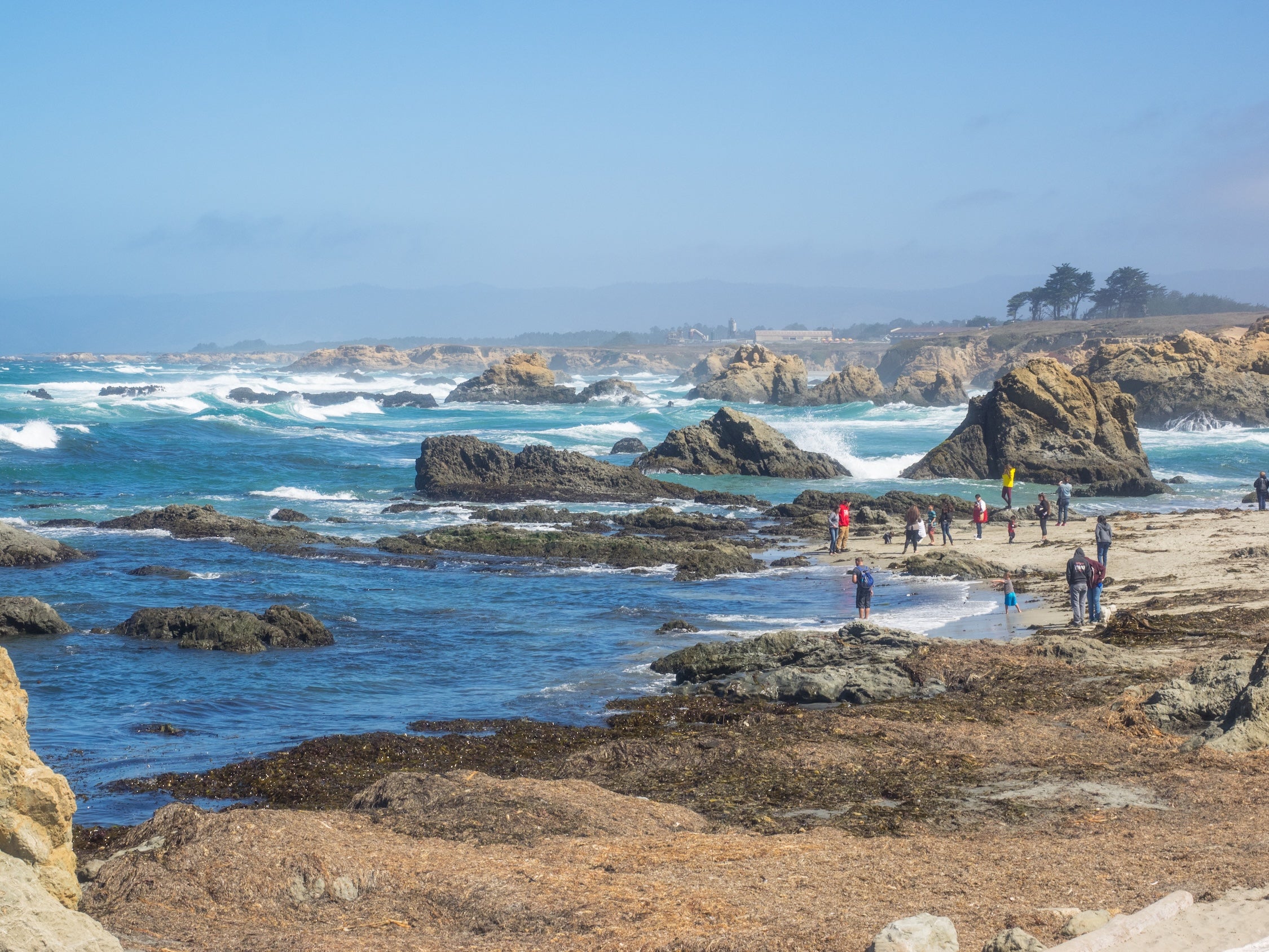
Highway 1 meets the shoreline near Westport, then heads south alongside steep bluffs. Pull over at any of the signed vista points for dramatic views of sea cliffs and pounding surf. If you need a break, Westport-Union Landing State Beach has a roadside campground and day-use area with picnic tables perched above the waves. By late afternoon, you’ll roll into Fort Bragg, a historic lumber town turned laid-back coastal hub. It’s a great place to spend the night. Check out Glass Beach on the north side of town, where colorful sea glass smoothened by the tides covers the sand (best at low tide). Hungry? Fort Bragg has you covered with local seafood and breweries. You can grab fish and chips in the harbor at Noyo Fish Company or enjoy a pint at the North Coast Brewing taproom downtown.
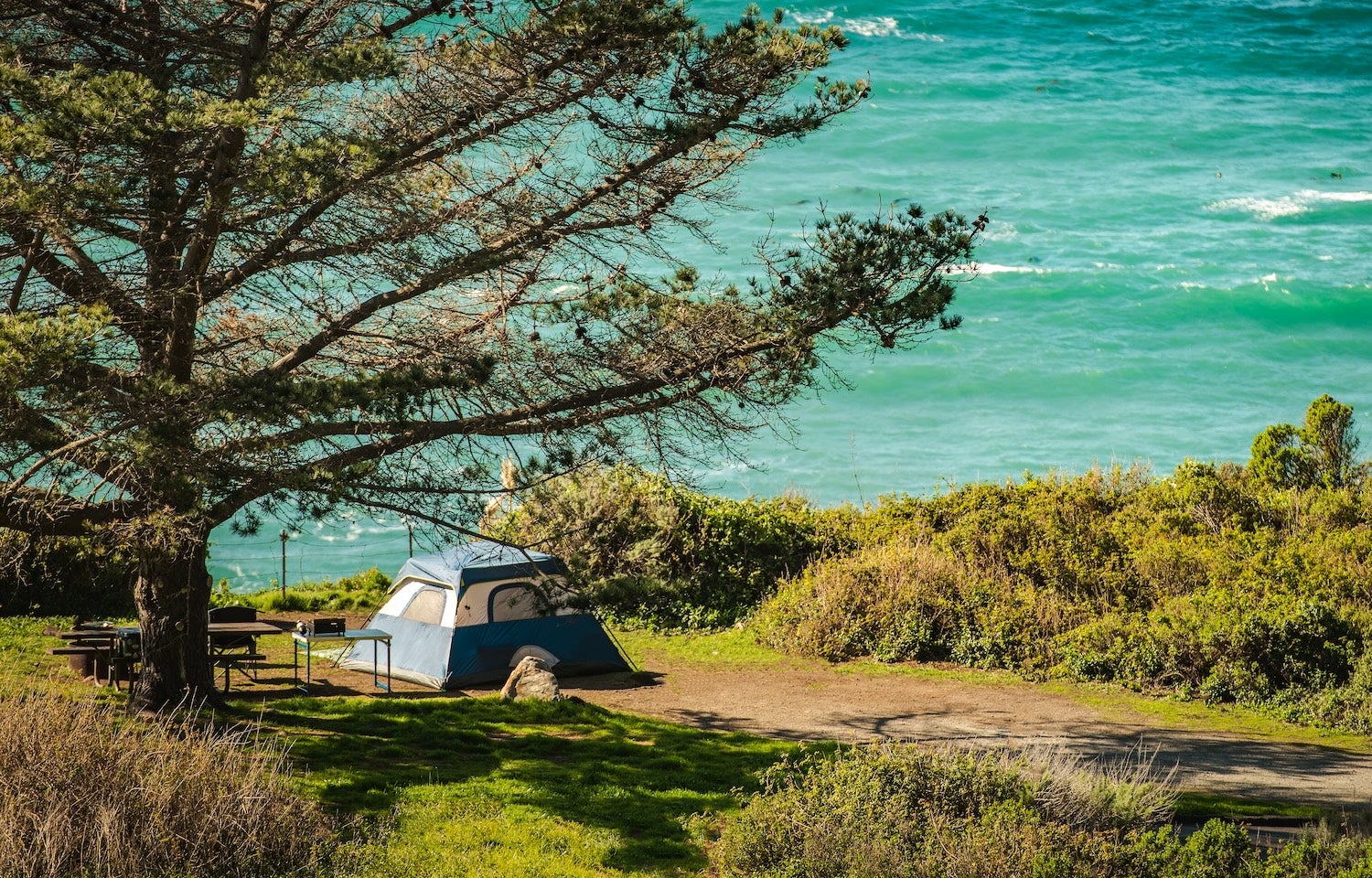
Camping options on this stretch are excellent. Just north of town, MacKerricher State Park offers a large campground behind the dunes, with access to tide pools and a scenic walking/biking trail along an old haul road. MacKerricher is known for its resident seals and great sunsets over the ocean. Closer to Mendocino village, Van Damme State Park Campground (in Little River) sits in a fern-filled canyon by the beach – a good alternative if Fort Bragg is full. (Van Damme is a few miles south of Mendocino, tucked just off Highway 1 among coastal forests.) Wherever you stay, evening on the Mendocino Coast is pure magic. Watch the fog linger offshore as the sky turns pastel, and listen for distant buoy bells and crashing surf as night falls.
Day 3: Mendocino to San Francisco (Marin Headlands)
Mendocino art scene, Point Arena Lighthouse, Sonoma Coast beaches, Golden Gate views. In the morning, explore the village of Mendocino before hitting the road. This postcard-pretty town of saltbox cottages and water towers sits on a headland overlooking the ocean. It’s known for its arts scene and has been the filming location for movies and TV (the historic architecture stood in for 1850s Maine in the show *Murder, She Wrote*). Stroll the Mendocino Headlands trail for panoramic cliff views, or grab coffee and pastries on Main Street. Just south of town, you’ll pass the 1909 Albion River Bridge – the last wooden trestle highway bridge on the California coast.
Continuing down CA-1, the next 100 miles weave through tiny hamlets and state parks. A worthwhile stop around mid-morning is the Point Arena Lighthouse, about 2 miles off Highway 1 via Lighthouse Road. For a small fee you can climb the 115-foot lighthouse tower or visit the museum in the keeper’s house, but even from outside the views are fantastic. Back on the highway, enjoy the untouched feel of this coastline – traffic is light and services are few. You’ll see grazing cattle on rolling hills and maybe wild turkeys along the road. Sonoma County marks the final leg of the rural coast. Stretch your legs at Salt Point State Park or Fort Ross Historic Park (a preserved 19th-century Russian fort compound right off the highway). If you’re craving lunch or fuel, aim for Bodega Bay. This fishing town at the north end of Tomales Bay is known for seafood (try chowder at Spud Point Crab Co.) and as the filming site of Hitchcock’s *The Birds*. South of Bodega Bay, the highway meanders inland by Tomales Bay – watch for oyster farms and roadside stands selling fresh oysters and local cheese.
As you enter Marin County, CA-1 winds past the western edge of Point Reyes National Seashore. It’s tempting to detour into the park if you have time; highlights like the Point Reyes Lighthouse and the Tule elk reserve at Tomales Point are about 40–50 minutes one-way from the highway. Otherwise, continue through the redwood-shaded town of Stinson Beach (a popular surf spot on warm days) and prepare for some final curves. The climb over Mount Tamalpais into the Marin Headlands is rewarded with an unbeatable finale: at the top of the last ridge, pull over at the Golden Gate Bridge Vista Point (just before 101). Suddenly the entire San Francisco Bay opens up before you. On clear days, you can see the city skyline, Alcatraz, and the orange spans of the Golden Gate Bridge stretching across the strait. It’s a fitting capstone to your journey.
To finish the segment, merge onto US-101 South and drive across the Golden Gate Bridge into San Francisco. Enjoy the iconic views as you cross, you’ve officially completed the Crescent City to SF road trip segment! Before diving into city traffic, consider a final celebratory stop at Kirby Cove Camp or the Marin Headlands on the north side for photos of the bridge (the light is often best in late afternoon). Then, head into San Francisco or continue on to the next leg of the Pacific Coast Highway adventure.
Campgrounds to Consider
- Jedediah Smith Campground – Crescent City, CA (Redwood National and State Parks). Riverside camping among old-growth redwoods. Flush toilets, showers, and even cabins available. Central to hiking trails in Jedediah Smith Redwoods State Park (like Boy Scout Tree Trail). This campground is popular in summer – reservations recommended.
- Elk Prairie Campground – Orick, CA (Prairie Creek Redwoods State Park). Set in a mixed forest and meadow where elk graze at dusk. 70+ sites and a few cabins near Prairie Creek Visitor Center. Drinking water and restrooms with showers on-site. Easy access to trails and scenic drives (Newton B. Drury Parkway runs past the campground).
- Gold Bluffs Beach Campground – Orick, CA (Prairie Creek Redwoods State Park). A primitive beachfront campground reached by a 6-mile dirt road (Davison Rd). 25 tent/RV sites right on the sand amid dunes and driftwood. Vault toilets, no potable water (bring in water). Fern Canyon trail is walking distance. Note: No trailers allowed due to road conditions.
- Burlington Campground – Weott, CA (Humboldt Redwoods State Park). Conveniently located on Avenue of the Giants next to the visitor center. 57 sites under redwoods (tents and small RVs, no hookups). Has flush toilets, showers, and close access to hiking trails and the Eel River. Some highway noise but superb forest ambiance. Open year-round.
- MacKerricher State Park Campground – Fort Bragg, CA. Large coastal campground spread around dunes, a lake, and pine groves just north of Fort Bragg. 140+ sites (tent & RV) with restrooms, showers, and a dump station. Highlights include tide pools at Laguna Point, seal watching, and an old logging haul road trail perfect for biking. Quick drive to Glass Beach and town amenities.
- Bodega Dunes Campground – Bodega Bay, CA (Sonoma Coast State Park). 100+ sites nestled in sand dunes and coastal scrub. Hot showers, flush toilets, and a short walk through dunes to ocean vistas. It’s a great base for exploring Sonoma Coast beaches and is one of the last state park campgrounds before the route enters the Bay Area. Expect cool, foggy nights.
Top Activities & Attractions
Natural Highlights
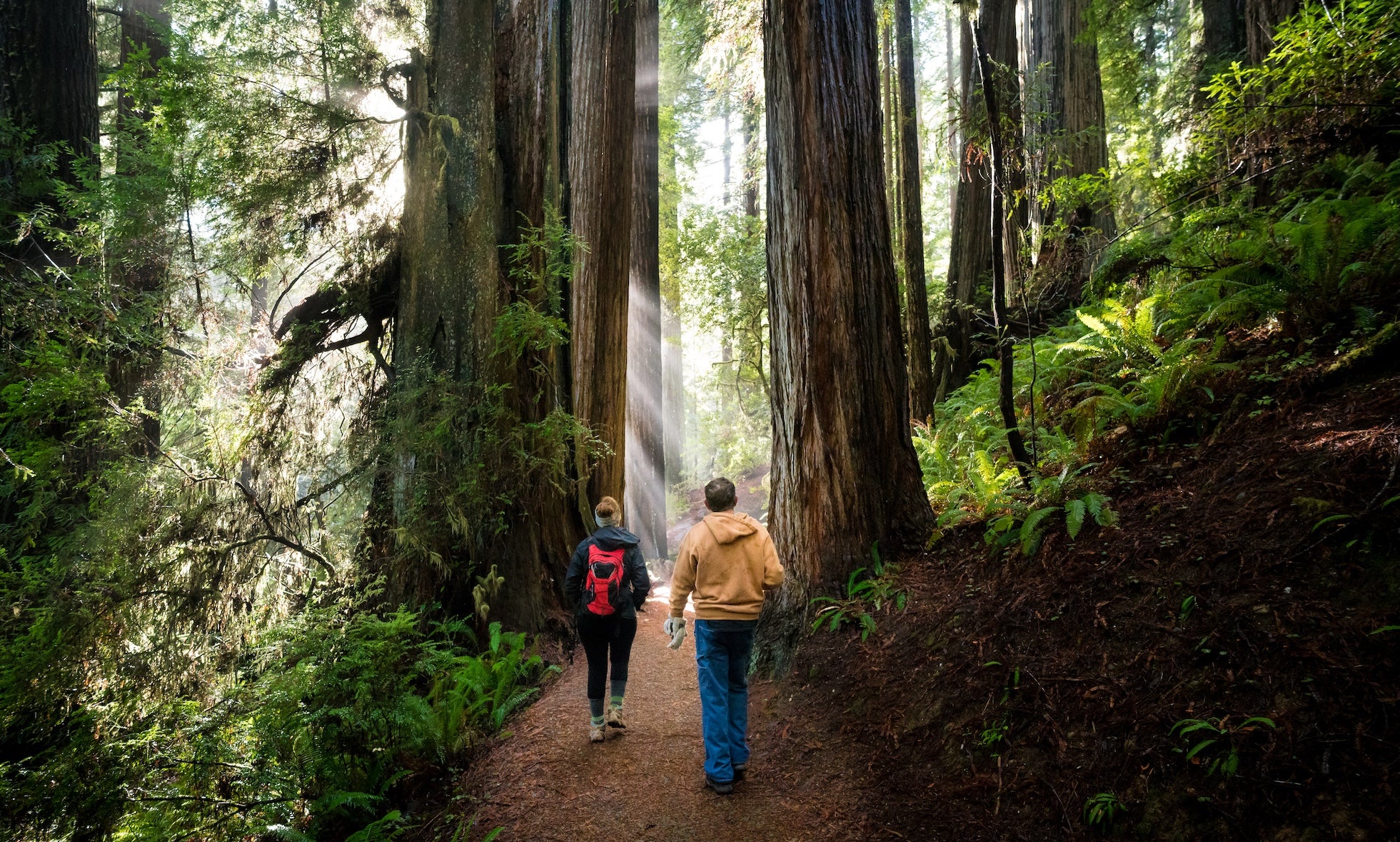
- Redwood Groves: Hike among the ancient giants in Redwood National and State Parks. Don’t miss Stout Grove in Jedediah Smith State Park (a flat 0.5-mile loop showcasing colossal trees) or the Cathedral Trail in Prairie Creek. These primordial forests feel like a step back in time.
- Coastal Scenery: Enjoy the rugged Pacific views at spots like Klamath River Overlook and along Highway 1 from Westport to Mendocino. Sea arches, sea stacks, and hidden coves abound. In Sonoma County, pullouts near Bodega Bay and Jenner offer panoramic ocean vistas where the Russian River meets the sea.
- Wildlife Watching: Keep an eye out for Roosevelt elk in Prairie Creek’s meadows (especially around Elk Prairie) and grazing deer in the headlands near Mendocino. Offshore, look for migrating gray whales in winter and spring – good viewpoints include Patrick’s Point (Sue-meg) and Point Arena Lighthouse.
- Beaches & Tide Pools: Northern California’s beaches are often more about scenery than swimming, but they’re fantastic to explore. Agate Beach at Sue-meg State Park (formerly Patrick’s Point) is known for agates and tide pools. MacKerricher State Park’s tide pools at Laguna Point teem with starfish and crabs. And of course, Glass Beach in Fort Bragg is famous for its glittering sea-polished glass fragments.
Cultural & Historic Sites
- Victorian Architecture in Eureka: If you pass through Eureka, take a quick drive by the Carson Mansion and the neighboring Pink Lady. These 1880s Victorian structures are iconic examples of ornate woodworking from the lumber boom era.
- Mendocino Village: Stroll the art galleries, boutique shops, and historic homes of Mendocino. This charming village, founded in the 1850s, feels frozen in time. The Mendocino Headlands provide a dramatic backdrop – a blend of cultural heritage and natural beauty.
- Fort Ross State Historic Park: On the Sonoma Coast, visit the reconstructed Fort Ross, a Russian fur trading outpost from the early 1800s. Walk within the wooden stockade to see the blockhouse, chapel, and officer’s quarters. It’s a fascinating slice of California history set against a gorgeous coastal backdrop.
- Point Arena Lighthouse & Museum: Climb to the top of this historic 1908 lighthouse (tallest on the West Coast at 115 feet) for a spectacular view and tour the museum about shipwrecks and light-keeping. Even if you stay ground level, the site’s history and scenery are well worth the short detour.
- Chandelier Drive-Thru Tree: A classic roadside photo op in Leggett. This private attraction lets you drive through the base of a centuries-old redwood. It’s pure Americana and a fun way to literally go “through” a tree – kids especially get a kick out of it.
Outdoor Recreation
- Hiking & Walking: There are endless trails. Try the James Irvine Trail to Fern Canyon (Prairie Creek) for a moderate 4.5-mile trek through redwoods to a mossy canyon. For an easier walk, the Pygmy Forest Discovery Trail in Van Damme State Park near Mendocino leads through a unique dwarf forest on a boardwalk. And in Marin, the Tennessee Valley Trail offers a gentle 1.7-mile path to a secluded beach if you have extra time before San Francisco.
- Biking: The Hammond Trail near Arcata provides a family-friendly coastal bike ride in Humboldt County. Further south, MacKerricher State Park’s Old Haul Road is a paved multi-use trail running 10 miles along sand dunes – great for a leisurely bike ride with ocean views. Bikes can also be rented in Mendocino to cruise around town and the headlands.
- Kayaking: For a different perspective, consider a paddling excursion. You can kayak on Stone Lagoon (just north of Orick) for a calm water redwood experience, or join a guided kayak tour of the sea caves and kelp forests off Van Damme State Park (check local outfitters in Mendocino). In warmer months, the Russian River’s estuary near Jenner is another scenic spot for a mellow kayak trip where river and ocean meet.
- Fishing & Surfing: Anglers can try their luck fishing for salmon and steelhead in the Klamath and Eel Rivers (check regulations/season). Ocean fishing charters are available out of Eureka and Fort Bragg for salmon or rockfish. As for surfing, hardy surfers don wetsuits year-round at breaks like Trinidad State Beach and Big River Beach in Mendocino. Just be cautious of strong currents and cold water – this isn’t mellow Southern California surf.
Unique Stops & Roadside Attractions
- Trees of Mystery: Located in Klamath along 101, this classic roadside attraction features giant carved statues of Paul Bunyan and Babe the Blue Ox greeting visitors. Inside, a trail leads through impressive redwoods (including one you can walk through) and a quirky Native American art museum. There’s also a gondola ride that lifts you into the canopy for a bird’s-eye view of the forest.
- Confusion Hill: If you stay on US-101 a bit south of Leggett (instead of turning onto CA-1 immediately), you’ll encounter Confusion Hill, a gravity house and mystery spot that has been amusing travelers since 1949. It’s pure old-school roadside fun – water appears to flow uphill and perspectives warp in the tilted house. A kitschy detour if you’re into that sort of thing.
- Skunk Train: In Fort Bragg, the historic Skunk Train offers a nostalgic ride through the redwood forests of the Noyo River canyon. The train, dating back to 1885, still chugs along on diesel and steam locomotives. Even a short 1-hour ride gives a glimpse into the region’s logging past (and nowadays you can also rent rail bikes to pedal the tracks!).
- Bowling Ball Beach: South of Point Arena at Schooner Gulch, time your visit for low tide and walk to Bowling Ball Beach, where nearly spherical sandstone concretions are scattered along the shore, looking like a giant set of bowling balls. It’s an odd and intriguing natural phenomenon that makes for great photos. Access requires a short hike down from the highway pullout.
- Marin Headlands Photo Ops: Just before finishing the route, take advantage of the unique vantage points in the Marin Headlands. Battery Spencer or Hawk Hill provides that iconic view of the Golden Gate Bridge with San Francisco in the background. It’s a popular, often crowded spot at sunset, but the sight is one-of-a-kind. A perfect final memory before heading into the city.
Travel Tips for This Segment
- Fog and Weather: The northern coast is notorious for fog. In summer, expect foggy mornings that usually clear by afternoon. Always drive with headlights on in fog, and be prepared for sudden visibility changes. Even on sunny days, it stays cool (60s °F), especially under the redwoods and by the ocean. Dress in layers and have rain gear handy during spring and fall. Winter travel can be wet and windy – check for road closures if storms roll through.
- Road Cautions: Portions of US-101 and CA-1 are very winding with narrow lanes. The Leggett to Westport stretch of Highway 1 demands attentive driving. RVs and trailers should use caution (many choose alternate routes to avoid this segment). Along the coast, watch your speed on tight blind curves and be patient if caught behind slow vehicles. Pullouts are your friend for letting others pass and for soaking in the views. Also keep an eye out for wildlife on the road, from deer to stray cattle in open range areas.
- Fuel and Supplies: Never let your tank get too low. Gas can be 50–70 miles apart in this region. Top off in Eureka or Fortuna before heading into Mendocino County, and again in Fort Bragg before the long haul to Bodega Bay. Some small towns like Orick or Leggett have only one older gas station (often with higher prices), so planning ahead saves money and stress. For groceries and camp supplies, Eureka has big stores, and Fort Bragg/Mendocino have markets and outdoor gear shops. Water is available at most developed campgrounds, but always carry extra drinking water when boondocking or at primitive sites.
- Reservations and Permits: If traveling in summer or on weekends, reserve campgrounds in advance wherever possible. State park campsites like Jedediah Smith and MacKerricher fill up fast. Fern Canyon now requires a free online permit (May–Sept) to limit crowding, so arrange that through the park’s website ahead of your visit. Likewise, popular attractions like the Skunk Train or Point Arena Lighthouse tours might need booking ahead during peak season. A little planning ensures you won’t miss out.
- Connectivity: Cell service can drop out for long stretches, especially in the depths of redwood forests (don’t expect signal in Jedediah Smith or Prairie Creek) and along remote coastal bluffs. Download offline maps and any trail or campground info you’ll need. Public Wi-Fi isn’t common except in larger towns. If you rely on GPS navigation, have paper maps as backup for the Bigfoot-country gaps in signal. The Dyrt app’s offline mode can be handy here for campground searches.
- Driving Etiquette: This route is meant to be savored. Slow down and use turnouts to let locals or faster drivers by if you’re enjoying a leisurely pace. Some stretches have very few passing lanes, so this courtesy goes a long way. Conversely, if you find yourself stuck behind an especially slow RV on Highway 1, take a deep breath and enjoy the scenery until you safely can pass or they pull over. Patience is part of the coastal experience.
- Landslides and Road Closures: The North Coast is prone to landslides, especially in winter and early spring. Always check current road conditions before you go. The CA-1 coastal route south of Leggett sometimes closes due to slides. US-101 has occasional closures too (e.g., Last Chance Grade south of Crescent City is an ongoing project). Resources like Caltrans QuickMap provide up-to-date info on closures, detours, and traffic. It’s wise to have an alternate route in mind or be ready for short delays where road work is happening to stabilize hillsides.
- Photography Tips: The redwoods are tricky to photograph due to low light under the canopy – try early morning when sun beams angle through the fog for a magical effect. On the coast, sunset is obviously prime time for photos, but sunrise can be just as beautiful with soft light on the cliffs (if you’re up early, the ocean often looks silver-blue and the shore is empty). For Golden Gate Bridge shots from the Marin side, late afternoon to sunset yields warm light on the bridge’s west side. And remember to put the camera down sometimes and just soak in the moment!
Additional Segments & Resources
This Crescent City-to-San Francisco guide is one part of the 19 day Pacific Coast Highway adventure. If you’re continuing onward, or if you started here in the middle, be sure to check out the other segment guides on The Dyrt for a complete picture:
- Segment 1: Olympic National Park, WA to Astoria, OR (4-day road trip)
- Segment 2: Astoria, OR to Brookings, OR (4-day road trip)
- Segment 3: Brookings, OR to San Francisco (4-day road trip)
- Segment 4: San Francisco, CA to Santa Barbara, CA (3-day road trip)
- Segment 5: Santa Barbara to San Diego (4-day road trip)
Safe travels and happy camping as you explore the Pacific Coast Highway!
The Dyrt is the only camping app with all of the public and private campgrounds, RV parks, and free camping locations in the United States. Download now for iOS and Android.Popular Articles:
Articles on The Dyrt Magazine may contain links to affiliate websites. The Dyrt receives an affiliate commission for any purchases made by using such links at no additional cost to you the consumer.