This segment of the Route 66 road trip planning guide spans the open plains from Oklahoma City, OK to Amarillo, TX. In late spring through early fall, the weather is generally warm and road conditions are reliable. Over roughly 260 miles, you’ll drive historic Route 66 alignments parallel to I-40, explore classic small towns and roadside icons, and camp under big Panhandle skies. The journey transitions from Oklahoma’s farmland and Route 66 museums into the wide Texas plains dotted with quirky art installations and a grand canyon. It’s a friendly, nostalgia-filled drive with plenty of practical stops for fuel, food, and overnights.
| Segment Distance | ≈ 260 miles |
|---|---|
| States | Oklahoma, Texas |
| Suggested Duration | 3 days / 2–3 nights |
| Best Seasons | May – June & Sept – Oct |
| Route Type | Historic US-66 & modern I-40 mix |
| Vehicle Access | All vehicles (RV-friendly with planning) |
Day 1: Oklahoma City to Red Rock Canyon
Morning – Oklahoma City Sights: Start in Oklahoma City by fueling up and gathering any last supplies. Before hitting the road, you can grab breakfast at a local diner and snap a photo of the Milk Bottle Grocery – a tiny 1930s building crowned by a giant milk bottle on old Route 66. As you leave town heading west, consider a short detour to Lake Overholser. Here an original steel truss bridge spans the Canadian River, marking an early Route 66 alignment. It’s a quick, scenic side-stop and a nice transition from city streets to the open road. Need gas? Plenty of stations line the I-40/Route 66 corridor on the way out of OKC, so top off the tank.
Midday – Journey to Red Rock Canyon: Drive about an hour west into rural Oklahoma. The route parallels I-40, passing through small towns like Yukon and El Reno. El Reno is famed for its onion-fried burgers – a classic lunch if you’re hungry early. By late morning or early afternoon, veer slightly south at Hinton to reach **Red Rock Canyon Adventure Park**. This hidden red sandstone canyon was a historic stop for 19th-century travelers and now offers a shaded oasis for road-trippers. Park and stretch your legs on the short hiking trails beneath towering canyon walls. In summer, there’s a swimming pool open to campers – perfect for cooling off. The canyon’s picnic areas and easy trails make it a relaxing midday break. Keep an eye on the time if you plan to camp here; arriving by mid-afternoon lets you pick a good site and enjoy the golden hour light on the red rocks.
Evening – Camping at Red Rock Canyon: Settle in at **Red Rock Canyon Adventure Park** campground, just a few miles off Route 66. The campground sits at the canyon floor, surrounded by orange-red cliffs and cottonwood trees. Campers appreciate the quiet, scenic setting and the convenience of being only about 50 minutes from OKC. Facilities include restrooms, hot showers, and even a small trading post for firewood or snacks. Make dinner at camp or drive back into Hinton for a simple meal at a local café. As night falls, enjoy the peace – you’re tucked away in a canyon that shields you from highway noise. The sky will be dark enough to spot stars peeking between the canyon walls. Note: Cell service is spotty down here. It’s a great first night to unwind and adjust to the slower pace of a Route 66 road trip.
Day 2: Red Rock Canyon to Shamrock, TX
Morning – Back on Route 66, Oklahoma: Leave Red Rock Canyon and hop back north to Route 66 (which runs closely along I-40). The morning drive will take you through several vintage Route 66 towns in western Oklahoma. First up is Hydro – home to Lucille’s Service Station, a famous 1929 gas station right on old Route 66. It’s a quick roadside photo stop; the old filling station, known as “Lucille’s,” has been restored as a museum piece (if closed, you can still admire the vintage pumps and signage). Continuing west, you’ll pass Weatherford. If time permits and aviation interests you, the Stafford Air & Space Museum just off the interstate showcases an SR-71 Blackbird and space artifacts. Otherwise, keep cruising through farm country toward Clinton.
Midday – Route 66 Museums in Clinton & Elk City: Clinton is a must-stop for Route 66 history. The Oklahoma Route 66 Museum in Clinton is the state’s official Route 66 showcase, filled with classic cars, neon signs, and Dust Bowl-era exhibits. Plan for about an hour here to walk through each era of the Mother Road – it’s a spirited trip through time that really gives context to everything you’ll see on your drive. Nearby, you can grab lunch. There’s a retro diner vibe at Lucille’s Roadhouse on the west side of Clinton (named after that same Lucille from Hydro) which serves burgers and blue-plate specials in a Route 66-themed setting.
Heading further west, consider a stop in Elk City, about 25 minutes past Clinton. Elk City’s National Route 66 Museum is another extensive collection, complete with a mock old-town street outside (with a schoolhouse, general store, and opera house). Even if you already toured the Clinton museum, Elk City’s is worth a quick look for its broader Mother Road exhibits covering all eight states. It’s also a good place for kids to stretch their legs, thanks to the adjacent park and large routed “Route 66” shield sign perfect for family photos. By now, you’re likely feeling the day’s heat if it’s summer – grab a cold soda or ice cream in Elk City before continuing. Gas stations and grocery stores are available here too, so it’s a smart spot to fill up the tank and replenish ice or water.
Afternoon – Oklahoma–Texas State Line: West of Elk City, Route 66 becomes quieter and more rural. You’ll drive through Sayre (spot its historic Beckham County courthouse that appeared in The Grapes of Wrath film) and Erick, the last Oklahoma town on 66. Erick has a humorous claim to fame as the hometown of country singer Roger Miller; there’s a small museum for him and songwriter Sheb Wooley. A quirky stop here is the Sandhills Curiosity Shop – an old brick building decked out in miscellaneous Route 66 memorabilia. If it’s open, you might meet Harley, a local character who sometimes serenades visitors with country tunes. Even if closed, the mural outside is a fun photo. Just beyond Erick lies Texola, a near-ghost town at the Texas border. The old filling station and the one-room jail in Texola make eerie, quick drive-by photo ops. You’ll see a sign reading “There’s No Place Like Texola” – snap a picture and prepare to cross into Texas.
Evening – Into Texas & Shamrock: Crossing into Texas, you gain an hour (entering Central Time if you weren’t already on it – both Oklahoma and the Texas Panhandle share the same time zone, so no change here). The landscape opens up even more in the Texas Panhandle. Your target for tonight is Shamrock, Texas – about 20 miles from the state line. Arrive in Shamrock before sunset if you can, because the town’s crown jewel is the art deco Tower Station and U-Drop Inn Café at the crossroads of Route 66 and US-83. This 1936-built Conoco gas station – with its green neon-trimmed tower and diner – is one of Route 66’s most iconic buildings. By day it serves as a visitor center and small museum. By night, its neon comes on and bathes the intersection in a nostalgic glow. It’s absolutely worth seeing lit up after dark. Park nearby and take a stroll around the beautifully restored gas pumps and diner exterior; you’ll feel like you time-traveled to the 1940s.
After enjoying the U-Drop Inn, get settled for the night. Just a few minutes west of town is the Texas Route 66 RV Park, a modern campground right on historic Route 66. The owners are known to be friendly and keep the place clean and safe. You’ll find long pull-through sites (great if you’re in an RV), full hookups, a small store, and even farm animals like goats and donkeys that kids might enjoy visiting. If you prefer more rustic camping, there are also free campsites around nearby Lake McClellan (in the national grassland about 30 miles west), but those are primitive. For most travelers, the RV park in Shamrock is a convenient choice. Shamrock has fuel stations, a grocery, and a few restaurants. You could cook dinner at camp or head to a local spot like Big Vern’s Steakhouse for some Texas beef. Either way, be sure to look up after dark – the Panhandle sky is broad, and on clear nights you’ll see plenty of stars. The campground is quiet, though light sleepers might hear distant I-40 trucks. This is tornado country, so note: the RV park even has a storm shelter on-site (a comforting touch in spring). Enjoy a restful night on the Texas plains.
Day 3: Shamrock to Amarillo
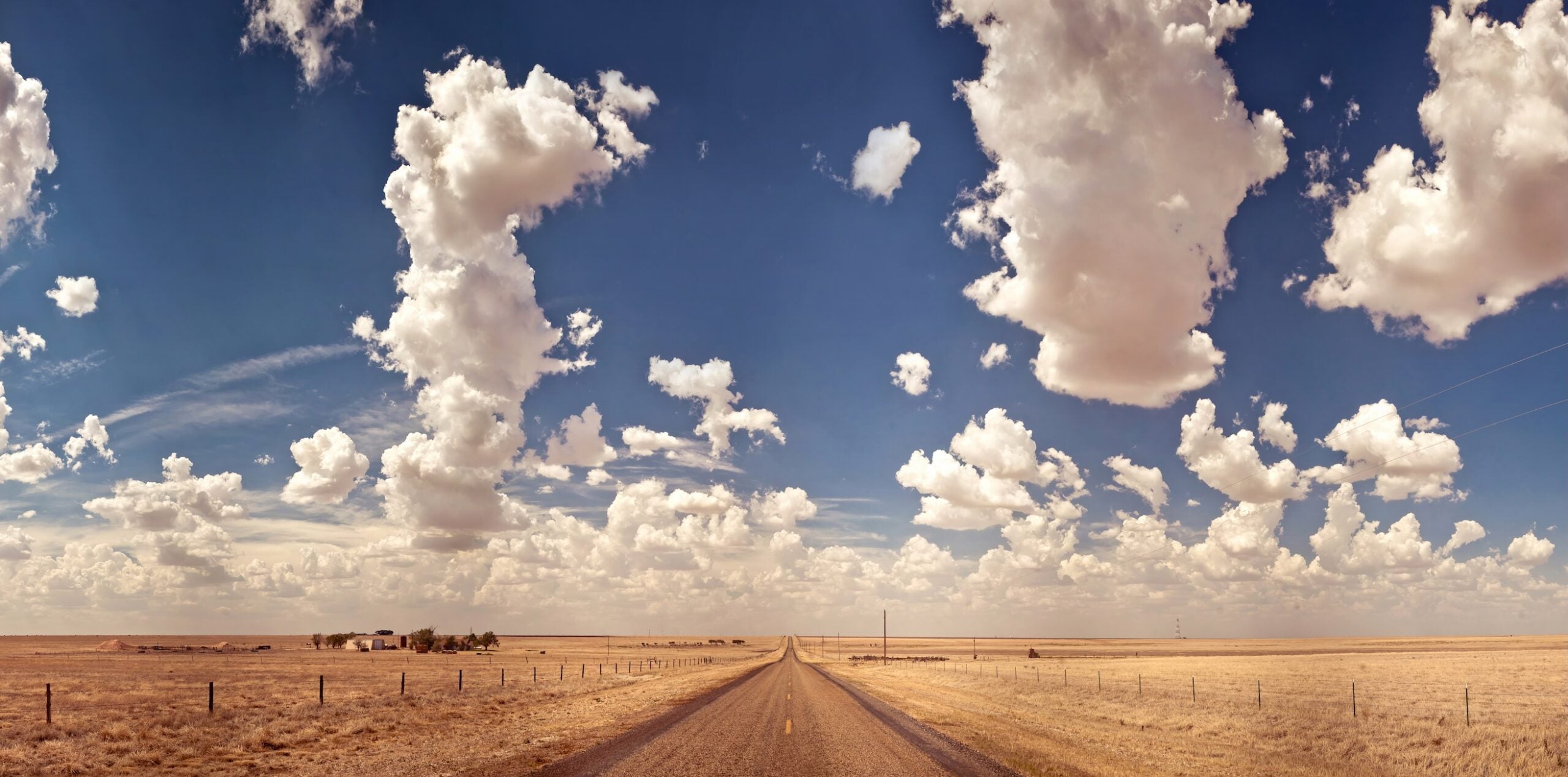
Morning – Route 66 through the Panhandle: Start early from Shamrock and continue west on old Route 66 toward Amarillo. The drive today is shorter, but packed with classic sights. After about half an hour, you’ll reach McLean, Texas. McLean is home to the Devil’s Rope Museum – a surprisingly interesting museum dedicated to barbed wire and Route 66 history, located in a former bra factory. It’s quirky Americana at its best, and admission is usually free (donations welcome). You’ll see hundreds of varieties of barbed wire and assorted ranching memorabilia. Attached is a small Route 66 memorabilia exhibit as well. If it’s open (typically limited hours, often morning and early afternoon), it’s worth a quick walkthrough. McLean also has a vintage Phillips 66 cottage-style gas station on Route 66 – a cute photo stop with its little brick building and orange 66 shield sign.
Continuing west, you’ll drive a long straight stretch of old 66 through tiny towns like Alanreed and Groom. Keep an eye out in Groom for two roadside oddities: the “Leaning Tower of Texas” and a giant cross. The leaning tower is a discarded water tower deliberately tilted at a precarious angle – a fun photo op just south of the freeway at Britten Truck Stop. You can pull off briefly to snap a picture of this Route 66 classic gimmick. In the same vicinity, you literally can’t miss the 190-foot tall white cross in Groom. This cross can be seen from 20 miles away. There’s an exit where you can visit the base of the cross, which is surrounded by life-sized statues depicting the Stations of the Cross. It’s a quick, peaceful stop (restrooms are available there too). By now, the sun is likely high and Texas can be hot – make sure you have water. The next services are in Amarillo, so if you somehow skipped fueling in Shamrock, consider a stop in the town of Conway (there’s a truck stop there). Conway also hosts Bug Ranch on the south frontage road – a parody of Cadillac Ranch featuring five old VW Beetles buried nose-down. It’s a free, offbeat stop where you can spray paint the cars (bring a can leftover from Cadillac Ranch if you like). Bug Ranch is less famous but makes for fun photos without any crowds.
Midday – Arriving in Amarillo: Around lunchtime, you’ll roll into Amarillo, the largest city of the Texas Panhandle. Historic Route 66 turns into Amarillo Boulevard and then SW 6th Avenue through town. On 6th Avenue west of downtown, you’ll find the Route 66 Historic District – a stretch of blocks with antique shops, murals, and eateries in vintage buildings. It’s a great area to park and wander on foot. For a bite to eat, options range from Texas-style BBQ to diners. GoldenLight Café on 6th is one of the oldest restaurants in Amarillo (since 1946) and serves up juicy burgers in a no-frills setting that oozes character. After lunch, explore a few antique stores for Mother Road souvenirs or chat with locals at a coffee shop. Amarillo folks are welcoming and used to road-trippers coming through.
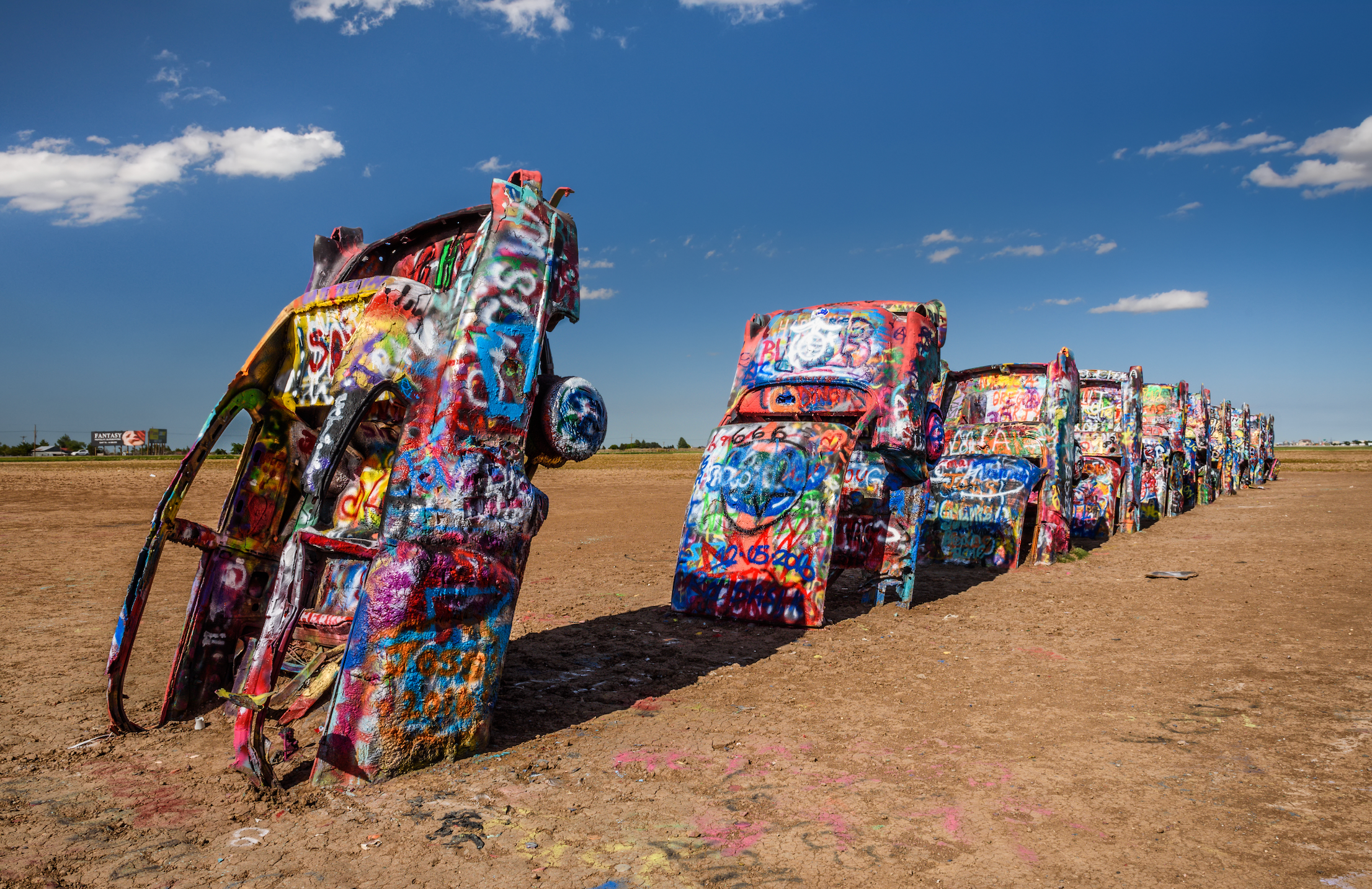
No trip to Amarillo is complete without visiting Cadillac Ranch, just west of the city. Head out I-40 a few miles to the famous public art installation in a field off Exit 62. You’ll see ten classic Cadillacs buried nose-first in the dirt, all covered in layers of graffiti. Pull onto the frontage road and park – entrance is free and you can walk right up to the cars. Most travelers bring spray paint to add their mark (check the ground; often there are half-empty cans left by others). It’s a messy, colorful experience and quintessential Route 66 Americana. Expect paint fumes and bright Texas sun – it’s best to wear old clothes and perhaps a hat. Take fun photos of your artwork, and remember that the graffiti constantly changes, so it’s ephemeral. Cadillac Ranch can be muddy after rain, so if it’s wet, wear appropriate shoes. Pro tip: Also grab a photo from a distance to capture all ten cars in a row. If you didn’t earlier, this is a good moment to reflect – you’re roughly at the midpoint of Route 66’s Chicago-to-LA journey (the official midpoint is a bit west in Adrian, but Amarillo is close).
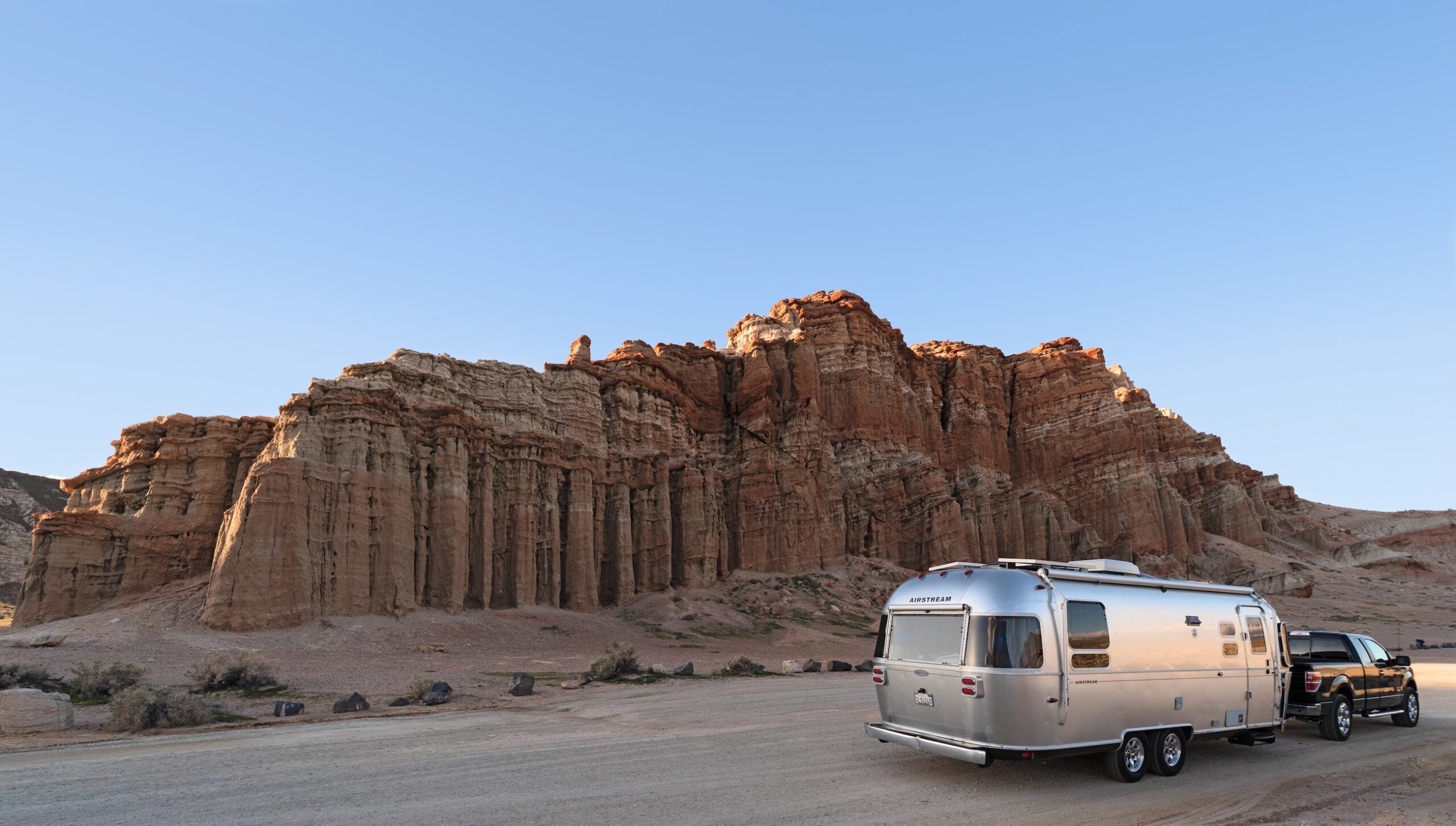
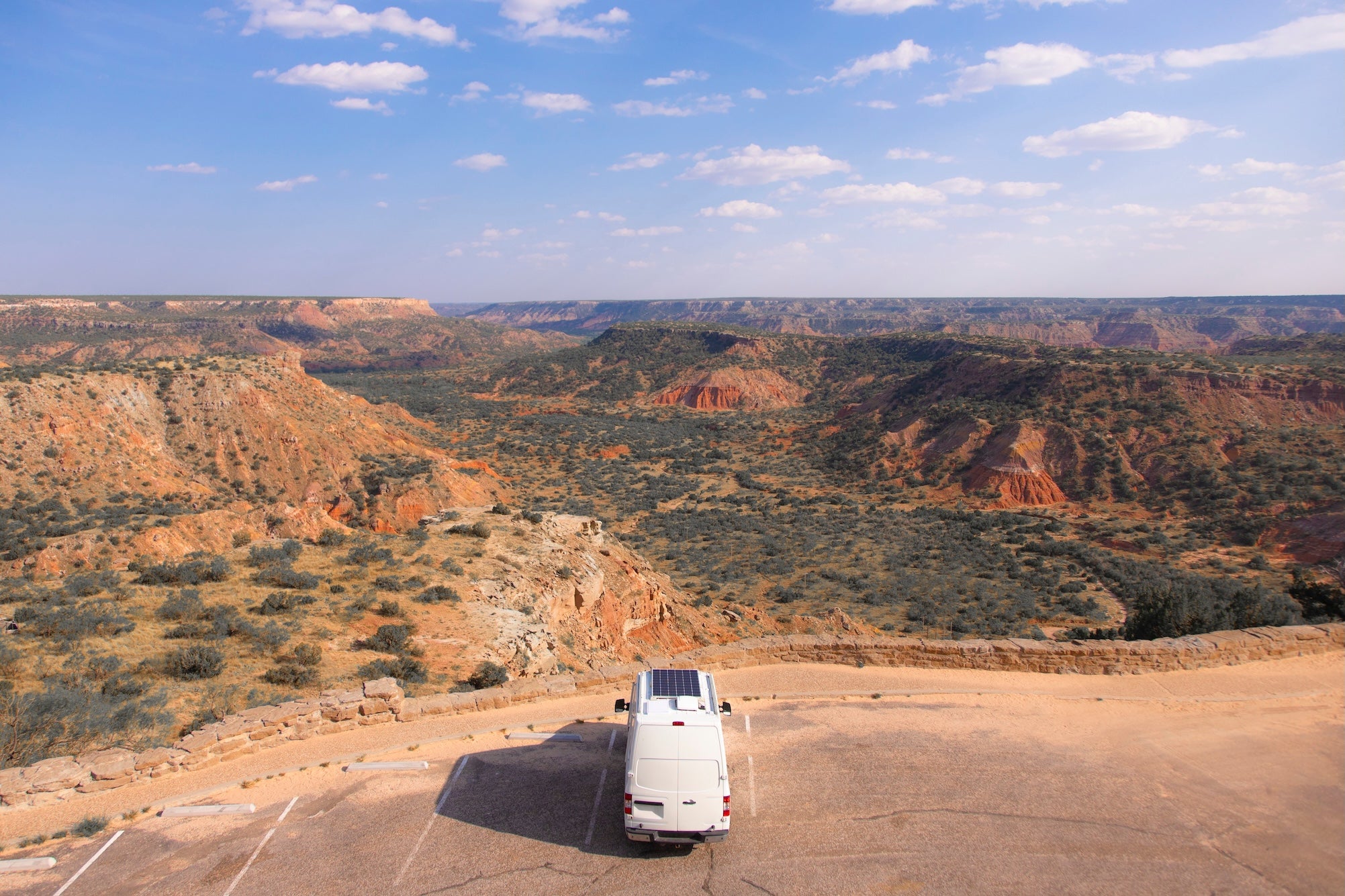
Afternoon – Palo Duro Canyon Side Trip: As you wrap up this segment in Amarillo, you have a fantastic optional detour for the late afternoon and overnight: Palo Duro Canyon State Park. Palo Duro is 25 miles south of Amarillo near the town of Canyon. It’s often called the “Grand Canyon of Texas” – a 120-mile-long canyon with vivid rock layers and multicolored cliffs. If time allows, drive down to the park (about 30–40 minutes from downtown Amarillo). The park road will descend steeply via switchbacks into the canyon. **Use low gear and take it slow** if you’re in a big RV – it’s paved and doable for standard vehicles and trailers, just a bit steep. Once inside, you’ll be greeted by spectacular desert scenery of red and orange canyon walls. Many travelers say camping here is a highlight of their entire Route 66 trip.
Set up camp at Palo Duro Canyon State Park (reservations recommended, especially on weekends). The park has several campgrounds – the Hackberry and Mesquite loops are popular for RVs and tents alike, offering picnic tables, water, and showers nearby. There are also more primitive tent sites and even cabins on the rim if you plan ahead. As evening approaches, consider a short hike on one of the nearby trails to catch sunset light on the canyon. The views are breathtaking without using that word – layers of rock glow red, orange, and purple as the sun goes down. Keep an eye out for wildlife, too: mule deer and wild turkeys often wander near the campsites, and you might hear coyotes howling after dusk. Summer travelers, note that temperatures in the canyon can still be very warm in the evening; it’s cooler than midday but often still in the 80s°F even at sunset. Take it easy and enjoy a leisurely dinner at camp. If it’s peak summer, the park hosts the “TEXAS” outdoor musical on certain nights in an amphitheater – a classic Texas-themed show (check ahead if interested). Otherwise, relish a calm night under the stars. The canyon’s depth and distance from city lights means you’ll get a dark sky. It’s the perfect grand finale for this segment of the journey.
Campgrounds and Overnight Options
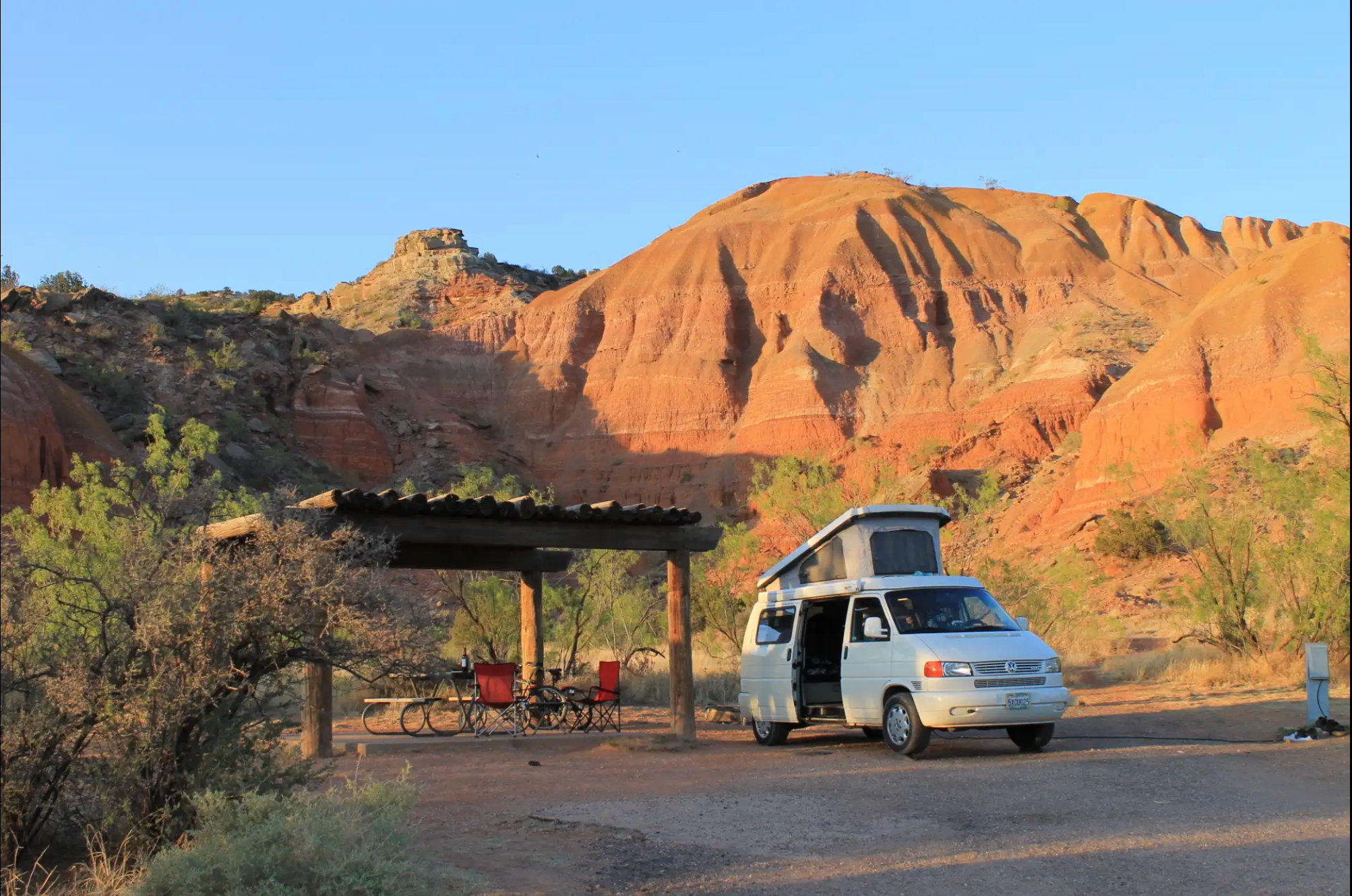
Red Rock Canyon Adventure Park – Hinton, OK: This campground sits in a lush red-walled canyon about 55 miles west of OKC. Campsites are spread beneath cottonwood trees with striking canyon views. It’s a favorite for its natural shade and short hiking trails leading to ridges and historic staircases built by the CCC. Tent and RV sites are available (a few with full hookups, so arrive early if you need one). Amenities include a swimming pool (seasonal), showers, a small store, and even rentable yurts and cabins if you want a break from tent camping. The Dyrt campers rate Red Rock highly for its unique scenery and family-friendly feel – it’s a peaceful stop conveniently close to the route.
Foss State Park Campground – Foss, OK: Located off old Route 66 near Foss (between Clinton and Elk City), this state park offers a large lake and four camp areas. It’s about 4 miles north of I-40 (Exit 53) – a quick detour for a pretty lakeside night. Foss Lake’s campgrounds have a mix of RV sites with hookups and tent sites, many right by the water. Campers love the swimming beach, fishing opportunities, and gorgeous sunsets over the lake. Hot showers and flush toilets are available, and there’s a marina store in case you need ice or bait. It’s a quiet, spacious park – an ideal overnight if you want to break up the drive and enjoy some water recreation. Foss is also known for occasional wildlife sightings; you might hear coyotes at night or see deer along the shoreline at dawn.
Texas Route 66 RV Park – Shamrock, TX: Just west of Shamrock, this clean RV-oriented park gets top marks from The Dyrt community (4.5+ stars). It’s essentially an overnight haven custom-built for Route 66 travelers. All sites are pull-through and level, with full hookups (30/50 amp) – big-rig friendly and no need to unhook your trailer if you’re just stopping for the night. There’s reliable free Wi-Fi, a laundry room, and a small store selling Route 66 souvenirs and basic groceries. The owners are often on-site and guide you to your spot, which is a nice touch. Kids will get a kick out of the petting zoo vibe (goats, chickens, and a friendly donkey live on the property). While there’s not much shade (this is open prairie), the steady breeze keeps things pleasant except on the hottest days. Many campers stop here specifically for the convenient access from I-40 and the nostalgic feel of staying on old Route 66 pavement. It’s a safe, well-lit place to rest up, and only five minutes from Shamrock’s restaurants and fuel.
Palo Duro Canyon State Park – near Amarillo, TX: Camping inside “Texas’s Grand Canyon” is a memorable way to cap off this segment. Palo Duro Canyon State Park’s campgrounds are about 30 minutes south of Amarillo, down in the beautiful canyon itself. Sites range from basic tent sites to RV spots with electricity and water. The Hackberry Campground, for example, is well-reviewed – campers report it has decent spacing, shade shelters, and clean restrooms with showers nearby. Waking up surrounded by towering canyon walls and multi-colored rock layers is worth the slight detour. You can hike right from your campsite onto scenic trails like the Lighthouse Trail (to a famous rock formation) or explore by mountain bike or horseback (outfitters offer rides in the park). Do note: summer heat in Palo Duro can be extreme – it’s often over 100°F by afternoon. Plan to do strenuous activities in early morning or late evening. Also, keep food secured; raccoons here are notorious campground bandits. Sites book up during peak season and weekends, so reserve ahead if possible. If you prefer to stay in Amarillo city instead, there are private RV parks like the **Amarillo Ranch RV Park** (formerly Oasis RV Resort) or the **Big Texan RV Ranch** that offer full hookups, pools, and easy access to town attractions. Those are practical, but they can’t compete with the natural wow-factor of a night in Palo Duro Canyon.
Highlights & Attractions Along the Way
Route 66 Icons & Museums: This stretch is rich in Route 66 heritage. In Oklahoma, the Oklahoma Route 66 Museum in Clinton and the National Route 66 Museum in Elk City provide an excellent one-two punch of history and nostalgia – from Dust Bowl migration stories to neon motel signs and classic Corvettes. Roadside icons are plentiful: don’t miss Lucille’s Old Gas Station in Hydro for a glimpse of 1930s road life, or the U-Drop Inn in Shamrock – a masterpiece of Art Deco design that has become one of the most photographed buildings on all of Route 66. The Tower Station’s neon at night is absolutely worth scheduling into your day. As you approach Amarillo, Cadillac Ranch is the ultimate roadside photo op – a living art project where travelers make their mark. It captures the freewheeling, creative spirit of Route 66 like nothing else. Keep a can of spray paint handy! If you’re a fan of odd museums, the Devil’s Rope Museum in McLean (dedicated to barbed wire) and even the Roger Miller Museum in Erick offer charming, offbeat diversions that you won’t find anywhere but on this road.
Outdoor Recreation & Natural Sites: While much of this drive is open plains, there are special spots to enjoy nature. Red Rock Canyon Adventure Park is an unexpected oasis for hiking, climbing, and even fishing in a small creek – all under the shade of red sandstone cliffs. It’s a great place for a short nature walk or a picnic among fall foliage if you’re traveling in October. Foss State Park provides opportunities to swim, boat, or fish in Foss Lake; on a hot summer afternoon, a quick dip here can be refreshing. In Texas, the crown jewel is Palo Duro Canyon. The park’s trails range from easy loops to challenging treks – you can marvel at hoodoos and multicolored cliffs on foot or bike. Even if you don’t camp in Palo Duro, a day visit to drive the loop and hike a short trail (like the .5-mile scenic overlook trail) is highly recommended. Keep in mind wildlife safety: watch for rattlesnakes in warmer months when hiking in rocky areas, and secure food from critters at camp. Lastly, those interested in stargazing should know that Palo Duro and Black Kettle National Grassland (north of I-40 near Cheyenne, OK) both offer very dark skies. If you overnight at any campground away from city lights, spend a few minutes looking up – the Milky Way is often visible out here on clear summer nights.
Cultural & Quirky Stops: Part of the fun on Route 66 is the pure Americana at every turn. In El Reno, if timing works, try an onion burger – Sid’s Diner is famous for them, and it’s a true local joint. In Weatherford, you’ll find a surprising aerospace connection at the Stafford Museum, reflecting Oklahoma’s contributions to NASA. As you hit the small towns, notice the murals (many towns along 66 have colorful murals depicting their heritage), like the one on the outside of the museum in Elk City or on buildings in Shamrock. Texas’s Panhandle has its own flavor of quirkiness – for example, the tiny town of Vega (just west of Amarillo) has a restored Magnolia gas station and a 1920s-era courthouse on the town square, worth a quick look if you venture that way. Amarillo itself offers a mix of cowboy culture and modern art. If you have extra time, the **Jack Sisemore RV Museum** in Amarillo is a free museum showcasing vintage RVs and campers (including the oldest Airstream). It’s a fun nod to road-tripping history. And of course, the Big Texan Steak Ranch is a cultural icon: a steakhouse that offers a 72-oz steak challenge, complete with a western-themed motel and shooting gallery. Even if you’re not up for a giant steak, it’s a kitschy place to grab dinner or a cold beer and enjoy the atmosphere – they sometimes have live music and definitely have plenty of photo-worthy taxidermy and neon inside. These cultural stops, whether genuinely historic or amusingly gimmicky, add color to your journey and stories to tell afterward.
Travel Tips for the Oklahoma City–Amarillo Segment
- Fuel and Services: Gas is easy to find in this stretch, especially in Oklahoma. Towns like Weatherford, Clinton, and Elk City all have multiple gas stations near the interstate. Once you enter the Texas Panhandle, services spread out. Shamrock has fuel and basic groceries; beyond that, there’s a notable gap until Amarillo (roughly 90 miles). There are a few truck stops at McLean and Groom, but it’s smart to fill up in Shamrock or Erick. Don’t let your tank drop too low – distances can be deceivingly long on the open plains. Likewise, plan food stops when you’re in populated areas. If you’re driving late, note that small-town stations and restaurants may close early (by 8 or 9 pm). In Amarillo, you’ll find everything you need (supermarkets, outdoor gear stores, etc.) to resupply before the next leg west.
- Weather & Timing: In late spring, be aware of severe weather. Oklahoma and the Texas Panhandle are part of Tornado Alley. May and June can bring strong thunderstorms. Keep an ear on local radio or weather alerts (a NOAA weather app is handy) if storms are forecast. Many small towns have tornado sirens. If severe weather threatens, you can often find shelter in sturdy public buildings (and as mentioned, the Shamrock RV park even has a storm shelter). Summer (July–August) means heat – daytime highs frequently reach the mid 90s °F or higher. Carry plenty of water for yourselves and your vehicle (engines can overheat; check coolant levels). Sightseeing is best done in morning or late day to avoid the peak heat. Wind is another factor – spring can be very windy in the Panhandle. Gusts can make high-profile vehicles tricky to handle, so drive cautiously and keep two hands on the wheel during strong crosswinds. On the flip side, autumn (September–October) generally brings mild days and cool nights, with far fewer storms – an excellent time to travel.
- Road Conditions & Navigation: Historic Route 66 in this region largely follows either OK-66 or I-40’s service roads. Oklahoma does a good job with “Historic Route 66” signage, especially through towns. Still, you might encounter multiple optional alignments of 66. For a worry-free experience, many travelers use The Dyrt’s road trip maps or a dedicated Route 66 navigation app to stay on track. In some spots, the old highway pavement remains and in others you’ll merge onto the interstate. A good example is west of Elk City, where a post-1930s alignment diverges south; many just take I-40 between Erick and Shamrock because the old road can be rough and poorly signed. Don’t hesitate to hop on the interstate if you’re unsure – you won’t miss major sights and you can always rejoin 66 at the next town. One more thing: watch your speed on rural 66 through small towns. Speed limits often drop to 35 or 25 mph, and local police do enforce them (especially in spots like Weatherford and Erick). It’s part of the charm – slow down and enjoy the vintage scenery.
- Camping and Reservations: This segment has a mix of first-come, first-served and reservable sites. State parks like Foss and Palo Duro accept reservations online and they can fill up on summer weekends or holidays. If you know your dates, it’s worth booking ahead for those. Private RV parks (e.g., in Shamrock or Amarillo) usually have space for drive-ins, but it doesn’t hurt to call ahead the day of, especially if you need a 50-amp hookup or arrive late. The Dyrt app’s campground reviews can give you insight into site sizes and any quirks (for example, reviewers noted one Palo Duro campground has limited cell service in the canyon – plan accordingly). Also, be mindful of gate closing times: Palo Duro’s park gates typically close at 10 pm, so arrive before then or you won’t get in until morning. Always have a backup stop in mind in case you’re delayed – for instance, if Foss State Park is full, Elk City has a city lake campground that could work, or if Palo Duro is booked, Amarillo’s RV parks are your fallback.
- Safety & Etiquette: Overall, this is a very safe and friendly route. People in small towns might strike up conversation when they see you’re a Route 66 traveler – don’t be shy to ask for local recommendations. Standard road-trip common sense applies: lock your vehicle when unattended (though crime is low, you might be leaving a car full of gear while you sightsee at museums). Watch for wildlife on the roads, especially around dawn/dusk near Red Rock Canyon and Palo Duro – deer and even wild turkeys can cross unexpectedly. Rattlesnakes exist in these regions, so use closed-toe shoes when walking trails or around rocky areas, and always look before you place your hands or feet while hiking or gathering firewood. If traveling with pets, be aware of heat dangers – never leave pets in a closed vehicle at attractions, and have plenty of water for them. Finally, practice Leave No Trace principles at natural sites: pack out all your trash (Cadillac Ranch unfortunately gets littered with empty spray cans; do your part by picking up after yourself). Keeping the Mother Road clean and respectful ensures the next travelers can enjoy it just as much.
- The Dyrt Pro Tip: Cell reception can be hit-or-miss in the canyon areas and some stretches between towns. Before you head out each day, download offline maps for your route. The Dyrt’s app offers offline campground lists and maps which can be extremely useful if you lose signal (for example, AT&T works well in Palo Duro Canyon, but Verizon is spottier). Having those resources at your fingertips means you won’t miss a turn onto an old 66 alignment or overlook a nearby campground option when you need one.
Additional Resources
For more detailed planning on the entire Mother Road, check out our full Route 66 road trip itinerary covering Chicago to Santa Monica. It links to each segment guide like this one. State tourism offices have helpful info too – see Oklahoma’s official Route 66 guide on TravelOK and the Texas Historical Commission’s Route 66 landmarks list for background on sites like the U-Drop Inn. If you’re curious about road conditions or construction on I-40/US-66 in this region, the Texas DOT website and Oklahoma DOT have up-to-date travel advisories. Lastly, local visitor centers (like the one inside the U-Drop Inn and the Amarillo Visitor Center) can provide maps, free brochures, and current recommendations. With a little preparation and a spirit of adventure, the Oklahoma City to Amarillo run will reward you with classic Americana, natural beauty, and plenty of stories for the road ahead.
Happy travels on Route 66!
The Dyrt is the only camping app with all of the public and private campgrounds, RV parks, and free camping locations in the United States. Download now for iOS and Android.Popular Articles:
Articles on The Dyrt Magazine may contain links to affiliate websites. The Dyrt receives an affiliate commission for any purchases made by using such links at no additional cost to you the consumer.