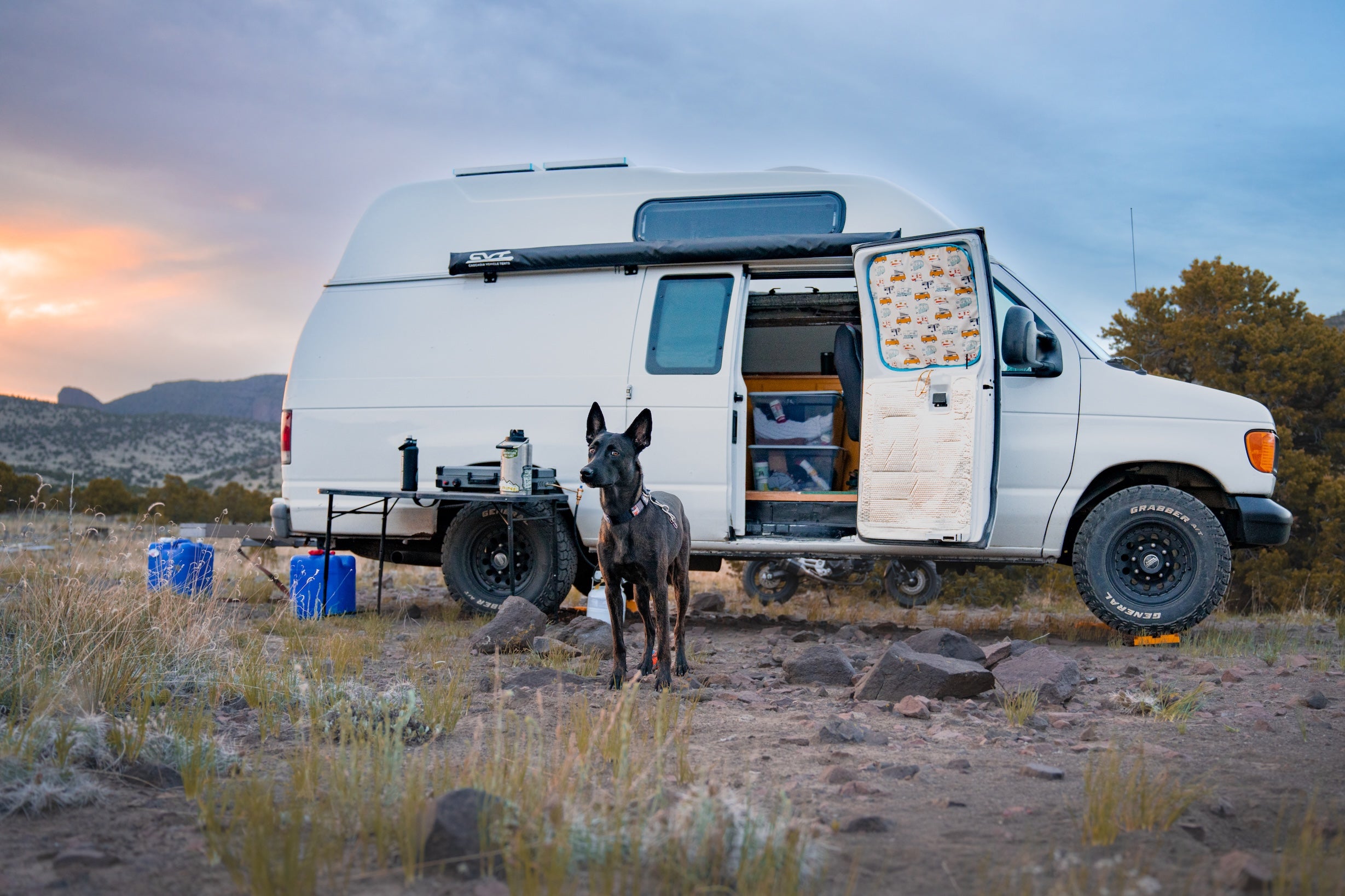
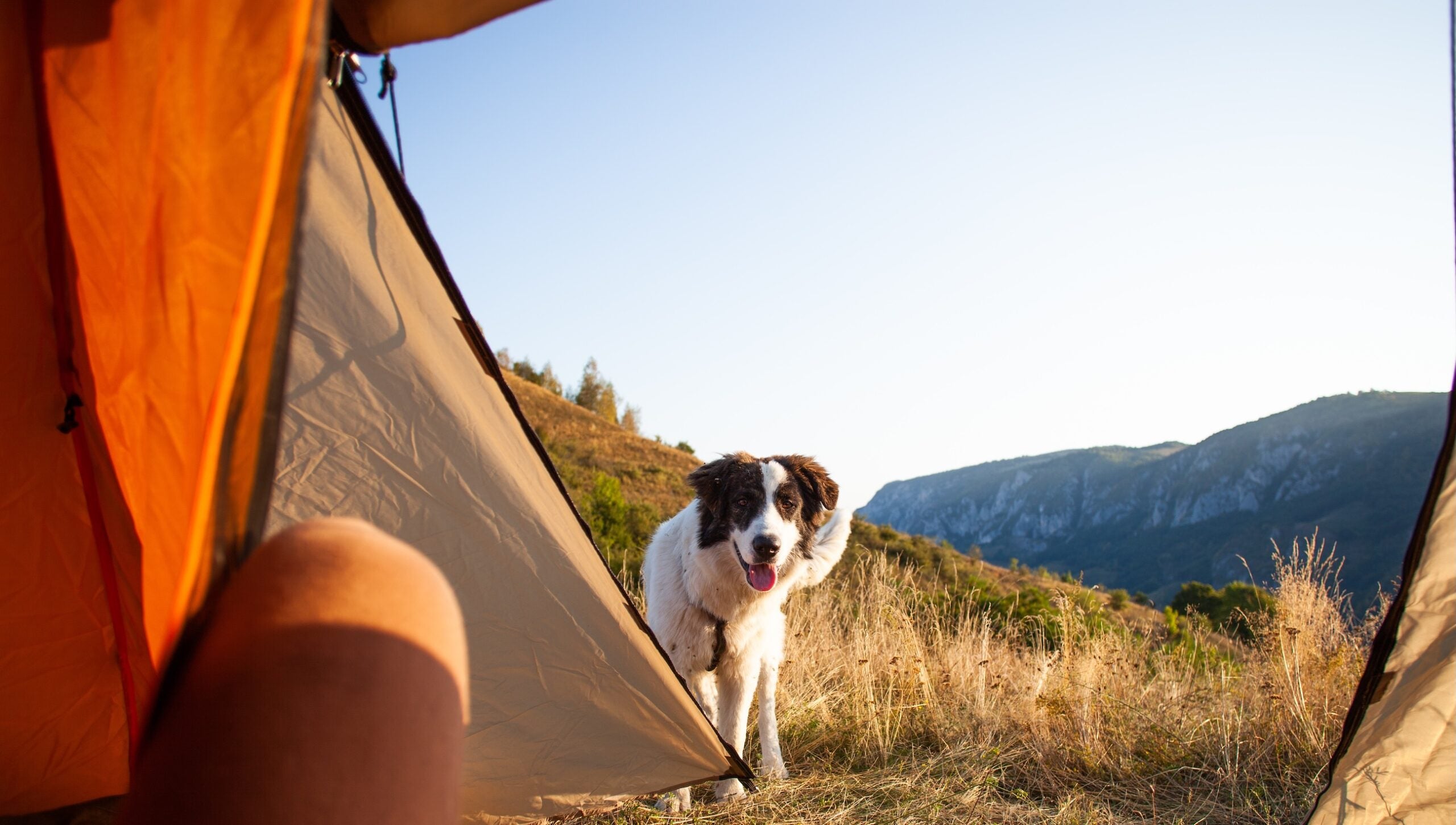
Camping with your dog is awesome. But if you’ve ever tried managing a curious dog at a busy campground or a remote dispersed site, you know the truth. While off-leash freedom can feel like the biggest gift to your dog, it can also feel like the biggest stress of the camping experience.
So what’s the solution for dog parents who want the best of both worlds – room to roam, without risking a runaway dog or safety scares?
Our editors went looking for a solution, and found a modern option that checks all the boxes: a GPS fence! Specifically, the SpotOn GPS Fence.
Off-Leash Without the Stress: Rethinking Dog Safety at Camp
The goal is to give dogs space to be dogs without losing control of the campsite. You want them to be able to sniff, wander, explore, and bark at the wind, without exposing them to any of the natural risks that can come with camping:
- Wildlife encounters
- Nearby roads
- Other dogs (leashed and unleashed)
- Campfires, grills, and camp kitchens
- A sudden squirrel sprinting into the trees
We’re looking for freedom with boundaries, and for that, we need the right tool.
The Portable Dog Fence Options (And Why the Differences Matter)
If you’ve been shopping around, you’ve probably seen a mix of solutions that might sound similar, but actually do very different things. Some of the possible pet solutions out there include the following:
- RV physical fences / tie outs
- Bluetooth trackers (Airtag)
- Pet collar GPS trackers
- GPS fences
We all know how a physical fence or tie-out works. The remaining 3 options have one key distinction:
- Bluetooth trackers and pet collar GPS trackers help you find your dog after they’re gone.
- A GPS fence helps prevent your dog from leaving in the first place.
That difference matters a lot when you’re camping. Let’s take a closer look.
Option 1: RV Fences & Tie-Outs (The Old-School Setup)
RV fences, long lines, and tie-ups can work, but they come with tradeoffs.
Pros
- Simple, familiar, and physical
- Can prevent roaming in a limited radius
- No technology required
Cons
- Stationary and awkward to reposition around your site
- Can tangle (especially with energetic dogs)
- Not ideal for large dogs with strength or speed
- Often limits your dog’s ability to wander around your site
- Doesn’t create true boundaries, just a tethered circle
If your dog thrives on movement, tie-outs can feel frustrating and restricting.
Option 2: Bluetooth Trackers (AirTag-Style)
Bluetooth trackers are popular because they’re cheap and easy. But for camping, they’re not a true safety solution.
Pros
- Affordable
- No monthly subscription required
- Helpful for locating items (or a dog) nearby
Cons
- Very short range
- Relies on nearby phones to ping location
- Doesn’t prevent an escape
- Do not work in remote areas
- Requires constant monitoring of your dog
Bluetooth trackers can help you find something if it’s close, but can’t necessarily keep your dog safe at camp.
Option 3: GPS Pet Tracker Collars (Tracking-Only)
GPS trackers are a big upgrade from Bluetooth because they can show your dog’s location on a map. But there’s still one major issue: tracking isn’t containment.
Pros
- Helps locate your dog if they run off
- Useful for escape recovery
- Great for dogs with a history of bolting
Cons
- Doesn’t prevent wandering
- Often depends on cell service to function
- Alerts happen after your dog leaves
- Your dog may already be near danger by the time you’re notified
While a slight improvement, a GPS tracker is still just a recovery tool, not a containment tool.
Our Favorite at The Dyrt: The GPS Fence (The “Goldilocks” Solution)
After comparing the most common options, we landed on the clear winner for camping:
A GPS fence
A GPS fence creates a virtual boundary that your dog learns to respect, without requiring a physical fence, stakes, wires, or a permanent setup.
Instead of asking your dog to stay near you because they’re tied up, you’re teaching them where they can roam freely and safely.
So, What Is a GPS Fence?
A GPS fence is a portable containment system that:
- lets you draw a boundary anywhere
- teaches your dog that boundary through training
- helps keep them contained at home, at campgrounds, and on trips
And unlike a tracker, a GPS fence is proactive. It’s designed to help prevent your dog from leaving your campsite in the first place.
Here’s how it stacks up to the other options:
Quick Comparison: What Each Option Really Does
| Option | Helps you find your dog if they’re lost? | Helps keep your dog safely contained? | Flexible & adventure-friendly? |
| RV physical fences / tie-outs | ❌ | ✅ (but limited) | ❌ |
| Bluetooth tracker (AirTag-style) | ⚠️ Limited | ❌ | ⚠️ Only in crowded areas |
| GPS pet tracker collar | ✅ | ❌ | ⚠️ Depends on cell service |
| GPS fence (SpotOn Nova) | ✅ | ✅ | ✅ |
This is why we kept coming back to GPS fencing as the “Goldilocks” solution. It’s not bulky and restrictive like a physical setup, and it’s not purely reactive like a tracker.
Why We Recommend SpotOn Fence Nova Edition for Camping
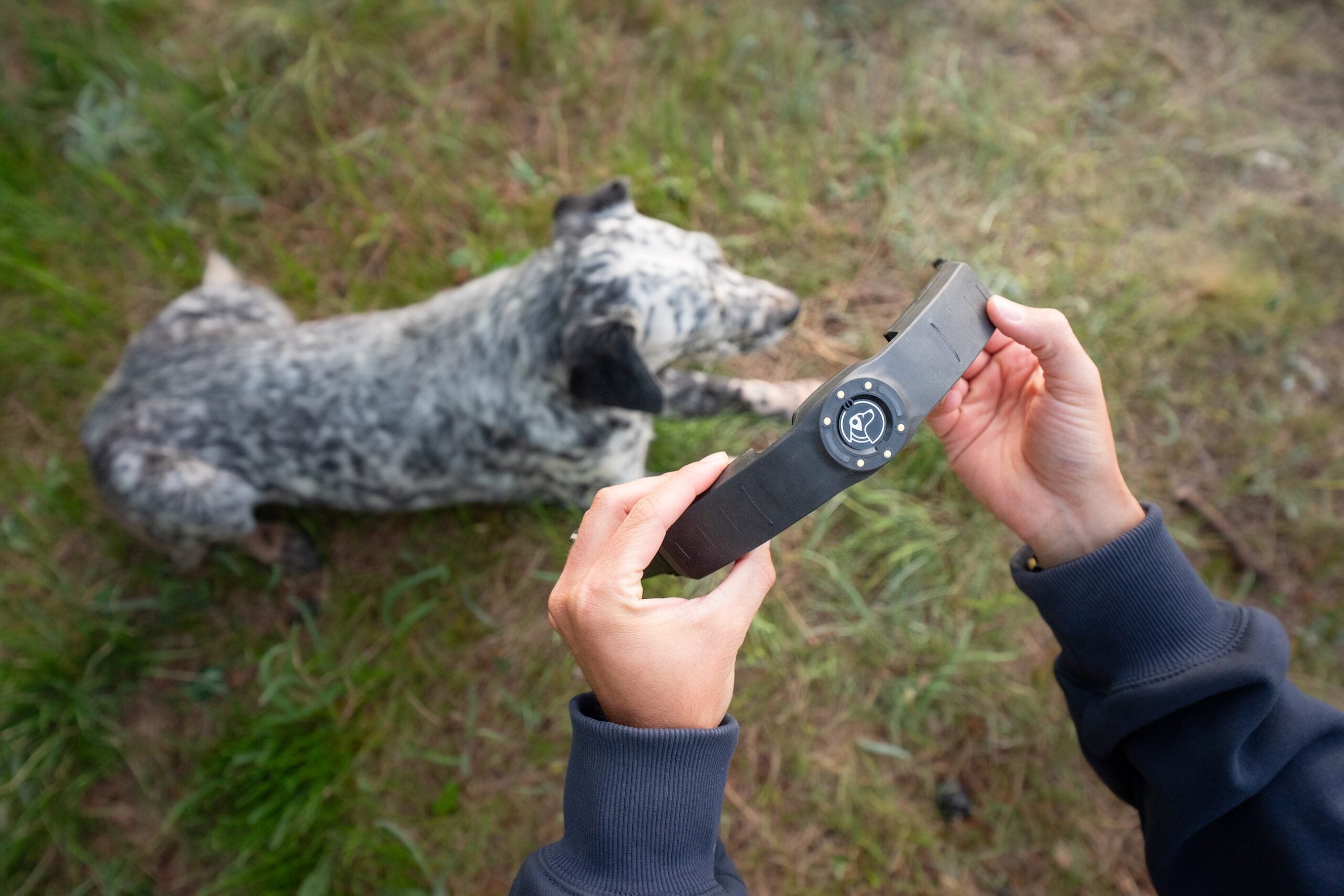
There are a few GPS fence options out there, but the one that stood out as best-in-class for real camping conditions is the SpotOn Fence Nova Edition.
Here’s what made it our top pick:
Accuracy + Reliability (Even in Trees and Tough Terrain)
Camping isn’t a wide-open soccer field. Sites vary a ton, and may include all sorts of challenges, like tree cover, uneven terrain, canyons, changing conditions, water and more.
The Nova Edition is built for that reality, featuring a dual-feed active antenna, dual-band receiver, and the largest GPS antenna in pet-tech, for best-in-class GPS accuracy and reliability. Basically, this collar works like a compact and efficient solar panel. Receiving more light rays and filtering for the clearest signal, for stronger GPS accuracy and reliability.
The Nova Edition is designed with that reality in mind, using a dual-feed, dual-band antenna and receiver to strengthen GPS accuracy and reliability. In practical terms, this means the system is built to maintain more stable boundary performance in environments where signal conditions are less ideal.
And don’t just take our word for it. SpotOn has gone a step further by using third-party GPS testing to evaluate performance. They work with Spirent, a company that specializes in testing high-precision positioning systems, to measure how the fence performs in real-world conditions like tree cover, uneven terrain, and variable signal environments.
That independent testing helps demonstrate SpotOn’s focus on delivering the most consistent and precise GPS boundary performance in the category, where containment reliability and accuracy matter most.
In other words: this isn’t “best case scenario” tech. It’s designed for the real outdoors.
A 360 Solution for Home + Camping + Travel
This is a huge factor. Because a portable dog fence for camping is great, but it’s even better when it works everywhere you go.
 With a GPS fence, you can create boundaries for:
- your backyard
- your campsite
- an Airbnb
- a family cabin
- a friend’s property
That kind of flexibility means you’re not buying a “camping-only” gadget, you’re investing in a safety system your dog can learn once, and use across various locations for years.
Off-Grid Mode (No Cell Service Required)
This is where SpotOn’s GPS fence system stands apart from many tracking-only collars, and from other GPS collars – SpotOn is currently the only system that offers true, fully functional GPS fencing without cell service.
For people who overland, van camp, stay long-term on public land, or camp in remote areas, cell service can be unreliable or nonexistent. With SpotOn, you can still create and use fences in the mountains, on BLM land, deep in the woods, or along remote trails without depending on signal.
That makes it especially useful for travelers who treat their campsite like a temporary yard. You can set a boundary wherever you stop, even if you’re days away from reliable coverage, and your dog still has a clear, consistent containment area, because the fence works directly via GPS – not cellular networks.
Water Friendly Adventures
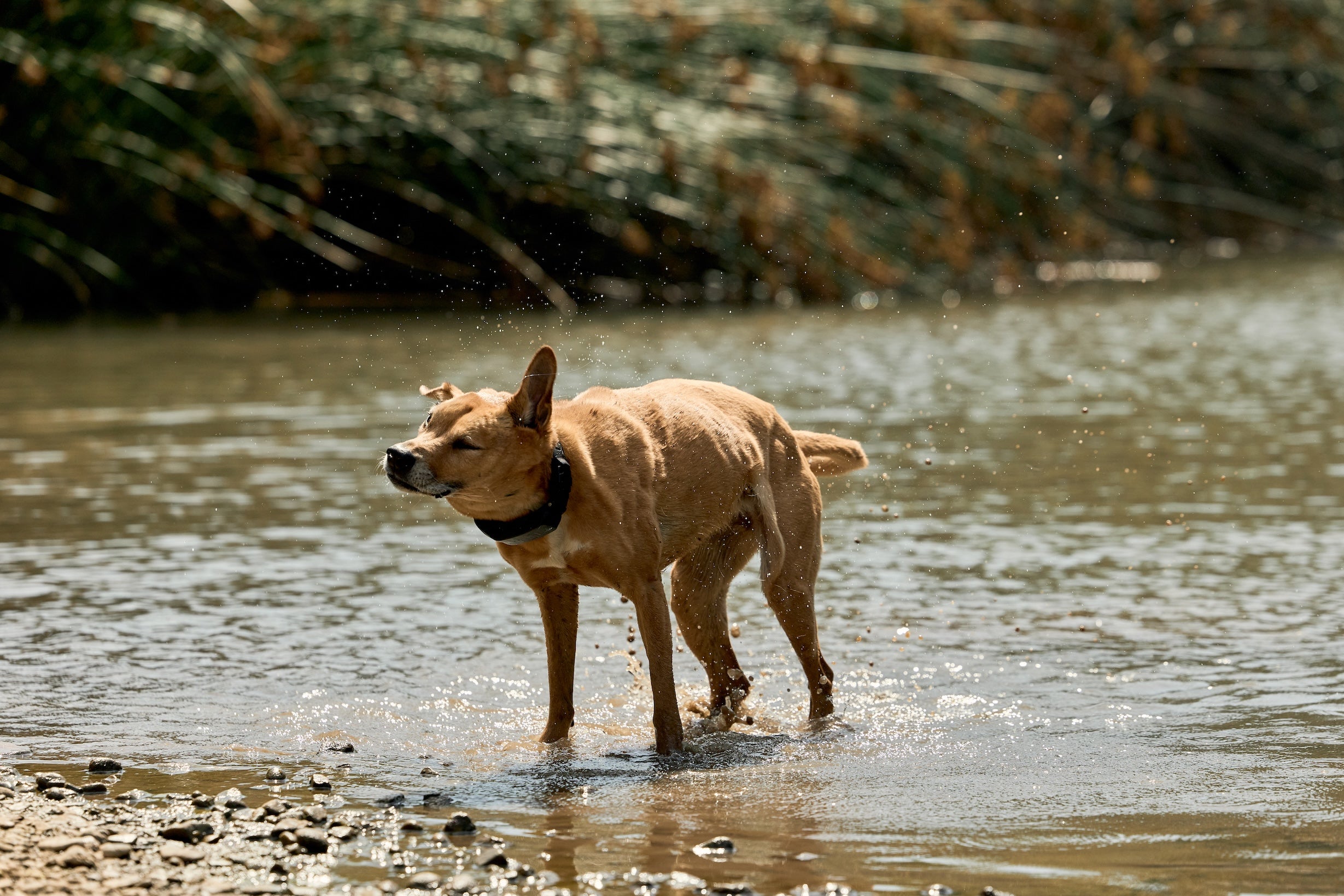
One of the big advantages for camping and outdoor trips is that SpotOn is built to handle real-world conditions, including water. The collar is waterproof, so rain, splashing, and water play aren’t an issue during normal outdoor use.
A unique benefit with a GPS fence is that your boundary isn’t limited to dry land. You can create fence lines that extend into the water, which is especially helpful at lakes, rivers, and shorelines. That means you can give your dog a designated area to cool down, wade, and play while still keeping them from swimming too far out or drifting down the shoreline.
For campers, this adds a layer of safety without taking away freedom. Your dog can enjoy the water, stay comfortable on hot days, and still have clear limits, so you’re not constantly calling them back or worrying about them venturing beyond sight while you’re trying to relax at camp.
Flexible Sizing
Camping dogs come in every shape and size, from adventure labs to compact trail buddies. The SpotOn Nova Edition works for dogs down to 20 pounds, making it a strong option for both smaller and larger breeds.
The Bottom Line: Is There a Portable Dog Fence for Camping?
Yes! And it’s better than most people expect. If you want:
- more freedom than a tie-out
- more safety than “off-leash and hope”
- more control than a tracker-only collar
- a solution that works even off-grid
…then a GPS fence is the answer.
And if you want the best version of that category for real outdoor use, our editors recommend the SpotOn Fence Nova Edition for its combination of reliability, portability, off-grid capability, and campsite-friendly customization.
The Dyrt is the only camping app with all of the public and private campgrounds, RV parks, and free camping locations in the United States. Download now for iOS and Android.Popular Articles:
Articles on The Dyrt Magazine may contain links to affiliate websites. The Dyrt receives an affiliate commission for any purchases made by using such links at no additional cost to you the consumer.