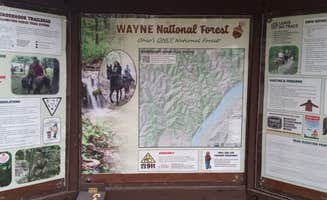
Wayne National Forest offers several horse camping locations near Williamstown, West Virginia, typically within a 60-90 minute drive. The region's Appalachian foothills create a mix of gentle valleys and moderate elevation gains on most bridle trails. Unlike the state parks with developed facilities, national forest horse campgrounds operate with minimal services but provide direct trail access at lower costs, generally $10-15 per night for primitive sites.
What to do
Evening trail rides: Riders often depart from Kinderhook Horse Trail in the morning hours and return before sunset. "The Kinderhook trail was overgrown. The Paw Paw trail on the other hand was very smooth, dry and wide," notes Annika E. at Kinderhook Horse Trail.
Water activities: Nearby lakes offer alternatives to trail riding. "Fishing is hit and miss. I doubt you will see a Ranger or State Park employee, that can be a good thing or a bad thing, you decide. LOTS of Geocaching opportunities," reports Leon H. at Strouds Run State Park Campground.
Historical exploration: The region features iron furnace remnants and former mining sites. "As history buffs will know that Ohio was one of the nation's leading iron producers back in the day. There is also a swimming beach on the opposite end of Lake Hope...if you just have to get wet," shares Dave V. at Lake Hope State Park Campground.
Stargazing: The limited light pollution makes for excellent night sky viewing. "Amazing at night for stargazing!" reports Olivia S., who visited Strouds Run State Park.
What campers like
Self-service setup: Many equestrian sites operate on an honor system. "Area is dedicated to horse trail riding. Nice clean area just off main road. Can camp here in certain spots. Not much area to camp. No fire rings, one picnic table," describes Joe B. about Kinderhook Horse Trail.
Parking convenience: Trailer accommodations vary by location. "Parking for regular cars is 100 yards before restroom (the others are for horse trailers only). Close to the restroom there's a picnic table, tentspots and a manual water pump," adds Annika E. about Kinderhook Trailhead.
Trail variety: The network offers options for different riding abilities. "The trails are well marked and easy to follow. And there are several loop sections so you can easily plan various tips accordingly," explains James W. about Zaleski State Forest.
Water access: Most horse camping areas provide basic water sources. "Does have a small hand pump water spigot. Has no flush vault toilet. No hook-ups of any kind," notes Joe B. about Kinderhook Horse Trail.
What you should know
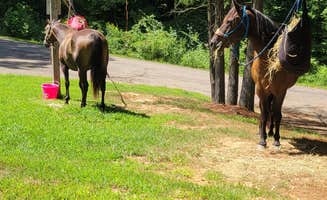
Limited facilities: Bring supplies as most equestrian campgrounds have minimal amenities. "With it being an equestrian trail, there were a lot of horses and trailers throughout the day. Before sunset, everyone cleared out and only campers remained," reports Dare To Everywhere about Kinderhook Trailhead.
Campsite privacy: Sites tend to be open with limited separation. "The site itself is quite nice, with access to toilets and picnic tables. However, it also seems to be a spot locals visit quite a bit. I've had two cars drive in after sunset who have just sat around for a bit then left," warns Jack H. about Kinderhook Horse Trail.
Water quality: Drinking water may need filtration at some locations. "The water is good and I have never seen them dry. You will see lots of wildlife," shares Leon H. about Zaleski State Forest.
Non-equestrian visitors: Some horse campsites attract general campers. "Very quiet campground with little to no other riders around. Only complaint would be the non equestrians staying in the equestrian area," notes Janessa S. about Blue Rock State Park Campground.
Tips for camping with families
Trail safety: Choose appropriate paths for less experienced riders. "We have camped at both Dock 3 and Dock 2 with our dog, those are the only two areas that allow pets. At Dock 3 we were right on the water but dock 2 is probably 200 yards from the water," mentions Kelsey R. about Burr Oak State Park Campground.
Alternative activities: Some campgrounds offer non-equestrian options. "I'm a tent camper and a hiker, but my family and I even spent some time at the lake and rented a paddle board and a water bike which was so much fun!" shares Anne P. about Lake Hope State Park.
Wildlife encounters: Prepare children for potential sightings. "You will see lots of wildlife, we have seen salamanders, deer, snakes, a wild turkey even wandered into our camp in May 2018," reports Leon H. about Zaleski State Forest.
Insect protection: The deciduous forest environment harbors numerous bugs. "A lot of insects, humid and dense deciduous forest surrounding the trailhead," warns Annika E. about Kinderhook Horse Trail.
Tips from RVers
Site leveling: Many forest campgrounds have uneven terrain. "Camp sites are very small and very unlevel, had to raise back of camper and put front about a 1/4" off ground to get close to level. Site around is sloped in all directions," reports Daniel about Lake Hope State Park.
Size limitations: Most equestrian sites accommodate smaller rigs only. "Definitely only for very small camper, car camp, or tent, small group," notes Joe B. about Kinderhook Horse Trail.
Hookup availability: Full-service sites are limited in equestrian areas. "The RV sites were a bit narrow, but otherwise nice and shaded. We took a couple of the hikes down by the lake and it was great," shares Kevin F. about Lake Hope State Park.
Cell service considerations: Coverage varies by location. "No internet or phone service so great to disconnect," mentions Daniel about Lake Hope State Park, while Joe B. reports about Kinderhook: "With att had 2 to 3 bars cell service."




 Traveler


