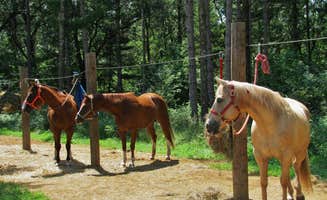
Elm Creek Horse Camp sits within the 4,900-acre Elm Creek Park Reserve in Minnesota's Hennepin County. Located at an elevation of approximately 945 feet, the camp offers dedicated equestrian facilities in a mixed hardwood forest setting. The park experiences typical northern Midwest seasonal patterns with hot summers reaching 85°F and winter temperatures often dipping below freezing. The campground's terrain consists primarily of level areas with some gradual slopes along connecting trails.
What to do
Archery practice during your stay: The horse campground is conveniently positioned near an archery range. "I went to this park for the first time last weekend, and I spent the entire time just saying 'wow'. I had never been here before, despite it only being 20 minutes away, because I always prioritize going to state parks," notes a visitor to Bunker Hills Regional Park, which also features archery facilities.
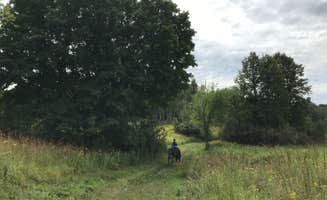
Explore multiple trail systems: Equestrian trails near Columbus connect to larger networks. At Crow Hassan Park Reserve, one rider shares, "This is my all-time favorite park to bring my horse to, and it's her favorite trail too. Seriously, when we head back to our trailer she will stop and refuse to proceed. Do a 180 on the trail and she is happy to trot away from the trailer."
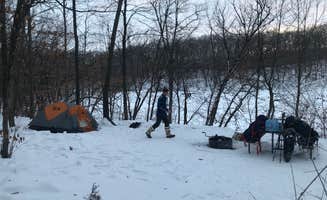
Winter horse camping options: Some equestrian facilities in the area maintain limited winter access. A visitor to Wild River State Park notes, "2/8/20-2/9/20. First time to this park. The campground was plowed out and had a nice spot for the tent. The sites were far enough apart and it looked like it would be more private when the leaves come in."
What campers like
Varied terrain for different riding skills: The regional horse trails offer diversity beyond Elm Creek. "The best place to be bug-free happens to be the sandy prairie trails, the wooded areas are nice but you may want to hustle out of there if you don't have enough bug protection," explains a reviewer at Crow Hassan Park Reserve, adding useful information about trail conditions.
Group camping opportunities: Equestrian groups can find dedicated facilities near Columbus. One camper at Lake Maria State Park shares, "What makes B6 stand out, though, is the vibe. It's close enough to Lake Maria's best hiking trails and just a short walk to the lake itself, where you can sit on a log and watch wood ducks paddle past and listen to the frogs in full chorus at night."
Water features near horse trails: Several horse campgrounds offer access to lakes or rivers. A visitor to Country Camping Tent & RV Park notes, "Key thing is the river is very clean and sandy bottom," which can be important for those planning to cross waterways with horses.
What you should know
Seasonal bug considerations: The area experiences significant insect activity during summer months. A camper at Lake Elmo County Park Reserve advises, "They have a home made lake that has a sand bottom but it has chlorine like a pool so no weeds. Great for swimming," offering a bug-free water option after riding.
Campsite reservation timing: Most equestrian campsites near Columbus require advance planning. "We spent two nights in the campground. It was fairly busy, but we still felt secluded despite a full campground," notes a visitor to Baker Park Reserve, highlighting the importance of early reservations.
Parking logistics for horse trailers: Some facilities have specific requirements for trailer parking. "During these COVID times everyone wants to get out and about more, which means that the main parking lot for the park that used to be mostly designated for horse trailer parking is now overrun with family vehicles," warns a horse camper about changing conditions at Crow Hassan Park Reserve.
Tips for camping with families
Child-friendly horse education: Some equestrian campgrounds offer programs for young riders. A visitor to Baker Park Reserve Regional Park shares, "This campground is a gem so very close to the Twin Cities. The sites are good sized, and the bathroom/showers are great. With great fishing, playground, swimming, and biking trails very nearby, the kids were kept as busy as they wanted to be."
Alternative activities for non-riders: Family members who don't ride can find other recreation options. "The campground was very nice. The sites are private, couldn't see any neighbors as there are a lot of trees. The park rangers were very helpful and informative," notes a visitor to Wild River State Park, describing additional hiking opportunities.
Wildlife spotting opportunities: The area supports diverse wildlife viewing alongside horse activities. One camper mentions, "This campground is massive! Our campsite was on the farthest loop and was very private! We saw sooooo many deer some even walking right through campsites! You can hear coyotes, raccoons and very loud owls."
Tips from RVers
RV sites with horse accommodations: Several campgrounds accommodate both RVs and horses with specialized setups. A review of Sand Dunes State Forest notes, "30' class C motor home. Some overhanging branches on the road in scrape the top and sides. Campsites are nice, mowed, gravel parking. Fire rings and picnic tables at each site. Sites range from open and flat to secluded and a little hilly."
Electrical considerations for horse camping: Understanding power availability is crucial for RVers with horse trailers. "Huge campground with privacy between the camp spots. There were nice trails to help explorer the regional park. The bathrooms were nice and clean. The only down fall was there was no trash cans in the campground only with you were leaving the campground," explains a camper regarding amenities at a nearby park.
Seasonal access limitations: Winter camping with horses requires special planning. "This site is perfect for anyone who wants a little solitude, a lot of nature, and a chance to slow down and breathe," describes one winter visitor, noting the importance of appropriate seasonal gear for both horses and humans.






 Legend


