Camping opportunities near Cass, West Virginia range from primitive sites to established campgrounds at elevations between 2,500 and 4,800 feet in the Monongahela National Forest. The region experiences cool mountain temperatures with afternoon thunderstorms common in summer months. Camping season typically runs April through October, though higher elevation campgrounds have shorter operating windows due to early frost.
What to do
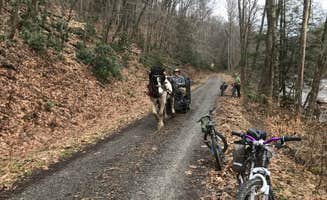
Explore hiking trails: The Greenbrier River Trail at Milepost 69.6 offers multiple connecting paths for hikers of all skill levels. "The Greenbrier River Trail is a delightful bikepacking excursion. Very doable for all ages. I'd recommend road bicycles with tires no narrower than 700x32 or mountain bikes," notes Dave V., who camped along the trail.
Visit Green Bank Observatory: Located within the National Radio Quiet Zone near Gandy Creek Dispersed Camping, this scientific facility restricts electronic devices. "Pocahontas County is home to the Green Bank National Radio Astronomy Observatory, a federal complex whose giant single-dish telescope detects 'invisible energy waves' from space. Within 10 miles of the Observatory, the use of cell phones, Wi-Fi, microwaves, and other devices is banned," explains Cindy B.
Fishing in stocked waters: Several streams and lakes in the area receive regular trout stocking. At Spruce Knob Lake Campground, "Lake is stocked with trout spring and fall. It is an easy drive to many of the local trout streams such as the Gandy, the Glady and Shavers Fork," according to Tim M.
What campers like
Dark skies for stargazing: The region's remote location creates exceptional night sky viewing. "You're in the middle of nowhere, so you do have a truly dark sky. If your legs aren't up for the 8-mile hike to Spruce Knob, take a drive and enjoy the view from the lookout tower on the summit of WV's high point," recommends Jean C. about camping near Spruce Knob.
Secluded creek-side camping: Many dispersed sites offer water access and privacy. "We picked a spot about halfway into the dispersed camping area, creek side along the Gandy creek. We were closer to the road than we wanted to be but because the past few days had been beautiful spring weather, the area was packed," shares Melanie S. at Gandy Creek Dispersed Camping.
Wildlife viewing opportunities: The forests and waterways support diverse animal populations. "The Greenbrier River Trail is one of the most beautiful and often most remote trail I have had the privilege of bikepacking... Wildlife and songbirds were abundant and as shocked to see you as you were them. Oftentimes, the deer would run the trail ahead of you for 200 yards before cutting off onto their sidetrail," writes Dave V. about the Greenbrier River Trail Milepost 63.8 Primitive Campsite.
What you should know
Prepare for limited services: Many camping areas have minimal facilities and distant supply points. "The only slight negative is the town is closed down, so make sure you bring everything you need to eat and drink," advises Richard about camping near Durbin.
Seasonal weather variations: Mountain elevations create unpredictable conditions even in summer. "In June, you can anticipate random, short afternoon or evening cloudbursts...but they can be gully-washers. Nights were cool and most mornings I wore a long-sleeve Merino shirt," mentions Dave V.
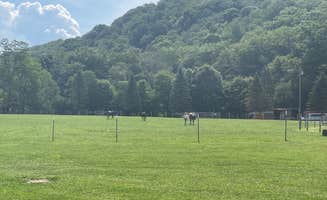
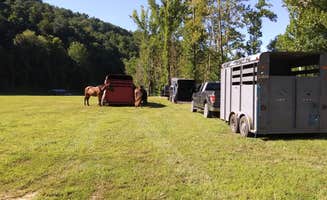
Road access challenges: Many forest roads require careful driving, especially to reach horse campgrounds near Cass, West Virginia. "Just getting to Laurel Fork Campground is a backwoods, seemingly endless gravel road journey. So something tells you…this is gonna be a good spot. Its out there…I mean, really out there," cautions Dave V., noting that cell service is nonexistent in most areas.
Tips for camping with families
Consider established campgrounds: Sites with amenities provide easier experiences for children. "Holly River State Park has plenty to offer for the whole family. The privacy of each site varies, on the weekends it is very busy though. This park has lots of hiking trails, waterfalls, biking, fishing, and horseback riding," reports Hannah V. about Holly River State Park Campground.
Visit waterfalls: Several accessible falls make great day trips from campgrounds. "Check out Mills Creek Falls and admire the really cool CCC-built rustic cabins," suggests Jennifer B. about visiting Kumbrabow State Forest.
Bring water shoes: Stream crossings and creek play require appropriate footwear. "Bring water shoes, the rocks can be sharp. The campsite was spacious and shaded, they do offer doubles for larger groups," advises Nicole R. about lakeside camping at Bolar Mountain.
Tips from RVers
Plan for limited hookups: Full-service sites are scarce in this region outside designated equestrian areas. "We were just traveling through on our way south and called to see if we could stay for a night. The campground was being shut down for the season but the owners accommodated us anyway! They let us fill water near their home which is on site and had a full hook up available for us," shares Casey L. about his experience at Douthat State Park Campground.
Check site dimensions: Some established campgrounds have size restrictions. "Caution should be used with large rigs as the low-water bridge to White Oak has steep approach and departure angles," warns Jeremy W. about access to certain camping areas at Douthat State Park.
Expect gravel roads: Many access routes to campgrounds require slow, careful driving. "Download your maps before you come, because there's no cell service and you'll truly get away. Make sure you have what you need because it's a long way to a spot to resupply!" advises Jean C.






 Traveler


