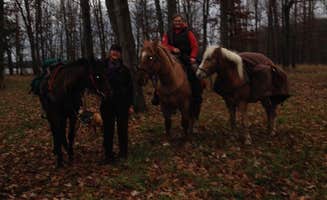
Equestrian camping near Williamsburg, Michigan offers access to miles of wooded trails through state forest land. The area sits at approximately 800-1,000 feet elevation with terrain characterized by rolling hills, mature hardwood forests, and river valleys. Summer temperatures typically range from 60-85°F with moderate humidity, while spring and fall bring cooler conditions with occasional rainfall that can affect trail conditions.
What to do
Kayaking and canoeing: Explore the Boardman River near Scheck's Place State Forest Campground. "Rustic campground with access to the Boardman river and many miles of trails in the state forest. Bring cash, no state park workers onsite, honor pay system," notes Anna B. The river offers gentle currents ideal for tubing and beginner paddling.
Stargazing: Take advantage of minimal light pollution at several campgrounds. "This campground is in some lower ground, with a beautiful river running though it. It's fairly wide open, with trees around, but this was great as it made stargazing easy," shares Judy B. about her experience at Scheck's Place.
Fishing and wildlife viewing: Lake Dubonnet Trail Camp offers fishing opportunities in a shallow, lily pad-covered lake. "Great like camp ground. No swimming but pretty lake with lots of lilipads and sunken tree. Nice hiking trail," explains Tracie S. The area has an abundance of turtles, fish, and waterfowl.
What campers like
Privacy and spaciousness: Horse campers appreciate the ample room at designated equestrian areas. "You can take as much space as you need and there is access to the river. We will be going back again next month," reports Gemma G. about Scheck's Place Trail Camp.
Affordability: Most state forest campgrounds operate with self-registration systems and reasonable fees. Kate K. notes about Lake Dubonnet: "Self registration for $15 per night." This pricing makes extended stays more feasible for those traveling with horses.
Clean facilities: Despite being rustic, campgrounds maintain serviceable amenities. "Lake Dubonnet Trail Camp has the basic rustic camping necessities. Outhouses near each circle, spickit with really good water, hiking trails, boat launch and even a nearby island you can kayak to," shares Caryssa R.
What you should know
Limited occupancy: Even during peak seasons, the equestrian camping areas rarely reach capacity. "There is hardly ever a lot of people. The last 2 times we went there was maybe one or two people with their horses or just passing thru," explains a camper about the trail camp section.
Vault toilets only: 4-Mile Trail Camp DNR and other horse-friendly sites offer basic facilities. "It's never busy here. I don't have horses but I've seen people stay with horse trailers with their tie outs to the poles that are designed for it. There's trails in the surrounding areas. Also water pump and vault toilets," mentions Lexi G.
Variable site conditions: Some camping areas can experience weather-related issues. "A couple of the sites flooded after an unusually heavy rain today, so I would avoid any site that looks low if rain is expected," advises Jay F. Select elevated sites when possible, especially during spring and fall.
Tips for camping with families
Kid-friendly water activities: Shallow lake edges and gentle river sections offer safe places for children. "I absolutely love this campground. I've camped there twice this summer and each time I enjoy it... even a nearby island you can kayak to and let the dogs roam free! (Mine sure loves it)," says Caryssa R.
Plan for insects: The wooded environment means mosquitoes and ticks are common from late spring through early fall. Pack appropriate repellents and check children and pets regularly after trail rides or hikes.
Pack extra clothing: Turtle Lake Campground and surrounding areas can experience significant temperature swings. "What I liked best about this park was that my children were not caked in dirt. While I understand that comes with the territory of camping, this campground provides a bit more of a grassy setting and offers a nice playground," shares Ann D.
Tips from RVers
Limited hookups: Most equestrian campgrounds lack water and electrical connections. "Rustic means vault toilets, no power and hand pump water. No reservations — FCFS," explains Jay F. Plan to operate on battery power or generators where permitted.
Accessibility considerations: Not all horse camping areas accommodate larger rigs. "Large sites, amazing hosts, does charge for a band for kids to do activities like jumping pad etc. this includes a bike rental and golf but was an added charge," notes Lindsey S. about Gaylord KOA, which offers more amenities but is farther from dedicated horse trails.
Seasonal availability: Most horse-friendly campgrounds operate from late spring through mid-fall. "May 1 to October 15" is the typical season for Scheck's Place, with similar timeframes for other nearby campgrounds. Call ahead if planning early spring or late fall trips as water systems may be winterized.



 Ranger


