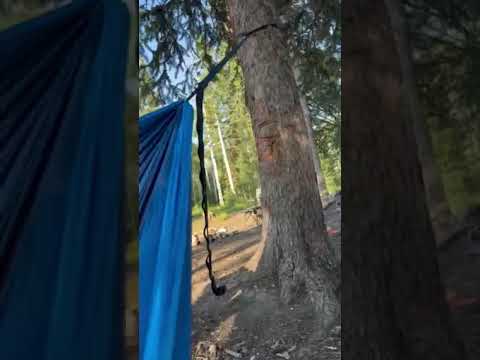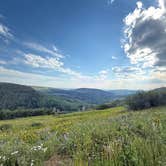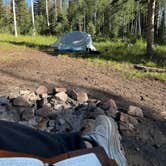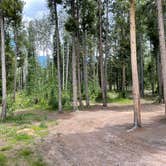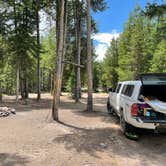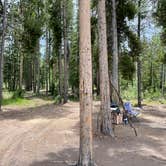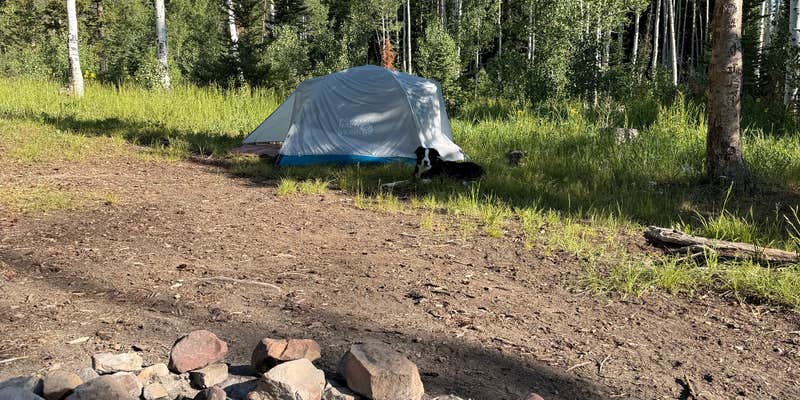
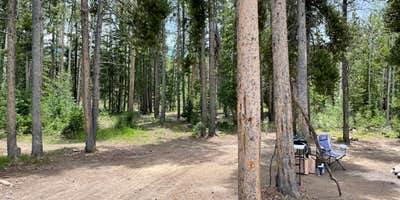
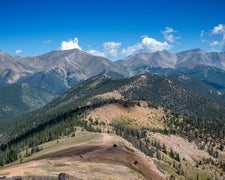
Free dispersed camping in White River National Forest sits about 7 miles down a semi-rough forest road to reach Yellowjacket Pass, though reviewers note no four-wheel drive or high clearance is required. The area holds 10 or more sites, some large enough for RVs and motor homes. Cell coverage is limited and varies by site, with AT&T users reporting anywhere from no signal to two bars depending on placement. Wildlife sightings, including black bear and deer, are common on the drive in. Expect flies and mosquitoes during daylight hours in summer. Scattered firewood and rock fire pits are present at some sites. Campers who find a good spot early tend to stay a while.
Description
There are many dispersed camping opportunities on the forest ranging from backpacking to car-camping along designated Forest Roads. Visitors are encouraged to minimize resource impacts by utilizing established sites rather than creating new ones. Dispersed camping sites along Forest Roads are shown on Motor Vehicle Use Maps, which are available free of charge at ranger district offices.
Visitors are permitted to drive vehicles up to 300 feet from designated routes for purposes of dispersed camping as long as no resource damage is incurred in the process. Dispersed camping within 100 feet of lakes, streams, and forest system trails is prohibited unless otherwise designated. Campers may stay for a maximum of 14 days. Some areas may have additional special restrictions.
Reduce Resource Damage
Avoid making new impacts. Whenever possible, use an existing campsite rather than creating a new one. Dispose of human waste, including toilet paper, carefully. Use self-contained waste disposal systems whenever possible. When unavailable, deposit solid human waste in catholes dug 6 – 8 inches deep and at least 200 feet from water, camp sites, and roads or trails. Cover and disguise the cathole when finished. Properly manage sanitation. Dispose of waste, gray water, sewage, and sewage treatment chemicals from self-contained toilets at authorized facilities provided for that purpose. Pack it in, pack it out. Do not leave behind any waste or litter. Leave no trace. Leave established sites in better condition than you found them. Leave new sites in as natural condition as you found them. Don’t move firewood. Moving firewood long distances can help spread harmful pests. Use only locally sourced or dead or downed firewood. Be bear aware. You are in bear country. Leave food, trash, and all items with fragrance (e.g., toothpaste, deodorant) in vehicle, bear-proof canisters, or suspended in bear bags. Do not eat in your tent. Visit the Colorado Division of Wildlife's web site for more information.
RV Road Trip Guides
Map & DirectionsYellowjacket Pass is located in Colorado near Meeker
 Dispersed Camping
Coordinates
40.13262827834002 N
107.66816555399424 W
Connectivity
 T-MobileNo Coverage
- VerizonNo Coverage
 AT&TLTESome Coverage
Connectivity
- T-MobileNo Coverage
- VerizonNo Coverage
- AT&TLTESome Coverage
Access
- Drive-InPark next to your site
- Walk-InPark in a lot, walk to your site.
Site Types
- Tent Sites
- RV Sites
- Standard (Tent/RV)
- Dispersed
- Group
- Equestrian
Features
For Campers
- Phone Service
- Alcohol
- Pets
- Fires
For Vehicles
- Big Rig Friendly
DISPERSED CAMPING
Enjoy dispersed camping on government land and leave no trace. Pack in and pack out. No (or limited) services at this camping area. Permit may be required.
PERMIT might be REQUIRED
We curate permit requirements across the US for our PRO members. Try PRO to see if Yellowjacket Pass needs a permit.
Drive Time
- 2 hrs 18 min from Grand Junction, CO
- 4 hrs 15 min from Denver, CO
- 4 hrs 25 min from Boulder, CO
- 4 hrs 55 min from Fort Collins, CO