Double C Horse and Rider Campground offers specialized equestrian camping within the Appalachian Mountain region. Located near Danese, West Virginia, where elevations range between 2,000-2,500 feet, these facilities provide dedicated spaces for horse owners in a region known for its numerous trail systems. The equestrian campgrounds operate seasonally with peak usage from April through October when trail conditions are most favorable.
What to do
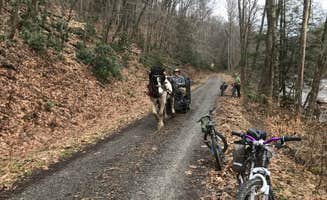
Trail riding beyond the park boundary: At Camp Creek State Park, riders can access trails that connect to larger networks. "The hiking is difficult in some areas but spectacularly beautiful. The campground staff was very friendly, and the amenities were clean and kept up," notes Julie B., who visited during peak fall foliage season.
Explore nearby waterfalls: Several accessible falls are within riding distance. "The falls are easily accessible and were beautiful even without an abundance of water. Very relaxing stay," shares Dawn M. about her experience at Camp Creek State Park, which features multiple water features along equestrian routes.
Swimming at designated river areas: After a day on horseback, cool off in local swimming spots. "Great Swimming Rock Trail South" is highlighted by Dave V. at Greenbrier River Trail as one of many water access points available to visitors throughout the region's equestrian camping areas.
What campers like
Spacious sites with privacy: Horse camping areas offer more room than standard sites. Cheryl B. from CB Ranch appreciated that "We loved every moment of our stay from the fire pit to the beautiful trails on the property to seeing the farm animals." This equestrian-friendly property provides ample space between sites.
Clean facilities despite rural setting: Many horse campgrounds maintain high standards. Kelly M. noted about River Expeditions that "This clean and spacious campground lends itself to white water rafting enthusiasts...Tent camping is primitive, but the bathhouse is clean and efficient."
Dedicated equestrian community: Horse camping attracts specialized visitors. Mike F. shared about Cranberry River Sites that "Backpacked and Camped here multiple times for both hiking and fishing. The main trail is graveled and very easily accessed. It runs along the Cranberry River with beautiful views all along the way."
What you should know
Negative Coggins test requirements: All horse campgrounds require current documentation. Dave V. notes important safety considerations: "This is bear country so I would recommend utilizing a bear bag or bear canister for your food and toiletries," which applies to all camping near equestrian facilities.
Limited cell service: Most horse campgrounds have minimal connectivity. "No cell service" appears as both a pro and con in reviews for multiple sites, indicating visitors should plan communications accordingly.
Seasonal operations: Many equestrian facilities close during winter months. "In late June, temperatures were still quite cool, so while the river looked inviting, we did not take the plunge," reports Dave V. about conditions at Greenbrier River Trail Mile Post 28.5.
Trailer parking logistics: Some horse campgrounds have challenging access. "The RV camp sites are too close together for my taste and the gravel parking spots are all on a slant, so it would be a challenge for larger trailers to get level there," warns Jennifer B. about parking conditions.
Tips for camping with families
Water activities as alternatives: When horses need rest, families can enjoy local waterways. Jamie H. recommends Cranberry River Sites: "If your looking for a weekend getaway or a week long rest. Look no further. The fishing here is the best around with beautiful waterfalls like big ruff."
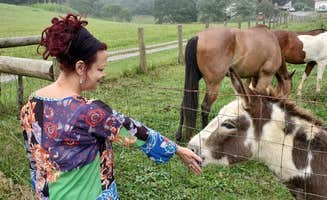
Farm animal interaction opportunities: Some equestrian campgrounds feature additional animals. At CB Ranch, Cheryl B. appreciated "seeing the farm animals. The constant songs of the birds is a reminder that we belong in nature."
Playgrounds near horse facilities: Several parks offer child-friendly areas. Fred R. highlights Mash Fork Campground having "Nice playgrounds clean lots" making it suitable for families with both riders and non-riders.
Tips from RVers
Trailer size considerations: Large horse trailers with living quarters face challenges at some sites. Lee D. noted about Mash Fork that "All camper pads are paved, have a generous camper pad length, and most are spread a decent amount of space apart."
Hookup availability varies: Most dedicated horse campgrounds offer limited services. Kevin E. recommends: "Many have full hookups and several are right along the creek. The waterfalls are a short walk from the campground. Firewood is available and they deliver it to your site."
Level parking concerns: Horse trailers require stable footing. Nicole M. advises: "Campground is well maintained. Many trees along edge of the campground but not very many in the center, so the sites on the outer loop have more shade if that's what you're looking for."




 Legend


