Equestrian camping options near Medway, Massachusetts spread across several state forests and management areas within 45 miles of town. The region features a mix of pine and deciduous forests with trails ranging from flat, sandy paths to moderate inclines with rocky terrain. Most equestrian sites remain open April through November, though some close during wet spring conditions when trails become susceptible to erosion.
What to do
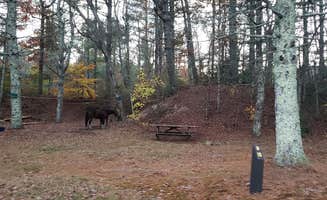
Trail riding at Pachaug State Forest: Direct access to over 35 miles of designated bridle paths through Connecticut's largest state forest. One camper noted that "Three horseback riding loops leave from the campground. There's also fishing and hiking available in the forest." Frog Hollow Horse Camp at Pachaug State Forest provides basic facilities with composting toilets and water available at the trailhead.
Swimming at kettle ponds: Cool off in spring-fed ponds after riding. At Charge Pond Campground, "The pond water was very clear, seeing as they are fed from natural springs under the ponds." These natural swimming spots provide relief during hot summer riding sessions and include sandy beaches for horses to drink safely.
Mountain biking alternatives: When not riding horses, several campgrounds offer cycling options. At Ponkapoag Camp, "Hiking trails abound on the property. While none of the trails are steep, they all go through beautiful areas, with views of the pond, and interesting rock formations." These multi-use trails provide variety for equestrians who also enjoy cycling.
What campers like
Privacy between sites: Many equestrian campgrounds offer spacing that accommodates trailers while maintaining privacy. At Charge Pond Campground, campers appreciate that "The sites are large and shady but don't have water or electric. The bath houses are clean and accessible." This setup provides buffer zones between horse trailers.
Proximity to water sources: Horse owners value campgrounds with reliable water access. "The pond itself is a wonderful place for kayaking and canoeing. There are several rocky boulders poking out of the water that make fun spots to discover," reports a camper at Ponkapoag Camp. These water features serve both recreation and practical needs for watering horses.
Multi-day riding without trailering: Wolf Den Campground connects to extensive trail networks allowing for varied daily rides. "Close to a small walking path and a larger intermediate hiking trail," notes one visitor, making it practical for riders seeking different terrain options without breaking camp.
What you should know
Limited amenities at equestrian sites: Most horse-friendly campgrounds prioritize trail access over facilities. At Frog Hollow Horse Camp, "It's hard to find much information about this equestrian, first come, first serve campground... Campsites are located around a loop with a couple of composting toilets near the entrance." Come prepared with your own supplies.
Seasonal operation changes: Normandy Farms Campground operates from "Apr 1 - Nov 30," while other facilities have shorter seasons. "We stayed here for a few nights when they celebrated Halloween 🎃. It is super easy to get around. They had tons of festive activities," reports one camper about their fall visit.
Reservation systems vary: Some equestrian campgrounds operate first-come, first-served. Others require advance planning. "Reservations are by mail only, although you can call the caretaker to confirm availability," explains a Ponkapoag Camp visitor. Always check current reservation policies before arrival.
Tips for camping with families
Beginner-friendly trail options: Families with young riders appreciate Pachaug's varied difficulty levels. "Campsites are located around a loop with a couple of composting toilets near the entrance. Water is available. There's space for your camping gear as well as a trailer and horseline," reports a visitor to Frog Hollow Horse Camp, making it suitable for novice riders.
Non-equestrian activities: The Preserve Club and Residences offers "New England's most amenity rich properties, in fact it may be the only place in the world that has such a diverse amount of outdoor offerings." This diversity helps keep non-riding family members entertained.
Playground access: Some campgrounds offer dedicated children's areas. At Wolf Den Campground, "There's a small playground in the middle of the loop, a number of hiking trails throughout the park along with a few geocaches." These features provide entertainment between riding sessions.
Tips from RVers
Length restrictions for horse trailers: RVers with living quarters horse trailers should check maximum vehicle lengths. At Normandy Farms Campground, "Our site was easy to navigate in and out of and was definitely big-rig-friendly with ample space for our motorhome and tow car. All utilities were well-placed and functioned properly." This accommodates larger trailer setups.
Electric hookups for equestrian sites: LeGrand Reynolds Horsemen's Camping Area provides electric, water, and sewer hookups specifically designed for equestrian campers with living quarters trailers. These connections allow for extended stays with horses while maintaining comfort.
Dump station locations: When traveling with horses and an RV, knowing waste disposal options matters. Charge Pond Campground has "a dump station with water and water available around the loops," allowing equestrians in self-contained units to manage longer stays without relocating their horses.




 Legend


