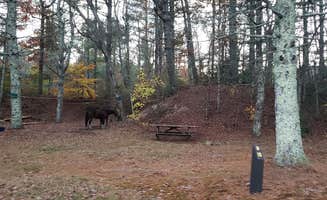
Pachaug State Forest provides dedicated equestrian camping facilities approximately 25 miles from Holland, Massachusetts. The forest encompasses over 24,000 acres of mixed woodland terrain in northeastern Connecticut with elevations ranging from 300 to 600 feet. The equestrian camping area maintains a rustic atmosphere with minimal development, preserving the natural woodland setting that attracts riders seeking trail access without commercial campground features.
What to do
Trail riding from camp: Three dedicated horseback riding loops originate directly from Frog Hollow Horse Camp at Pachaug State Forest, eliminating the need for daily trailering. "Three horseback riding loops leave from the campground. There's also fishing and hiking available in the forest," notes Jean C.
Explore beyond equestrian trails: The management areas surrounding equestrian campgrounds offer additional recreational activities between rides. At Wolf Den Campground — Mashamoquet Brook State Park, campers can find "a small walking path and a larger intermediate hiking trail" according to 175 P., making it suitable for non-riders in your group.
Historical sites: While camping at Pachaug or nearby areas, explore the region's historical landmarks. Gary G. mentions that Mashamoquet Brook State Park features "an old mill and blacksmith shop that is sometimes open on weekends for tours," providing educational opportunities during your equestrian camping trip.
What campers like
Quiet atmosphere: Equestrian campers appreciate the peaceful environment at Pachaug State Forest compared to more developed campgrounds. Gary G. notes that at nearby Wolf Den, "no other campers here when we arrived, so totally silent. No road noise." This tranquility is typical of equestrian-focused camping areas in the region.
Multi-day riding options: The extensive trail systems connecting to equestrian campgrounds allow for varied daily rides without repetition. The 24,000-acre Pachaug forest trail system offers routes for different skill levels and durations, with terrain variations that keep horses engaged and riders challenged.
Campsite layout: At Normandy Farms Campground, which can serve as a base for day trips to equestrian areas, Matt T. appreciates that "campsites are big and well spaced," a feature important to horse owners who need extra room for equipment even when not staying at dedicated equestrian campgrounds.
What you should know
Seasonal conditions: Trail maintenance and riding conditions vary significantly throughout the year. Spring and fall provide optimal riding weather with moderate temperatures (50-70°F), reduced insects, and firmer trail surfaces. Summer riding should be planned for early morning to avoid heat and increased bug activity.
Basic facilities: Equestrian campgrounds in the region provide minimal amenities. Jean C. describes Frog Hollow as having "composting toilets near the entrance" and "water is available," but lacks showers or electrical hookups. This rustic approach is standard at dedicated horse camps near Holland.
Reservation requirements: Most equestrian campgrounds operate on different reservation systems than regular campgrounds. LeGrand Reynolds Horsemen's Camping Area — Arcadia Management Area requires reservations, while Frog Hollow operates on a first-come, first-served basis, particularly important during peak riding seasons in spring and fall.
Tips for camping with families
Non-equestrian activities: When bringing children who may not ride, select campgrounds with supplemental activities. At The Preserve Club and Residences, Chris M. highlights it as "New England's most amenity rich properties" with "a diverse amount of outdoor offerings," providing alternatives for family members between trail rides.
Safety considerations: Equestrian camping with children requires additional planning. Designate horse-free zones within your campsite for children to play safely. Pack extra clothing and supplies as horse camping typically generates more dirt and requires more frequent clothing changes for children.
Educational opportunities: Use equestrian camping trips as learning experiences. The historical sites near Wolf Den Campground include what Jean C. describes as "an old mill and blacksmith shop that is sometimes open on weekends for tours," providing educational context about the region's rural heritage.
Tips from RVers
Specialized campsite selection: RVers with horse trailers require specific site considerations. Look for pull-through sites with adequate length for both RV and trailer. At Jelena's Campground, sites are designed to accommodate the turning radius needed for larger trailer configurations.
Water and electrical planning: While many equestrian campgrounds lack hookups, some offer partial services. LeGrand Reynolds Horsemen's Camping Area provides electrical hookups and water connections at each site, allowing for extended stays without generator use, which is prohibited at many horse camps to maintain the quiet atmosphere horses prefer.
Equipment organization: When combining RV camping with equestrian activities, create dedicated storage zones for horse gear separate from camping equipment to prevent cross-contamination. Use external storage boxes or truck bed systems to keep tack organized and protected from moisture.




 Legend


