Horse campgrounds near Franklin Town, Massachusetts offer campers access to equestrian trails with direct access to natural areas. The region sits within eastern Massachusetts's hardwood forest ecosystem at elevations between 200-500 feet. Summer camping temperatures typically range from 60-85°F, while spring and fall can see overnight lows in the 40s, requiring proper preparation for both horses and humans.
What to do
Trail riding in Pachaug State Forest: Frog Hollow Horse Camp provides access to three horseback riding loops directly from the campground. "Three horseback riding loops leave from the campground. There's also fishing and hiking available in the forest," notes one visitor. The trails vary in difficulty, making them suitable for different experience levels.
Biking in Myles Standish State Forest: Charge Pond Campground offers extensive biking trails through wooded terrain. "The bike trails through the part are great and we enjoyed them. Paved and mountain bike trails," writes one camper. Bring a proper trail map as the campground-provided maps can be difficult to read on the trails.
Fishing and kayaking: Multiple kettle ponds throughout the region provide excellent fishing opportunities. "We kayaked one morning and enjoyed watching the people catching good sized fish around us," reports a visitor. Most ponds have sandy beach areas for launching small watercraft and swimming access during summer months.
What campers like
Large, private sites: Ponkapoag Camp offers spacious cabins and tent sites with good separation. "The cabins have assorted dressers and shelves for storage, and a table for dining on those bad weather days. The floors are wooden. Many cabins have wood stoves, which is great for the cooler parts of the year," writes one camper.
Swimming options: Several campgrounds feature ponds with designated swimming areas. "The pond water was very clear, seeing as they are fed from natural springs under the ponds," notes a camper at Charge Pond. Most swimming areas include sandy beaches and basic facilities, though lifeguards aren't typically present.
Proximity to urban attractions: Despite their natural settings, many campgrounds remain close to metropolitan amenities. "Normandy Farms is approximately 35 miles from Boston. If you don't want to drive to the city, you can park at the nearby train or subway station and ride into the city," explains one reviewer. This makes these campgrounds ideal for combining outdoor recreation with day trips to historic sites.
What you should know
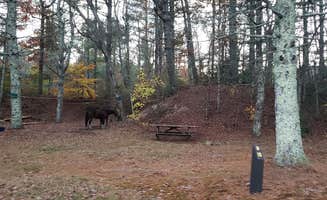
Limited amenities at horse camps: While equestrian-focused, campsites at horse camps often provide only basic facilities. At LeGrand Reynolds Horsemen's Camping Area, campers need to bring containment systems for their horses and prepare for primitive camping conditions despite having water and electrical hookups available.
Alcohol regulations vary: State parks often prohibit alcohol consumption. "When you are sitting by the campfire, sometimes, chilling with a beer or another adult beverage is nice. Not in Massachusetts State Parks. No alcohol allowed," points out one camper. Check each campground's specific rules before bringing alcoholic beverages.
Reservation systems differ: Some campgrounds require mail-in reservations while others use online systems. "Reservations are by mail only, although you can call the caretaker to confirm availability," notes a visitor to Ponkapoag Camp. During peak season (May-September), advance reservations are strongly recommended at all facilities, especially for holiday weekends.
Tips for camping with families
Look for campgrounds with kid-friendly activities: Wolf Den Campground offers features designed for families. "Large open areas for kids and adults to play during day and star gaze at night. Close to a small walking path and a larger intermediate hiking trail," notes one family camper. The playground in the center of the camping loop provides a convenient gathering spot.
Bathroom quality matters: Family campers often prioritize clean restroom facilities. "Our daughters rate campgrounds by their bathrooms. I was pleasantly surprised that they received at least one cleaning during our time there," writes one parent. Most state park campgrounds offer basic bathrooms with varying levels of maintenance.
Consider non-electric options for affordability: Non-electric sites typically cost significantly less while still providing core amenities. "We stay in the charge pond area which is a smaller pond but nice and clean. There are bbqs, tables and bathrooms at the pond. The sites are large and shady but don't have water or electric," explains a regular camper. Many families find primitive camping suitable for weekend trips.
Tips from RVers
Check site dimensions carefully: Normandy Farms Campground accommodates larger RVs but requires advance planning. "Our site was easy to navigate in and out of and was definitely big-rig-friendly with ample space for our motorhome and tow car. All utilities were well-placed and functioned properly," shares one RVer. Request specific site information when booking to ensure your rig will fit comfortably.
Consider seasonal timing: Campground atmosphere changes dramatically between peak and off-peak periods. "The one thing you may notice is that if you stay on a Friday or Saturday night, the campground may be to capacity, like it was when we stayed. But the Sunday, and Monday nights, the 7 closest spots to us were empty," reports a camper. Weekday camping often provides a quieter experience with better site availability.
Watch for tree clearance: Many New England campgrounds have mature trees that can present challenges for taller rigs. "The parking pads are paved and a few have overhanging branches, but the trees provide separation and some shade on largely open sites," notes one reviewer. Request sites with adequate overhead clearance if your RV exceeds 11 feet in height.




 Legend


