Horse campgrounds near Holliston, Massachusetts offer outdoor experiences ranging from basic facilities to full-service options for riders and their mounts. Holliston sits in Norfolk County at 200 feet above sea level, with terrain that transitions from wetlands to forested hills. The region's horse trails connect to larger state forest systems, with most equestrian camping areas open from mid-spring through late fall when trail conditions are optimal.
What to do
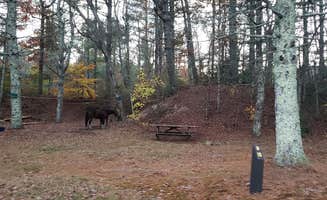
Trail riding access: At Frog Hollow Horse Camp at Pachaug State Forest, three horseback riding loops depart directly from the campground. As one reviewer notes, "Campsites are located around a loop with a couple of composting toilets near the entrance. Water is available. There's space your your camping gear as well as a trailer and horseline."
Swimming after rides: Many equestrian areas provide access to swimming spots. At Charge Pond Campground — Myles Standish State Forest, riders can cool off after trail activities. One camper shares, "The pond water was very clear, seeing as they are fed from natural springs under the ponds. The dept. of conservation and recreation drives around several times a day in case you have any issues."
Hiking with non-riders: Horse camps often connect to hiking trails suitable for non-riders in your group. A visitor to Ponkapoag Camp notes, "Hiking trails abound on the property. While none of the trails are steep, they all go through beautiful areas, with views of the pond, and interesting rock formations."
What campers like
Privacy between sites: Equestrian camps typically provide more space than standard campgrounds. At Ponkapoag Camp, campers appreciate the layout: "We have always loved it here. It is rustic camping, no water or electricity and the bathroom is an outhouse and no showers. The people are friendly and we have always had a good time."
Full-service alternatives: For those seeking amenities beyond basic horse camps, Normandy Farms Campground provides a convenient option. One camper explains the contrast: "We planned a brief stop in the Boston area with the intent of seeing the John F. Kennedy Presidential Library and Museum and Normandy Farms appealed to us for various reasons. One reason was the fact that they have dog walkers that will come to your site and take care of your precious pooch while you are away."
Quiet weekday stays: Horse camps tend to be less crowded midweek. A Myles Standish visitor notes, "The one thing you may notice is that if you stay on a Friday or Saturday night, the campground may be to capacity, like it was when we stayed. But the Sunday, and Monday nights, the 7 closest spots to us were empty, it was like having the woods to ourselves."
What you should know
Basic facilities: Most equestrian campgrounds offer minimal amenities. At Wolf Den Campground, "This small state park campground offers basic campsites with running water and showers, open Memorial Day to Columbus Day... The parking pads are paved and a few have overhanging branches, but the trees provide separation and some shade on largely open sites."
First-come sites: Many horse camps operate without reservations. At Frog Hollow, "About half the sites were occupied in late October" according to one visitor, suggesting availability even during peak fall foliage season.
Water availability: Water access varies between horse camping areas. While Frog Hollow provides water, other locations like Ponkapoag Camp require you bring your own: "We brought all our water from home, and it worked well. Make sure you bring campsuds or other eco-friendly soap since the toilets are just outhouses without running water much of the year."
Tips for camping with families
Playground access: Some campgrounds near Holliston offer family-friendly features. Wolf Den Campground provides "a small playground in the middle of the loop, a number of hiking trails throughout the park along with a few geocaches, a swimming pond, and a small brook with an old mill and blacksmith shop."
Fishing opportunities: Kids can fish while adults manage horses. At Myles Standish, one visitor enjoyed "watching the people catching good sized fish around us. The beach (at least at Charged Pond) had a nice sandy section and a bathhouse."
Weather preparedness: Temperature swings affect children more than adults. At Ponkapoag, one camper noted: "Many cabins have wood stoves, which is great for the cooler parts of the year. We were there Memorial Day weekend, and needed the stove when it dipped to 40 degrees."
Tips from RVers
Site selection for horse trailers: Look for pull-through sites that accommodate both living quarters and horse trailers. Normandy Farms, though not a dedicated horse camp, notes: "We chose a paved full hook-up pull thru with paved patio. Our site was easy to navigate in and out of and was definitely big-rig-friendly with ample space for our motorhome and tow car."
Shower access varies: Some equestrian camps lack shower facilities. When staying at facilities like Wolf Den, campers recommend confirming amenities: "In 2020 with Covid, there were restrictions on visitors to the campground, reservations required, and swimming was not allowed."
Campsite maintenance: Many equestrian campgrounds require campers to maintain their sites. At Ponkapoag, "Upon departure from the camp, you are required to sweep and tidy up the cabin," which helps maintain facilities for future visitors.




 Legend


