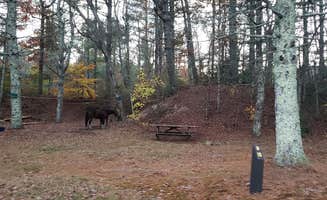
Frog Hollow Horse Camp at Pachaug State Forest provides equestrian camping in Connecticut's largest state forest. Located approximately 45 minutes from South Lyme, the campground features a central loop with about 10 campsites designed to accommodate horse trailers. The terrain within the 24,000-acre forest ranges from flat areas to moderately challenging sections with elevation changes of 100-300 feet. The three separate trail loops allow riders to access a variety of terrain directly from their campsites.
What to do
Trail riding on multi-use paths: The equestrian trails at Shinnecock East County Park offer coastal riding opportunities. "The ocean is beautiful and we catch stripe bass. The bay is peaceful and we go crabbing," notes Anthony M., highlighting the dual-water access that creates unique riding experiences.
Fishing in forest ponds: Pack fishing gear when visiting the Pachaug State Forest area, as multiple small ponds and streams are accessible from the trail system. "There's also fishing and hiking available in the forest," mentions Jean C. about the recreational options beyond horseback riding.
Winter camping preparations: For those planning equestrian camping during colder months, the trails remain accessible but require additional preparation. "About half the sites were occupied in late October," reports one visitor, indicating that off-season camping is viable with proper cold-weather gear for both riders and horses.
What campers like
Privacy between sites: At Wolf Den Campground — Mashamoquet Brook State Park, the spacious design earns praise. "Very nice sized lots. Large open areas for kids and adults to play during day and star gaze at night," reports a camper identified as 175 P., highlighting the balance between openness and privacy.
Natural water features: The brooks and small waterways throughout the region provide natural water sources and scenic stops. "There's a small brook with an old mill and blacksmith shop that is sometimes open on weekends for tours," notes Jean C. about features that add historical interest to the natural surroundings.
Night sky viewing: The minimal light pollution around equestrian campgrounds near South Lyme creates excellent stargazing conditions. Campers frequently mention setting up outside their trailers after dark. One visitor described the area as ideal for "star gaze at night" due to limited development within the state forests.
What you should know
Seasonal availability: Most equestrian campgrounds in the region operate seasonally. At Mashamoquet Brook State Park, facilities are "open Memorial Day to Columbus Day," according to Jean C., though some primitive camping may be available in other seasons with proper permits.
Water sources for horses: Water access points exist but vary by location. Some campgrounds provide central water stations rather than hookups at individual sites. Visitors should bring water buckets and leads for accessing communal water sources.
Trail difficulty ratings: The equestrian trails range from beginner-friendly to intermediate challenge levels. Forest trails often include stream crossings and occasional rocky sections that may require experienced riders or horses.
Site selection strategy: The first-come, first-served policy at most equestrian campgrounds requires planning. Weekday arrivals generally offer better site selection. "The ones toward the back of the loop back up toward the woods and give you some more privacy," advises one regular visitor about optimal site locations.
Tips for camping with families
Geocaching opportunities: Several forest locations offer geocaching activities for children when not riding. "There's a number of hiking trails throughout the park along with a few geocaches (download details for offline use as phone connection is spotty)," suggests Jean C. at Mashamoquet Brook State Park.
Playground access: Some campgrounds include playground facilities for younger children. "The playground is really nice and big has a lot of slides," notes Gino D. about Sears Bellows County Park, providing an alternative activity for children too young to ride independently.
Educational opportunities: Historic sites near camping areas offer learning experiences. "There's a small brook with an old mill and blacksmith shop that is sometimes open on weekends for tours," mentions a visitor, describing educational opportunities that complement outdoor activities.
Tips from RVers
RV parking constraints: Most equestrian sites accommodate RVs with horse trailers, but size limitations exist. "Dry camping in an RV no tents," explains Lisa M. about Shinnecock East County Park, noting that vehicle requirements vary by location.
Power availability: Electric hookups are limited at most equestrian campgrounds. "Site 20 is the only one with electric," reports a camper about one facility, emphasizing the need for self-sufficiency with solar panels or generators where permitted.
Length restrictions: RV length matters when booking equestrian sites. "Most sites are relatively short level pads, with little or no shade," notes Gary G., suggesting that larger rigs should research specific site dimensions before arrival.




 Legend


