Equestrian-friendly campgrounds near Moosup, Connecticut offer dedicated facilities for horse owners seeking woodland trail experiences. The region features a combination of state forest and management area camping options within 30 miles of Moosup. These primitive to moderately developed sites accommodate both horses and riders with varying levels of amenities depending on location.
What to do
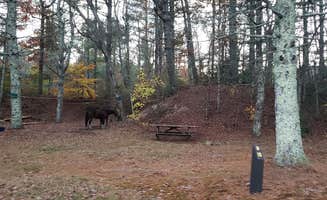
Trail riding at Wolf Den Campground: Wolf Den at Mashamoquet Brook State Park connects to multiple hiking paths ideal for day rides. "There's a small playground in the middle of the loop, a number of hiking trails throughout the park along with a few geocaches, a swimming pond, and a small brook with an old mill and blacksmith shop that is sometimes open on weekends for tours," notes Jean C.
Fishing excursions: Many campgrounds offer proximity to stocked fishing areas. "There's also fishing and hiking available in the forest," mentions one reviewer about Frog Hollow Horse Camp at Pachaug State Forest. Bringing fishing equipment allows campers to supplement trail riding with shoreline angling.
Explore historic sites: The region contains several historic structures accessible from horse trails. "It's a nice place to explore and have a picnic," reports a camper at Wolf Den Campground — Mashamoquet Brook State Park. Many trails lead to colonial-era structures, stone walls, and abandoned settlements that provide historical context while riding.
What campers like
Ample trailer parking: Horse camps typically provide wider sites to accommodate vehicles with trailers. "There's space for your camping gear as well as a trailer and horseline," notes Jean C. about Frog Hollow. This allows equestrians to bring necessary equipment without space constraints.
Water availability: Access to drinking water for horses represents a valued feature. "Water is available," confirms a reviewer about Frog Hollow Horse Camp. Most equestrian campers appreciate designated watering stations that eliminate the need to carry large water quantities.
Well-marked trail systems: Riders appreciate clearly designated paths that prevent getting lost. A visitor to The Preserve Club and Residences notes it's "New England's most amenity rich properties" with "a diverse amount of outdoor offerings." Equestrians report that most local trails feature consistent blazes and intersection markers.
What you should know
Seasonal fluctuations in availability: Fall tends to have more open sites than summer. According to Jean C., "About half the sites were occupied in late October" at Frog Hollow. Spring and summer weekends typically reach capacity earlier, particularly at LeGrand Reynolds Horsemen's Camping Area.
Primitive facilities standard: Most horse camps offer basic amenities only. Gary G. found Mashamoquet Brook State Park "all in great shape. No other campers here when we arrived, so totally silent. No road noise. Most sites are relatively short level pads, with little or no shade, but very pleasant." Expect composting toilets rather than flush facilities at most equestrian campgrounds.
Reservation systems vary: Some locations operate on first-come, first-served basis while others require booking. "It's hard to find much information about this equestrian, first come, first serve campground in Connecticut's Pachaug State Forest," explains one camper. Check with specific properties for current reservation policies.
Tips for camping with families
Look for multi-use recreation areas: Some horse campgrounds offer additional activities for non-riders. At Normandy Farms Campground, "They had tons of festive activities. They have an indoor and an outdoor pool. The restrooms are clean," reports Liz W., making it suitable for family members who don't ride.
Consider proximity to hiking trails: Non-riders can explore on foot while others ride. "Close to a small walking path and a larger intermediate hiking trail," notes 175 P. about their experience at Wolf Den. This allows family members to separate for activities then reconvene at camp.
Pack for variable weather: Connecticut's changing conditions affect comfort levels. "Stayed here on a Tuesday night right after hurricane Henri. The park was completely cleaned up from any damage or debris," reports Gary G. Layered clothing and rain gear ensure family members remain comfortable regardless of conditions.
Tips from RVers
Electric access limited: Most horse campgrounds offer minimal hookups. An exception is LeGrand Reynolds Horsemen's Camping Area — Arcadia Management Area, which provides electric hookups alongside water access. This makes it preferred for RVers requiring power.
Interior road quality matters: Check road conditions before bringing larger rigs. "We picked site 33 for the best shade and longer pad," notes Gary G. about navigating Mashamoquet Brook State Park. Most equestrian campgrounds maintain gravel roads that become challenging during wet periods.
Consider generator restrictions: Many horse camps limit generator hours to protect trail experience. "Site 20 is the only one with electric," mentions Jean C. about Wolf Den Campground, highlighting the scarcity of powered sites. Solar options provide quieter alternatives for essential power needs while respecting quiet hours.




 Legend


