Pachaug State Forest offers equestrian-focused camping near Ledyard Center, Connecticut. The forest spans over 24,000 acres, making it Connecticut's largest state forest with terrain that ranges from flat areas to moderately challenging hills. Fall temperatures typically range from 45-65°F, creating optimal riding conditions from September through early November when trails aren't muddy from rain.
What to do
Trail riding through connected loops: Three riding loops depart directly from Frog Hollow Horse Camp, connecting to a broader network of bridle trails throughout Pachaug State Forest. According to Jean C., "Three horseback riding loops leave from the campground. There's also fishing and hiking available in the forest."
Fishing opportunities: Multiple ponds and streams within the forest provide freshwater fishing access points within 3-5 miles of the campground. Fish species include bass, trout, and pickerel depending on water body and season. Many riders bring compact fishing gear for evening activities after riding.
Hiking excursions: When not riding, campers can explore portions of the forest on foot. Several trails are multi-use, while others are designated specifically for hikers. The nearby Wolf Den Campground offers additional hiking options as noted by one visitor: "Close to a small walking path and a larger intermediate hiking trail" with "Large open areas for kids and adults to play during day and star gaze at night."
What campers like
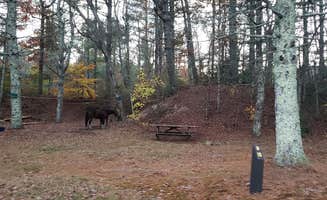
Well-maintained equestrian facilities: The campground's layout accommodates both horses and humans with thoughtful design elements. As one camper noted, "There's space for your camping gear as well as a trailer and horseline," making the logistics of horse camping more manageable than at general-purpose campgrounds.
Availability during peak season: Unlike many camping areas that book months in advance, LeGrand Reynolds Horsemen's Camping Area in nearby Arcadia Management Area provides an alternative when Frog Hollow fills up. This Rhode Island option is just 11 miles from Ledyard Center and offers similar trail riding opportunities with different terrain features.
Privacy between sites: The campground layout provides reasonable separation between campsites, allowing horse owners to maintain appropriate distance between unfamiliar horses. The loop configuration means trailers can be positioned to create natural barriers when needed, especially important for horses who may be territorial.
What you should know
Limited advance information: Finding comprehensive details about equestrian camping options requires persistence. According to one reviewer at Wolf Den Campground, "It's hard to find much information about this equestrian, first come, first serve campground." The Connecticut Department of Energy and Environmental Protection website remains the most reliable source for current regulations and trail conditions.
Basic amenities only: Facilities are functional but minimal. The composting toilets near the entrance provide essential sanitation, but there are no showers. Water access points serve both horses and humans, but spigots are limited to certain areas of the campground.
Weather-dependent trail conditions: Spring often brings muddy sections that may be temporarily closed to prevent trail damage. Late summer can create dry, dusty conditions requiring riders to carry additional water for horses on longer trail segments.
Tips for camping with families
Playground alternatives: While Frog Hollow lacks playground equipment, nearby Sears Bellows County Park offers family-friendly alternatives within day-trip distance. As one visitor noted, "The playground is really nice and big has a lot of slides," making it worth considering for a side excursion during multi-day stays.
Junior rider considerations: Families with young riders should stick to the green-blazed beginner trail loop which runs approximately 2.5 miles and avoids challenging terrain. The blue and red trails contain sections with steeper grades and water crossings that may intimidate novice riders.
Educational opportunities: The state forest occasionally offers ranger-led programs covering local ecology and history. Check the visitor center or bulletin board upon arrival for scheduled activities, which typically occur on summer weekends at 10:00 AM.
Tips from RVers
Site selection for larger rigs: RVers with horse trailers should aim for sites 5-12, which offer the most level parking and easiest access for larger combined vehicle lengths. Sites toward the back of the loop offer more shade but tighter turning radiuses.
Generator limitations: Unlike some campgrounds, Shinnecock East County Park notes "No generators allowed" in its rules. Similarly, Frog Hollow restricts generator use to specific hours (typically 8AM-10PM) and requires noise-reducing covers or barriers when in operation.
Water access planning: While water is available at the campground, RVers report the pressure can be inconsistent. Arrive with tanks at least partially filled, especially during holiday weekends when demand is higher and supply pressure may drop during peak usage times.




 Legend


