




 Ranger
Stokes State Forest
Ranger Review: humangear FlexiBowl and GoBites at Steam Mill Campground
Campground Review
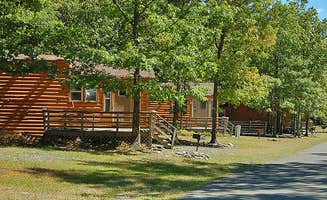
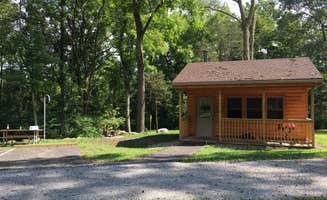
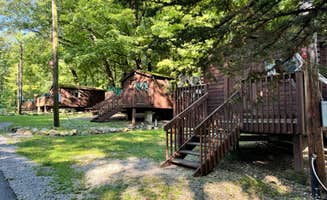
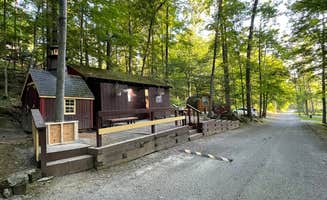
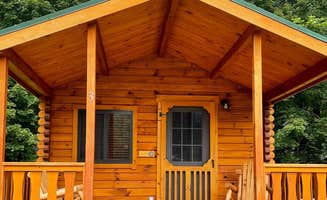
Stokes State Forest has four campgrounds. The Steam Mill Camping Area is tucked out the of the way and is the most primitive. It is the smallest of the campgrounds with 27 sites only suitable for tents or small trailers/campervans. No pets or alcohol allowed.
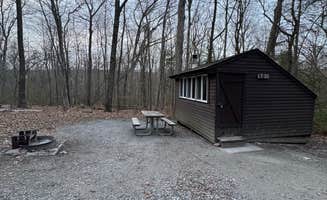
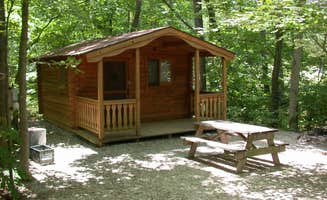
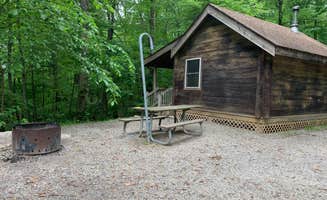
The campground has a pit toilet and a well. Each large campsite has a picnic table, fire pit, and lantern hook. Some sites also have a tent platform. Many sites are a bit rocky.
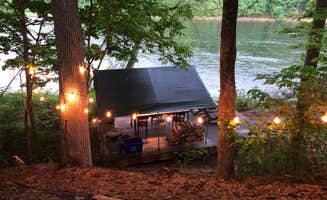
We selected site T219. It was a solid choice: private but close to the toilet and water. Some sites located around the opposite side of the ring back up to a babbling brook. The rushing water will soothe you to sleep.
Remember, this is bear country so proper food storage is a must. Bear lockers are not provided. The area also has ticks and rattlesnakes.
Outdoor activities in the area abound. Go fishing, hiking, biking, horseback riding, kayaking, and more. There are 21 marked trails that cover over 63 miles within the boundaries of Stokes State Forest. Twelve miles are part of the Appalachian Trail. Pick up a hiking map at the park office or download the Avenza Maps app.
This visit we hiked the Tillman Ravine trail (tip: make the trail a loop and visit both the ravine and the nearby old cemetery).
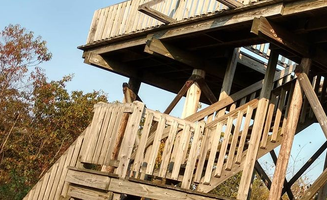
You can also drive or hike to Sunset Mountain Scenic Overlook for a view of High Point Monument. High Point Monument is the highest elevation in New Jersey and is located in High Point State Park which borders Stokes State Forest on the north. High Point State Park also offers camping, hiking, sightseeing opportunities. And, on the western border of Stokes State Forest is the Delaware Water Gap National Recreation Area. So, there is lots of outdoors to get out and explore!
Product Review
We camped at the Steam Mill Camping Area in Stokes State Forest in our campervan over a chilly autumn weekend. We had the opportunity to cook some soup on our stovetop and chill out by the campfire. And, as Rangers for The Dyrt, we get products to test from time to time so we were psyched to try out some new dinnerware and cutlery. This included the FlexiBowl and GoBites from humangear.
What made these humangear products pretty awesome? Well, the fun colors to start. I mean, seriously, my orange bowl rules. The FlexiBowl also has some neat features: it’s flexible - just like the name suggests - and foldable. The bowl can be squished and stuffed anywhere. And, the top section can be folded down to create a smaller bowl. The FlexiBowl is versatile yet durable. It held my hearty, warm soup just perfectly.
I paired the FlexiBowl with one of the GoBites utensils (the Uno model). The Uno model is my favorite - it has a fork on one side and a spoon on the other side. Very simple and convenient. The other GoBites models include the Duo (separate fork and spoon that can snap together) and the Trio (a fork, spoon, and knife - with bottle opener - in a case).
PRO TIP: I keep the Trio GoBites model in my travel pack at all times. It recently came in handy on a (non-camping) trip to Sardinia. The knife on the Trio allowed me to slice some delicious local cheese to pair with bread, jam, and wine that was purchased from the grocery store. YUM.


