Tent camping near Delaware Water Gap National Recreation Area offers multiple water-accessible primitive sites along the Delaware River. The area sits at elevations ranging from 300 to 1,600 feet with summer temperatures averaging 75-85°F during peak season. River camping sites have specific regulations requiring paddlers to stay one night maximum per site, with most requiring adequate food storage to prevent wildlife encounters.
What to do
Waterfall exploration: 10-15 minute hike from river campsites to Raymondskill Falls from Namanock Island. This waterfall is just one of several accessible from campsites. "You have Raymondskill Falls about a half an hour above you on the river, and down river you will shortly come to Dingman's Crossing, (lots of history), and a short hike takes you to two more waterfalls," notes John B.
Blueberry picking: Fill kayaks with wild berries during summer months at Camp Mohican Outdoor Center. "If you're there in the summer, I'd recommend taking a kayak around the lake and filling it with wild blueberries," suggests Dan X., who stayed at the center which offers both tent sites and cabin options.
History exploration: Search for 18th-century structures near water-access campsites. At Sandyston Boat In Campsites, visitors can "search for abandoned/forgotten homes and mills, (some of which date back to the 1700's), or try your luck at fossil and artifact hunting" according to camper reviews.
Stargazing: Experience exceptional night sky viewing from river campsites away from light pollution. River campers note that sites offer rare opportunities for viewing stars without interference from artificial light.
What campers like
Island isolation: Complete seclusion from other campers on Namanock Island. "You totally feel that your party is alone out on the river, the entire world is yours and yours alone," writes John B. The island layout allows for multiple tent sites with significant privacy between campers.
Natural immersion: Wildlife viewing opportunities from tent sites. At river campsites, campers report seeing "deer, doves, robins, woodpeckers, quail(?), chipmunks, squirrels, skunk(?), and heard frogs" according to Dwight D., who stayed at Steam Mill Campground.
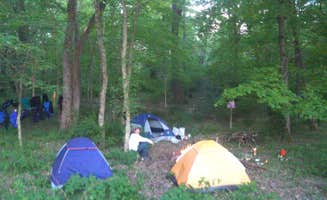
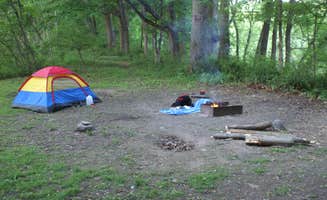
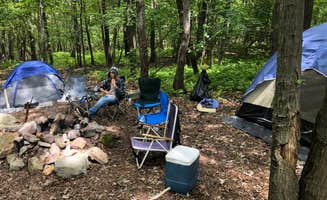
Tent site quality: Well-maintained fire rings and clearings at primitive sites. "The sites are in excellent shape!" reports Derek W. about Namanock Island, noting that the NPS-maintained sites include basic amenities like fire rings despite their primitive status.
Access to hiking trails: Direct connections to trail networks from many campsites. "The campground is along the Blue Loop trail, providing either an easy walk along the stream or an easy/moderate hike that connects to the AT with views at Sunrise Mountain. I made a fairly easy 9-mile loop this time," shares Kristan V. about Steam Mill Campground.
What you should know
Bear safety precautions required: Store food properly in vehicles or bear boxes. "There are bears in this area, and while I've not seen one in the campground, I have seen them on the trails while staying here. I store my food in my car overnight and toss garbage bags in the dumpster nightly as well," advises Kristan V. at Steam Mill Campground.
Site access challenges: River approach difficulties at certain water-access sites. "The river to camp journey...Due to fluctuating water levels all of the islands that are used for camping have a cut wall cliff style approach, but these sites have a very steep and above average height to the shoreline making unloading both more tiring and more of a hazard than I prefer," notes John B. about Sandyston Boat In Campsites.
Campsite competition: Early arrival recommended for weekend camping during peak season. "During the summer, it is often a challenge to find an open site on a Saturday night, especially if you have gotten a late start on the river or are approaching the southern end of the park," warns Ross R. regarding river campsites.
Water access considerations: Some sites have challenging swimming conditions. At Bushkill Creek Boat In Campsite, "all the water directly off the campsite is pretty rocky and shallow, so not great for swimming," according to Anna M.
Tips for camping with families
Select sites with adequate space: Some river campsites accommodate 5-6 tents comfortably. Sites at Namanock Island offer enough space for family groups with multiple tents, making them suitable for larger gatherings.
Consider sites with emergency access: Some river campsites have emergency roads. "There is an emergency pick up/access road available as well with contact from the park," notes Stephanie S. about Alosa Boat In Campsites, which adds safety for families with children.
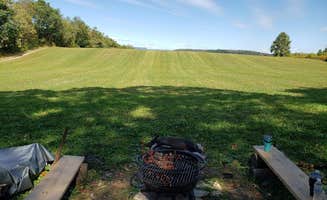
Look for group campsites: Dedicated areas available for larger family gatherings. "Large field with multiple group campsites with bearboxes, fire pit and garbage cans at each site. Four outhouses centrally locates and a pump well," describes Christopher W. about Rivers Bend Group Campground.
Choose campgrounds with activities: Some sites offer organized events for children. At Kittatinny Valley State Park Campground, "They had activities for everyone and we had a blast at bingo and won! There are so many things to do in the area with the farms and orchards and vineyards that it is great to get out and explore for a bit!" shares Jackie G.
Tips from RVers
Limited RV camping options: Most river sites accessible only by water. While primitive tent camping dominates the Delaware Water Gap area, a few developed campgrounds can accommodate small RVs or travel trailers.
Research site access: Some campgrounds have steep entrance roads. Several campsites in the area have limited turning radius and challenging approaches that may be difficult for larger RVs.
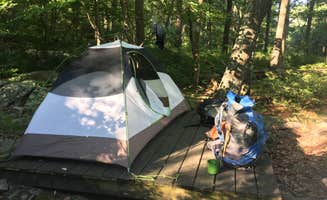
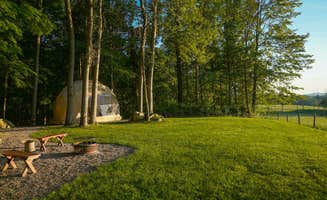
Consider platform tents as alternatives: Some campgrounds offer alternatives to RVs. "This is the first time we decided to forgo tent camping and reserve a shelter at a state park. We had a much better experience than we were expecting! The 'shelter' is what we would describe as a 'cabin'; four walls, a roof, locking door, locking windows, large picture frame front window, four beds(two bunks), a wood burning stove, and a porch," describes Dwight D. about Jenny Jump State Forest.













 Traveler


