Primitive camping options exist throughout the Delaware Water Gap National Recreation Area spanning 70,000 acres across eastern Pennsylvania and western New Jersey. The region features elevations ranging from 300 to 1,600 feet with mixed hardwood forests dominating the landscape. Winter temperatures frequently drop below freezing, while summer highs average in the mid-80s with moderate humidity.
What to do
Hiking remote trails: Access the extensive Thunder Swamp Trail System directly from the Thunder Swamp Trailhead parking area. "Trailhead parking was chill for a night. No trouble. Tons of hiking. Went down Saw Creek trail to a marsh," notes Jason R. about this Pennsylvania access point.
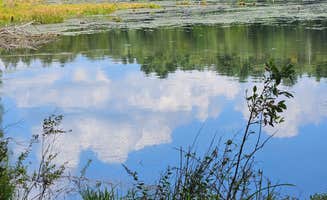
Lakeside camping: At Hickok Brook in New York, visitors can find secluded tent sites near the water. "Really is a nice quiet place. It's Labor Day weekend, see how many people try to cram in to the very limited camping area," shares Gregg T., who also advises that rangers enforce designated camping areas only.
Overnight backpacking: The Appalachian Trail through the region provides designated camping areas for multi-day hikers. Katharine T. mentions that at Appalachian Trail Designated Backpacker Campsite 2, there's "good trees for hammocking" though hikers should note "no ground fires" are permitted at these sites.
What campers like
Privacy options: The Appalachian Trail campsites offer both community and seclusion. "We camped nearer to others but there are secluded spots too," writes Katharine T. about Appalachian Trail Designated Backpacker Campsite 2 in New Jersey, noting it provides "a perfect balance of community and space."
Wildlife safety provisions: Bear boxes are available at some designated camping areas along the Appalachian Trail. At Campsite 2, Katharine T. noted the area is "well maintained with bear boxes provided," giving backpackers secure storage for food and scented items.
No-cost camping access: Free camping near Delaware Water Gap National Recreation Area exists at several designated sites. The Appalachian Trail campsites in the Worthington State Forest section provide no-fee overnight options, though Renee Z. points out that "as you enter the Worthington State Forest there are signs and hand painted maps indicating that this is the only place you can sleep in the forest."
What you should know
Limited water access: Water sources are scarce at many primitive sites. At Appalachian Trail Designated Backpacker Campsite 2, Renee Z. reports "there's no water nearby," recommending that hikers "stock up on water at the Dunnfield creek natural area, or wait until Sunfish pond."
Permit requirements: Several camping areas require permits from local ranger stations. At Hickok Brook, Gregg T. learned this firsthand: "Where I originally camped was not a spot, according to Ranger. Had to move next to the lake. Need a permit on NY state land. Contact Rangers office of whatever county."
Road conditions: Access roads to some dispersed camping areas are rough and unsuitable for certain vehicles. At Hickok Brook, Corey warns: "The road is very rough with huge potholes so good clearance is a must. It's not a good spot for car camping but you could conceivably drive up to the spots and pull off the road to put up a small tent somewhere."
Tips for camping with families
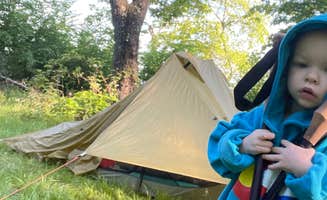
Site selection strategies: When camping with children, choose sites with appropriate terrain. Renee Z. describes Appalachian Trail Designated Backpacker Campsite 2 as "a little on the small and sloped side for tent camping," which could be challenging for family-sized tents.
Hammock alternatives: Consider hammocks instead of tents for older children at sloped sites. Renee Z. found that while the Appalachian Trail site was less suitable for tents, "I was in a hammock and it was a great place for that!"
Supply planning: No services exist near most dispersed camping areas. Gregg T. advises about Hickok Brook: "Bring everything with you. It's a hike back to town... there is a small town 10 minutes away. Eldred, NY."
Tips from RVers
Vehicle restrictions: Most primitive camping near Delaware Water Gap is unsuitable for RVs. Corey attempted to access Hickok Brook "thinking that there would be flat places to park a very rugged camper in my full ton diesel pickup" but found it was "not RV friendly" despite having a capable vehicle.
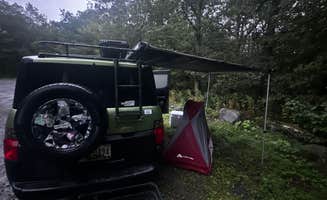
Overnight parking alternatives: Some trailhead parking lots permit overnight vehicle stays. Benjamin H. reports about Thunder Swamp Trailhead: "It's a gravel parking lot. Plenty of shade. No one bothered me."
Size limitations: Even accessible parking areas have space constraints. The few spots suitable for overnight vehicle parking are typically small gravel lots with room for only a handful of vehicles rather than dedicated RV camping areas.



 Scout
Scout


