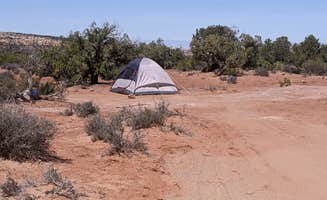
Best Tent Camping near Canyonlands National Park

CAMPER SUMMARY PRESENTED BYFord

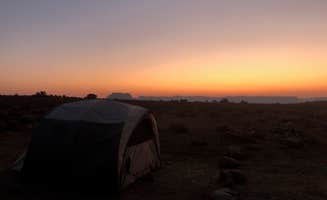
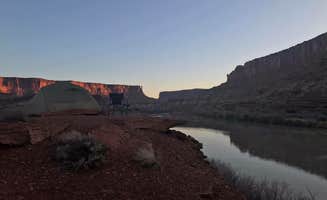
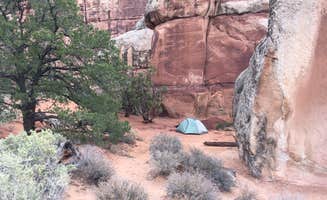
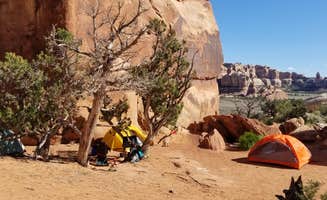
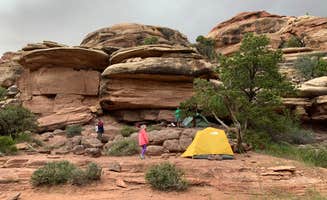
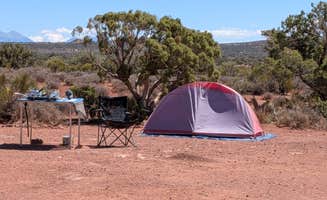
Tent campsites near Canyonlands National Park provide primitive backcountry experiences across various landscapes, from high desert plateaus to canyon rims. Several backcountry locations require permits, including White Crack Backcountry Campsites and Elephant Canyon, while dispersed tent camping is available at Yellow Circle Road and BLM Mineral Point Road areas. Most sites maintain a rugged, undeveloped character fitting the remote desert setting.

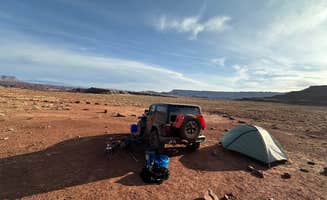
Tent camping in Canyonlands demands thorough preparation as amenities are extremely limited. Most backcountry tent sites require a high-clearance 4x4 vehicle to access, particularly those along the White Rim Trail. As one camper noted, "The road getting to this is a total b*tch. But the views are worth every bit of the hassle." Many backcountry campsites lack drinking water, and campers must pack in everything needed while adhering to strict Leave No Trace principles. Vault toilets are present at select locations like Murphy Hogback and Candlestick, but most sites offer no facilities whatsoever, requiring campers to pack out waste using enzyme-treated bags.

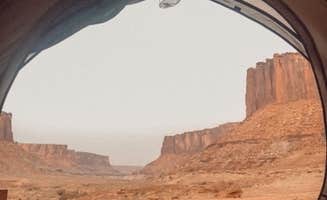
The primitive nature of Canyonlands tent camping delivers unparalleled solitude and night sky viewing. Areas farther from developed zones provide deeper isolation, with several reviews mentioning the absence of other people, especially in off-seasons. A review mentioned that "if solitude is what you are seeking, then this is the perfect place!" Tent-specific considerations include preparing for extreme temperature fluctuations, bringing adequate sun protection as many sites lack natural shade, and securing gear against frequent high winds that occur along exposed ridgelines and mesa tops. The backcountry tent experience requires self-sufficiency but rewards campers with pristine desert landscapes and spectacular canyon views inaccessible to day visitors.

Best Tent Sites Near Canyonlands National Park (55)

Show More
Showing results 1-10 of 55 campgrounds

2025 Detourist Giveaway

Presented byToyota Trucks

Review Campgrounds. Win Prizes.

Enter to Win


Tent Camping Reviews near Canyonlands National Park

1975 Reviews of 55 Canyonlands National Park Campgrounds


  • Mary S.
    Jun. 1, 2018

    Wingate Campground — Dead Horse Point State Park

    Brand new Wingate area, comfortable but no shade

    Dead Horse Point has a new section called Wingate. The older section is Kayenta.

    Wingate has wide asphalt spaces, electricity, fire rings, tent pads and picnic tables with wind blocks on 2 sides. There are very few trees...so no shade. (Kayenta has greater shade possibilities.) There may also be some sewer hookups.

    Another feature - walk-in tent sites and yurts. There are 4 great looking yurts in Wingate and 5 others near the park's Visitor Center.

    Bathrooms - they are private and include an automatic flush toilet, soap dispenser, automatic faucet and hand dryer. No showers but the bathrooms are very nice.

    There is a dishwashing sink outside the bathroom. It appears the water is potable but they ask you to arrive with water and help conserve water. Their water is trucked in from Moab....per reserveamerica.com.

  • Troy W.The Dyrt PRO User
    Oct. 31, 2018

    Chesler Park 2 (CP2) campsite in The Needles District — Canyonlands National Park

    Chesler Park 2 (CP2) nestled within The Needles

    This is a backcountry campsite reachable by a 4.4 miles hike from the Elephant Hill Trailhead in The Needles District of Canyonlands National Park. This is dispersed camping so there are no services nor amenities once you leave the trailhead. Leave No Trace principles apply. WAG bags required. Carry in any water that you might need because water is scarce or non-existant.

    The hike to the campsite is over hills, down canyons, across slick rock, traversing sand and across a plateau. The trail is marked by cairns for most of the way, but it is highly recommended that you use a topo/trail map and compass or GPS to navigate. Along the way you will see a variety of rock formations such as joints, fins and spires.

    You will cross a canyon and creek where EC1, EC2 and EC3 are located. A short distance after EC3 you will see a directional sign for Druid Arch or Chesler Park. Follow the Chesler Park Trail for about 1 mile. Look for the CP2 wooden sign post along the trail. The campsite is nestled amongst some rock formations and spires. There is no water resources in the area. There is plenty of open space to set up 3-4 tents.

    There are three additional site located within a mile in the NW direction. This site is nestled amongst some huge rock formations and has views of a plateau and some needles. There is a trailhead and latrine toilets about 2 miles west of this campsite. About 1.5 miles away is The Joint.

  • Lee D.The Dyrt PRO User
    Oct. 20, 2023

    Kayenta Campground — Dead Horse Point State Park

    Nicely laid out campground

    General & Site Quality: 56 electric sites, walk-in tent sites, and nine yurts in two loops: Kayenta and Wingate. Paved driveways, mostly level, a tent pad, fire ring, and a sheltered picnic table (from sun and wind) complete the electric sites. Back-in sites are on the inside of the loops while pull-thru sites are on the outside. There were three camp hosts in the Wingate loop, more than I usually see. 

    Bathhouse: Eight individual units in each loop with toilet, sink, soap, and hand dryer. Although the toilets were automatic flush, they didn’t always do the job and often took multiple tries. One toilet was clogged. There are also some vault toilets. No showers. 

    Activities: Nice and easy hiking trails. You can hike the west rim and east rim trails to make a loop for approximately five miles (depending on how many overlooks you include). Some trails are better marked than others, but we enjoyed a west-to-east rim hike from and returning to our campsite in Wingate. Designated mountain biking trails. 

    Unfortunately, we could only snag one night here but would have liked to have stayed longer.

  • Angee D.
    May. 17, 2019

    Elephant Canyon 3 (EC3) — Canyonlands National Park

    Views All Around

    This is a great backpacking campsite. Permit is required as are wag bags and leave no trace. I tracked it at 3 miles from Elephant Canyon trailhead. It was a 2 mile hike to Druid Arch from this site. No service and no water so plan accordingly.

  • Troy W.The Dyrt PRO User
    Nov. 1, 2018

    Devils Kitchen — Canyonlands National Park

    Devil’s Kitchen

    The Devil’s Kitchen is a “near” backcountry campsite. I say that this is "near" backcountry because the campsite is accessible with a 4x4 vehicle. Or one can reach it by hiking in. The main attraction of the area is of course a visit to the Devil’s Kitchen and the nearby needle formations in Chesler Park. The Devil's Kitchen is an natural alcove within some of the rock formations. You'll probably spot the latrine toilet before you spot the kitchen. Just past the latrine toilet is a huge rock overhang. Pass under the overhang and you'll enter the kitchen. It is an enclosed area shaded by the tall rock walls. The temperature and climate inside the alcove is cool and noticeably different than the temperature in the surrounding plateau area which is exposed and much warmer.

    This is a backcountry campsite in The Needles District of Canyonlands National Park. This is dispersed camping so there are no services nor amenities once you leave the trailhead. Leave No Trace principles apply. WAG bags required. Carry in any water that you might need because water is scarce or non-existant.

  • Troy W.The Dyrt PRO User
    Oct. 31, 2018

    Elephant Canyon 3 (EC3) — Canyonlands National Park

    Elephant Canyon 3 (EC3)

    This is a backcountry campsite reachable by a 2.5 mile hike from the Elephant Hill Trailhead in The Needles District of Canyonlands National Park. This is dispersed camping so there are no services nor amenities once you leave the trailhead. Leave No Trace principles apply. WAG bags required. Carry in any water that you might need because water is scarce or non-existant.

    The hike to the campsite is over hills, down canyons, across slick rock and traversing sand. The trail is marked by cairns for most of the way, but it is highly recommended that you use a topo/trail map and compass or GPS to navigate. Along the way you will see a variety of rock formations such as joints, fins and spires.

    You will cross a canyon and creek where EC1 and EC2 are located. Continue past EC2 for another .25 miles. You might walk right past the campsite, but look for the EC3 wooden sign post. The campsite is nestled amongst some rock formations. The creek is below in the canyon. Don't count on any water being in the creek, it will most likely be dry. There is plenty of open space to set up 3-4 tents.

    This is one of the first three campsites when entering The Needles District from the Elephant Hill Trailhead. There are two additional site located within half a mile. This site has views of a plateau and some needles. A quarter mile away the trail splits between the trail to Chesler Park and Druid Arch.

  • Jeanene A.The Dyrt PRO User
    Jul. 4, 2016

    Horsethief Campground

    Best Views for Sunrise and Sunset - Close to Arches NP

    On Utah 313, 12 miles from Hwy 191 Elevation 5800 and offering 56 sites and can accommodate RV's (no hookups). Great views for sunrise and sunset! All BLM campgrounds and camping areas have vault toilets, fire rings, are open year round, and a fee is charged / collected at self pay station at entrance. No firewood gathering (available at convenience stores in Moab). Camping at all sites is limited to 14 days within a 30 day period. Be prepared for wind. Ground is pretty hard and tough to get tent stakes in - we tied down to rocks on site. About a 15 min ride from Arches and about 30 min from Moab. A great place to get away form the crowds!

  • Chase R.
    May. 24, 2024

    Yellow Circle Road Dispersed Camping Area

    Beautiful, Remote Views

    This was our second night boondocking near Moab, and it was peaceful. We were the only ones out in this area camping with not a single car driving by while we were here. On the way up we passed several campers right near the entrance of Yellow Circle Road. The campsite provides views of the mountains. The sunset was amazing even through the shrubbery. It does get windy out here in May; however, the shrubbery provides a solid wind break and the wind usually dies down in the evening. There was already a fire ring when we got here. Broken glass was found in some areas, be sure to watch where you step. If one doesn’t have firewood, there are plenty of dead branches laying around to use as firewood. There is potential room for other campers if one decided to come in a group with a similar set up to our camping set up. To get to this campsite, one doesn’t need high clearance; however, parts of the road aren’t crushed gravel (good tires are a must). Enjoy this beautifully, remote campsite!

  • Crystal W.
    Sep. 13, 2022

    Sun Outdoors Canyonlands Gateway

    Nice Location to hit the parks

    Centrally located off the main road. About ten minutes from Arches National Park and twenty minutes from Canyonland Nation Park/Dead Horse State Park. Level camping pads. Clean drinking water. The bathrooms are nice but there are only four so it can get congested. Slight noise pollution from the main strip but worth it for the central location. Nice pool. Moderately priced gas station and camp store on site. Friendly staff. If you plan to visit Arches NP don’t forget make the mandatory reservation online with the NPS.


Guide to Canyonlands National Park

Dispersed tent camping near Canyonlands National Park ranges from sandy desert flats to elevated mesa positions. The park sits at elevations between 3,700 to 7,200 feet, creating dramatic temperature variations that can exceed 40°F between day and night. Winter camping requires extra preparation with overnight temperatures frequently dropping below freezing from November through March.

What to do

Hike to Druid Arch: From the Elephant Canyon backcountry sites, this iconic formation is accessible via a moderately challenging trail. "It was a 2 mile hike to Druid Arch from this site. No service and no water so plan accordingly," notes a camper at Elephant Canyon 3 (EC3).

Experience night sky viewing: The Canyonlands region offers exceptional dark sky conditions for astronomy enthusiasts. "We had a clear night, and the starriest sky I've ever seen!" reports a visitor at Elephant Canyon 3. For elevated viewing locations, Murphy Hogback sites provide panoramic celestial observation points.

Explore off-road areas: Many remote areas require technical driving but reward with isolation. "The road is rough, and has some technical aspects to it, so high clearance 4x4 and experiences off road driving is a must," explains a camper at Candlestick Backcountry Campsites, who visited during January when they "saw no one else on the trail."

What campers like

Unique geology access: Tent camping provides entry to geological features unavailable to day visitors. At White Crack Backcountry Campsites, a camper explains "a few yards down is the reason why it's called white crack camp. Large mushroom white top rocks, and a large crack!"

Weather variation opportunities: Winter camping offers complete solitude not possible during peak seasons. "For us, when we did this in January there were no other cars or bikes on the trail, and certainly none in the campground," reports a White Crack visitor who needed permits from the Island in the Sky visitor center.

Desert canyon privacy: Many sites provide natural separation despite being in primitive areas. At Gemini Bridges Campground, "Bumpy drive in 4x4 and high clearance definitely recommended. Probably 5/6 spots large enough for big groups. We got there around noon on a Thursday and only found one open spot."

What you should know

Vehicle requirements are non-negotiable: Many tent camping areas demand specific vehicles. "The road is very rough and is only suitable for high clearance 4x4 travelers, or mountain bikers/hikers," states a White Crack camper. Similarly, at Gemini Bridges "you need 4x4 to get back in here and it is a bit of a drive back in here."

Permit systems vary by location: Most backcountry sites require advanced permits through recreation.gov or visitor centers. Airport Backcountry sites need "permits required from Island in the sky visitor center. Highly sought after camp sites in peak season."

Exposed campsites require adaptation: Lack of natural shelter means preparation for environmental conditions. "Zero shade. Pack your own," advises a visitor to Airport A Backcountry Campsite.

Waste management is strictly regulated: All backcountry tent camping requires proper waste disposal. At Maze Overlook, "if you are at the campsite, and you have to answer nature's call, then carry Enzyme treated potty bags to do your business. If you are hiking, you can bury your waste, but make sure to carry out the toilet paper."

Tips for camping with families

Start with accessible dispersed sites: For families new to tent camping in Canyonlands, choose less remote areas first. At BLM Mineral Point Road Dispersed Camping, "we had reservations the following night at the Horsethief Group Sites, so were just looking for a place for a few early arrival folks to crash for the evening," making it "easy to use their toilets and trash if needed."

Plan multiple-day itineraries: Strategically position family camping to maximize park access. "We enjoyed this area and we able to do day trips to all the parks," notes a visitor at BLM Mineral Point Road, who cautions "some of the access is trickier than others so be sure to scout ahead of time."

Bring comprehensive sun protection: Desert tent camping requires multiple sun barriers. At Airport A, preparation for "zero shade" conditions is essential, particularly for children sensitive to extended sun exposure.

Tips from RVers

Transfer to tent setups at remote sites: Many RVers leave their rigs at developed campgrounds and use tents for backcountry experiences. "We took our travel trailer (22' total) up, just have to be careful," notes a camper at Yellow Circle Road Dispersed Camping Area, adding that "the higher up you go on the road, the rougher."

Scout roads before commitment: Road conditions change seasonally and require verification. "Unless you've ample off roading experience, outfitted your rig with an assortment of lights, and a decent lift kit, please don't attempt to climb the mountain beyond a certain point at night," warns a Yellow Circle Road camper, explaining that "the trail has portions where the road has given out."

Use BLM areas for staging: Public lands surrounding Canyonlands provide staging areas for extended stays. "This is a free area 10 min from canyonland and 15 from dead horse point state park," reports a visitor to Mineral Point Road, who found "a spot with good privacy" and "had 1 bar Verizon."


Frequently Asked Questions

Where are the best tent camping spots in Canyonlands National Park?

The Needles District offers exceptional tent camping opportunities in Canyonlands. Elephant Canyon 3 (EC3) is a highly-rated backcountry site about 3 miles from Elephant Hill Trailhead and provides convenient access to Druid Arch. Chesler Park 2 (CP2) is another excellent option, located 4.4 miles from the same trailhead and offers stunning surroundings. For those seeking vehicle-accessible options, the Devils Kitchen site can be reached by 4x4. The Island in the Sky district features Murphy Hogback for more remote experiences, while backpackers can explore Airport and Candlestick backcountry sites. All backcountry camping requires permits and adherence to Leave No Trace principles.

Do I need a permit for tent camping in Canyonlands National Park?

Yes, permits are required for all backcountry tent camping in Canyonlands National Park. Popular sites like Elephant Canyon 1 (EC1) and Devils Kitchen require advance reservations through the National Park Service. Permits can be obtained up to four months in advance for peak seasons, and a limited number are held for walk-up visitors. Backcountry camping permits cost $30 per trip (up to 7 nights) for groups of up to 7 people. Developed campgrounds like Squaw Flat (Needles) and Willow Flat (Island in the Sky) operate on a first-come, first-served basis without advance permits but do require payment of campground fees.

What are the best times of year for tent camping in Canyonlands National Park?

Spring (mid-March through May) and fall (September through October) offer the most pleasant temperatures for tent camping in Canyonlands National Park. During these seasons, daytime temperatures typically range from 60-80°F with cool nights. Elephant Canyon 2 (EC2) and other backcountry sites are especially popular during these moderate months. Summer (June-August) brings extreme heat often exceeding 100°F, making camping challenging unless you're at higher elevations like Monticello Lake. Winter camping is possible but requires preparation for cold nights, potential snow, and limited water availability. Fall offers spectacular colors, while spring brings wildflowers. Be aware that spring can bring unpredictable weather and occasional flash floods.

What facilities and amenities are available at Canyonlands National Park tent campgrounds?

Facilities at Canyonlands tent campgrounds vary significantly between developed and backcountry sites. Developed campgrounds offer vault toilets, picnic tables, fire rings, and trash collection, but no showers or hookups. For more amenities, Jaycee Park Campground near the Colorado River provides walk-in tent sites with convenient access to climbing areas. Yellow Circle Road Dispersed Camping Area outside the park offers boondocking options with no facilities but scenic views. Backcountry sites like those in Elephant Canyon provide no amenities whatsoever - no water, toilets, or trash disposal. Campers must pack in all supplies and pack out all waste (WAG bags required). Cell service is extremely limited throughout the park, so plan accordingly.