







J
John F. Scout
Scout
ScoutCreekside Campground
Quit, right along the creek, dollar general is right down the street. If only that house wasn’t looking down on me🤷♂️
175 campgrounds · Check availability for any dates.
The Monongahela National Forest surrounds Baker, West Virginia, offering a mix of established and dispersed camping options. Wolf Gap Recreation Area provides tent-only sites with picnic tables, fire rings and vault toilets, while Trout Pond Recreation Area features more developed facilities including electric hookups, water access, and reservable sites for tents, RVs and cabins. Dispersed camping can be found at Squirrel Gap Road and Squirrel Hollow Road, where primitive sites allow for a more secluded experience. Most campgrounds in the region sit at higher elevations, providing cooler temperatures even during summer months.
Road conditions vary significantly throughout the region, with many forest service roads requiring high-clearance vehicles. Several campgrounds are accessible via gravel roads with potholes and rough sections, particularly after rain events. "The drive to the Spruce Knob Lake Campground is on a combination of narrow, winding, mostly unpaved roads. Go slow because there are plenty of blind curves," noted one visitor. Cell service is extremely limited throughout the area, making advance planning essential. Weather patterns can change quickly in these mountains, with afternoon thunderstorms common during summer months. Most developed campgrounds operate seasonally from April through November, though some dispersed sites remain accessible year-round depending on snow conditions.
Campers consistently praise the region's natural beauty, pristine rivers, and abundant wildlife. The South Branch Potomac River provides opportunities for fishing, swimming and tubing at several campgrounds. Many sites feature direct access to hiking trails, including connections to the Appalachian Trail and paths leading to scenic overlooks. Visitors frequently mention the exceptional stargazing opportunities due to minimal light pollution. While developed campgrounds offer amenities like showers and flush toilets, they can fill quickly during summer weekends and holidays. According to one camper, "The tent section is a giant meadow with picnic tables and tent pads arranged around the edges. Nearly all have an incredible view of Seneca Rocks, a magnificent geological feature." Dispersed sites trade conveniences for solitude, with many offering more space between neighbors.
"Easy access to hiking trails."
"The grounds have sites in close proximity to a toilet without running water. When we arrived, half of the sites were occupied, but only a few left notes on the board as was requested by the service."
from $20 / night
Check Availability"Although it's not immediately convenient to the various hiking trails in the Lee Ranger district of Washington-Jefferson NF, this little site is tucked away atop a mountain far from any crowds."
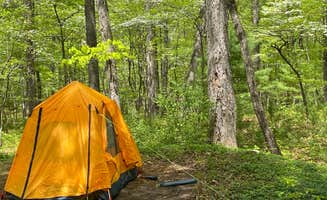
"Tent sites are rough, some outside ring sites have tent pads."
"There is Rockcliff lake and small beach area, an overlook (Lina Constable Overlook) to hike to right off the camp loop but it’s 1 mile steep incline at times but worth every step. Gorgeous!"
"The area closes completely (entrance gate is locked) from Dec 21 - May 1. The site was super clean and well maintained. Lots of hiking trails and a very easy one that loops around the Rockcliff Lake."
from $25 - $105 / night
Check Availability"In my opinion it has the best location of the 3 Turks they have. It’s it the woods close to a boat landing you can see a bit of the river. In the fall or spring I’m sure the view is amazing."
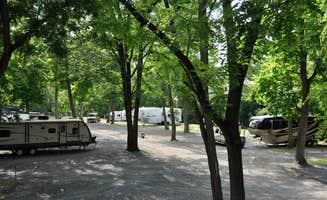
"Private showers, no WiFi, firewood on site, lots of shade, trails and walking distance to the river. Highly recommended. Close access to Shenandoah National Park."
from $27 - $427 / night
Check Availability"It is not near a main highway unless you call Route 50 through Romney a main highway. It is west of town up a curved mountain road. It is on the top area of "Middle Ridge" mountain. "
"Very positive experience."
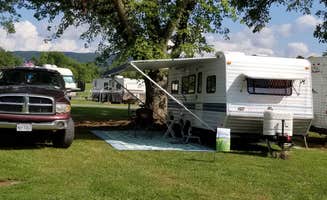
"We spent 2 nights at Creekside Campground in Edinburg, VA on our way to West Virginia—- and found a real gem. We paid$50/night for Back-in Creekview FHU Site#20."
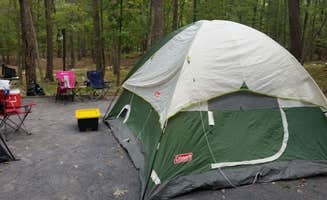
"We had a large grass space with water and power on the edge of a beautiful creek and enjoyed the sounds of it both nights."
from $26 - $47 / night
Check Availability"Very nice spot, good tent setup pads and fire rings at all the sites, my one complaint is that it is right next to the road that while not frequently used, the occasional car can often take away from the"
"There are several trails that intersect with the campsite ànd day hikers are a common site."
"While the campground is very nice, with clean conveniently located bathrooms, the site itself is probably not suited for a large group of people."
"Our site had the AT running right behind it. The was plenty of access to trails, and pretty central to the park. The campground is near showers, laundry, campstore, and visitor center."
from $30 - $75 / night
Check Availability"Sites are located less than a mile from the paved highway. We found 5 spots just off the road. All were easily accessible by cat or with a small teardrop trailer."
"But this one is right off the road, entrance is steep. Decent sized area, stone fire ring, plenty of firewood."
ScoutQuit, right along the creek, dollar general is right down the street. If only that house wasn’t looking down on me🤷♂️

 Guide
GuideI fear that yurt glamping may have ruined me against tent camping again! This was absolutely lovely. We stayed in the painted horse yurt. Cozy, comfy, lots of amenities. The only downside here is the sulfur odor the water in the bathroom has, but it is very good for your skin at least! I’d stay here again for sure.

 Traveler
Great place if you want to off road a little and have an amazing view to wake up and go to sleepp too. Would definitely do this again!
TravelerGreat spot! Water taps appear to be turned off for winter. Flushing toilets. Waterfall hike nearby!
ScoutGenerous sized sites, quiet, beautiful area.
ScoutStayed here for 2 weekday nights in mid-October, late season. Nice & quiet. Warm showers, clean bathrooms, nice staff.
There was some vehicle activity with vehicles as they were still running river trips.
Very pleasant.
 Traveler
Quite the dump and almost no one around to talk to. There is a bathroom with running water, flushing toilets, and a shower. But it is cramped and not attractive. Most of the sites are right underneath the freeway, and very noisy. Primitive sites away from the road noise are nothing more than a wide area of the dirt road.
 Guide
GuideThere are numerous Md. State DNR Campsites along Savage River Road.. No hookups but water may be available at Big Run State Park. These campsites are remote and very private for the most part. Some may be able to accomodate trailers and RV's for dry camping. Check MD DNR WEBSITE for more info
 Traveler
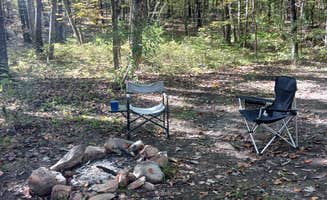
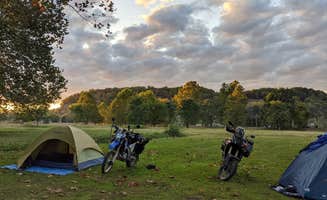
Dispersed camping beyond the actual quarry. A lot of rain occurred in the days prior but on my visit over two days. Bright and sunny. However, it was a lot of road wash out and a lot of standing water as you made your way toward dispersed spots. Apparently, I was the only one there, because they were many, many spots open for camping. Nice pre-visited sites and was able to camp near running stream.
Camping spots near Baker, West Virginia range from primitive sites to full-hookup facilities at elevations between 1,200-4,000 feet. The region features diverse microclimates across its mountain ridges and valleys, with temperature swings of 15-20 degrees possible between higher and lower elevation campgrounds. Most dispersed camping areas require high-clearance vehicles due to unmaintained forest service roads.
Hiking from campsites: At Wolf Gap Recreation Area, trails connect directly to the Appalachian Trail network. "Big Schloss offers one of the most unique views in the region!" notes Andrew M. Primitive campsites provide direct trail access for early morning starts.
Fishing opportunities: The fishing ponds at Middle Ridge Campground offer catch-and-release options. "Short drive down the mountain to get to the ponds but my husband and oldest son had a blast catching fish in their ponds!" reports Kayla M. Many anglers visit during weekday mornings when water is calmer.
Wildlife viewing: Deer frequently appear at dusk around campsites. "You will definitely see deer in the campground as they walk through and browse the understory. They are unafraid of humans unless directly approached," writes Veronica S. about Big Meadows. Many campgrounds provide wildlife checklists at registration.
Privacy between sites: At Hawk Recreation Area Campground, the layout allows for seclusion. "There are lots of trees that provide some privacy between camp spots," notes Ray G. Some dispersed sites along gravel roads around the official campground offer even more isolation.
Water features: Crystal clear water draws campers to many local spots. "The lake water was crystal clear and is surrounded by beautiful views of the mountains," says Laure D. about Rockcliff Lake at Trout Pond Recreation Area. The small beach area typically has fewer visitors on weekday mornings.
Stargazing conditions: Limited light pollution creates ideal night sky viewing. "And finally, the fireflies are spectacular. At dusk, the ground shimmers, and then after they disperse, you will still see them flit by the tent throughout the night," reports one visitor about summer evenings.
Road access challenges: Forest roads require careful navigation. "The drive is on a combination of narrow, winding, mostly unpaved roads. The road to access the campground was good with some tight turns up the hill the last couple of miles," notes Stephen H.
Limited connectivity: Cell service varies dramatically by carrier and location. "No cell service. We went to the visitor center and connected to the WiFi if we needed to do something online," explains one camper. AT&T typically has better coverage than Verizon in most camping areas.
Water availability: Many primitive sites lack potable water. "Bring plenty of water and everything you need/want," advises Shandi B. about Wolf Gap. Some campgrounds have seasonal water pumps that may produce rusty-looking water due to mineral content.
Playgrounds and activities: Family-friendly facilities vary widely between campgrounds. "There are hiking trails, playgrounds for the kids. Whether a day trip or camping this is a nice spot," recommends Wendi C. about recreational areas with developed amenities.
Animal encounters: Some campgrounds feature domesticated animals that children enjoy. "We have three children who absolutely loved petting and feeding Mules and Donkeys!" shares Kayla M. about Squirrel Gap Rd Dispersed camping areas.
Educational programs: Ranger-led activities provide learning opportunities. "Nice amphitheater with interesting ranger programs," mentions Kim L. Many programs run between Memorial Day and Labor Day, focusing on local ecology and history.
Site dimensions: Many campgrounds have limited space for larger rigs. "We were pulling a 15' trailer and could only access the sites from driving reverse along the one way road. The trailer barely fit the back-in site," cautions Vy N. Most sites accommodate units under 30 feet.
Utility connections: Hookup quality varies significantly between campgrounds. "Water pressure was just a bit weak and used our water tank and pump during our stay. Best we could get for water pressure out of the hose was 25-20 psi. No issues with power or sewer," reports a camper about typical conditions.
Leveling challenges: Prepare for uneven terrain at many sites. "Many of the car parking pads are not level. But the tent pads appear to be," notes VanRumschpringa V. Bringing extra leveling blocks is recommended for campers with trailers and RVs.
Frequently Asked Questions
What camping is available near Baker, WV?
According to TheDyrt.com, Baker, WV offers a wide range of camping options, with 175 campgrounds and RV parks near Baker, WV and 26 free dispersed camping spots.
Which is the most popular campground near Baker, WV?
According to TheDyrt.com, the most popular campground near Baker, WV is Wolf Gap with a 4.7-star rating from 21 reviews.
Where can I find free dispersed camping near Baker, WV?
According to TheDyrt.com, there are 26 free dispersed camping spots near Baker, WV.
What parks are near Baker, WV?
According to TheDyrt.com, there are 21 parks near Baker, WV that allow camping, notably Jennings Randolph Lake and Shenandoah National Park.
Keep Exploring