Dispersed camping opportunities near Allentown, Pennsylvania include several primitive sites along the Appalachian Trail corridor and within Delaware State Forest. Elevations range from 500 to 1,600 feet across the region, with the higher elevations providing overlooks along the Blue Mountain ridge. Backcountry campers should note that water access varies significantly by location, with many sites requiring hikers to carry in all necessary water or filter from seasonal sources.
What to do
Hiking to viewpoints: The Bake Oven Knob area offers both overnight parking and access to the Appalachian Trail with a short hike to a scenic overlook. "The hike to the overlook is really lovely; short and rocky," notes one visitor to Bake Oven Knob.
Trail system exploration: Thunder Swamp Trail System provides extensive hiking options from the trailhead camping area. "Tons of hiking. Went down Saw Creek trail to a marsh," reports a camper who stayed at Thunder Swamp Trailhead. The network includes multiple interconnected trails suitable for day hikes from your camping spot.
Section hiking: The Appalachian Trail corridor near the Delaware Water Gap offers opportunities for section hiking with strategic overnight stops. Many dispersed sites are positioned to facilitate multi-day hikes with manageable daily distances of 8-12 miles between camping areas.
What campers like
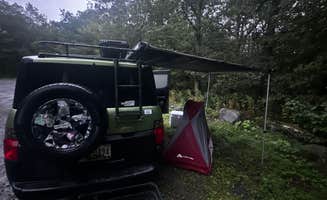
Van and vehicle accessibility: Some dispersed camping areas allow overnight parking, creating convenient options for van campers. A regular visitor to Bake Oven Knob shares, "I've overnighted in my van here a bunch, no problems. This spot is both part of the Appalachian Trail and a day hiking area for the Bake Oven Knob."
Bear protection infrastructure: Bear activity requires proper food storage, and some sites provide this critical infrastructure. A hiker at Appalachian Trail- Designated Backpacker Campsite 2 notes sites are "Well maintained w bear boxes provided. Good trees for hammocking."
Privacy options: Many areas balance community with solitude based on site selection. "We camped nearer to others but there are secluded spots too," reports a camper about their experience at the designated backpacker site. This flexibility allows campers to determine their preferred level of interaction with others.
What you should know
Water planning essential: Natural water sources are limited or absent at many sites. One backpacker advises, "No Water (nearest is sunfish pound- easy hike about a 1 round trip)." Others note complete absence of water: "I gave the site only four stars because there's no water nearby."
Parking lot camping: Some trailheads serve as impromptu free camping near Allentown, Pennsylvania. A visitor to Thunder Swamp Trailhead describes, "It's a gravel parking lot. Plenty of shade. No one bothered me." These unofficial spots offer convenience but minimal amenities.
Fire restrictions: Open ground fires are prohibited at most dispersed sites in the region. Always verify current regulations before planning meals or warmth sources. Pack alternative cooking methods and adequate warm clothing for cool nights.
Tips for camping with families
Hammock options: Sites with adequate tree coverage provide hammock camping alternatives to tents. This can be particularly useful with children on uneven ground. "It's a little on the small and sloped side for tent camping, but I was in a hammock and it was a great place for that," shares a camper about Appalachian Trail campsite options.
Space considerations: When camping with multiple children, evaluate site capacity carefully. Several backcountry areas have limited flat space for larger tents. Arrive early to secure adequate space during peak seasons (April-October).
Educational opportunities: The Appalachian Trail corridor contains numerous informational signs about local ecology, geology, and trail history. These create natural learning moments for school-aged children at major trailheads and viewpoints.
Tips from RVers
Overnight trailhead parking: Some trailhead parking areas accommodate smaller RVs for overnight stays. "Trailhead parking was chill for a night. No trouble," reports one visitor about their experience at Thunder Swamp Trailhead.
Limited facilities: No-cost camping areas near Allentown lack hookups or dumping facilities. Self-contained units must arrive with full water tanks and empty waste tanks. The nearest dump stations are typically at developed campgrounds 15-25 miles from dispersed sites.
Access road considerations: Many forest roads leading to free camping spots have unpaved sections with seasonal conditions. Spring thaws often create muddy sections that may be impassable for larger vehicles or those without adequate clearance.



 Scout
Scout


