The Stanhope region of New Jersey sits at the gateway to the Skylands Region at approximately 900 feet above sea level, characterized by rolling hills and dense forests of oak, maple and birch trees. Camping options in this area are available from early April through late October, with most campgrounds closing for the winter season. Water quality varies significantly between campgrounds, with iron content affecting taste at certain locations.
What to do
Fishing at nearby lakes: The Musconetcong River at Stephens State Park Campground provides accessible trout fishing opportunities within walking distance of campsites. "The river is just a small walk down the hill (you can stairs or a path which was nice). They stock the water with trout and there was an officer checking for fishing permits," reports jacquelyn G.
Wolf preserve tours: Located at Camp Taylor Campground, the Lakota Wolf Preserve offers daily wildlife educational experiences. "You can take a short hike up the mountain there to see the wolves in the sanctuary. There are moments by the fire you can hear them howl in the distance," explains Julie F. Camp Taylor runs wolf preserve tours twice daily on weekends.
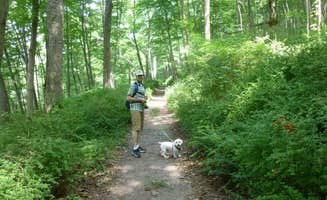
Hiking mountain trails: Accessible forest paths connect many campsites to longer trail networks. At Stokes State Forest, campers find "21 marked trails that cover over 63 miles within the boundaries of Stokes State Forest. Twelve miles are part of the Appalachian Trail," according to Trip Over Life's review. Many trails can be accessed directly from campgrounds without driving.
What campers like
Private, wooded sites: Many campgrounds offer secluded spots separated by natural barriers. At Jenny Jump State Forest, "the camp sites are nicely laid out to ensure privacy. This park is high up on a mountain and affords lovely views. Well kept and clean," notes Jocelyn G. The elevation provides natural cooling during summer months.
Clean bathroom facilities: Well-maintained shower houses are consistently mentioned in reviews. At Swartswood State Park Campground, "the bathroom and shower area was very clean," writes Kaitlyn S. Dwight D. adds, "Clean bathrooms with flush toilets and showers, masks required for the pandemic."
Lakes and water activities: Free or low-cost water recreation is available at several campgrounds. At Panther Lake Camping Resort, "The lake and pool were a big plus, especially for hot days. While I did not take advantage, you are allowed to rent boats and take them out on the lake," explains Ethan K. Boat rentals typically range from $10-$25 per hour depending on type.
What you should know
Reservation requirements: Most campgrounds fill quickly during summer weekends and holidays. At Great Divide Campground, campers should note that "you are not allowed to keep your car at your site. You have to drop your supplies off and drive it back to the parking lot which was slightly annoying," according to Ethan K.
Campsite privacy varies: Site selection significantly impacts experience. At Mahlon Dickerson Reservation, "The sites are hit or miss in terms of comfort, some have large, flat, clear spaces for multiple tents, some you have to wedge a tent to avoid rocks," notes Christina L. Sites numbered 15-20 tend to offer more seclusion.
Bear safety protocols: All campgrounds in the region require proper food storage. "Remember, this is bear country so proper food storage is a must. Bear lockers are not provided," warns Trip Over Life. Campers should store food in vehicles overnight or hang from designated bear poles when available.
Tips for camping with families
Look for activity centers: Campgrounds with organized events keep children engaged. At Panther Lake Camping Resort, "Lots of activities to keep kids busy which was nice but this place is a party place for sure. One family had a large movie screen outside watching movies every night," explains Julie F.
Consider noise levels: Family-friendly campgrounds often have varying quiet hours enforcement. "Unlike many other campgrounds we've been to, they are very good about actually enforcing the quiet hours at night, so you can have an actual peaceful and quiet night around the campfire," says Dan B. about Camp Taylor Campground.
Check playground access: Several campgrounds feature recreational facilities for children. At Driftstone Campground, "It would be very difficult to be bored -- games, activities, swimming, boating, plenty of open field for the kids. It is a very family-friendly campground where the staff and other campers are very personable," reports Jim G.
Tips for RVers
Site leveling challenges: Many campgrounds have uneven terrain requiring preparation. At Round Valley State Park Campground, Janine W. notes "Some of the sites are at least 3 miles to get to unless you take a boat across. Beautiful peaceful and primitive." This limits accessibility for larger rigs.
Water access locations: Hose lengths may need to be longer than standard at some campgrounds. At Mahlon Dickerson Reservation, "Website lists water hook ups at long distances but they have hose reels to help with that. Our site (15) said 75' however the 50' hose reel made it to our rv connection," reports antruze.
Road access limitations: Several campgrounds have narrow entry roads that challenge larger vehicles. At Driftstone Campground, Jim G. warns, "PLEASE NOTE: if you are towing or have a motorhome, make sure you follow the directions on the website. Coming in from the wrong road could lead you to a hairpin turn and steep hill." Most campgrounds recommend maximum RV lengths under 35 feet.











 Legend


