Kettle Moraine State Forest spans over 30,000 acres near Pewaukee, Wisconsin, with elevations ranging from 700 to 1,000 feet above sea level. The region's glacier-formed terrain creates unique camping conditions with natural springs, kettles, and moraines throughout the landscape. Campgrounds in the area operate primarily from April through November, though some offer winter camping options for experienced outdoor enthusiasts.
What to do
Hike to observation points: At Pike Lake Campground, visitors can access multiple well-maintained trails including a lookout tower with panoramic views. "There is also a lookout tower that offers stunning views of the surrounding area," notes Jimmy P., who appreciates the conservation efforts on display. "They are even updating the path of the trails to help stop erosion on the hills, which is impressive if you are interested in conservation."
Swim in natural spring waters: The quarry at Menomonee Park offers a clean swimming area with a sandy beach. "The quarry is good for swimming, kayaking, or canoeing. There is a beach with life guards," reports Matt N. The water remains relatively cool even during summer heat due to the natural spring sources.
Fish from accessible piers: Multiple lakes in the region are stocked for fishing, with dedicated piers at several campgrounds. At Kettle Moraine Southern Unit, one visitor observed serious anglers having success: "We saw a guy with a catfish the size of my forearm," shares Kelsey H., highlighting the productive fishing opportunities available directly from campground docks.
What campers like
Natural variety of ecosystems: The region transitions between pine forests, oak savannas, and prairie landscapes. "The site was actually really lovely and I appreciated the thick brush creating some real seclusion," notes Kendal R. about Pinewoods Campground. Sites 22-26 at Muskego Park offer a different environment: "These campsites are in the midst of a pine forest. It would be sweet to tent camp there and listen to the wind in those trees," describes Josh F.
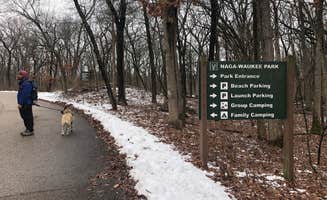
Proximity to Milwaukee: Despite feeling remote, most campgrounds are within an hour of the city. "A very nice, woodsy campground. Feels like you are further north than you really are!" explains Gina L. about Naga-Waukee Park. This accessibility makes these parks popular weekend getaways for urban residents seeking nature without long drives.
Winter camping options: Unlike many Wisconsin campgrounds, some sites remain open year-round. "No showers in winter but awesome," reports David H. about Ottawa Lake Campground, who appreciates the solitude of off-season visits. The park offers plowed access roads and winter-accessible sites for cold-weather enthusiasts.
What you should know
Site privacy varies significantly: Loop selection impacts the camping experience. "The site was well wooded and very spacious! It had a decent clearing for some sun and the driveway was longer setting it back from the loop road," notes Jack D. about site 273 at Pinewoods Campground. Sites with longer driveways typically offer better separation from other campers.
Road noise at certain campgrounds: Highway proximity affects some sites more than others. "The road noise is absolutely noticeable. It was incredibly loud when we drove through the loop closest to the highway and was significantly better even just one section over," explains Linda N. at Ottawa Lake Campground.
Varying enforcement of rules: Management styles differ between county and state parks in the region. "The quiet Loop was a wonderful idea however, the campsite next to us was blasting music and at 11:30 pm someone randomly started playing a flute?" reports Kendal R. at Pinewoods. At Mukwonago County Park, rangers maintain a more consistent presence: "The rangers drive through regularly and will deliver wood to your site if requested," notes Abbe W.
Tips for camping with families
Check beach quality before swimming: Water conditions vary at different parks throughout the season. "The lake is very clean and the site are a good size. Gets very busy on the weekends!" advises Neysha R. about Ottawa Lake. Some water areas post E. coli warnings during peak summer heat.
Consider the quiet loops for families: Designated quiet areas provide better sleeping conditions for young campers. "We liked this site because it was on the 'quiet loop.' No radios or pets allowed," explains Wendy Z. about Kettle Moraine Southern Unit. Note that these quiet zones typically restrict pets, so they're not suitable for dog owners.
Look for educational opportunities: Several parks offer structured activities for children. "Pick Up the activity book for kids it is a great adventure lots to do at the lake!!!" suggests Jill G. at Kettle Moraine Southern Unit. Many campgrounds provide junior ranger programs during summer weekends.
Tips from RVers
Limited electric availability: Most campgrounds offer some electric sites, but they book quickly. "Not all sites here have electricity so be mindful of that while booking," cautions Linda N. about Ottawa Lake Campground. Electric sites often cluster in specific loops, so check campground maps when reserving.
RV size constraints: The winding forest roads limit accessibility for larger vehicles. "There is a TIGHT turn in the campground loop near site #17 to be aware of with longer trailers," warns Sugar Maple S. about Pike Lake. Most Waukesha County parks accommodate smaller trailers but present challenges for big rigs.
Consider Milwaukee State Fair RV Park for urban access: For those wanting to combine camping with city visits, this paved facility offers full hookups. "Perfect campground for what it is! Big paved parking lot with full hookups. Very close to downtown, right off of interstate," explains Mary G., noting its convenience for accessing Milwaukee attractions despite lacking natural settings.












 Legend


