Camping spots near Millers Falls, Massachusetts range from primitive tent sites to facilities with full amenities across the region's varied terrain. Elevations in this area of central Massachusetts typically remain below 1,500 feet, creating moderate hiking conditions with occasional steep sections. Summer temperatures average 70-85°F during the day, while nighttime can drop to 50-60°F even in July and August.
What to do
Water activities on Tully Lake: Rent canoes, kayaks, or paddleboards directly at Tully Lake Recreation Area to explore the numerous islands. "We take our canoe and spend the whole day at the lake. You can find lots of private areas to swim, pick blueberries and relax," notes camper Ben P.
Mountain biking options: The trails surrounding DAR State Forest provide varying difficulty levels for cyclists, with some trails connecting to larger regional networks. "You can hike and bike (mtb). Nearby there are waterfalls (gorgeous) and a local mountain," explains Miguel B. about the recreation options available.
Hiking to Doane's Falls: Located a short walk from Tully Lake campground, this series of five waterfalls offers excellent photography opportunities. "If you'd like to hike with children, there is an easy hike close to the entrance, along Doane's Falls, a series of 5 waterfalls along an ascending path through a wooded area," shares Nancy R.
River floating experiences: The Ashuelot River provides calm waters perfect for tube floating during summer months. According to Michael M. at Ashuelot River Campground, it's a "Beautiful river to float down or paddle up. Saw a bald eagle this past weekend while paddling up past the campground."
What campers like
Cart-in camping system: At Tully Lake, the vehicle-free camping environment creates a peaceful atmosphere. "No cars at all at the campsites, which was great for peace of mind as our toddler roamed around. It also made for a super quiet stay," shares Megan G.
Accessible wildlife viewing: The wetlands and forests around Otter River State Forest support diverse wildlife observation opportunities. "It was a great little campground for massachusetts," writes Matt R., who particularly enjoyed the natural setting.
Uncrowded waterfront access: Several campgrounds offer direct lake or pond access without the crowds of designated swimming beaches. At Lake Dennison Recreation Area, "We can drop our paddle boards in any time and explore the lake. There is a tiny swimming beach on the campground side and we try to stay as close as possible to it," notes Juliet P.
Firewood delivery service: Some campgrounds offer direct delivery of firewood to campsites, eliminating the need to transport it. At Ashuelot River Campground, a camper mentions, "Friendly owners who go around delivering wood and ice to guests given the pandemic right now."
What you should know
Substantial non-resident fees: Massachusetts state parks charge significantly higher rates for out-of-state visitors. One camper at DAR State Forest noted, "I don't mind paying a little extra some places because of being out of state, but paying $54 a night for not even any hookups when MA residents pay $17 is insane."
Cell service limitations: Most campgrounds in the area have limited connectivity. Tim S. at Country Aire Campground warns, "There is also zero cell service (there is an operational pay phone at the showers) which is fine… but wished we knew ahead of time."
Reservation competition: Waterfront sites book extremely quickly, particularly at Tully Lake. "The sites fill up weeks out (and can completely fill the day registration opens, which is date-dependent each year)," explains Kris M.
Access challenges: Some campgrounds have specific entry requirements or restrictions. At Ashuelot River Campground, Camie S. cautions, "Don't come in off of rt 10, there's a low covered, one lane bridge that you can't tow thru. Some of the turns aren't so friendly either."
Tips for camping with families
Beach selection matters: The swimming areas vary significantly between campgrounds. At DAR State Forest, "The public beach area is small but you can find your own quiet spot away from the crowd," suggests Lauren M.
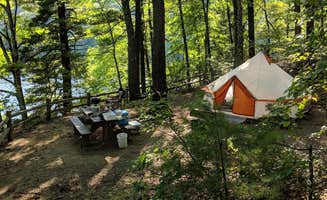
Consider yurt options: For families wanting a camping experience without tents, Otter River State Forest offers yurt accommodations. Jean C. notes, "At the top of the hill, there are several yurts available," which provide more weather protection than traditional tent camping.
Playground facilities: Fort Dummer State Park offers recently updated play areas for children. One visitor noted, "Amenities include campers only beach, great trails (including accessible), nature center, staff were present and circulated often."
Bike-friendly campground loops: Lake Dennison Recreation Area features paved loops ideal for children learning to ride. "There are ample trails for hiking and kids can ride their bikes," shares Bonnie B., who found the campground "a gem for families."
Tips from RVers
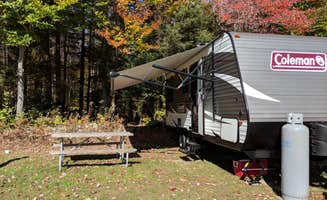
Site accessibility: For larger RVs, several campgrounds offer designated areas with easier access. At Ashuelot River Campground, John C. reports, "Sites big enough for our 42' 5th wheel and 2 cars. Sites in the woods have water and 50 amp service, no sewer. Most of the open sites have 30/50 amp service with full hook-ups."
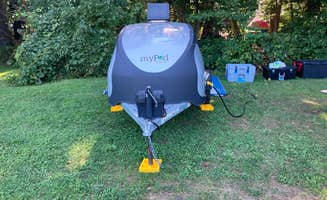
Narrow campground roads: Some campgrounds have limited turn radius on interior roads. DAR State Forest camper Joe S. advises, "Not sure I'd try a really big rig here, but our little 16' trailer fit in great. I don't see any pull through sites, but I didn't see them all."
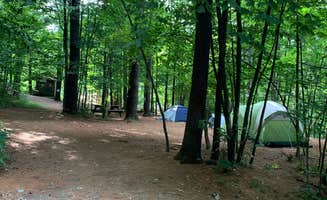
Site privacy variations: The layout and vegetation between sites varies dramatically between campgrounds and even within sections of the same facility. At Lake Dennison, Rachael K. observes, "The sites with higher numbers by the lake are all on top of each other with little to no trees or shrubs between sites, and you can't really decipher where one site ends and the next begins."












 Guide
Guide


