Camping spots near Mineral Bluff, Georgia range from primitive to developed facilities with most sites situated between 1,500-2,000 feet elevation in the southern Appalachian Mountains. The region experiences distinct seasonal changes with fall colors peaking in mid-October and summer temperatures averaging 10-15 degrees cooler than Atlanta. Winter camping requires preparation as temperatures regularly drop below freezing from December through February, especially at higher elevation campgrounds.
What to do
Trout fishing access: Toccoa River offers excellent fishing opportunities with stocked and wild trout. "The fishing was great too. This was my first time trout fishing in North Georgia but I was able to catch plenty of trout," shared one visitor at Cooper Creek, which provides stream-side camping with easy water access.
Water recreation: Lake Blue Ridge provides swimming, boating and paddling options from late spring through early fall. At Morganton Point Campground, "The beach is extremely clean and the rental shop by the lake rents kayaks and paddleboards. However, it is a little pricey if you plan on doing it. It was $35 for a kayak or paddleboard," notes a camper.
Hiking trails: Blood Mountain summit offers challenging terrain and panoramic views. A camper at Vogel State Park Campground explains: "The hiking both from Vogel State Park and nearby are incredible. Take half a day and climb Blood Mountain along the Appalachian Trail. Views from the summit are breathtaking...doing the hike is also a little breathtaking too."
What campers like
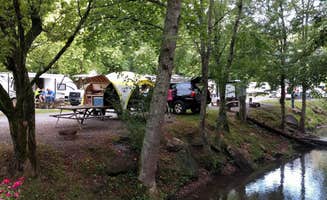
Creek-side sites: The sound of flowing water creates natural white noise for sleeping. At Cooper Creek, campers mention "The creek is very peaceful and well stocked with trout, along with some natives, but mostly stocked fish. Most of the camp sites are along the creek which makes this a great place to stay."
Spacious waterfront camping: Many campers praise the room between sites at lakefront locations. "Camped on lot 14 which was quite spacious with easy access to the water. Tent was located away from the fire pit and picnic table and the restrooms were close by," reports a visitor to Morganton Point Campground.
Walk-in tent areas: More secluded options exist for tent campers willing to carry gear short distances. One camper at Fort Mountain State Park Campground shared: "Had I known about the incredible tent 'walk-in' sites before arrival, I would've stayed there. They are tucked away on their own loop on a wooded hillside."
What you should know
Cell service limitations: Coverage varies significantly by carrier and location throughout the region. At Thunder Rock Campground, "Very busy campsite. Get here early if you want to get a spot. There are showers on site and very clean bathrooms. Would recommend if your coming down to go rafting. No cell service with ATT."
Road conditions: Several campgrounds require travel on steep or unpaved roads. A camper at Fort Mountain State Park noted, "They don't call it Fort Mountain for nothing - there was quite a drive uphill to get here."
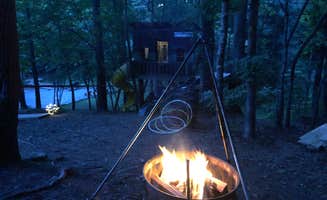
Seasonal facility closures: Water systems at many campgrounds shut down during winter months. At Cooper Creek, one visitor mentioned "Primitive-no running water in winter so pack that in. Fire pits have a swivel grill, ideal to cook with the cast iron over the fire."
Tips for camping with families
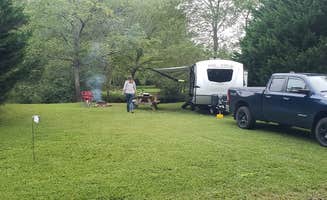
Kid-friendly water features: Shallow creeks provide safe play areas for children. "The kids played in the creek, and also joined in a soccer game on the field. Sites were spacious. We stayed by the creek and had water/electric," noted a visitor to Persimmon Creek RV Park.
Wildlife awareness: Bears are active throughout the region. At Fort Mountain State Park, one camper reported: "We had bear visitors, something they'll warn you about upon arrival. The bears just added to the appeal of this place though."
Off-grid entertainment: Limited connectivity means planning non-electronic activities. "This place has a lot to offer: hiking, waterfalls, put put, playgrounds, lake views and paddle boats, standard hook up sites, etc.," explained a Fort Mountain visitor.
Tips from RVers
Site selection considerations: Many campgrounds have challenging spots for larger rigs. A camper at Amicalola Falls State Park Camping noted: "We have a 27' airstream and there are a couple campsites that are hard to get into. Number 18 does not look hard, but the layout is very difficult to get into. The bend halfway into the campground would be extremely difficult with much bigger than 27' camper."
Leveling challenges: Sloped sites require additional equipment. "The site had about a 5 inch difference shopping towards the road. I used rocker blocks maxed out (about 4 inches in height) and still was not level," reported one RVer at Fort Mountain State Park.
Water access considerations: Several campgrounds offer direct water access from RV sites. At Morganton Point Campground, "Many campsites are along the lake and some have access to the lake. We viewed many campers who had their boats tied up right at their site and access to the water."











 Scout
Scout

