Lake Georgetown features a 26-mile shoreline surrounded by cedar groves and limestone formations at approximately 791 feet elevation. The lake experiences hot summers with temperatures frequently exceeding 95°F between June and September, while winter nights can drop below 40°F. Most campgrounds remain open year-round with varying levels of crowding depending on season.
What to do
Primitive camping options: The Sawyer Park Primitive Campsites offer a more secluded experience accessible only by hiking or boating. "This is primitive (dispersed) camping. There are a few areas with clear land or tent pads where you may camp. But there are also zones where you may simply camp wherever you can setup a tent or hammock," notes Troy W. about these Sawyer Park Primitive Campsites.
Access the Goodwater Loop: This trail connects multiple campgrounds around the lake. "The Goodwater Trail is a loop trail that circles Lake Georgetown and runs about 26.2 miles. It passes through forests, grasslands, over some small hills and across a few tributaries," explains a reviewer at Russell Park, adding that "In the summer be aware that the combination of the temperature and the exposure makes this trail uncomfortable to hike."
Explore nearby swimming spots: While many lake areas have rocky shores, some campgrounds offer designated swimming zones. "There is a designated swimming area within the campground," mentions Troy W. about Russell Park. At other locations, campers find their own access points, as Mark S. notes, "If you want, you can easily walk down to the river and hike along it."
What campers like
Covered shelters: Most established campgrounds feature protective structures over picnic tables. "Each site has a shelter with picnic table, campfire pit/grill," explains Troy W. about sites at Russell Park. Similarly, Amy H. observes at Cedar Breaks Park: "The coverings over the tables are thick wood and very large on a concrete pad. Grill with firepit and grill grates on top."
Quiet weekday stays: Many pet-friendly Georgetown Lake campgrounds have significantly lower occupancy during weekdays. "The camp was nearly empty in October this year which is the peak season for camping in Texas," reports Steve & Ashley G. about Berry Springs Park & Preserve. This makes weekdays ideal for campers with pets seeking more space.
Lake views from select sites: Certain campsites offer direct views of the water. Kenneth H. notes about Jim Hogg Park: "The site that I had most recently had a beautiful western view over the lake and I enjoyed several beautiful sunsets." Similarly, Mark S. recommends at Cedar Breaks: "We opted for spot 58 which is on a small bluff overlooking the lake. We had a trail from our spot to the lake which we took advantage of."
What you should know
Limited shade in some areas: Despite cedar trees throughout the region, many lakeside sites lack adequate coverage. "Not a lot of shade, but sites are OK," mentions J E. about Jim Hogg - Lake Georgetown. This makes the covered shelters particularly valuable during summer months.
Varying site levelness: Some campsites require significant adjustment for RVs. As Karen H. warns: "The sites along the outside of the loop have lake views and are level. The sites along the inside are scary unlevel! Some of the big rigs were backed in and jacked up 4 feet or so in front."
Wildlife concerns: Pet owners should remain vigilant about potential wildlife encounters. Mark S. cautions: "Watch out for RATTLESNAKES. We saw 2." This hazard requires special attention when camping with pets around Georgetown Lake.
Tips for camping with families
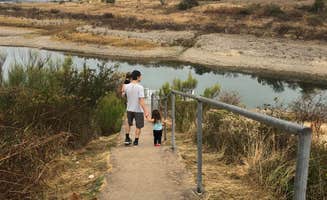
Choose campgrounds with accessible water: For families with children or pets, water access makes a significant difference. At Tejas Park, Jesse L. reports: "It's at the head of a trail, just near the river. If you want, you can easily walk down to the river and hike along it." Similarly, Mark S. notes: "Tejas is right on the river, ample opportunities to wet a line if you like."
Consider primitive versus established sites: Families should evaluate their comfort needs. "Tejas Park is perfect for those in the area looking for tent camping without wanting to be surrounded by RV's," explains Mark S., while Steve L. adds: "This location is close enough to be near civilization, but feels remote to get the primitive camping experience."
Plan for weather variables: Texas heat requires preparation when camping with families. Troy W. advises: "In the summer be aware that the combination of the temperature and the exposure makes this trail uncomfortable to hike. Take precautions, drink lots of water and stay in the shade all that you can."
Tips from RVers
Check dump station locations: The positioning of facilities can impact your departure routine. As one camper notes about Jim Hogg Park: "Dump station is at entrance of park and park is fairly large to haul a portable dump tank." This logistical consideration is important for RVers staying multiple days with pets.
Verify site dimensions before booking: Not all campgrounds accommodate larger RVs. Steve & Ashley G. mention about Berry Springs Park & Preserve: "The sites are best suited for tent camper, vans, and smaller trailers." This consideration is crucial for pet owners traveling with larger rigs.
Consider hookup options: Available utilities vary between campgrounds. Kenneth H. confirms: "The sites have water and electric connections," while other reviewers note the absence of sewer connections at many sites, requiring use of dump stations upon departure.





 Legend


