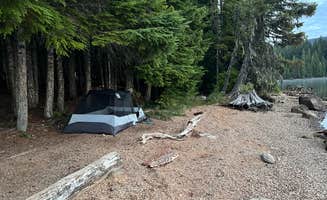
Tent campsites near Mt. Hood National Forest range from primitive sites at high elevations to accessible shoreline locations around nearby lakes. Most dispersed camping areas sit at elevations between 3,000-4,500 feet with seasonal snow often blocking access until May or early June. Winter temperatures frequently drop below freezing even in summer months, requiring proper cold-weather gear regardless of season.
What to do
Fishing at Timothy Lake: Cast for trout at Timothy Lake Meditation Point where campsites offer direct shoreline access. "I'm an avid Hobie 16 sailor and Timothy I can say has one of the best evening winds that I've sailed in a long time mornings are great light glass but the evenings are the best," notes Rick D. about Timothy Lake Meditation Point.
Hiking to East Zigzag Mountain: From Burnt Lake campsites, take the 2-mile trail to East Zigzag Mountain summit. "If you put down your stuff at your site, you can do another 2 mile hike up the summit of East Zigzag Mt. and see a beautiful view of Mt. Hood," explains Sonja O. about Burnt Lake.
Wildlife watching: Set up camp near Barlow Crossing for deer sightings. "We have a favorite dispered campsite that is right on the creek. Quiet and serene. We always have deer come visit us," says Kelly K. about the camping experience.
What campers like
Privacy between sites: Many dispersed sites maintain good separation from neighbors. "The site was super private by the river spacious and beautiful," reports kathaleen about Shellrock Creek, noting that "even when it's full" the campground remains a "winner."
Lake access for water activities: Several campgrounds provide direct water access for swimming, fishing, and boating. "We took our inflatable kayak... situated in a little cove and has a beachy area for playing in the water or launching water craft," explains Jesse H. about Meditation Point Campground.
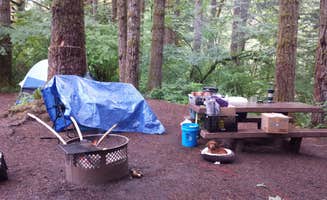
Natural fire rings at primitive sites: Most dispersed areas feature established fire pits created by previous campers. "We did dispersed camping and were amazed happy to find that even the dispersed sites came with a fire circle and logs," comments John T. about his camping experience.
What you should know
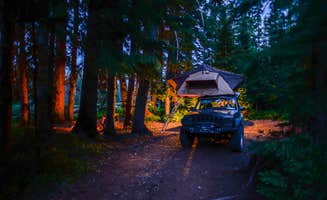
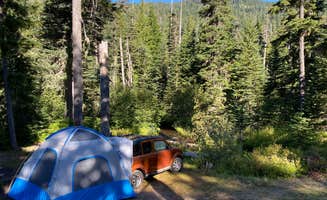
Road conditions vary widely: Many forest roads require high-clearance vehicles. "You'll want a high clearance/4wd vehicle. We took my Honda Element and had to camp in the campground instead of near the lake... Too many big rocks and ruts in the road to attempt," warns Lisa K. about Badger Lake Campground.
Site availability patterns: Weekdays offer better chances for securing spots at popular areas. "We went on a Monday in early August, to this lovely 4 site campground. We were able to camp at (in my opinion) the best site, which was right on Barlow Creek, (I think it was # 4). We had the campground all to ourselves for the first 3 nights," shares Dawn O. about Barlow Crossing.
Water safety concerns: Some lake areas require proper footwear due to debris. "Biggest complaint is that we found a lot of small pieces of broken glass and melted aluminum in the beachy area, so be sure to wear water shoes!" cautions Jesse H. about Meditation Point.
Tips for camping with families
Look for creekside sites: Water access provides natural entertainment for children. "A hand full of semi-private camping grounds along the crystal clear creek... One site is literally right up on the stream bank, that's the one we want next time for sure," recommends Aria R. about camping at Shellrock Creek.
Choose beginner-friendly backpacking options: Some sites offer good introductions to backpacking. "4 in our group, two of us were first time backpackers. This was a great intro to backpacking," shares trena E. about Burnt Lake, noting it's "a great, well-maintained trail for beginners."
Plan for variable weather: Mountain weather changes rapidly even in summer. "We went in May, so there was still snow, and the lake was so full it had flooded part of the trail, making the backside campsites inaccessible," reports trena E. about conditions at Burnt Lake.
Tips from RVers
Stick to established campgrounds: Most dispersed sites work best for tent camping only. "We usually camp in the grass near the lake. There are no fees and I've never seen another person down here," notes Chris H. about Kinzel Lake Campground, where tent camping is the primary accommodation.
Pay attention to bathroom facilities: Toilet access varies significantly between locations. "Decent, well stocked vault toilet," reports Dawn O. about facilities at Barlow Crossing, while many dispersed sites like those along NF2656 have no facilities whatsoever.
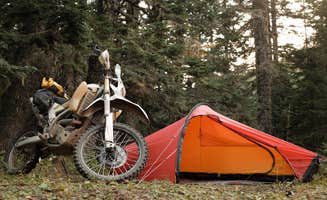
Know road limitations: Forest roads can be challenging for larger vehicles. "The road leading into the campgrounds (NF-2613/Kinzel Lake Road) is primitive and just challenging enough to keep most folks away. You will want a motorcycle or 4WD vehicle to get here," advises Chris H. about access to Kinzel Lake.












 Guide
Guide


