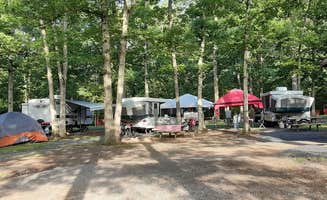
Star Tannery sits at an elevation of around 900 feet in the northern Shenandoah Valley, where the George Washington National Forest transitions from foothills to mountainous terrain. The area experiences distinct seasonal changes with cold, occasionally snowy winters and warm summers that rarely exceed 90°F. Camping options near Star Tannery range from free primitive sites with vault toilets to full-service campgrounds with amenities like hot showers and electrical hookups.
What to do
Hiking to mountain overlooks: Wolf Gap Recreation Area provides direct access to the Big Schloss trail, offering panoramic valley views. "The hiking around here is first rate—Big Schloss offers one of the most unique views in the region!" notes one Wolf Gap visitor. The moderate 4-mile round trip climbs to a rocky overlook perfect for sunrise photography.
Fishing in stocked streams: Elizabeth Furnace Campground provides access to Passage Creek, which is regularly stocked with trout. According to a camper, "There is a stocked trout stream, will keep the kids and kids at heart busy." The creek runs directly behind several campsites at Elizabeth Furnace Family Campground, making it convenient for morning or evening fishing.
Target shooting: The Cove Campground offers an unusual amenity for outdoor enthusiasts. "On top of them having an outdoor gun range... they have a small beach, picnic tables everywhere, a volleyball sand court, a dock, you can fish in the lake," shares one visitor. The range is properly maintained with designated shooting areas and safety protocols.
What campers like
Quiet weekday camping: Wolf Gap visitors note the difference between weekday and weekend experiences. "This was a great midweek site. The reservation board is straightforward, the history of the campground is interesting, and the trail access is excellent," reports a Wolf Gap camper. Weekdays typically see less than 50% occupancy, even during summer months.
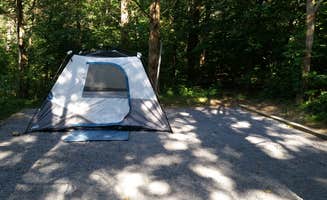
Creek-side tent sites: Several campgrounds feature tent sites directly adjacent to flowing water. At Gooney Creek Campground, "We landed the prime spot all the way at the back of the campsite, nearest to the swimming hole. The site is located near a highway, so getting a spot in the back is ideal," advises a visitor. The sound of running water creates natural white noise that masks any highway sounds.
Wildlife viewing: Mathews Arm Campground in Shenandoah National Park provides regular wildlife encounters. "Great campground! A lot of hiking and nature everywhere. We even had a doe and fawn right in our campsite! Just be careful of the black bears," states one camper. The park's wildlife management protocols help maintain safe distances while allowing observation opportunities.
What you should know
Road conditions: Access to many camping areas requires driving on unpaved forest roads. At Hawk Recreation Area Campground, campers warn about approach roads: "Be forewarned that the road is quite bumpy. I was fine in a small car with relatively low clearance, but if you have extremely low clearance or things hanging down from your car, you're gonna have a slow, difficult drive in."
Water availability: Many primitive campgrounds have limited water access. "The water pump was out of order during my visit. I saw a ranger come and check on it," reports a visitor at Hawk Recreation Area. Always bring container capacity for at least one gallon per person per day when visiting remote sites.
Registration protocols: Most forest service campgrounds use self-registration systems that require camper participation. "Check-in and check-out are accomplished by filling out a 3 x 5 card at the entrance and placing it in the slot for your campsite," explains a camper. This system helps rangers track site usage and allows campers to claim specific sites.
Tips for camping with families
Creek exploration opportunities: The Cove Campground offers water features particularly suited for families. "We went here just before the busy season and only had to share the camp loop with one other group. Lake was very nice and would be the perfect place to cool off on a hot summer day," reports a visitor. The shallow edges provide safe wading areas for supervised children.
Multiple playgrounds: Candy Hill Campground provides structured play areas. "They have a nice pool, 2 playgrounds, neat bikes you can rent, gold cart rentals. Best of all, they sell bags of special stones and fossils for you to mine. My boys had a blast with that!" shares a parent. The mining activity costs $5-8 per bag and keeps children engaged for hours.
Junior Ranger programs: Shenandoah River State Park offers educational activities for children. "The children's programs offered on the weekends were great too," notes one visitor. Programs typically run Memorial Day through Labor Day and include nature scavenger hunts and wildlife identification activities lasting 1-2 hours.
Tips from RVers
Site access challenges: Many campgrounds in the area have restrictions that affect larger RVs. At Creekside Campground, "Once I was able to negotiate a few big trees, the site was plenty roomy and right on the water." RVs over 30 feet should call ahead to confirm appropriate site availability.
Utility considerations: Water connections can be problematic at some sites. "The water leaked and made for a pretty soggy swamp on the utility side of our coach," reports an RV camper. Bringing extra water hoses (25-50 feet) and electrical extension cords helps address hookup placement issues.
Spacing concerns: RV campers should expect close quarters at many area campgrounds. "Lengthways doesn't seem to be an issue. I am seeing some good size rigs. However they aren't very wide. You are basically on top of your neighbor. Think being parked in a parking lot. With maybe a parking space between you," cautions a visitor. This proximity affects awning deployment and outdoor seating arrangements.












 Scout
Scout


