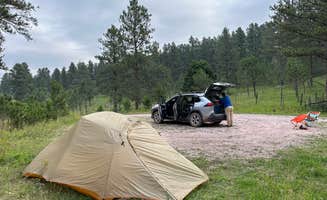
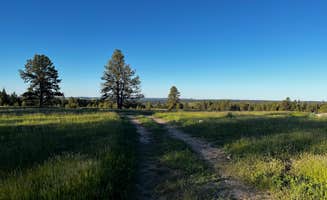
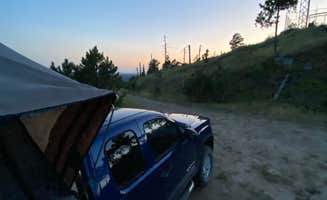
Dispersed camping areas around Wind Cave National Park offer primitive camping options at elevations ranging from 3,500 to 5,500 feet. The terrain features predominantly pine forests with occasional meadow openings that provide habitat for deer, coyotes, and numerous bird species. Many sites sit within the Buffalo Gap National Grassland or Black Hills National Forest boundaries, where visitors must follow strict Leave No Trace principles.
What to do
Explore thermal features: Wind Cave National Park's main attraction lies underground, but staying at North Pole Rd Dispersed Camping puts you just minutes from the park entrance. "During our stay, we toured Custer State Park, Jewel and Wind Cave, as well as Mt. Rushmore. We found the location to be very central," notes camper Francois T.
Wildlife viewing: Dawn and dusk provide optimal times for spotting wildlife near campgrounds. At Spring Creek Road, "We saw many deer near sunset, very peaceful and quiet," according to Makenzie S. The area attracts diverse wildlife throughout seasons.
Night sky observation: The Black Hills region offers excellent stargazing opportunities with minimal light pollution. Campers at North Pole Road often experience exceptional night skies. "We got to listen to some coyotes in the distance," adds Ashley A., highlighting the immersive natural experience.
What campers like
Central location: The dispersed camping areas provide strategic access to multiple parks. "Perfect location for exploring the Black Hills, Custer State Park, Wind Cave NP, Mt. Rushmore, and Jewel Cave NM," notes a visitor at RD 356 Dispersed Site Black Hills National Forest. Most primitive camping near Wind Cave National Park sits within 15-30 minutes of major attractions.
Natural surroundings: The forested settings create peaceful camping environments. At Needles Highway Dispersed Site, visitors appreciate the isolation: "The spot is large and easily accommodates our truck and 35' travel trailer. There is enough tree cover to allow you to have privacy too!" explains Nicholas S.
Variable campsite options: Different sites accommodate various camping styles. Spring Creek Road offers "plenty of easily accessible spots" according to Michael U., while RD 356 provides "spacious sites" with options for different vehicles. Campers consistently mention the flexibility of site selection.
What you should know
Road conditions vary significantly: Many sites require careful vehicle assessment. At Cold Springs School Road by Beaver Creek, "the roads are good" and "could probably get away with a low clearance since the roads are good," notes Truly W. However, other areas demand more capability.
Cell service fluctuations: Connectivity varies dramatically between camping areas. At Black Hills Dispersed Site - Hwy 89, service ranges from nonexistent to minimal: "Pitch black nights, and pure solitude," reports Rory R. Most campers should plan for limited connectivity.
Seasonal considerations: Primitive camping near Wind Cave experiences significant seasonal changes. "Be prepared for some snow, even in late May," warns Kelda C. at North Pole Rd. Spring and fall campers should pack for freezing overnight temperatures despite warm daytime conditions.
Limited amenities: Free dispersed camping requires complete self-sufficiency. "This is a pack in and pack out site with no facilities; no running water, no bathrooms, nothing. Make sure you bring what you need with you," advises Connor M. about RD 356 Dispersed Site.
Tips for camping with families
Choose accessible sites: For family camping, prioritize areas with easier access. At Camp Bob Marshall Dispersed, Heather S. notes: "Road is rough but was passable in our truck. We towed in a small teardrop but I wouldn't recommend a large rig." This helps prevent difficult situations with children.
Wildlife education opportunities: The area provides excellent wildlife observation chances for children. Spring Creek Road campers often report deer sightings, making it ideal for nature education. "Didn't see many cars at all," adds Clint M., highlighting the quiet environment beneficial for families.
Plan for insects: Bug protection becomes essential, particularly in warmer months. Cold Springs School Road by Beaver Creek gets high marks for being "Pretty much devoid of biting insects except for the one tick we found," according to one reviewer, but other sites report significant mosquito populations.
Weather preparation: Families should pack for rapid temperature changes. "Weather was great, very mild. Air was fresh and crisp," reports Connor M. at RD 356, but conditions can shift quickly, requiring layered clothing options for children.
Tips from RVers
Site selection strategy: RVers should scout locations before committing. "We went a bit more off the path by turning right, going up past a water treatment plant and parking near the end of the road," explains Anastasia W. about Camp Bob Marshall, highlighting the need for advance planning.
Accessibility assessment: Realistic vehicle capability evaluation remains critical. At Needles Highway Dispersed Site, "The road to get up to the higher sites was a big rough, but the Tacoma handled it no problem!" reports Logan H., emphasizing the importance of accurate vehicle assessment.
Arrival timing: Early arrival significantly impacts site availability. Josh Z. from North Pole Rd explains: "All the other spots down the road were taken so we pulled into a field across from the private road." Competition for prime spots intensifies during peak season, particularly for larger rigs.














 Legend


