Primitive camping near Black Hills National Forest offers unique opportunities in one of South Dakota's most diverse landscapes. The forest covers 1.2 million acres with elevations ranging from 3,500 to 7,242 feet at Black Elk Peak. Summer temperatures typically reach 75-80°F during day with nighttime lows around 50°F, while winter brings sub-freezing conditions and occasional heavy snowfall.
What to do
Hiking at Needles Highway: Located near Needles Highway Dispersed Site, this area provides excellent access to popular trails. "This spot is perfect for anyone looking to spend time at Sylvan Lake or hike Black Elk Peak. We are about 10 minutes from all of that!" notes Nicholas S.
Wildlife viewing: The Black Hills region supports diverse wildlife populations including deer, elk, and mountain goats. "We came in the dark was able to find a spot," reports De'Armond M. about Spring Creek Road, where campers often spot wildlife at dawn. "Saw many deer near sunset, very peaceful and quiet."
Rock exploration: The unique geological formations throughout the forest provide natural climbing and exploration opportunities. At Balsar Gulch, campers can explore rocky outcroppings. "We camped at this site based on location and wanting a dispersed site. Easy access and other sites available. Did some hikes around Lake Sheridan and Custer State Park," shares Natalie T.
What campers like
Proximity to attractions: Most dispersed camping areas sit within 15-30 minutes of major attractions. "During our stay, we toured Custer State Park, Jewel and Wind Cave, as well as Mt. Rushmore. We found the location to be very central," reports Francois T. about North Pole Rd Dispersed Camping.
Solitude and space: Unlike developed campgrounds, these sites offer significant distance between campers. "There was only one other camper set up down along the stream and the couple there looked comfortable," writes Tim K. about Spring Creek Road. "The sites are fairly far apart, more suitable for lone campers looking for a spot to rest."
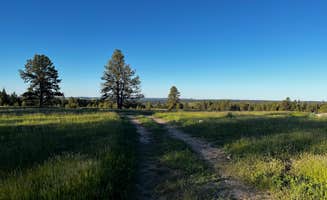
Natural features: Stream access and forest settings rank high among camper preferences. "The views and settings are plush, magical, quiet, with a small babbling stream winding through the forest, camp sites and meadows," describes Chris N. "I was inspired to compose poetry overlooking a meadow with deer feeding in the morning."
What you should know
Road conditions: Many forest service roads become challenging after rain. "Once you leave the gravel the roads are hit and miss. You're not taking a trailer down most of them if any," warns Ryan P. about dispersed camping near Calumet Road.
Limited facilities: True backcountry camping means complete self-sufficiency. At RD 356 Dispersed Site, "This is a pack in and pack out site with no facilities; no running water, no bathrooms, nothing. Make sure you bring what you need with you," advises Connor M.
Fire restrictions: Fire bans frequently occur during dry periods. "The area seems to not allow for campfires," notes Ben H., though restrictions vary by location and season. Always check current regulations with forest rangers before planning campfires.
Cell service: Connectivity varies widely throughout the forest. "Cell service diminished as we drove in. The other folks walked back along the road to get a signal," reports Art S., describing a common experience in remote areas.
Tips for camping with families
Choose accessible sites: Some dispersed areas offer better access for families with young children. "My Son and I stayed here while visiting Mount Rushmore and the surrounding area's other attractions. We are planning on staying here again in the future because of it's close proximity to everything and my 6 year old loved it!" shares Connor M. about RD 356 Dispersed Site.
Consider noise levels: Some sites experience more traffic or neighboring sounds than others. About North Pole Road, Josh Z. notes, "There was a bit of traffic but nothing unbearable. All in all it was a good spot for the night."
Safety considerations: Remote areas require additional vigilance with children. "This is NOT A PLACE FOR CHILDREN. It would be very easy getting lost or hurt," cautions Elizabeth R. about Calumet Rd Dispersed Camping.
Tips from RVers
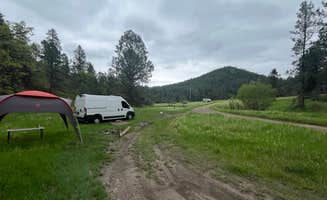
Site selection: Larger rigs need careful planning when selecting dispersed sites. "The spot I camped at was right on the creek. Great, secluded spot," shares Clint M., but adds, "Didn't see many places I would want to pull a camper into but great for ground tents, rooftop tents and camper vans."
Access roads: High-clearance vehicles work best for most remote sites. "The road in was fairly easy to find and smooth. I drove all the way to the end of the road to check out the sites and turned around and went back to the one I liked the best," recommends Tim K., noting his site "was level enough that it only took one block under one wheel."
Length limits: Most dispersed areas accommodate smaller RVs but have limitations. "The first spot closer to the road is much better suited for an RV," advises Ben S. about finding suitable spots for larger vehicles.
















 Guide
Guide


