The Delaware Water Gap area offers water-based tent camping along the 40-mile Delaware River corridor that cuts through the Pocono Mountains. Summer water temperatures typically range from 70-75°F, while the shorelines feature rocky terrain that requires careful site selection. Campers must navigate the river's variable flow rates, which can range from calm pools to Class I rapids depending on recent rainfall and seasonal conditions.
What to do
Waterfall exploration: 10-15 minute hike from Sandyston Boat In Campsites leads to Raymondskill Falls. "Within minutes on the Pennsylvania side of the river you can hike to Raymondskill Falls, as well as search for abandoned/forgotten homes and mills, some of which date back to the 1700's," notes camper John B.
Fossil hunting: Many riverside locations contain fossils and historical artifacts. The Sandyston area is particularly rich with history. One camper mentioned you can "try your luck at fossil and artifact hunting" along the shoreline during low water periods.
Hiking the McDade Recreation Trail: Connect with this multi-use trail near Hornbeck's River Campsites for day hiking without breaking camp. "A short walk upriver on the trail will bring you to the Dingman's Campground, whose store has ice cream and cold drinks and to Hornbeck Creek waterfall trail," shares Ross R.
Birdwatching: The riparian corridor supports diverse bird populations. "Saw tons of bald eagles flying near the site and while paddling birds playing and baby geese with their mommas!" reports Sean M. from his experience on Namanock Island.
What campers like
Complete darkness for stargazing: Namanock Island offers exceptional night sky viewing due to its isolation. John B. describes, "Once darkness falls the absence of light sources beyond your camp remind you that you are truly alone in the wilderness."
Island camping privacy: The tent sites on islands create a unique sense of seclusion. "We were the only one on our island, thankfully," reports Adeline M. about her experience at Sandyston Canoe Camping, appreciating the extra privacy.
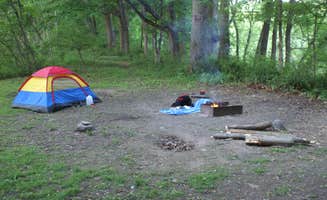
Spacious sites: Many riverside locations provide ample room for tents and gear. "They were very large and while covered by 40+ft trees were open enough to make you wish you brought more gear and people just because it would fit," notes John B. about the tent sites at Sandyston.
Wildlife encounters: Campers regularly report seeing diverse wildlife at the best tent camping near Shohola, Pennsylvania. "Saw deer, doves, robins, woodpeckers, quail(?), chipmunks, squirrels, skunk(?), and heard frogs," reported Dwight D. about his stay at Steam Mill Campground.
What you should know
Water access challenges: Most riverside sites have steep approaches requiring careful loading/unloading. "Due to fluctuating water levels all of the islands that are used for camping have a cut wall cliff style approach, but these sites have a very steep and above average height to the shoreline making unloading both more tiring and more of a hazard," warns John B.
No reservation system at most sites: Most boat-in sites operate first-come, first-served. "It's first Come first serve so we were definitely anxious to make sure we got a spot," shares Adeline M. about Sandyston. Summer weekends fill quickly, especially after 3pm.
Bear safety requirements: Proper food storage is essential in this area. "There are bears in this area, and while I've not seen one in the campground, I have seen them on the trails while staying here. I store my food in my car overnight and toss garbage bags in the dumpster nightly as well," advises Kristan V. from Steam Mill Campground.
Limited amenities: Come prepared for minimal infrastructure. "This is one of the rare primitive sites along the river to feature an outhouse. My daughter was happy to have a chance to have walls for privacy for a change," notes one camper about Alosa Boat In Campsites, highlighting the usual lack of facilities.
Tips for camping with families
Choose access points carefully: Some launch sites are more family-friendly than others. "This was a really good spot, bathrooms were in good condition and my campsite was decently secluded. There are a few spots where you can launch a kayak and the lakes connecting rivers/streams are very cool and jungly," reports Eddie H. about Namanock Island.
Consider shorter river segments: For families new to paddling, the 4-mile stretch from Milford to Namanock Island works well. "Took about 4.5 hours to paddle 3 miles then had to wave down a boat to tow me the rest of the mile. Was not fun!!!!" warns Sean M., highlighting the importance of realistic planning with children.
Be ready for insects: Summer camping brings significant bug activity. "Very buggy spot, LOTS of centipedes and other creatures at night, so bring a chair instead of sitting on the bench or log," advises Sean M. about Namanock Island.
Firewood planning: Gather firewood along the way or purchase before launching. "I was a bit nervous about collecting fire wood being the place was so clean but collected enough. Definitely would stop at one of the many places along the way to buy fire wood," suggests Sean M.
Tips from RVers
Small trailers only: Port Jervis Elks Brox Hiker/Biker Campground accommodates modest setups. "I would not drive an rv in here except maybe a small type trailer," notes Gregg T., emphasizing the access limitations.
Road conditions: Access roads to many campgrounds are unpaved and narrow. "I read a previous review that stated small cars stay away. I have a Nissan rogue and made it in no problem. It's .8 miles in on the right," shares Gregg T. about Port Jervis Elks Brox.
Limited hookups: Few sites near Shohola offer RV services. "These sites are for people truly there to camp, either in a tent or small travel trailer," explains Kristan V. from Steam Mill Campground, highlighting the primitive nature of most camping options.





 Guide
Guide


