Necanicum River flows along the west side of Highway 101 near Tolovana Park, offering additional water access for campers beyond ocean beaches. The area maintains moderate temperatures year-round, rarely exceeding 70°F in summer or dropping below 35°F in winter. Spring camping often coincides with elk migrations, requiring special awareness when traveling with dogs through pet-friendly campgrounds near Tolovana Park.
What to do
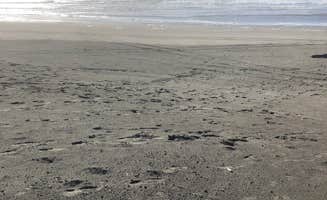
Tide pool exploration: 5-minute walk from Nehalem Bay State Park Campground. When low tide occurs, the beach reveals small marine ecosystems. "When we went the tide had gone out leaving little tide pools around. It was very nice," reports Deanna F., who found the experience peaceful and educational.
Crabbing excursions: 15-minute drive to Kelly's Brighton Marina. Rent equipment or bring your own to catch Dungeness crab from the nearby bays. "Go crabbing at Kelly's and then horseback riding on the beach!" suggests Jean M., who combines multiple coastal activities during her stays.
Historic site tours: 25-minute drive to Fort Stevens. Explore military fortifications dating back to the Civil War era with interpretive displays. "Visiting the forts and cannons are fun. Bring mosquito repellent!" advises Gail S. who visited Fort Stevens State Park Campground while exploring the north coast.
Dune climbing: Located within Barview Jetty Campground. Large sand formations provide natural playground spaces for children and adults. "I spent many a year at this campground, letting the kids (who am I kidding, me) run up and down the big sand dune and play on the tree at the top!" shares Richelle H.
What campers like
Proximity to town: Less than 10-minute walk from Wright's for Camping. The central location allows for car-free exploration of shopping and dining. "We took our bike and rode into town and to the beach. It's also a lovely walk," notes Maurice G., appreciating the convenience of this pet-accessible campground.
Clean facilities: Daily maintenance schedules at pet-friendly locations. Most campgrounds prioritize bathroom and shower cleanliness for human and animal comfort. "They clean the bathrooms at least twice a day keeping them fresh and fully stocked," reports Avery C., who values the hygiene standards.
Wildlife viewing: Early morning and dusk sightings common. Local wildlife includes shorebirds, marine mammals, and occasional Roosevelt elk herds. "The elk came right up to my site one evening," mentions Skyler C., who stayed at Sea Ranch Resort (now called The Retreat) where pets are welcome but must remain leashed during wildlife encounters.
Washing stations: Available at multiple campgrounds. Dedicated areas for cleaning sandy gear and pets after beach outings. "There is a water station as well as a place to wash down any beachy gear," notes a camper who appreciated this practical feature after visiting the coast with dogs.
What you should know
Summer booking requirements: 6-9 month advance reservations recommended. Most campgrounds fill quickly, especially those with dog-friendly policies. "Reserve early, as there are many repeat campers here who book the next year before they leave," advises Maurice G., highlighting the competitive reservation system.
Traffic noise considerations: Highway proximity affects some sites. Campgrounds closest to Highway 101 experience periodic road noise, particularly in sites nearest the main road. "The one (maybe only) downfall is that it is adjacent to Hwy 101, so there is occasional traffic (sometimes loud trucks) throughout the night," notes one camper.
Seasonal bathroom closures: Check winter availability. Some facilities reduce services during off-season months. "We visited during COVID so a lot of stuff was limited to reservation or closed," reports a visitor at Cannon Beach RV Resort, one of the area's year-round pet-welcoming facilities.
Dog restriction areas: Species protection zones. Certain beach sections restrict dogs during bird nesting seasons. "Both campgrounds enforce leash policies to protect local wildlife," explains a regular camper familiar with environmental regulations.
Tips for camping with families
Fire pit location: Check site layouts before booking. Placement varies between campgrounds, affecting safety considerations for younger children. "The fire ring at our specific site was in the perfect placement to keep our infant safe, but able to enjoy the fire," shares Bethany M., who found Thousand Trails Seaside especially accommodating for families with pets and small children.
Recreation options: Bike-friendly internal roads. Many campgrounds feature paved loops suitable for children learning to ride. "Good paved loop for kids to ride bikes," notes C.M., who appreciated the secure environment for family activities.
Noise management: Review quiet hours policies. Families with early bedtimes should consider campground enforcement standards. "They are strict about quiet hours and you must wear headphones listening to music," explains a parent who appreciated the calm atmosphere with young children.
Bathroom proximity: Research site maps before booking. Facilities with younger children benefit from closer restroom access. "Bathrooms are within walking distance but showed full quickly in the morning," advises a parent who planned early morning routines accordingly.
Tips from RVers
Site angles: Consider backing requirements. Internal road layouts affect ease of placement for larger vehicles. "Good angles for backing in. However, inner loops you have neighbor front, back and sides," warns Misty Z., who recommends requesting outer spots at Cape Disappointment State Park Campground when traveling with dogs and RVs.
Electric service quality: Steady power delivery. Most RV sites maintain consistent electrical service even during peak usage. "The power was rock solid. There is free WiFi that works great early in the day but slows to a crawl at night," notes an experienced RVer.
Campground navigation: Morning departures recommended. Heavy weekend traffic creates congestion in larger facilities. "Trying to get out of the far back loop is a nightmare," cautions Bryan G., who suggests planning movement during off-peak hours.
Winter facility access: Confirm off-season availability. Some RV parks reduce amenities during slower months. "We stayed in October and it was nice and quiet at night," reports David M., appreciating the reduced crowds at typically busy campgrounds that welcome pets year-round.















 Scout
Scout


