Equestrian camping near Tolovana Park offers access to forested trails throughout the northern Oregon coast range. The region receives approximately 80 inches of annual rainfall, creating lush vegetation along trail systems. Many equestrian campgrounds in this area remain open from May through September, with some extending operations into November depending on trail conditions and seasonal rainfall patterns.
What to do
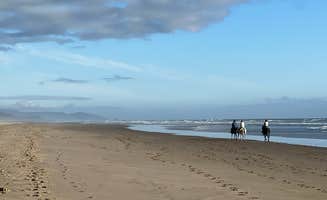
Beach riding excursions: Nehalem Bay State Park provides beach access for riders seeking coastal experiences. "Great dune area. Always horses riding on the beach too. Super neat experience," notes Jamie B. about the Nehalem Bay State Park Campground.
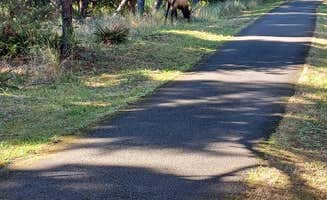
Multi-use trail exploration: The Banks-Vernonia State Trail connects with numerous equestrian paths. "The park has recently renewed trail signage," mentions OregonSteve about Dairy Creek East. The paved rail-to-trail offers 21 miles of relatively flat terrain suitable for both horses and humans.
Forest riding loops: Tillamook State Forest provides extensive trail networks with varying difficulty levels. "We love staying in the campground! There are many river access points, the forestry center, walking trails and wildlife all within walking distance," explains Katie C. about Jones Creek, which sits adjacent to forest service roads leading to horse-accessible trails.
What campers like
Private, forested sites: Horse camps typically offer more spacious camping spots. "This campground was so beautiful and clean! All of the campsites are nestled among big fir trees. The campsites have picnic tables and fire pits," writes Kelcie T. about Clatsop State Forest Northrup Creek Horse Campground.
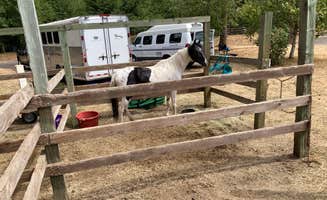
Convenient corral arrangements: Many sites include built-in horse containment. "Each site has a picnic table, fire pit, and a corral. There is a double corral on the double sites," Stephanie Z. reports about Hares Canyon Horse Camp.
Off-season availability: Spring and fall often provide quieter camping experiences. "We stayed on Sunday and Monday nights and had the entire campground to ourselves," Jesse H. comments about Northrup Creek Horse Campground, noting the lower usage on weekdays provides more solitude.
What you should know
Seasonal facilities: Water access varies throughout the year. "The horse camp sites all have corrals for the horses. Nice hiking trail starts at the tent camping area," describes Dexter I. about Northrup Creek, but notes that facilities like water pumps may not operate during early spring or late fall.
Trail sharing etiquette: Multi-use trails require awareness of other users. "We've enjoyed previous stays at L.L. Stub Stewart State Park in our tent and in one of the cozy cabins in the past. This time, we stayed overnight in our camper van at the top of the hill in Hares Canyon Horse Camp," says Tanya B., mentioning the mixed-use nature of the trails.
Manure management requirements: Horse camps typically have specific waste protocols. "You must clean up after your own horse. Manure bin as well as shovels/brooms are provided onsite," explains Stephanie Z. about Hares Canyon, representing a standard practice at regional equestrian camping facilities.
Tips for camping with families
Beginner-friendly trail options: Several camps offer shorter loops suitable for younger riders. "Big Tree Trail will take you past some monster sized trees," recommends Dexter I. at Northrup Creek, identifying a trail appropriate for less experienced riders.
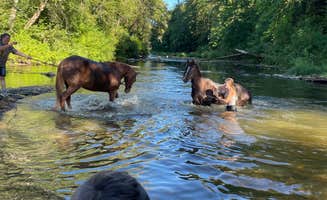
Stream access for cooling off: During summer months, water features provide welcome relief. "The tent loop only has a porta potty but it doesn't stink," notes Schona K. about Camp Wilkerson, adding that "there is even a stream to play at" near the camping areas.
Educational opportunities: Several equestrian camps connect to interpretive trails. "Go crabbing at Kelly's and then horseback riding on the beach!" suggests Jean M. about Nehalem Bay, highlighting complementary activities beyond riding.
Tips from RVers
Limited hookup availability: Many equestrian sites offer partial hookups. "My 2001 Tacoma with a RTT was perfect, but I don't think the sites are built for large-ish RVs," warns Daniel S. about Northrup Creek, indicating the constraints of forest road access.
Turning radius considerations: Forest camp roads often have tight corners. "The pad starts with asphalt and then goes to gravel, where you actually park the rig," explains MickandKarla W. about their stay at L.L. Stub Stewart State Park, highlighting the importance of understanding pad configuration.
Seasonal access challenges: Spring and fall can present muddy conditions. "The road is 1 lane, gravel but nicely maintained. Not many areas to pull over so go slow and prepare to back up if necessary," advises Pinkie K. from her experience at Snag Lake Campground, reflecting similar forest road conditions found throughout regional horse camps.






 Legend


